You’ve bought the good beans. You’ve dialed in the grind. But your French press coffee still tastes flat, sour, or bitter. The culprit isn’t your beans or your technique—it’s the water temperature. Most home brewers pour boiling water straight from the kettle and wonder why the cup tastes like ash.
This guide isn’t just a number to memorize. It’s a system. You’ll learn the precise temperature window, how to compensate for heat loss, and how to diagnose your brew’s flaws by taste alone. By the end, you’ll know exactly how to adjust your water for any roast, any altitude, and any press.

Veken
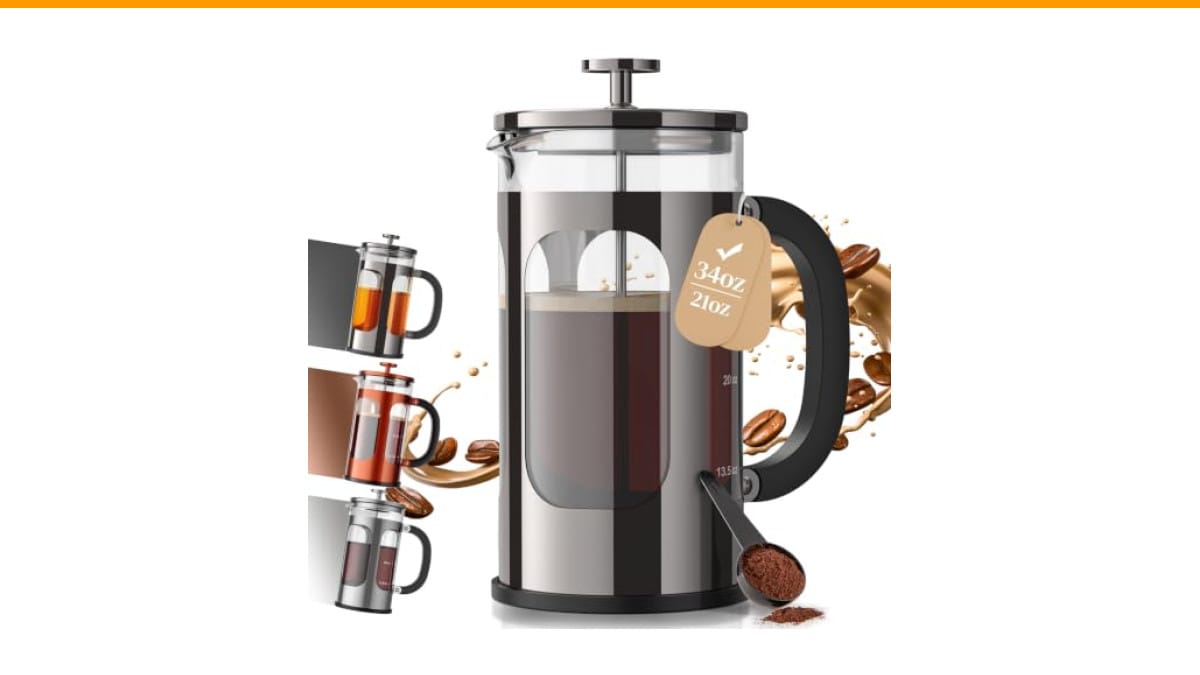
Veken 34oz French Press Coffee Maker, No…
- No Plastic Touching Food: Made with 304 stainless steel and food-grade silicone, our French press keeps all brewing surfaces plast…
- Thickened Glass and Versatile Brewing: Made of high borosilicate glass that resists thermal shock up to 302°F, this thick durable…
- 4-Level Filtration for Pure Coffee: This French press has a 4-layer stainless steel filter—spiral plate, cross plate, and two fine…
As an Amazon Associate I earn from qualifying purchases.
If you’re using a standard glass carafe, the Veken French Press Coffee Maker handles heat retention well thanks to its thickened borosilicate glass and stainless steel frame. It’s a solid vessel for putting the temperature advice below into practice without plastic touching your brew.
Why Water Temperature Is the #1 Variable in French Press
Temperature controls extraction rate. Hotter water pulls more flavor compounds out of the coffee grounds—fast. Cooler water pulls fewer compounds, slower. Get it wrong, and no amount of grind adjustment will save the cup.
Think of coffee solubles as having different melting points. The desirable fruity and sweet acids extract first at lower temps. The bitter and woody compounds extract last at higher temps. If your water is too hot, you’re dragging out those harsh bitters. If it’s too cool, you’re leaving the good stuff behind.
French press is especially sensitive because the metal mesh filter doesn’t trap the fine particles that paper filters catch. Those fines keep extracting during the full steep time. Your starting temperature dictates how much of that extraction happens.
The Golden Range: 195°F–205°F (And Why It Works)
The sweet spot for most French press brews sits between 195°F and 205°F. That range gives you balanced extraction—bright enough to taste origin character, but not so hot that you scorch the grounds.
Here’s the science in plain terms. At 205°F, you get maximum extraction speed. The coffee will have more body and deeper sweetness, but it also risks bitterness if your steep time runs long. At 195°F, extraction slows down. You get a cleaner, brighter cup with more perceived acidity and less bitterness.
Neither temperature is wrong. They just produce different cups. The best water temperature for French press coffee maker setups depends on your roast level and personal taste preference.
I’ve tested this side by side with the same beans and same grind. The difference is dramatic. At 205°F, the cup tastes syrupy and dark. At 195°F, the same coffee tastes tea-like and tart. Find where you like the balance.
How Roast Level Shifts Your Ideal Temperature
Light Roasts (Aim for 205°F)
Light roasts are dense. They haven’t been roasted long enough to develop the porous structure that dark roasts have. That density makes them harder to extract. You need the heat to break through.
Start at 205°F for light roasts. If the cup tastes sour or grassy, you’re under-extracting. Push the temperature higher, but remember your kettle can’t exceed the boiling point. Alternatively, extend your steep time to four minutes instead of three.
Dark Roasts (Aim for 195°F)
Dark roasts are the opposite. The roasting process has already broken down the cellular structure, making them highly soluble. They extract quickly, even in cold water. Use 195°F to avoid pulling out the harsh, ashy flavors that hide in dark roasts.
A common mistake is treating all roasts the same. I’ve brewed a dark Brazilian roast at 205°F and it tasted like burnt rubber. Dropping to 195°F transformed it into a smooth, chocolatey cup. The beans didn’t change—the temperature did.
The Hidden Heat Loss Problem (And How to Fix It)
Here’s the trap. You heat your kettle to 205°F, but the water doesn’t stay at 205°F. The moment you pour, heat escapes into the air, the glass carafe, and the coffee grounds themselves.
In testing, pouring from a kettle into a room-temperature glass press drops the water temperature by 5°F to 10°F instantly. That means your 205°F target becomes 195°F in the actual brew. You’re not brewing at the temperature you think.
To compensate, overshoot your target by 8°F to 10°F. If you want a 200°F brew, heat the kettle to 208°F or 210°F. The water will lose heat during the pour and land right where you want it.
Metal French presses hold heat better than glass. The stainless steel walls retain warmth, so the temperature drop is smaller—maybe 3°F to 5°F. If you’re using a glass carafe, always overshoot more. If you’re using a metal press, you can be more precise.
Preheating the carafe helps too. Rinse the empty press with boiling water before you add coffee. That warms the glass so it doesn’t steal heat from your brew water.
Altitude, Kettles, and Boiling Point: Real-World Adjustments
Water boils at 212°F at sea level. At 5,000 feet, it boils at 203°F. At 7,500 feet, it boils at 198°F. If you live at altitude, you physically cannot reach 205°F.
This changes your strategy. At high altitude, the best water temperature for French press coffee maker brewing is whatever your boiling point allows. You’ll need to compensate with a longer steep time or a finer grind to boost extraction.
For example, at 6,000 feet, water boils at 200°F. Use that water at full boil, extend your steep to four minutes, and you’ll get a decent cup. Don’t try to hit 205°F—it’s impossible without a pressure vessel.
Also consider your kettle. An electric kettle with a temperature setting is a huge advantage. It holds the water at the exact temperature, so you don’t have to watch a thermometer. A stovetop kettle gives you less control. You’ll need to wait for the boil to settle.
No Thermometer? 3 Foolproof Ways to Hit the Right Temp
Not everyone owns a gooseneck kettle with a digital readout. Here’s how to get close without any tools.
- The 30-Second Rule: Bring water to a rolling boil, then wait 30 seconds before pouring. This drops the water to approximately 205°F. It’s not perfect, but it’s reliable for most roasts.
- The 60-Second Rule: For dark roasts, wait a full minute after boiling. The water will settle around 195°F–200°F, which is ideal for dark beans.
- The Bubble Test: Watch the water after boiling stops. When the large, rolling bubbles turn into small, gentle streams, the water is around 200°F. This takes practice, but it’s a skill you’ll build quickly.
These methods aren’t exact. But they’re far better than pouring boiling water directly onto your grounds, which guarantees a bitter cup.
Troubleshooting: What Your Coffee’s Taste Says About Your Temp
Your palate is the best thermometer you own. Here’s what your coffee is telling you.
| Taste You Notice | Likely Temperature Error | Fix |
|---|---|---|
| Sour, sharp, or salty | Water too cool (under-extraction) | Increase temp by 5°F or extend steep time by 30 seconds |
| Flat, weak, or empty | Water too cool or steep too short | Increase temp to 200°F+ and check your coffee-to-water ratio |
| Bitter, dry, or ashy | Water too hot (over-extraction) | Drop temp by 5°F or shorten steep time by 30 seconds |
| Harsh with no sweetness | Water at full boil | Wait 30–60 seconds after boiling before pouring |
Use this chart as your starting point. Adjust one variable at a time. If you change temperature and grind simultaneously, you won’t know what fixed the problem.
Quick Reference: Temperature, Grind, and Steep Time Chart
Here’s a cheat sheet for your next brew. These are starting points, not laws. Tweak based on your taste.
| Roast Level | Water Temp | Grind Size | Steep Time | Resulting Flavor Profile |
|---|---|---|---|---|
| Light | 205°F | Coarse | 4 minutes | Bright, fruity, higher acidity |
| Medium | 200°F | Coarse | 3.5 minutes | Balanced, sweet, moderate body |
| Dark | 195°F | Coarse | 3 minutes | Low acidity, heavy body, chocolate notes |
Cold brew is a different animal. Use room temperature water and steep for 12–24 hours in the fridge. The best water temperature for French press coffee maker cold brew is simply cold—no heat needed.
Final Verdict: The Best Temperature for Your Next Cup
Start at 200°F. That’s the middle of the golden range and works for most medium roasts. Then adjust based on the troubleshooting chart above.
If you’re brewing light beans, push to 205°F. If you’re brewing dark beans, drop to 195°F. Always overshoot by 8°F–10°F to account for heat loss during the pour. And if you’re at altitude, work with your boiling point, not against it.
Here are the key points to remember:
- Target 195°F–205°F for most French press brews
- Light roasts want the hot end; dark roasts want the cool end
- Overshoot your kettle temp by 10°F to compensate for heat loss
- Preheat the glass carafe to reduce temperature drop
- Wait 30–60 seconds after boiling if you don’t have a thermometer
- Use the taste chart to diagnose sour vs. bitter vs. flat coffee
- Altitude changes your boiling point—adjust steep time accordingly
Water temperature is the difference between a cup you tolerate and a cup you crave. Take the extra minute to get it right. Your morning will thank you.
Products related to this article
Sponsored / affiliate links. As an Amazon Associate I earn from qualifying purchases. I may earn additional commission from eligible campaigns.
 HomeBeyond Espresso Coffee Maker 12 Cups, Classic Stovetop Espresso Maker, 600ml / 20oz Coffeemaker for Gas & Ceramic Stovetops (Silver)
 Quick Heating Cup Warmer, Three Temperature Settings, Splashproof and Portable, for Coffee, Milk, Lightweight ABS Material
 Coffee Mug Warmer & You are Awesome Mug Set, Electric Cup Warmer for Desk