You know the feeling. You pour a cup from your French press, take a sip, and get that watery, weak flavor that leaves you checking the carafe to see if you forgot the coffee entirely. It’s a common problem. Most people blame the method, but the press itself isn’t the issue. The issue is that you’re treating it like a drip machine.
French press brewing is immersion brewing. The grounds sit in water for minutes, not seconds. That means you control strength through a handful of variables, and small changes produce dramatic results. This guide walks through the exact ratios, grind sizes, and timing adjustments that turn a thin cup into a rich, bold brew.
You’ll walk away knowing how to dial in your press for a stronger cup without crossing into bitter, over-extracted territory. No vague advice here — just numbers you can use immediately.
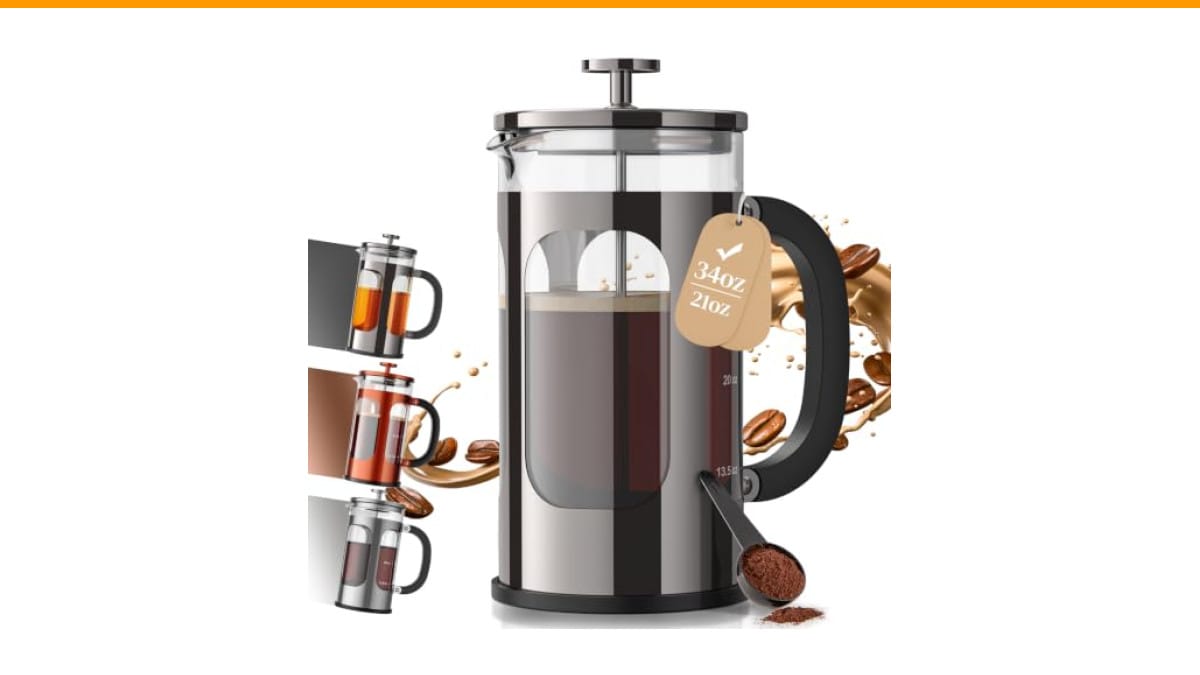
Before we get into technique, the gear matters. A press with a clean, tight filter system makes a noticeable difference. I’ve used the Veken French Press Coffee Maker for a few weeks now. The 4-layer stainless steel filter catches fine particles that older single-mesh presses let through, so you get the strength of a long steep without the sludge at the bottom of your mug.
The Ratio: Strong Coffee Starts With Math
Strength is a ratio problem. The standard French press ratio is 1:15, which means one gram of coffee for every 15 grams of water. That produces a balanced cup, but you’re not here for balanced. You’re here for strong.
Start at 1:12. That’s 60 grams of coffee for 720 milliliters of water, which fits a standard 34-ounce press. If you don’t have a scale, use 2 tablespoons of coarsely ground coffee per 6 ounces of water. That gets you close enough to taste the difference.
Push it to 1:10 if you want a truly intense cup. That’s roughly 70 grams of coffee for the same 700 milliliters. This ratio borders on concentrate, so it works best for adding milk or drinking in smaller servings. I wouldn’t go beyond 1:10 with a standard press — the flavors start to muddle and you lose the clarity that makes French press coffee pleasant.
One thing to watch: if you’re using a press with a thinner glass carafe, the extra coffee mass doesn’t matter. But if you’re brewing at 1:10, the slurry is thicker and harder to stir. A carafe like the Veken with its wider base handles the thicker mix without splashing.
Grind Size: The Difference Between Strong and Bitter
Grind size controls extraction rate. A finer grind exposes more surface area, so water pulls more flavor compounds faster. That sounds like the answer, but it’s a trap.
For French press, you want a coarse grind, roughly the size of sea salt flakes. Here’s the problem: if you grind too fine, the water extracts bitter compounds quickly, and your strong coffee tastes like ash. If you grind too coarse, the water barely touches the grounds, and you get weak, sour coffee no matter how long you steep.
If you’re using a blade grinder, pulse it in short bursts and shake the grinder between pulses. This gives you a more even particle size. A burr grinder is better if you own one — it produces uniform grounds, which means no fine dust over-extracting while the larger chunks under-extract.
Here’s a specific test: take a pinch of grounds between your fingers. If it feels like table salt, it’s too fine. If it feels like rock salt, it’s too coarse. Sea salt texture is your target.
Steep Time and Agitation: The Final Lever
Steep time is where most people sabotage their cup. The standard advice is 4 minutes, but that’s for a balanced cup at a 1:15 ratio. At 1:12, you need to adjust.
Start with 4 minutes at 1:12. Taste it. If it’s strong but flat, increase to 4 minutes 30 seconds. If it’s bitter, drop to 3 minutes 30 seconds. Your water temperature matters here too — boiling water (212°F) over-extracts quickly. Let your water sit 30 seconds off the boil to hit around 200°F.
Agitation matters more than people think. After you pour water over the grounds, stir gently for 5 seconds. This ensures all grounds are saturated. Then let it sit. Don’t stir again — that agitates the bed and pushes fine particles through the filter, making the cup gritty.
When you press, go slow. A fast press forces sludge through the mesh. A slow, steady press takes about 20 seconds and keeps the bed intact.
Comparing Methods for Stronger Coffee
There’s more than one way to push strength. Here’s how the main adjustments stack up against each other.
| Method | What to Change | Strength Impact | Risk |
|---|---|---|---|
| Higher coffee ratio | 1:15 to 1:12 | High — directly increases body and flavor | Low — just uses more coffee |
| Finer grind | Coarse to medium-coarse | Medium — faster extraction | High — easy to over-extract into bitterness |
| Longer steep | 4 to 5 minutes | Medium — pulls more compounds | Medium — bitter if pushed too far |
| Hotter water | 200°F to 212°F | Low to medium — speeds extraction | High — scalds grounds, harsh taste |
| Double press | Brew, then re-press the same grounds | Low — mostly adds bitterness | High — ruins flavor |
In testing, the ratio adjustment gives the most reliable results. It’s the only variable that adds strength without adding bitterness. Grind and time require careful tuning to stay in the sweet spot.
Cleaning Matters More Than You Think
Old coffee oils go rancid and coat the mesh filter. That rancid layer steals flavor and adds a stale note to every cup. If your coffee tastes weak even at a 1:12 ratio, the filter might be the problem.
Disassemble the plunger and rinse each layer of the filter after every use. Once a week, do a deeper clean. The glass carafe can handle hot water and mild soap. The silicone and stainless parts are easy to rinse under the tap.
If you’ve been skipping this, your next cup might taste stronger before you change anything else. A clogged filter restricts flow and leaves grounds in the water longer than you intended. For more on keeping your gear in shape, check our coffee maker cleaning guide.
Common Questions About Stronger French Press Coffee
Why does my French press coffee taste weak even with more coffee?
Check your grind size first. If it’s too coarse, the water can’t extract enough flavor in 4 minutes. Fix it by grinding finer — but not too fine. Sea salt texture is the sweet spot. Also check your water temperature. Water that’s below 195°F won’t extract fully.
Can I use a French press to make espresso-strength coffee?
No. Espresso requires 9 bars of pressure, which a French press can’t create. You can make a strong concentrate at a 1:10 ratio, but it won’t have the crema or mouthfeel of espresso. It works fine for a strong Americano-style drink.
How long should I steep for maximum strength?
Five minutes is the practical ceiling. Beyond that, you extract bitter compounds that mask the strength. If 5 minutes at a 1:12 ratio still isn’t strong enough, add more coffee instead of steeping longer.
Does stirring during the steep help make coffee stronger?
One gentle stir right after pouring is good. It saturates all grounds evenly. Stirring again mid-steep agitates the bed, pushes fines through the filter, and makes the cup gritty. It doesn’t add strength — it adds bitterness and sediment.
Why does my strong French press coffee taste bitter?
Bitter usually means over-extraction. Your grind is too fine, your water is too hot, or your steep is too long. Fix one variable at a time. Start with water temperature — let it sit 30 seconds off the boil. Then adjust grind. If it’s still bitter, shorten the steep to 3 minutes 30 seconds.
What Actually Changed My Cups
- Weigh your coffee. A scale removes guesswork. 60 grams for a full press at 1:12 is a solid starting point.
- Grind coarser than you think. Sea salt texture, not table salt. Even extraction beats fine grounds every time.
- Let boiling water rest 30 seconds before pouring. 200°F extracts cleanly without scalding.
- Stir once, right after pouring. Then leave it alone for 4 minutes.
- Press slowly, over 20 seconds. Fast pressing forces sludge through a 4-layer filter.
- Clean the filter after each use. Rancid oils steal flavor and clog the mesh.
- If your press has a single-layer mesh filter, consider upgrading. The Veken press uses a 4-layer system that keeps fines out of the cup without weakening the brew.
Stronger coffee isn’t about a magic trick. It’s about controlling the ratio, grind, and time so they work together. Start with 1:12, coarse grind, 4 minutes, and adjust from there. That combination fixes watery coffee in one brew. For more on keeping your equipment running well, see our cleaning frequency guide.
Products related to this article
Sponsored / affiliate links. As an Amazon Associate I earn from qualifying purchases. I may earn additional commission from eligible campaigns.
 HomeBeyond Espresso Coffee Maker 12 Cups, Classic Stovetop Espresso Maker, 600ml / 20oz Coffeemaker for Gas & Ceramic Stovetops (Silver)
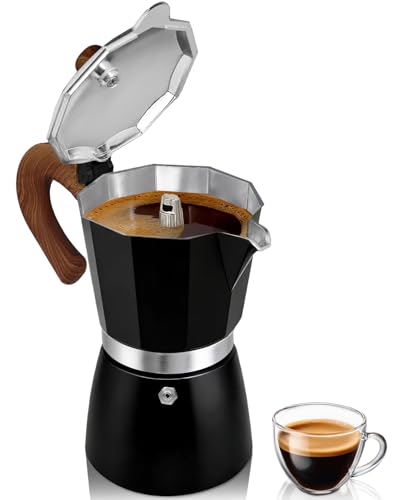 Belly Moka Coffee Maker Stovetop Espresso Maker 9 Cup Aluminum Moka Pot Percolator 15oz 450ml Easy Brewing for Electric Ceramic Stoves Home Camping Italian Cuban Café Classic Black
 Belly Moka Coffee Maker Stovetop Espresso Maker 6 Cup Aluminum Moka Pot Percolator 10oz 300ml Easy Brewing for Electric Ceramic Stoves Home Camping Italian Cuban Café Classic Silver