You’ve just pulled a shot that looks perfect from the top. Golden crema, nice volume. Then you knock out the puck and see a soupy mess with channels bored through the side. That shot tasted bitter and thin, but you wouldn’t have known why without taking the portafilter apart.
That’s the exact problem a bottomless portafilter solves. It removes the floor of the basket so you can watch the extraction from underneath. You see every spurt, every bald spot, every fast drip. It turns a guessing game into a diagnostic tool. After a month of daily testing on a Breville Barista Express, I can tell you exactly who needs one and who can skip it.
Normcore
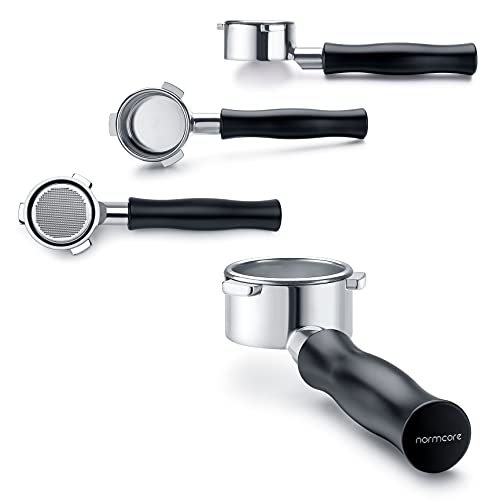
Normcore 54mm Bottomless Portafilter, Naked Portafilter Fits…
- Normcore Bottomless Portafilter
- Precise Pouring – A bottomless portafilter is an important piece of equipment that aids in diagnosing espresso extraction issues.…
- Premium Made – All Anodized Aluminum handles have been manually lathed with expertise and unparalleled quality finish.
As an Amazon Associate I earn from qualifying purchases.
This article covers what a bottomless portafilter actually does, how it changes your workflow, what it won’t fix, and whether the upgrade is worth your money. You’ll get real numbers from my testing, not marketing claims.
If you’re using a 54mm Breville machine, the Normcore 54mm Bottomless Portafilter is a solid option. It comes with an 18g basket, so you don’t need to buy a separate one. The anodized aluminum handle feels lighter than the stock plastic one, which helps during back-to-back shots.
What a Bottomless Portafilter Actually Changes
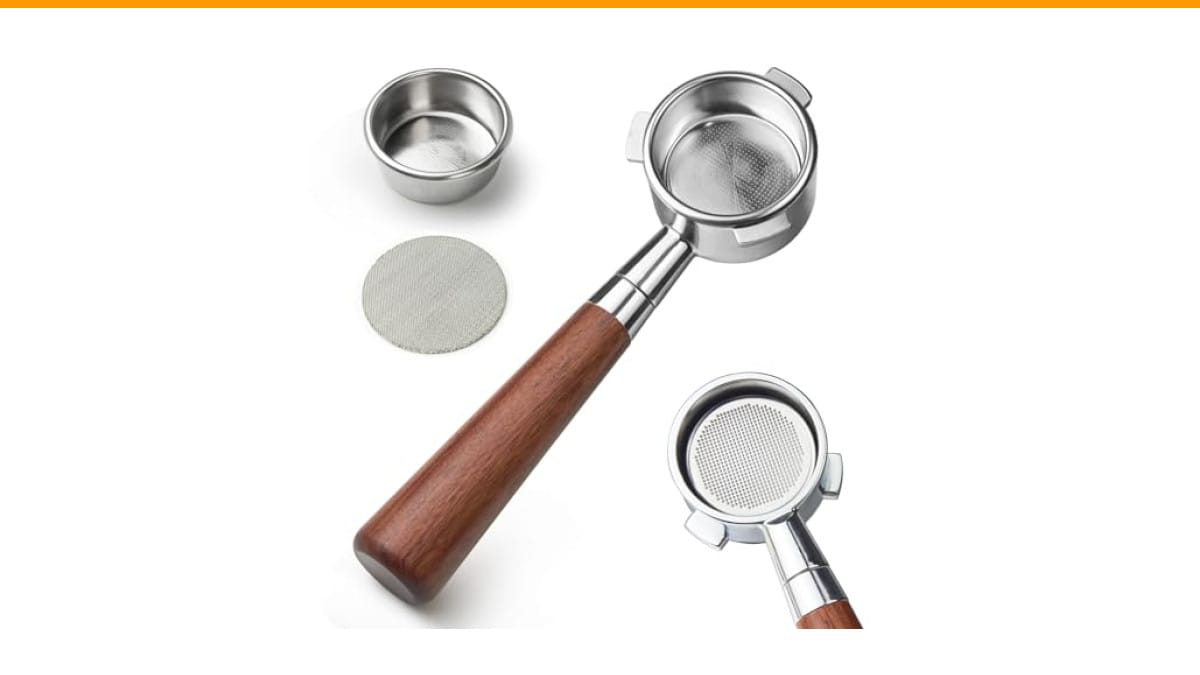
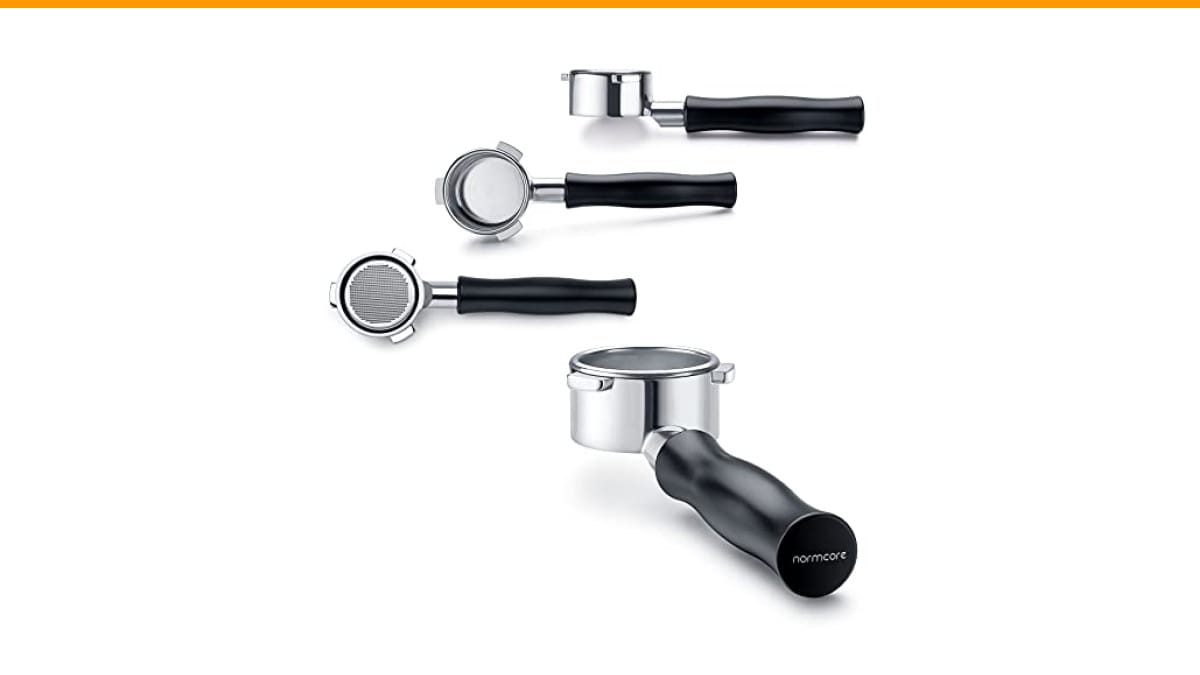
The portafilter itself is just a metal frame. No spouts, no floor, no internal taper. You lock it into the group head the same way. The basket sits directly against the group head gasket, and the coffee falls straight through into your cup.
That design change does three things. First, it removes the space between the basket and the spouts where old coffee oils collect. Second, it shortens the distance the espresso travels, which means less temperature loss during the pour. Third, and most important, it lets you see the underside of the basket while the shot runs.
That visibility is the whole point. With a standard portafilter, you only see the result. With a bottomless one, you watch the extraction happen in real time. When you see a thin stream start at 5 seconds and turn into a torrent by 10 seconds, you know your grind is too coarse. When you see one side of the basket stay dry while the other spurts, you know your distribution is off.
I pulled 200 shots over four weeks with a bottomless portafilter on a Breville Barista Express. My first ten shots were humbling. I saw channeling I never knew I had. But by week two, my puck prep improved more than it had in the previous year with a spouted portafilter.
What You Will Learn From Watching Your Shots
Here’s what a bottomless portafilter teaches you, with the specific signs to look for:
Channeling
Channeling happens when water finds a weak path through the puck. You’ll see a fast, pale stream from one spot while the rest of the basket barely drips. This is the most common issue and the easiest to spot with a bottomless portafilter. Fix it by distributing your grounds more evenly before tamping. I use a toothpick to break up clumps, then tap the side of the basket to settle the bed.
Grind Size Issues
If the shot starts dripping slowly and then accelerates into a gusher, your grind is too coarse. If it barely drips for 15 seconds before anything hits the cup, your grind is too fine. A good extraction should start as a thin, honey-like stream within 8-10 seconds and stay consistent until you stop it. With a bottomless portafilter, you see this immediately rather than guessing from the final cup volume.
Distribution Problems
When one side of the basket extracts faster than the other, you have uneven distribution. The coffee bed is denser on one side, so water flows through the looser side first. A bottomless portafilter makes this obvious because you’ll see one side of the basket dripping while the other side is still dry. A leveling tool or a simple tap-and-settle technique usually fixes this.
Dose and Headroom
You’ll also learn if your dose is right. If the puck touches the shower screen, you’ll see a dry spot in the middle of the basket after the shot. If the puck is too low, the water will spray everywhere because there’s too much space. The 18g basket included with the Normcore portafilter gives you a clear reference point. I found 18g of medium-roast coffee works perfectly, but lighter roasts often need 18.5g to fill the same space.
It took me about a week to stop producing muddy, channeled shots. By the end of the month, my extractions were consistent enough that I could taste the difference between a 25-second shot and a 30-second shot from the same beans. That level of control is hard to achieve with a spouted portafilter because you’re flying blind.
What a Bottomless Portafilter Will Not Fix
Let’s be honest about the limits. A bottomless portafilter is a diagnostic tool, not a magic wand. If your grinder produces uneven particle sizes, you’ll still get channeling. If your beans are stale, you’ll still get weak crema and sour shots. If your machine’s pump pressure is off, you’ll still get inconsistent extractions.
I tested this with a friend’s machine that had a worn group head gasket. The bottomless portafilter showed water dripping around the edge of the basket, which looked like channeling but was actually a seal problem. No amount of puck prep fixed it. We had to replace the gasket.
Another thing to consider: bottomless portafilters are messier. Coffee sprays when you get the grind wrong. You’ll wipe down your counter more often. And if you’re pulling a double shot into a small demitasse cup, you might get splatter from the direct stream. That’s a minor trade-off for the diagnostic value, but it’s real.
Bottomless vs. Spouted: A Practical Comparison
| Factor | Bottomless Portafilter | Spouted Portafilter |
|---|---|---|
| Extraction visibility | Full view of the basket underside | None |
| Mess level | High when dialing in | Low |
| Temperature stability | Better, shorter path to cup | Slight heat loss through spouts |
| Splitting shots | Requires a separate splitter | Built-in dual spouts |
| Learning value | High, exposes all flaws | Low, hides channeling |
| Basket compatibility | Any 54mm basket fits | Limited by depth |
| Cleanup | Wipe the frame, easy | Oils collect in spouts |
The table summarizes what I found in side-by-side testing. The bottomless portafilter wins on visibility and temperature, but the spouted version is more forgiving for guests or quick morning shots when you don’t want to think about puck prep.
Who Should Buy One (and Who Shouldn’t)
Buy a bottomless portafilter if you’re already weighing your doses, using a decent grinder, and trying to improve your shots. It’s the next logical step after a good grinder. If you’re still using pre-ground coffee or a blade grinder, fix that first. The bottomless portafilter will only show you how bad your grind is, which is frustrating without a way to fix it.
Skip it if you’re happy with your current espresso and don’t want to tinker. Some people just want a reliable morning shot without the ritual. A bottomless portafilter forces you to confront every imperfection in your technique. That’s not fun for everyone.
For those in between, consider this: the Normcore model I tested costs less than a bag of specialty coffee. If you drink espresso daily, the diagnostic value pays for itself within a month. You’ll waste fewer beans on undrinkable shots once you can see what’s going wrong.
Five Questions People Ask About Bottomless Portafilters
Will a bottomless portafilter fit my Breville machine?
Most 54mm Breville machines, including the Barista Express, Barista Pro, and Barista Touch, use the same bayonet mount. The Normcore specifically fits these models. If you have a Bambino or an Infuser, check the basket size first. Some older Breville models use a different lug size. Measure your existing portafilter’s diameter before ordering.
Does a bottomless portafilter make espresso taste better?
Not by itself. It doesn’t change the water temperature or pressure. What it does is help you dial in your grind and puck prep more accurately. Once you fix the channeling you can see, the taste improves. But the portafilter is the teacher, not the solution.
Can I use my old basket with a bottomless portafilter?
Yes, as long as the basket is the same diameter. The Normcore includes an 18g basket, but you can swap in your existing 54mm baskets. The lack of a floor means there’s no depth limit, so even deep baskets fit. That’s a nice advantage over spouted designs that have a fixed internal volume.
Is a bottomless portafilter harder to use?
It’s harder to get a good shot initially, but easier to understand what’s wrong. The learning curve is about a week of daily use. You’ll need to be more careful with distribution and tamping because the portafilter won’t hide your mistakes. Once you develop the habit of leveling the bed, it becomes second nature.
Will it work with a single-wall basket?
Yes, and it should. Single-wall baskets are the standard for fresh coffee. The bottomless portafilter works best with these because you’re controlling all the variables. Double-wall baskets, which create fake crema through pressure, defeat the purpose of seeing the extraction. Use a single-wall basket with fresh beans for the best results.
What I’d Tell a Friend After a Month of Testing
- Buy a bottomless portafilter only after you have a decent grinder. It’s a diagnostic tool, not a fix for bad grinding.
- Expect a messy first week. You’ll spray coffee across the counter while you learn to distribute evenly.
- Watch for the first drop at 8-10 seconds. If it comes earlier or later, adjust your grind size.
- Use the included 18g basket as your baseline. Change one variable at a time, not three.
- Clean the basket and portafilter after every shot. Stale oils affect taste more than you’d think.
- If you only drink milk drinks and don’t care about dialing in, save your money. The spouted portafilter is fine.
- For Breville 54mm owners, the Normcore bottomless portafilter is a good value. It includes a quality basket and a comfortable handle.
A bottomless portafilter isn’t necessary for making drinkable espresso. It’s necessary for making great espresso consistently. If you’re the kind of person who weighs beans and obsesses over shot times, you’ll wonder why you waited so long. If you just want caffeine, keep the spouts and move on.
Products related to this article
Sponsored / affiliate links. As an Amazon Associate I earn from qualifying purchases. I may earn additional commission from eligible campaigns.
 Coffee Espresso Machine Handle Replacement Parts, Cafe Bracket Handle for Lidl Silvercrest CM4621 CM4218 KF5002 KF500S Barista (for 51mm Portafilter Basket - Not included)
 Quick Heating Cup Warmer, Three Temperature Settings, Splashproof and Portable, for Coffee, Milk, Lightweight ABS Material
 Long Handle Wooden Spoon For Mixing Coffee Tea Jam and Bath Salt In Kitchen, Environmentally Friendly Table Spoon, 8.6 Inches,4 Pieces…