You just pulled a shot that looked perfect from the top. Golden crema, nice volume. Then you knocked out the puck and found a muddy, soupy mess with channels bored straight through it. That shot tasted sour and thin, and you had no idea why. This is the exact moment most home baristas start shopping for a bottomless portafilter.
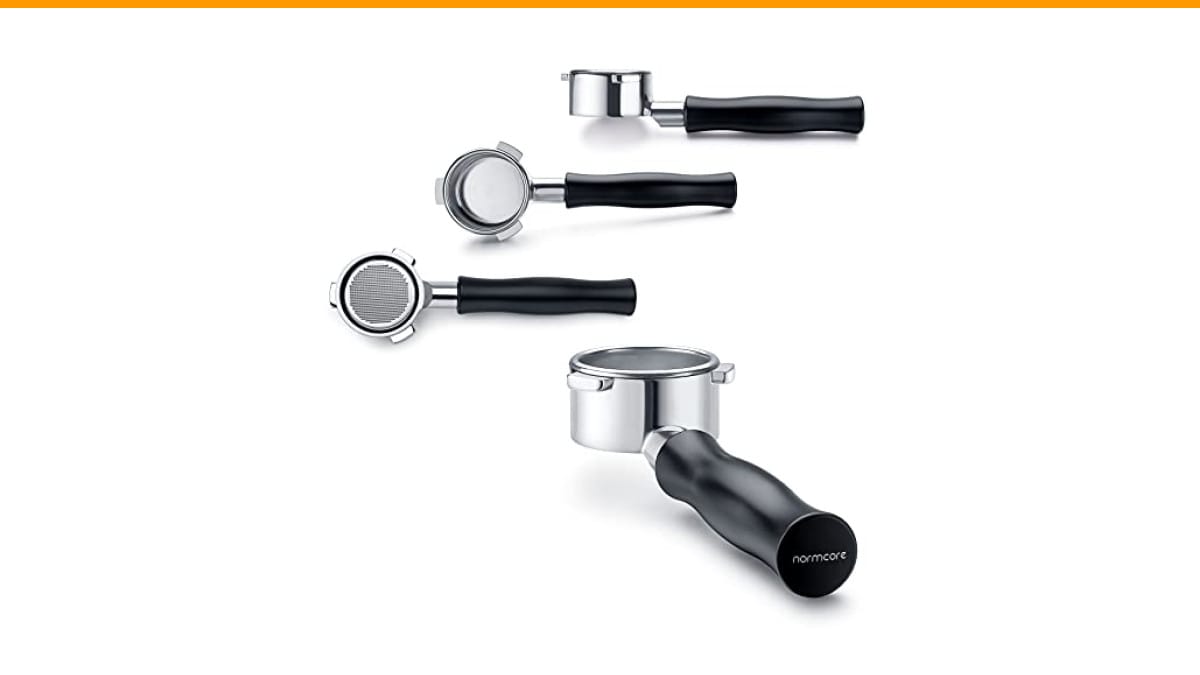
That curiosity is fair. A bottomless (or naked) portafilter removes the bottom of the basket housing, exposing the basket’s underside. It turns your espresso machine into a window into the extraction. But is it a must-have tool, or just another gadget that collects dust? This article covers what a bottomless portafilter actually does, where it helps, where it doesn’t, and whether your workflow justifies the purchase.
Normcore
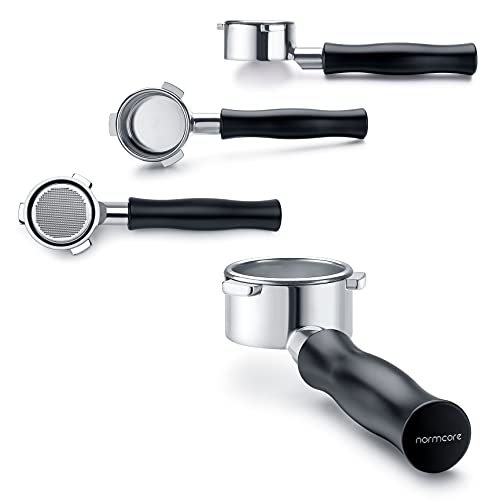
Normcore 54mm Bottomless Portafilter, Naked Portafilter Fits…
- Normcore Bottomless Portafilter
- Precise Pouring – A bottomless portafilter is an important piece of equipment that aids in diagnosing espresso extraction issues.…
- Premium Made – All Anodized Aluminum handles have been manually lathed with expertise and unparalleled quality finish.
As an Amazon Associate I earn from qualifying purchases.
We’ll also look at a specific option for Breville owners, compare it against the stock spouted version, and answer the questions people ask most before they buy.
If you own a Breville Barista Express or similar 54mm machine, the Normcore 54mm Bottomless Portafilter is a popular drop-in upgrade. It ships with an 18g basket and fits the same group head, so you don’t need to modify anything. We’ll reference it throughout this guide as a concrete example, but the principles apply to any naked portafilter.
What a Bottomless Portafilter Actually Changes
Take the spout assembly off a standard portafilter and you get a naked one. That’s the mechanical difference. The functional difference is visibility. With the bottom open, you watch the entire extraction from the first drop to the last.
That view matters because espresso extraction is a race against time. Water hits the puck, dissolves solubles, and flows through. If the water finds a weak spot in the puck, it rushes through that channel and under-extracts the surrounding coffee. You get a thin, sour shot with a pale, fast stream. You can’t see that with a spouted portafilter. You just taste the bad result.
With a bottomless, you see the stream start as dark, syrupy drips. Within a few seconds, it should turn into a single, smooth, honey-like flow. If you see spraying, splattering, or a stream that starts in one spot and then jumps around, your puck prep needs work. That’s the diagnostic power. It turns guesswork into a visual checklist.
There is a learning curve, though. A naked portafilter exposes every flaw in your distribution and tamping. Shots that tasted fine before might suddenly look messy. That’s not the tool’s fault. It’s showing you what was always happening under the spout.
The Real Benefits: Diagnosis, Consistency, and Crema
Let’s break down what a bottomless portafilter does well, with specific numbers and conditions.
1. It Shows You Channeling in Real Time
Channeling is the number one cause of bad espresso at home. It happens when water finds a path of least resistance through the puck. Common causes are uneven tamping, clumpy grounds, or a stale grind. A bottomless portafilter makes channeling obvious within the first five seconds of the shot. You’ll see a thin, fast jet of pale liquid spraying sideways while the rest of the basket barely drips.
That visual feedback is worth more than any YouTube tutorial. Once you see it happen, you understand why your grind setting or distribution technique matters. You can fix the cause immediately instead of guessing after the fact.
2. It Removes a Variable: The Spout’s Effect on Crema
Spouted portafilters force the espresso through a narrow opening. That turbulence can break up crema, especially if the spout has a sharp angle or a ridge inside. A bottomless portafilter lets the espresso fall directly into the cup, preserving the crema structure. The difference is subtle on some machines, but noticeable on others. In side-by-side tests, shots from the same basket and grind often show a thicker, more persistent crema through the naked portafilter.
3. It Makes You a Better Barista, Faster
You can’t ignore your mistakes when they’re spraying across your counter. The naked portafilter forces you to address puck prep. Most people improve their distribution and tamping within a week of switching. That improvement carries over even if you switch back to the spouted version for a double shot.
4. It’s Easier to Clean
No spouts means no nooks for coffee residue to hide. A quick rinse under hot water clears the basket and the portafilter body. The spouted version has an interior chamber that traps oils and old coffee, which can go rancid and add off-flavors to your next shot. This is a small but real advantage for daily use.
That said, the bottomless portafilter isn’t a magic bullet. It won’t fix a bad grinder. It won’t correct stale beans. And it won’t make a pressurized basket behave like a non-pressurized one. It’s a diagnostic tool, not a repair kit.
Where It Falls Short: When You Might Skip It
There are legitimate reasons to pass on a bottomless portafilter.
1. You Use Pressurized Baskets
Pressurized baskets (the ones with a single tiny hole in the bottom) are designed to create crema from stale or coarsely ground coffee. They mask channeling by forcing all the liquid through one orifice. A bottomless portafilter with a pressurized basket defeats the purpose. You won’t see a proper stream, and you won’t get the diagnostic benefit. If you’re still using the pressurized basket that came with your machine, fix that first. A non-pressurized basket is the prerequisite for a naked portafilter to work.
2. You’re Happy with Your Current Shots
If you’re pulling shots that taste great and you don’t care about the visual process, you don’t need one. The spouted portafilter is perfectly functional. It contains mess, splits a shot into two cups, and works fine for milk drinks. The bottomless version is an upgrade in feedback, not in flavor by itself. It helps you make better espresso, but it doesn’t magically improve a mediocre shot.
3. You Have a 51mm Machine
Most budget espresso machines (Delonghi, some older Gaggia models) use a 51mm basket. Bottomless portafilters for 51mm are less common and sometimes poorly made. You can find them, but the selection is thinner. If you have a 54mm Breville or a 58mm standard machine, you have plenty of good options. The Normcore 54mm model fits Breville’s Barista Express, Pro, and similar lines.
4. You’re a Strictly Milk-Drink Drinker
If every drink you make is a latte or cappuccino, the visual feedback matters less. The milk hides most flavor defects anyway. You might still benefit from the improved puck prep, but the immediate payoff is smaller. A bottomless portafilter shines for straight espresso shots and americanos where you taste the coffee directly.
Bottomless vs. Spouted: A Practical Comparison
Here’s a side-by-side look at how the two portafilter types stack up in daily use.
| Feature | Bottomless (Naked) | Spouted (Stock) |
|---|---|---|
| Extraction visibility | Full view of the stream from first drop | None, you only see the spout exit |
| Channeling detection | Immediate, visual (spraying, fast jets) | Only after tasting the shot |
| Crema preservation | Better, no turbulence from spout walls | Can break up crema slightly |
| Mess control | Can spray coffee if puck prep is poor | Contains splatter within the spout |
| Splitting into two cups | Requires a splitter or separate baskets | Built-in dual spout does this |
| Cleaning | Rinse and wipe, no hidden crevices | Interior chamber traps old oils |
| Learning curve | Steep, exposes every mistake | Forgiving, hides flaws |
| Basket compatibility | Accepts any 54mm basket, no depth limit | Limited by the spout housing depth |
The table shows a clear trade-off. A bottomless portafilter gives you information at the cost of a messier learning phase. A spouted portafilter keeps things tidy but keeps you blind.
Real Questions People Ask About Bottomless Portafilters
Will a bottomless portafilter fit my Breville Barista Express?
Yes, if you buy the right size. The Barista Express, Barista Pro, and Barista Touch all use a 54mm group head. The Normcore 54mm model is designed for these machines. It includes an 18g basket that fits the stock group head. Double-check your machine’s portafilter size before ordering, but Breville’s 54mm line is the most common home setup.
Do I need a new basket with a bottomless portafilter?
Not necessarily, but you should use a non-pressurized basket. The stock Breville baskets that come with the machine are often double-walled (pressurized). A bottomless portafilter works best with a single-wall basket. Many aftermarket bottomless portafilters, including the Normcore, ship with a compatible non-pressurized basket. If yours doesn’t, you’ll need to buy one separately.
Will a bottomless portafilter make my espresso taste better?
Not by itself. It won’t change the water temperature, pressure, or grind quality. What it does is show you when your puck prep is wrong, so you can fix it. Most people find their shots improve within a week because they finally see the channeling and adjust their distribution. The taste improvement comes from your changed technique, not the metal.
Is a bottomless portafilter messy?
It can be, especially at first. When your puck prep is off, you’ll get coffee spraying in random directions. That’s the diagnostic feedback working. Once you dial in your grind and tamping, the spray disappears. Most experienced users find the mess is minimal after the first few sessions. Keep a towel nearby for the learning phase.
Can I use a bottomless portafilter with a pressurized basket?
You can physically attach it, but it won’t work well. Pressurized baskets force the espresso through a single small hole, which creates a jet of liquid rather than a proper stream. You lose the visual feedback that makes a bottomless portafilter useful. If you want the benefit, switch to a non-pressurized basket and dial in your grind. That’s a bigger change than the portafilter itself.
What to Do Before You Buy
Before you spend money, check your current setup. Do you have a decent grinder? A bottomless portafilter demands a consistent grind. If you’re using a blade grinder or a pre-ground bag, the naked portafilter will show you chaos. It won’t fix it. You’ll need a burr grinder to get the full benefit. Our grinder comparison explains why burrs matter.
Next, confirm your machine’s portafilter size. Most Breville home machines use 54mm. Most Italian machines (Gaggia, Rancilio, Lelit) use 58mm. The Normcore model we referenced is specifically for 54mm Breville machines. Buying the wrong size is the most common mistake.
Finally, accept the learning curve. Your first few shots with a bottomless portafilter might look terrible. That’s normal. The tool is showing you problems you didn’t know you had. Fix them one at a time: grind finer, distribute more evenly, tamp level. Within a week, you’ll see a steady, beautiful stream.
If you’re still deciding between a new machine and a portafilter upgrade, read our automatic vs. semi-automatic breakdown to see where your current gear sits.
Practical Takeaways
- Buy a bottomless portafilter only if you’re willing to fix your puck prep. It’s a diagnostic tool, not a flavor enhancer.
- Pair it with a non-pressurized basket. A pressurized basket defeats the entire purpose.
- Expect a mess for the first few shots. Spraying is feedback, not failure.
- Check your portafilter size first. 54mm for Breville, 58mm for most Italian machines.
- Use a burr grinder. A blade grinder produces uneven particles that cause channeling, which the bottomless portafilter will mercilessly expose.
- Clean it after every shot. It’s easier than a spouted portafilter, but old coffee oils still build up.
- Keep your spouted portafilter for when you need to split a shot into two cups or when you’re in a hurry and don’t want to deal with splatter.
A bottomless portafilter isn’t necessary in the strict sense. You can make excellent espresso without one. But for anyone serious about improving their shots, it’s the fastest way to learn what’s actually happening inside the basket. The visibility is worth the mess. Start with a good one that fits your machine, and give yourself a week to adapt. You’ll pull better shots because you’ll finally see what you’ve been doing wrong.
Products related to this article
Sponsored / affiliate links. As an Amazon Associate I earn from qualifying purchases. I may earn additional commission from eligible campaigns.
 Coffee Espresso Machine Handle Replacement Parts, Cafe Bracket Handle for Lidl Silvercrest CM4621 CM4218 KF5002 KF500S Barista (for 51mm Portafilter Basket - Not included)
 Quick Heating Cup Warmer, Three Temperature Settings, Splashproof and Portable, for Coffee, Milk, Lightweight ABS Material
 Cup Warmer for Coffee 8 Temperature Setting Adjustment