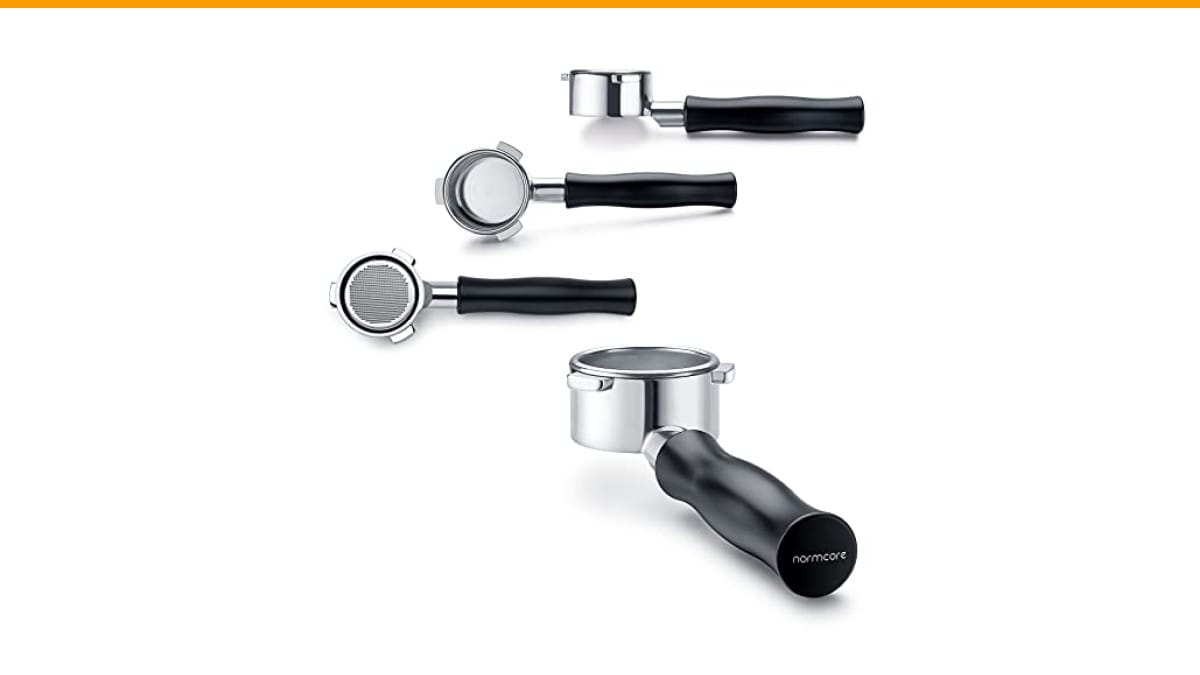
What Is a Bottomless Portafilter and Why Does It Matter?
You tamped, you timed, and the shot still came out bitter. Or it ran too fast, or it dripped like a leaky faucet. The machine works fine. The grinder is decent. The problem is you’re flying blind.
A spouted portafilter hides everything below the basket. You see the stream after it merges, but you can’t see how it got there. A bottomless portafilter removes the floor and the spouts. You watch the coffee emerge directly from the basket holes. That single change turns your espresso machine into a diagnostic tool.
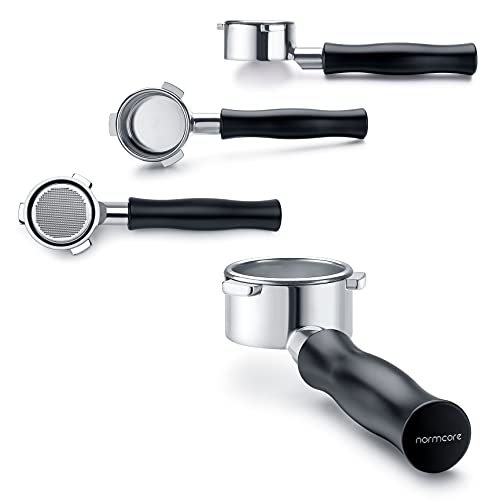
Normcore
Normcore 54mm Bottomless Portafilter, Naked Portafilter Fits…
- Normcore Bottomless Portafilter
- Precise Pouring – A bottomless portafilter is an important piece of equipment that aids in diagnosing espresso extraction issues.…
- Premium Made – All Anodized Aluminum handles have been manually lathed with expertise and unparalleled quality finish.
As an Amazon Associate I earn from qualifying purchases.
This guide covers the specs that actually matter when picking one, how to read the flow to fix your puck prep, and whether you should even bother if you use pre-ground coffee. You’ll walk away knowing exactly what to look for and what to do with the information it gives you.
If you own a Breville Barista Express or Pro, the Check Price on Amazon is a solid starting point. It includes an 18g filter basket, which removes the guesswork of buying a separate one, and the anodized aluminum handle feels balanced in the hand. It’s not the only option, but it’s a clean fit for those machines.
The 4 Real Benefits (and 2 Hidden Drawbacks) of Going Naked
Most people switch for one reason: they want to see channeling. That’s valid, but it’s not the whole story.
Benefit 1: You finally see your mistakes
Channeling happens when water finds a weak path through the puck. You get a thin, fast stream and sour espresso. With a spouted portafilter, you only notice the bad taste. With a bottomless one, you watch a jet of coffee spray sideways. It’s humbling and immediately useful.
Benefit 2: Better crema and body
When the puck is even, the water extracts uniformly. That builds a thicker crema and a fuller mouthfeel. The naked portafilter doesn’t create crema by itself. It just shows you when you’re doing it right, and that feedback loop pushes you toward better shots.
Benefit 3: Easier cleaning
No spouts means no coffee oils collecting in narrow channels. You rinse the basket and wipe the rim. That’s it. The spouted ones get grimy inside the spout threads, and they’re annoying to scrub.
Benefit 4: Fits any basket size
Because there’s no bottom, you’re not limited by the depth of the spout housing. You can drop in a triple basket, a high-wall precision basket, or a flat-bottom one. The portafilter body just holds the basket in place. That flexibility matters if you experiment with dose.
Drawback 1: Messy countertops
When you’re learning, coffee sprays. It gets on the cup, the scale, and the drip tray. You’ll wipe down more often. It’s a fair trade for the information you gain, but it’s worth knowing before you commit.
Drawback 2: Less thermal stability in cheap models
Some budget bottomless portafilters use thin metal that cools down fast. The group head heats the basket, but a flimsy body can wick heat away. If you pull back-to-back shots, you might notice the second one runs slower. Premium handles and thicker metal mitigate this.
How to Choose a Bottomless Portafilter: The 5 Critical Specs
Not all portafilters fit all machines. Here’s what to check before you click buy.
1. Machine Compatibility (Ear Count, Thickness, and Lug Angle)
The ears are the two metal tabs that lock into the group head. Most machines use two ears, but some commercial groups use three. Measure your original portafilter’s ear thickness with calipers. A 54mm Breville machine uses a specific lug angle and thickness that differs from a 58mm E61 group. Buying a 58mm portafilter for a 54mm machine won’t work. The Normcore 54mm option is designed for Breville Barista Express and Pro models, so it matches those ears exactly. For other machines, check the manufacturer’s compatibility list carefully.
2. Basket Grade, Hole Count, and Depth
The basket matters more than the handle. Standard baskets have fewer holes and a rounded edge. Precision baskets, like IMS or VST, have more holes, often 300 to 600, and a flat edge for a better seal. The depth controls your dose. A double basket typically holds 14–18g. A triple holds 20–24g. If you use 18g, a triple basket leaves too much headspace, which causes soupy pucks and under-extraction. Match the basket depth to your dose. The included 18g basket in the Normcore kit is a good middle ground for most home setups.
3. Handle Material, Weight, and Ergonomics
You’ll grip this thing daily. A heavy wooden handle looks beautiful but can feel awkward during a 3 AM pre-work shot. Anodized aluminum is lighter and stays cool to the touch. The Normcore handle is lathed by hand, so the surface is smooth and the weight is distributed well. A balanced handle makes tamping easier because the portafilter sits flat on the counter without tipping.
4. Basket Retention Spring
Check if the portafilter includes a spring that holds the basket in place. Without it, the basket falls out when you knock the puck out. Most quality bottomless models include one, but cheap generics sometimes skip it. That’s a 50-cent part that saves you a lot of frustration.
5. Finish and Coating
Brushed metal shows water spots. Matte finishes hide fingerprints but can wear unevenly. Polished chrome is classic but slippery when wet. Pick a finish you’re willing to maintain. The anodized finish on the Normcore resists staining from coffee oils better than bare aluminum.
How to Read Your Extraction Like a Pro (Visual Flow Diagnosis)
Here’s where the bottomless portafilter earns its keep. You’re looking for three things: time to first drop, flow rate, and color.
A good shot starts with a slow, dark drip after about 5–8 seconds. Then the flow turns into a thin, uniform stream that looks like warm honey. The color should shift from dark brown to a lighter hazelnut as the shot progresses. If it blondes (turns pale yellow) before 25 seconds, you’ve under-extracted.
Fixing Channeling, Spraying, and Early Blonding
Spraying to the left or right means the water is finding a channel on that side. The fix is usually distribution. Your puck is denser on one side than the other. Use a WDT tool to break up clumps and level the grounds before tamping. A level, even tamp fixes most of this.
If the flow starts in the center and then suddenly jets out, the puck is cracking. This happens when you tamp too hard or use too fine a grind. Ease off the pressure and grind coarser.
Early blonding, before 20 seconds, points to a coarse grind or a low dose. Grind finer and add a gram or two. If the shot chokes (drips slowly or not at all), grind coarser or reduce the dose. You’re looking for a 25–30 second pull with a 1:2 ratio. Adjust one variable at a time.
Bottomless vs. Pressurized: Which One Is Right for Your Grinder?
This is the fork in the road. Pressurized baskets use a single small hole to build pressure artificially. They forgive stale coffee, pre-ground supermarket grinds, and sloppy tamping. The downside is a fake crema and a flat, one-note flavor.
Bottomless portafilters demand a real espresso grinder. You need a burr grinder that can dial in fine enough. If you’re using pre-ground coffee in a can, a bottomless portafilter will spray everywhere and taste sour. It’s not the tool for that situation.
Here’s a side-by-side comparison to help you decide.
| Feature | Bottomless (Naked) | Pressurized |
|---|---|---|
| Best for | Fresh beans + burr grinder | Pre-ground or blade grinder |
| Crema quality | Real, textured, depends on bean freshness | Artificial, thick, but dissipates fast |
| Diagnostic value | High – you see channeling and spray | None – issues are hidden |
| Difficulty | Steep learning curve | Forgiving, easy |
| Flavor ceiling | High – can highlight origin notes | Low – muted, muddy flavors |
| Puck prep required | WDT, leveling, consistent tamp | Minimal, just don’t overfill |
If you’re still using a blade grinder, save your money. Buy a decent burr grinder first. The portafilter won’t fix bad grind consistency. If you have a grinder like a Baratza Encore or better, go bottomless. You’ll taste the difference immediately.
Your First Pull: A 5-Step Beginner’s Checklist
Here’s a simple routine to get a clean shot on your first try with a bottomless portafilter.
- Weigh your beans. Use 18g if you have a double basket. Don’t eyeball it. The dose determines everything else.
- Grind fine, but not too fine. Aim for a texture like table salt. If it’s powdery like flour, it’s too fine. If it’s gritty like sand, it’s too coarse.
- Distribute with a WDT tool. Stir the grounds in the basket to break up clumps. Then tap the side to level the bed. This takes 10 seconds and prevents most channeling.
- Tamp level and firm. Put the portafilter on a flat counter. Push straight down with about 15 kg of pressure. Don’t twist at the end; that just cracks the puck.
- Pull the shot and watch. Start the timer. Look for the first drop at 5–8 seconds. If it sprays, note which side. If it blondes early, note the time. Adjust grind size by one notch and try again.
That’s it. You’re not chasing perfection on the first pull. You’re building a baseline. The bottomless portafilter shows you exactly what to change next time.
Frequently Asked Questions
Will a bottomless portafilter fit my Breville Barista Express?
Yes, if you buy the 54mm version. Breville uses a 54mm group head, which is smaller than the standard 58mm used by most Italian machines. The Normcore 54mm model is made specifically for Breville Barista Express and Pro. Check your model number before buying; the Barista Touch uses the same 54mm size.
Do I need a special basket for a bottomless portafilter?
No, but you should use a precision basket for best results. The included 18g basket works fine. If you upgrade to an IMS or VST basket, make sure it’s 54mm and matches your dose. A triple basket in a portafilter designed for a double will have too much headspace.
Why does my espresso spray everywhere?
That’s channeling. The water is forcing through a weak spot in the puck. Fix the distribution first with a WDT tool. Then check your tamp is level. If it still sprays, your grind is too coarse or your dose is too low. Grind finer and add a gram of coffee.
Can I use pre-ground coffee with a bottomless portafilter?
You can, but you’ll hate the result. Pre-ground coffee is ground for drip machines, not espresso. It’s too coarse and too stale. The water will rush through and you’ll get a thin, sour shot that sprays. Stick with a pressurized basket until you buy a burr grinder.
Is an expensive bottomless portafilter worth it over a cheap one?
Sometimes. You’re paying for three things: precise machining of the ears (so it locks in without wobble), a better handle finish, and a reliable basket spring. A $20 generic might fit fine, but it might also leak around the group head gasket. The Normcore sits in the middle—it’s not the most expensive, but it’s machined well enough to seal properly. Check the return policy and read recent reviews for fit issues.
The Bottom Line: Is It Worth the Upgrade?
If you’re serious about espresso, yes. A bottomless portafilter is the cheapest diagnostic tool you can buy. It won’t make your coffee taste better on its own. It will make you a better barista by showing you exactly where you’re failing.
Here’s what to remember when shopping.
- Match the diameter and ear geometry to your machine. 54mm for Breville, 58mm for most others.
- Buy a model with a basket included. It saves you a separate purchase and ensures a proper fit.
- Get a precision basket with 300+ holes if you can. It improves flow consistency.
- Skip the wooden handle if you care about weight. Anodized aluminum is lighter and easier to clean.
- Use a WDT tool before tamping. It solves most channeling issues.
- Don’t upgrade until you own a burr grinder. The portafilter is useless with pre-ground coffee.
- Expect a mess for the first week. That’s the learning curve. It gets cleaner as your puck prep improves.
Take the plunge. Your shots will get better, and you’ll finally understand what the machine is doing. For a quick refresher on keeping your gear clean, check our coffee grinder cleaning guide—a clean grinder is just as important as a naked portafilter.
Products related to this article
Sponsored / affiliate links. As an Amazon Associate I earn from qualifying purchases. I may earn additional commission from eligible campaigns.
 Coffee Espresso Machine Handle Replacement Parts, Cafe Bracket Handle for Lidl Silvercrest CM4621 CM4218 KF5002 KF500S Barista (for 51mm Portafilter Basket - Not included)
 Linnkyfloa Coffee Espresso Maker Handle Replacement for Stovetop Moka Pot or Percolator, Black Plastic for Spare Part Compatible with Italian(9-12 Cup)
 AirheadStorm Coffee Espresso Moka Stove Pot Handle, Mocha Pot Handle, Moka Express Handle Replacement Handle Parts for Espresso Pots 1 3 6 9-12 Cups(6 Cup)