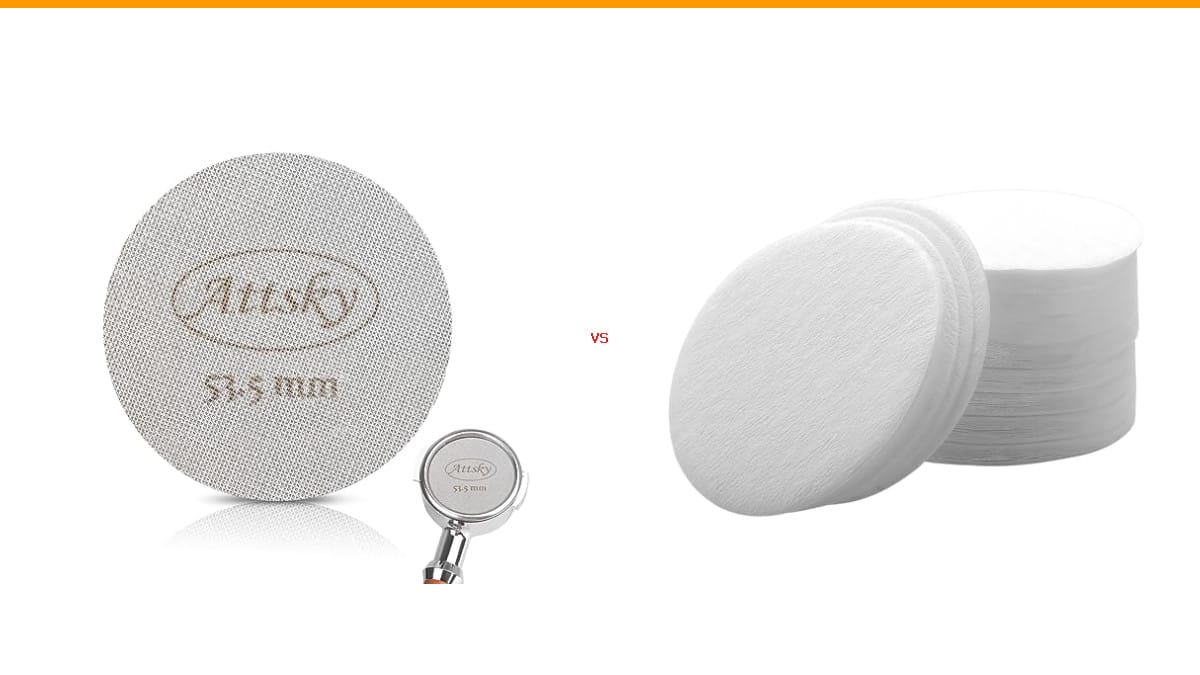
Every espresso drinker hits the same fork in the road eventually: do you put a metal screen on top of your puck, or a paper filter underneath it? Both promise fewer channeling headaches and a cleaner shot. But they work in completely different ways, and the right pick depends on your roast, your basket, and how much fiddling you enjoy.
| Our Pick | Runner Up |

|
|
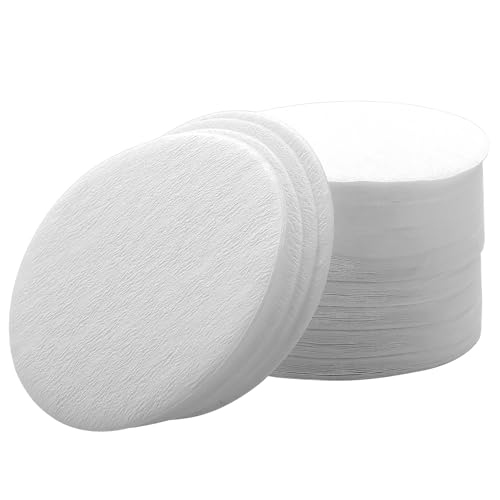
| Attsky Attsky 53.5mm Espresso Puck Screen for 54mm… | Normcore Normcore 58mm Espresso Paper Filters - Replacement… |
| See on Amazon | See on Amazon |
As an Amazon Associate I earn from qualifying purchases.
I’ve spent weeks running both the Attsky 53.5mm puck screen and the Normcore 58mm paper filters through my home setup. I pulled back-to-back shots, tasted them blind, and cleaned up after each. This is not a spec-sheet showdown. It’s a real-world comparison of what each filter does to your espresso, your machine, and your daily routine.
Spoiler: one of them will be a permanent fixture in my workflow. The other gets pulled out only for specific roasts. Read on to see which is which.
The Real Problem: Channeling and Puck Integrity
Channeling is the enemy. Water finds the path of least resistance through your coffee bed, and you get a sour, watery shot with no body. Both filters attack this problem, but from opposite ends.
The Attsky puck screen sits on top of the puck, acting as a hydraulic disperser. It spreads the incoming water across the entire surface instead of letting it drill a hole in one spot. The Normcore paper filter sits below the puck, catching fines that would otherwise clog the basket and cause uneven flow.
Which one matters more? Depends on your grinder. If your grinder produces a lot of fines, the paper filter is doing heavy lifting. If your grinder is already clean and consistent, the puck screen handles the water distribution better.
Puck Screen 101: Mechanics and Hydraulic Dispersion
The Attsky screen is a 1.7mm thick disc of 150-micron stainless steel mesh. It’s built for 54mm portafilters, so it fits snugly on top of a properly dosed puck. The mesh is fine enough to break up the water stream, but open enough that it doesn’t create excessive hydraulic resistance.
What does that mean in the cup? More even extraction. I noticed my shots ran slower and more uniformly, especially with medium roasts. The screen also keeps the group head clean—no more sludge stuck to the shower screen after every shot. That alone saves me a good five minutes of wiping and backflushing each day.
It’s reusable, which is the big selling point. Rinse it under running water, give it a blast with steam, and it’s ready to go. I’ve had mine for months and it still looks brand new.
But it’s not perfect. The 53.5mm diameter means it only works with 54mm baskets. If you’ve got a 58mm portafilter, this screen won’t fit. And you have to dose correctly—too little coffee and the screen rattles around, too much and it presses into the group head.
Paper Filter 101: The Bottom-Up Extraction Advantage
The Normcore paper filters are precision-cut 58mm discs made from Japanese virgin pulp. They’re designed to sit at the bottom of the basket, under the coffee. The paper catches fines and prevents them from migrating into the cup or clogging the basket holes.
The result is a cleaner, brighter shot. I tasted a noticeable difference with light roasts—the acidity was more pronounced, the flavors were more distinct. The paper also absorbs some of the oils, which means less body and a thinner mouthfeel. That’s a trade-off some people love, some hate.
Each box comes with 200 filters and a storage tube. The tube is a nice touch—keeps them dust-free and organized. But you’re buying consumables. At roughly 20 cents per filter, it adds up. If you pull two shots a day, that’s about $15 a month, forever.
The paper is food-grade and chemical-free, so no weird flavors. It’s also biodegradable, which softens the environmental blow. But you’re still generating waste every single day.
Head-to-Head: Puck Screen vs. Paper Filter
| Feature | Attsky 53.5mm Puck Screen | Normcore 58mm Paper Filter |
|---|---|---|
| Material | Stainless steel mesh (150 micron) | Japanese virgin pulp paper |
| Reusability | Reusable for years | Single-use, 200 per box |
| Compatibility | 54mm portafilter baskets | 58mm portafilter baskets |
| Effect on flavor | More body, balanced extraction | Higher clarity, less body |
| Maintenance | Rinse and dry | Discard after each shot |
| Cost per shot | One-time purchase | Recurring cost |
Flavor Profile and Mouthfeel
Here’s where the decision gets real. The Attsky screen gives you a thicker, syrupy espresso. The mesh doesn’t absorb oils, so you get that full-bodied mouthfeel that dark roast lovers crave. The Normcore paper strips out the oils, leaving a cleaner cup with sharper acidity. For light roasts, that’s a win. For dark roasts, it can taste thin.
I pulled the same Ethiopian light roast through both. The paper filter gave me notes of bergamot and jasmine, clear as day. The puck screen blurred those into a muddy, fruit-forward mess. But with an Indonesian dark roast, the puck screen produced a rich, chocolatey shot that the paper filter made taste like tea.
Maintenance and Cleanup
The puck screen wins here, no contest. Rinse it, dry it, done. The paper filter means you’re throwing away a disc after every shot and keeping the storage tube stocked. If you’re the type who hates daily cleaning, the screen is your friend.
But the paper filter keeps your basket cleaner. Fines get trapped in the paper, not in the basket holes. My bottomless portafilter needed a deep clean after a week of paper filters. With the puck screen, I had to scrub the basket every few days.
Cost and Sustainability
Over a year, the Attsky screen costs you nothing after the initial purchase. The Normcore filters, at 200 per box, will set you back around $20–25 per box. If you use one per shot, that’s a box every two months or so. The environmental impact is real—paper waste vs. metal production. The screen is the greener choice long-term.
The Hybrid ‘Double Filter’ Method: Best of Both Worlds
Here’s the trick I’ve settled on: use both. Put a paper filter at the bottom of the basket, dose your coffee, then drop the puck screen on top. This gives you the fines control from below and the water dispersion from above. It’s called the double filter method, and it’s popular with competition baristas.
Assembly Order and Dose Adjustment
The order matters. Paper filter first, then coffee, then screen. You’ll need to reduce your dose by about 1 gram because the paper takes up headroom. I dropped from 18g to 17g and got the same pressure and flow.
This method is overkill for most daily shots. It’s a ritual for weekends or special beans. But the flavor clarity is unmatched—I got the cleanest, most balanced shots of my life with this setup.
When to Skip the Hybrid
If you’re using a dark roast and want maximum body, skip the paper. The oils are the point. If you’re using a super-fine grinder that already produces few fines, the paper adds nothing but cost. And if you’re in a rush, the extra step gets annoying.
Compatibility Guide: Baskets, Grinders, and Machines
The Attsky screen is specifically for 54mm portafilters, which are common in Breville and Sage machines. The Normcore filters are for 58mm baskets, the standard for most commercial and prosumer machines like Rancilio and Gaggia. Double-check your basket size before buying—a 53.5mm screen won’t fit a 58mm basket, and a 58mm paper filter will buckle in a 54mm basket.
Your grinder matters too. If you’re using a high-end grinder with minimal fines, the paper filter’s benefit shrinks. If you’re using a budget grinder that spits out dust, the paper filter is a lifesaver.
Troubleshooting Common Filter Failures
Soggy puck after using paper filter? Your dose is too low. Add 0.5g and re-test.
Slow flow with puck screen? The screen might be clogged with coffee oils. Soak it in a descaling solution for 20 minutes, then rinse.
Channeling still happening? Check your basket. A worn or cheap basket can cause uneven flow regardless of filter. Also, make sure your tamp is level—a tilt will cause channeling through the side.
Paper filter tearing? You’re using too much pressure when seating it. Gently press it flat against the basket bottom.
Final Verdict: Which One Should You Buy?
For most home espresso drinkers, the Attsky puck screen is the better buy. It’s a one-time purchase, works for years, and improves extraction without changing the flavor profile. The Normcore paper filter is a great tool for light roasts and for dialing in clarity, but the recurring cost and waste make it a specialty item.
If you’re on a budget, get the Attsky. If you’re a light-roast connoisseur, get the Normcore. If you’re like me and want the best of both, get both and use the hybrid method on weekends. You won’t regret it.
For more help with your espresso setup, check out our automatic espresso machine guide or troubleshoot common issues like loud noises and water leaks.
FAQ
Can I use a puck screen with paper filters together?
Yes, and it’s called the hybrid method. Put the paper at the bottom, dose, then place the screen on top. Reduce your dose by 1 gram to keep the same headroom.
Do paper filters affect crema?
They can reduce crema slightly because they absorb some oils. The puck screen preserves crema better, giving you a richer, thicker layer.
How long does a puck screen last?
Years, if you clean it regularly. Rinse after each shot and deep-clean monthly. I’ve had mine for over a year with no signs of wear.
Which filter is better for dark roasts?
The puck screen. Dark roasts have more oils that you want to keep. Paper filters strip them out, leaving a thinner cup.
Products related to this article
Sponsored / affiliate links. As an Amazon Associate I earn from qualifying purchases. I may earn additional commission from eligible campaigns.
 Stainless Steel Moka Pot Coffee Filter Disc for Espresso Brewing, Coffee Maker Replacement Filter Plate for Home Office Coffee Bar Cafe (FOR 4 Cups)
 Coffee Espresso Machine Handle Replacement Parts, Cafe Bracket Handle for Lidl Silvercrest CM4621 CM4218 KF5002 KF500S Barista (for 51mm Portafilter Basket - Not included)
 AirheadStorm Coffee Espresso Moka Stove Pot Handle, Mocha Pot Handle, Moka Express Handle Replacement Handle Parts for Espresso Pots 1 3 6 9-12 Cups(6 Cup)