You pull a shot and the crema looks thin. The stream from the portafilter sputters instead of flowing steady. Or worse, the machine flashes the CLEAN ME light right before guests arrive. Most owners ignore that warning until the coffee tastes like burnt rubber. That’s a mistake.
This guide walks through every cleaning task for the Barista Express, from the daily steam wand wipe-down to the monthly backflush and the descaling cycle. You’ll learn the exact tools, the step-by-step process, and how to read the machine’s error lights. No guesswork, no ruined gaskets, no metallic aftertaste.

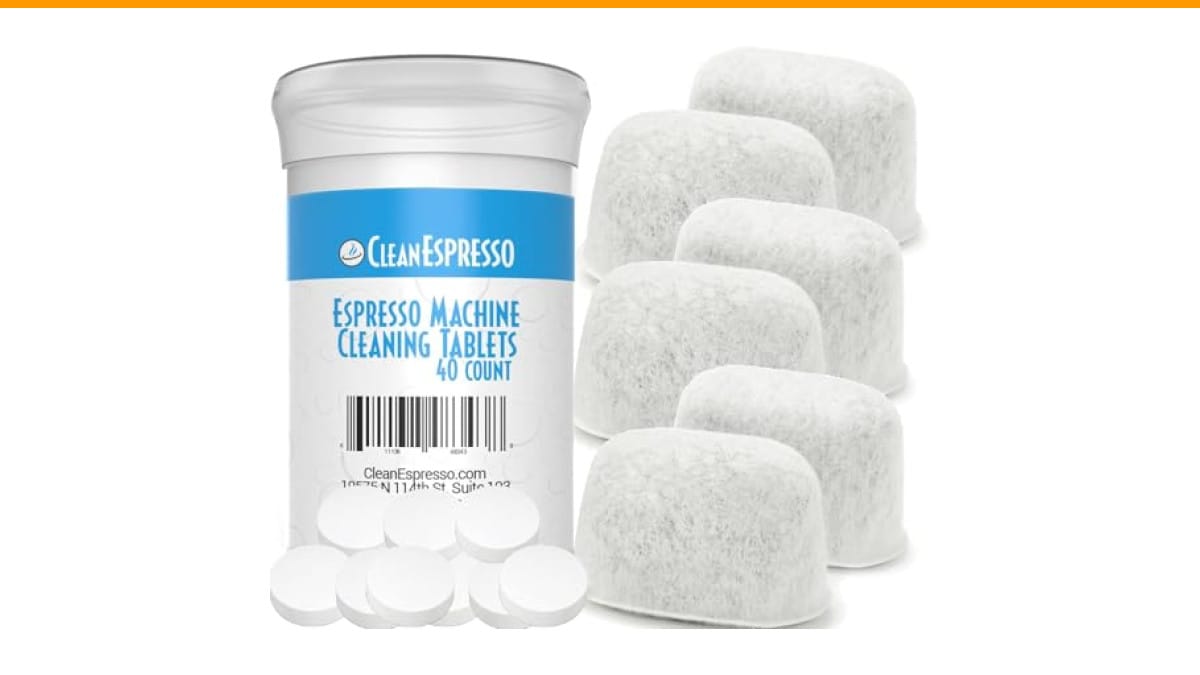
CleanEspresso
CleanEspresso - Designed For Breville Cleaning Kit…
- BETTER TASTE: Get better tasting espresso & cappuccino by removing oily buildup inside your machine and keeping its parts clean
- 2 GRAM TABLETS: Effectively cleans Breville espresso machines without hassle or waste, offering double the cleaning power compared…
- DESIGNED FOR BREVILLE MACHINES: Breville Brewer Cleaning Tablets Designed For Use With Most Models: Including Barista Express, bes…
As an Amazon Associate I earn from qualifying purchases.
A good cleaning kit makes this routine painless. The CleanEspresso Designed for Breville Cleaning Kit includes 40 two-gram cleaning tablets and six water filters. The tablets hold up to the machine’s backflush pressure better than the one-gram versions, and the filters replace the BWF 100 model. Check the current price on Amazon if you want a single-box solution.
Why Cleaning Your Barista Express Matters
Coffee contains oils. Those oils coat the group head, the three-way valve, and the inner walls of the brew boiler. Left alone, they turn rancid and sticky. That rancid layer is what makes your espresso taste bitter or sour even with fresh beans.
Scale is the second enemy. Hard water deposits calcium and magnesium inside the thermocoil. A thin layer of scale acts like insulation, making the machine work harder to heat water. Over time, that leads to temperature instability and longer shot times.
There’s also a hygiene factor. Milk residue in the steam wand harbors bacteria. Old coffee grounds in the portafilter and drip tray attract mold. A clean machine isn’t just about taste—it’s about not drinking week-old sludge.
What You Need: Tools and Cleaning Agents
Gather these before you start. Most are included with the machine or cost a few dollars.
- Cleaning tablets (like the CleanEspresso kit mentioned above) or a generic espresso cleaner powder
- Blind filter basket (the rubber-plugged basket that came with your machine)
- Descaling solution—use Breville’s official descaler or a food-grade citric acid mix
- Microfiber cloths—two or three, so you’re not wiping milk with a dirty rag
- Small brush (a toothbrush works) for the grinder chute and gasket
- Bottle brush for the water tank and drip tray
One note on tablets: the Barista Express backflush cycle runs about 30 seconds with a 10-second pause. Cheap one-gram tablets dissolve too fast and lose their cleaning power before the cycle finishes. The two-gram tablets in the CleanEspresso kit stay intact longer, which is why they work better in this specific machine.
Don’t use dish soap on the group head or inside the brew boiler. Soap leaves a film that ruins crema production. Stick to dedicated espresso cleaners.
Daily & Weekly Cleaning: Steam Wand, Portafilter, and Drip Tray
Daily cleaning takes two minutes. Do it every time you finish making coffee.
- Wipe the steam wand with a damp cloth immediately after steaming milk. The residual heat makes dried milk easier to remove.
- Purge the wand for two seconds to clear milk from the internal tube.
- Knock out the spent puck, rinse the portafilter and basket under hot running water.
- Empty and rinse the drip tray if it looks full or dirty.
Once a week, do a deeper pass. Remove the portafilter’s plastic insert and soak both the insert and the basket in hot water with a drop of dish soap. Rinse thoroughly. Check the steam wand tip for clogged holes—if the steam comes out uneven, soak the tip in hot water for 10 minutes, then poke the holes with a pin.
Most people skip the grinder hopper. Once a week, empty the beans and wipe the hopper interior with a dry cloth. Coffee oils from beans make the hopper walls sticky, and old grounds mix with fresh ones, dulling your shot’s flavor.
For a full guide on steam wand maintenance, see our steam wand cleaning guide.
The Monthly Backflush: Group Head and Three-Way Valve Deep Clean
Backflushing pushes cleaning solution backward through the group head and into the three-way valve. This flushes out coffee oils and grounds that no amount of surface wiping can reach. Do this every 200 shots or once a month, whichever comes first.
Step-by-Step Backflush with Cleaning Tablet
- Insert the blind filter basket into the portafilter.
- Drop one cleaning tablet into the basket.
- Lock the portafilter into the group head.
- Press the single cup button. Let the cycle run until it stops.
- Wait 10 seconds, then press the single cup button again.
- Repeat this cycle until the machine has run about five full cycles or the water runs clear.
- Remove the portafilter, rinse the blind basket, and run two blank shots (no coffee) with the regular basket to flush any cleaner residue.
You’ll see murky, brown water during the first few cycles. That’s the dissolved oils coming out. The water should run clear by the fourth or fifth cycle. If it stays dark, run another cycle.
How to Clean the Shower Screen and Gasket
After backflushing, take a closer look at the shower screen. It sits at the top of the group head and distributes water over the puck. Over time, it gets coated with a hard, baked-on layer of coffee oil.
You can remove it. Use a flathead screwdriver to gently pry the screen off its retaining screw. The screw is a standard Phillips head. Once off, soak the screen in a bowl of hot water with a cleaning tablet dissolved in it for 15 minutes. Scrub with a soft brush, rinse, and reinstall.
The rubber gasket (the black ring behind the screen) also needs attention. Wipe it with a damp cloth after the soak. If it feels hard, cracked, or no longer seals tightly, replace it. A worn gasket causes channeling—water takes the path of least resistance, leaving dry spots in the puck and weak extraction.
If the CLEAN ME light stays on even after a proper backflush, check our guide on resetting the clean and descale lights.
Descaling: Protecting the Thermocoil from Scale
Backflushing cleans oils. Descaling removes mineral scale. They’re different jobs, and you need both.
When to Descale (Hard Water vs. Soft Water)
The descale interval depends entirely on your water. The machine’s manual says every 3-6 months, but that’s a guess.
If you have hard water (above 150 ppm calcium carbonate), descale every 2-3 months. You’ll know you have hard water if your kettle develops white crust or your shower glass spots up quickly. If you use soft water (below 60 ppm) or filtered water, you can stretch to every 6 months.
The machine also tracks this internally. When it decides scale is building up, the DESCALE light glows orange. Don’t ignore it—running a heavily scaled machine risks permanent thermocoil damage.
Step-by-Step Descaling Cycle and Reset
- Remove the water filter from the tank.
- Fill the tank to the MAX line with a descaling solution mixed per the product instructions (usually one part solution to two parts water).
- Place a large container (at least 2 liters) under the steam wand and another under the group head.
- Enter descale mode: turn the machine off, then hold the 2-CUP button while powering on. Release when the DESCALE light flashes.
- Press the 1-CUP button to start. The machine will run the cycle automatically, pausing to let the solution soak.
- When the tank empties, refill with fresh water and run another cycle to rinse.
- The machine exits descale mode automatically when done.
After descaling, the first two shots you pull will taste metallic or flat. That’s residual solution in the lines. Discard those shots, then pull a third and taste it. If it still tastes off, run another water-only cycle through the group head.
Grinder Maintenance: Burrs, Chute, and Anti-Static Flap
The integrated grinder gets ignored because it’s not visible. That’s a mistake. Ground coffee accumulates in the chute and behind the anti-static flap, going stale and contaminating fresh grounds.
Every two weeks, remove the hopper and brush out the visible grounds. The anti-static flap sits at the bottom of the chute—it’s the little rubber flap that reduces static clumping. Gently pull it aside and brush behind it. You’ll be surprised how much old coffee hides there.
For a deeper clean, remove the upper burr. Twist the burr carrier counterclockwise and lift it out. Brush the burrs with a stiff brush, then vacuum the chute area. Do not use water on the burrs—moisture causes rust. Reinstall the burr carrier and give it a quarter-turn to lock it back in place.
If your grinder is producing inconsistent grounds or clogging, read our article on common Barista Express grinder problems.
Troubleshooting: CLEAN ME vs. DESCALE Light Errors
The machine’s error lights confuse a lot of owners. Here’s how to tell them apart and what to do.
| Light | Color | Meaning | Fix | Reset |
|---|---|---|---|---|
| CLEAN ME | Red/Orange | Backflush needed (oils built up) | Run backflush cycle with tablet | Machine auto-resets after cycle |
| DESCALE | Orange | Scale detected in thermocoil | Run descale cycle with solution | Hold 1-CUP + 2-CUP during startup to reset manually |
| Both lights flashing | Red + Orange | Descale cycle incomplete or error | Rerun descale, ensure tank is full | Power cycle after successful descale |
If the CLEAN ME light flashes but you just backflushed, check the blind basket. If the rubber gasket is worn, water leaks past it and the machine doesn’t register pressure, so it never starts the cleaning cycle. Replace the gasket.
If the DESCALE light stays solid after a completed cycle, the machine didn’t register the rinse. Unplug it for 30 seconds, plug it back in, and run a water-only cycle through the group head.
The Complete Cleaning Schedule (Cheat Sheet)
Print this or save it to your phone. Stick to it and your machine will outlast your countertop.
- After every use: wipe steam wand, purge it, rinse portafilter and basket.
- Weekly: deep-clean portafilter insert, soak steam wand tip, wipe grinder hopper.
- Every 2 weeks: clean grinder chute and anti-static flap.
- Monthly or every 200 shots: backflush with tablet, clean shower screen and gasket.
- Every 2-3 months (hard water) or 6 months (soft water): descale, replace water filter.
- Every 6-12 months: replace group head gasket, inspect shower screen for wear.
The water filter replacement matters more than people think. A clogged filter restricts flow and makes the pump work harder. The CleanEspresso kit includes six filters, which covers a year of replacements.
FAQ: Vinegar, Dishwasher, and Post-Cleaning Taste Issues
Can I use vinegar instead of descaling solution?
Technically yes, but it’s not a good idea. Vinegar is acetic acid, which is weaker than the citric or lactic acid in commercial descalers. It takes multiple cycles to work, and the vinegar smell lingers in the machine’s plastic tubing for weeks. If you must use vinegar, use a 1:3 ratio of white vinegar to water, run the cycle, then run three water-only cycles to rinse. The metallic aftertaste risk is higher with vinegar.
Can I put the portafilter in the dishwasher?
No. The dishwasher’s detergent and high heat will strip the finish off the chrome plating. The plastic insert will warp. Wash all portafilter parts by hand with warm soapy water.
Why does my espresso taste metallic after cleaning?
You didn’t rinse enough. After a backflush, run at least two blank shots. After descaling, run a full water tank through the group head and discard the first two shots. Metallic taste is residual cleaning agent. If it persists after a full rinse, check the water filter—a depleted filter can itself cause a mineral taste.
How often should I replace the group head gasket?
Every 6-12 months, depending on how often you lock the portafilter in. Signs of a worn gasket are leaking water around the portafilter during extraction, or the portafilter turning past the 90-degree position. A new gasket costs a few dollars and takes two minutes to swap.
Do I need to backflush if I only make one shot a day?
Yes, but you can stretch the interval. The machine counts shots internally, not days. If you pull one shot daily, backflushing every 200 shots works out to roughly every 6-7 months. That’s fine. The CLEAN ME light will tell you when the machine thinks it’s time.
Final Maintenance Notes
- Backflush monthly with a two-gram tablet—one-gram tablets dissolve too fast for the Barista Express cycle.
- Descale based on your water hardness, not a calendar. Hard water means every 2-3 months.
- Clean the grinder chute and anti-static flap every two weeks—stale grounds there ruin fresh coffee.
- Never put portafilter parts in the dishwasher. Hand wash only.
- Discard the first two shots after descaling to avoid metallic taste.
- Replace the water filter every 2 months or when the filter reminder appears.
- If the CLEAN ME light won’t reset, check the group head gasket before assuming a sensor failure.
Follow this routine and your Barista Express will deliver consistent shots for years. The machine rewards owners who treat it like a tool, not an appliance. For a broader look at the machine’s performance, check our full Barista Express review.
Products related to this article
Sponsored / affiliate links. As an Amazon Associate I earn from qualifying purchases. I may earn additional commission from eligible campaigns.
 Cascade Platinum Plus Dishwasher Detergent Pods Dish Soap Lemon 57 Count
 Finish Dishwasher Cleaner Tablets, Grease & Grime Remover, 12ct
 Coffee Espresso Machine Handle Replacement Parts, Cafe Bracket Handle for Lidl Silvercrest CM4621 CM4218 KF5002 KF500S Barista (for 51mm Portafilter Basket - Not included)