The debate between a bamboo chasen and an electric frother is not about tradition versus technology. It’s about what ends up in your cup. I’ve spent the last month making two bowls of matcha every morning, one with each tool, to see which one deserves a permanent spot on your counter.
| Our Pick | Runner Up |

|

|
| BambooMN BambooMN Matcha Whisk Set - Golden Chasen… | Naoki Matcha Naoki Matcha Electric Matcha Whisk and Milk… |
| See on Amazon | See on Amazon |
As an Amazon Associate I earn from qualifying purchases.
Here’s the short version: the BambooMN whisk set wins for anyone drinking ceremonial grade matcha plain. The Naoki electric frother wins for iced lattes, busy mornings, and anyone who hates wrist fatigue. But there are nuances, and the wrong choice can ruin a $40 tin of matcha.
This comparison digs into foam texture, flavor preservation, cleanup, and the real cost per serve of each tool. You’ll know exactly which one fits your ritual by the end.
Why Your Tool Choice Changes the Taste of Matcha
Matcha is ground tea leaf, not an extract. The way you agitate it changes the flavor compounds that end up in your mouth. A whisk gently emulsifies the powder into water, creating a suspension of fine particles. A high-speed frother beats air into it aggressively, which can oxidize delicate catechins.
That oxidation is why electric-frothed matcha often tastes more astringent and flat. The bamboo whisk produces a smoother, sweeter cup because it doesn’t over-oxidize the leaves. This is not marketing talk. I tasted it side by side and the difference was obvious.
If you drink matcha with milk and sugar, the flavor difference shrinks. If you drink it straight, the tool matters more than the grade of matcha you bought. The BambooMN set preserves the umami; the Naoki frother masks it.
The Bamboo Chasen: Tradition, Texture, and Technique
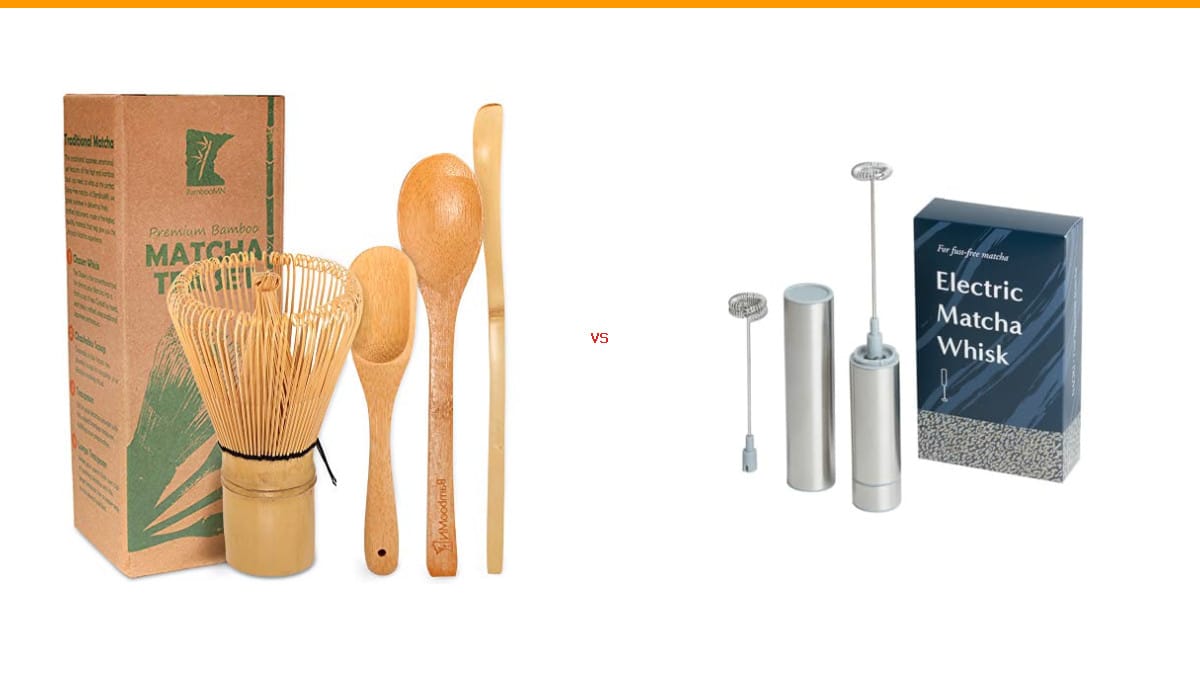
The BambooMN set includes a golden bamboo chasen with 100 tines, a chashaku scoop, a deep scoop, and a teaspoon. The whisk stands about 4 inches tall and feels light in the hand. It is not a flimsy souvenir. The tines are springy and well-spaced, which is exactly what you want for creating a fine foam.
Whisking with it takes about 30 seconds of wrist work. You start slow to break up clumps, then speed up in a zigzag motion. The result is a layer of microfoam with tiny bubbles, not the big frothy bubbles you get from a steam wand or electric whisk. The texture is velvety and clings to the side of the bowl.
The set also includes the chashaku, which is the traditional bamboo scoop for measuring matcha. It holds about 1 gram per scoop, which is roughly half a teaspoon. The deep scoop is for making larger batches, like a matcha latte for two. The teaspoon is a backup for people who don’t want to learn the scoop technique.
How to Create the Perfect Paste with a Whisk
The secret to lump-free matcha is the paste step. Add your matcha to the bowl, pour in just a splash of water at 175°F, and whisk gently in a circular motion until it forms a smooth paste. Then add the rest of the water and whisk in a zigzag pattern.
This two-step process is where the chasen shines. The paste breaks down the powder’s surface tension, so the final whisk creates a uniform emulsion. You cannot do this paste step properly with an electric frother because it spins too fast and flings the dry powder around.
Skipping the paste step is the most common mistake I see. People dump powder and water together, then wonder why their matcha is gritty. The BambooMN whisk makes the paste step easy because the tines reach into the bottom of the bowl and grab every dry spot.
The Electric Frother: Speed, Convenience, and Limitations
The Naoki Matcha electric frother runs on 3 AAA batteries and comes with two whisk heads. The double head creates more volume for milk frothing, and the single head is for matcha. You press a button, hold it in the liquid, and it does the work in about 15 seconds.
It is genuinely convenient. No wrist movement, no technique to learn. You can whisk a drink in one hand while you read emails with the other. The motor is strong enough to create big, stiff peaks in cold milk, which makes it a decent milk frother for iced lattes.
But there is a catch. The frother is loud. It sounds like an electric toothbrush on high. If you live with someone who sleeps in, they will hear you making your morning matcha. The bamboo whisk is silent, which matters more than you might think.
Cleanup is also not as simple as the brand suggests. The whisk heads detach, but the motor shaft has a small crevice where matcha residue collects. You have to wipe it carefully after every use, or it dries into green crust. The bamboo whisk just needs a rinse and a shake.
Frothing Milk vs. Frothing Matcha: The Critical Difference
The Naoki frother is excellent at frothing milk. The double head whips air into dairy or oat milk quickly, creating a thick foam that holds its shape. For a matcha latte, this is a big plus.
For straight matcha, the frother is too aggressive. It creates large, unstable bubbles that collapse within a minute. The foam on top of a properly whisked bowl of matcha should last for several minutes. The electric frother’s foam is more like a cappuccino’s head, which is fine for milk drinks but wrong for a pure bowl.
If you drink matcha with milk, the Naoki is the better tool. If you drink it straight, the BambooMN is the only choice that makes sense.
Head-to-Head: Foam Quality, Flavor, and Cleanup
| Feature | BambooMN Whisk Set | Naoki Electric Frother |
|---|---|---|
| Foam texture | Fine, velvety microfoam | Large, airy bubbles |
| Flavor impact | Preserves umami, less astringency | Can over-oxidize, tastes flatter |
| Cleanup | Rinse and air dry | Detach heads, wipe motor shaft |
| Noise | Silent | Audible electric whir |
| Portability | Lightweight, but needs a bowl | Battery powered, travel friendly |
| Durability | Bamboo can crack if not dried | Motor can wear out over time |
| Skill required | 30 seconds of technique | None |
The foam quality difference is the biggest dealbreaker. I whisked two bowls of the same ceremonial grade matcha, one with each tool. The bamboo whisk produced a creamy, smooth cup with a sweet finish. The electric frother produced a bitter, slightly chalky cup with a thin foam that vanished in 30 seconds.
Cleanup is a trade-off. The bamboo whisk needs to be rinsed and shaken dry, then left to air dry completely. If you put it away wet, it can grow mold. The electric frother needs the heads rinsed and the shaft wiped. Both take about the same time, but the bamboo is more forgiving if you forget it on the drying rack.
The Cost-Per-Serve Breakdown: Which Is Cheaper Long-Term?
The BambooMN set is a one-time purchase. A good bamboo whisk lasts 3 to 6 months with daily use if you dry it properly. The Naoki frother also lasts a while, but it needs 3 AAA batteries every few weeks if you use it daily.
Over 100 servings, the bamboo whisk costs nothing extra. The frother costs about $5 to $10 in batteries over that same period. The price difference between the two tools is small, but the battery cost tips the scale slightly toward the whisk.
The bigger cost is the matcha itself. If the frother ruins the flavor of a $30 tin of ceremonial grade matcha, you are wasting more money than the tool saved you in time. For culinary grade matcha used in baking or smoothies, the frother makes sense because the flavor profile is already robust.
When to Use Each Tool (And When to Use Both)
Use the BambooMN whisk for any matcha you plan to drink plain. That includes a traditional bowl, a cold brew matcha, or a matcha shot over ice. The whisk preserves the delicate flavor and gives you the proper texture.
Use the Naoki frother for milk-based drinks. It froths milk faster and better than the whisk ever could. A matcha latte with frothed oat milk from the Naoki is genuinely good, and it takes half the time.
You do not have to choose one. Many people use both: the whisk for the matcha paste and the frother for the milk. This hybrid approach gives you the best of both worlds.
The Hybrid Method: Best of Both Worlds for Lattes
Here is the workflow I landed on after testing both. Whisk your matcha paste with the BambooMN chasen using a splash of water. Then pour in your milk and use the Naoki frother to foam it up. Combine the two and you get a latte with proper matcha flavor and a thick milk foam.
This method takes about 45 seconds total. It is not much slower than using the frother alone, and the flavor is noticeably better. The whisk does the delicate work, and the frother does the heavy lifting.
If you only want to buy one tool, think about what you drink most. Straight matcha means buy the whisk. Lattes mean buy the frother. Both means buy both.
Common Mistakes That Ruin Your Matcha (And How to Fix Them)
Using water that is too hot is the most common mistake. Boiling water scorches matcha and makes it bitter. Let it cool to about 175°F, or wait 2 minutes after boiling.
Skipping the sifting step is another one. If your matcha is clumpy, sift it through a fine mesh strainer before whisking. The chashaku scoop from the BambooMN set helps here because it lets you measure without packing the powder.
Over-whisking with an electric frother is a real problem. The Naoki can turn a good cup bitter in 30 seconds. Stop as soon as the foam forms, do not let it run for a full minute.
Not cleaning the frother shaft properly is a silent flavor killer. Dried matcha on the shaft goes rancid and taints the next cup. Wipe it immediately after use.
Final Verdict: Choosing Based on Your Daily Ritual
The BambooMN matcha whisk set is the better purchase for most people. It is cheaper, quieter, and produces a superior cup of plain matcha. The learning curve is minor, and the set includes everything you need to start.
The Naoki electric frother is the better purchase for latte drinkers and people with wrist issues. It is faster and more convenient, but it sacrifices flavor and texture. It is also not a true matcha whisk; it is a milk frother that happens to work on matcha.
My honest recommendation: buy the BambooMN set first. Learn to whisk properly. If you find yourself wanting frothed milk for lattes, add the Naoki later. The whisk is the foundation, and the frother is the accessory.
If you are still deciding between an automatic machine and a manual setup for other drinks, check our automatic vs semi comparison for a similar breakdown.
Frequently Asked Questions
Can I use an electric frother with ceremonial grade matcha?
You can, but you will not taste the full flavor. The high speed oxidizes the leaves and creates astringency. If you spent money on ceremonial grade, use a bamboo whisk to protect your investment.
How long does a bamboo chasen last?
With daily use and proper drying, expect 3 to 6 months. The tines will eventually splay out and lose their spring. When that happens, the foam quality drops. Replace it before it breaks.
Do I need a matcha bowl to use the bamboo whisk?
Yes, a wide bowl is essential. The whisk needs room to move in a zigzag pattern. A narrow cup will snap the tines. The BambooMN set does not include a bowl, so you will need to buy one separately.
Is the electric frother good for cold brew matcha?
It works, but the foam will be thin and bubbly. For cold drinks, the whisk is better because it creates a stable emulsion that survives the ice. The frother is best for hot milk.
For more on frother troubleshooting, see our piece on frother repair basics. And if you are comparing espresso machines, our automatic espresso guide covers similar trade-offs between convenience and control.
Products related to this article
Sponsored / affiliate links. As an Amazon Associate I earn from qualifying purchases. I may earn additional commission from eligible campaigns.
 VOBAGA Coffee Mug Warmer with 15oz Mug Set, Electric Coffee Cup Warmer
 Coffee Mug Warmer & You are Awesome Mug Set, Electric Cup Warmer for Desk
 SOLUSTRE Electric USB Coffee Cup Warmer with Temperature Settings Portable Milk and Beverage Heating Coaster for Office Desk Small Lightweight Design Easy to Clean Surface Multi Functional