You just pulled a shot that tastes like yesterday’s ash tray. The grind size looks right, the beans are fresh, but the coffee has a sour, oily bite that wasn’t there last week. You clean the machine, but the problem sticks around. That’s when you realize the grinder is the culprit.
Burr grinders trap coffee oils and fine particles in every crevice. Over time, those oils go rancid and mix with mineral deposits from humid air or slightly damp beans. The result is stale, bitter coffee and a grinder that struggles to produce consistent grounds. This guide walks you through how to descale a coffee burr grinder safely, whether you use chemical tablets, rice, or a full disassembly.

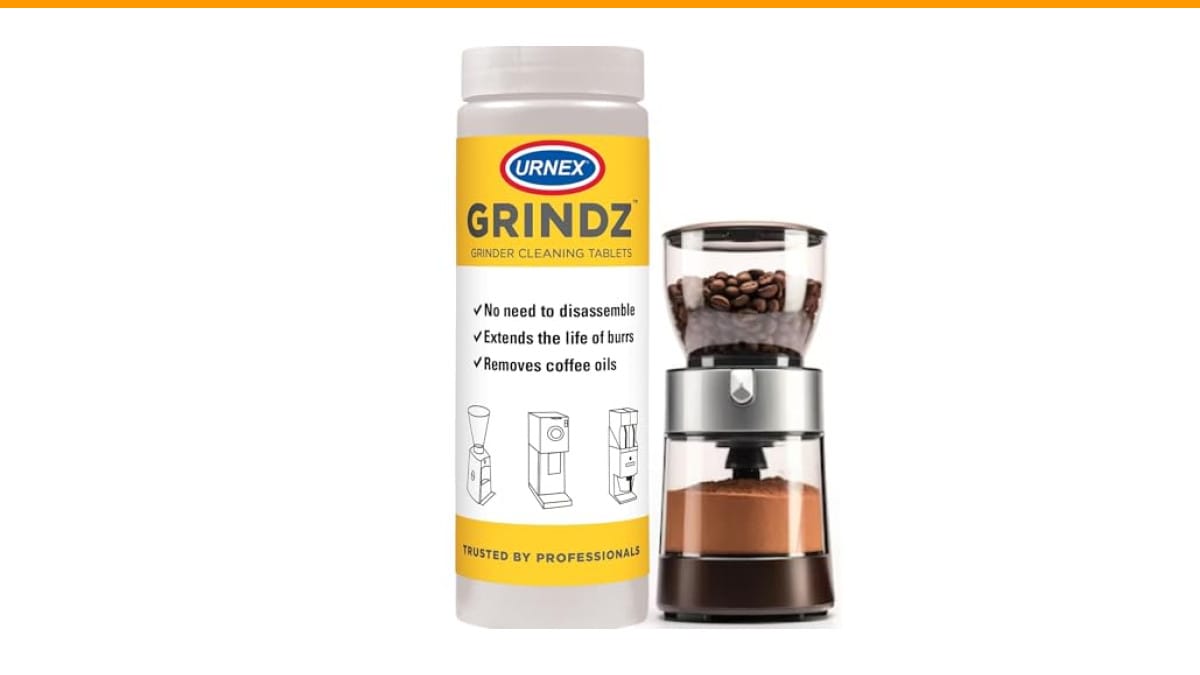
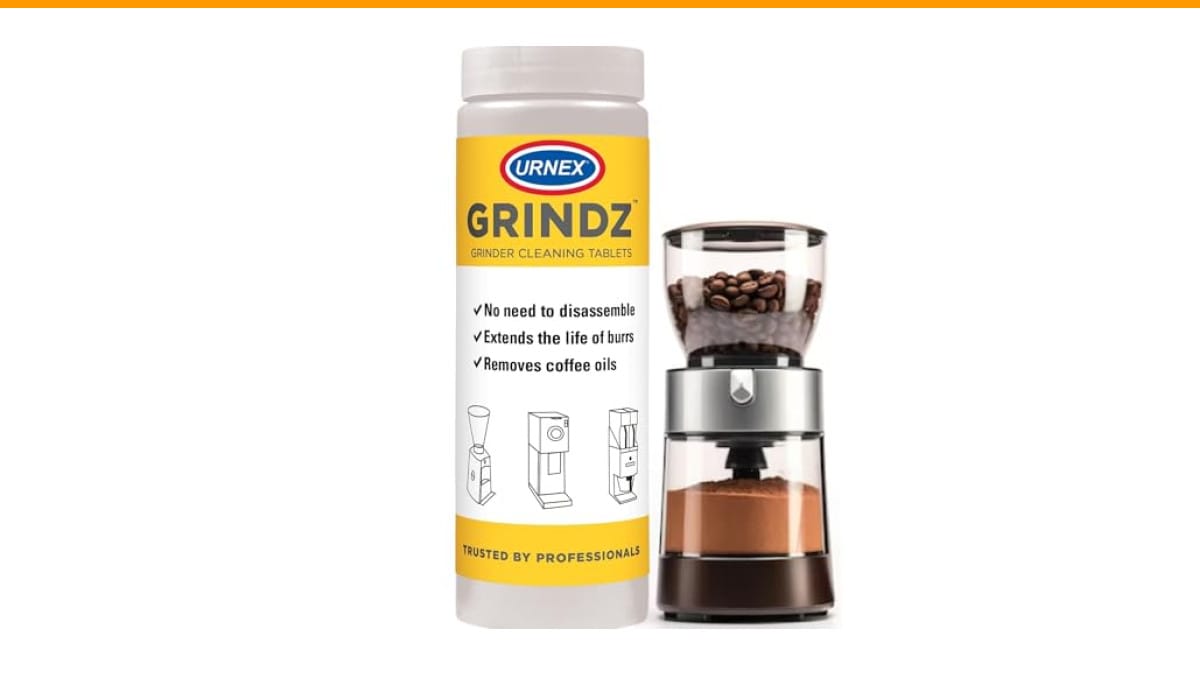
Urnex
Urnex Grindz Professional Coffee Grinder Cleaning Tablets…
- Removes coffee residue and oils in standalone coffee grinders (not for super automatic espresso machines)
- Patented, all-natural, food safe and gluten-free tablet absorbs and loosens coffee grounds
- Effectively cleans grinders without disassembling burrs or casings
As an Amazon Associate I earn from qualifying purchases.
You’ll learn the exact steps, what not to do, and how often to run a cleaning cycle. No guesswork.
One of the easiest ways to handle routine cleaning is with a dedicated product like Urnex Grindz Professional Coffee Grinder Cleaning Tablets. These food-safe tablets absorb and lift coffee residue without needing to take apart the burrs. They are a solid middle ground between a quick rice trick and a full teardown. We’ll compare them against other methods below.
What Actually Builds Up Inside a Burr Grinder
People call it “descaling,” but most of what accumulates in a grinder isn’t scale. It’s coffee oil. Whole beans contain about 10% oil by weight. When you grind, that oil coats the burrs and the chute. It mixes with micro-fines and forms a sticky paste.
Mineral scale shows up only if you live in a hard-water area and accidentally get moisture into the hopper. That’s rare. The bigger enemy is oxidized oil, which turns rancid and imparts a bitter, cardboard-like flavor to fresh coffee.
If you use flavored beans, the problem gets worse. Those syrups leave a residue that clings to metal and transfers to the next batch. Switching back to a normal bean after grinding hazelnut is nearly impossible without a deep clean. That’s why the step-by-step grinder cleaning guide on this site recommends a thorough routine.
So, descaling a burr grinder really means removing oil and residue. Scale removal is a bonus, not the main event. Keep that in mind when choosing a method.
Method 1: The Rice Trick (Cheap but Imperfect)
Uncooked white rice is the old barista hack. It is dry, abrasive, and absorbs oil. Run a quarter cup through the grinder on a medium setting, then discard the rice powder. It picks up loose gunk and deodorizes the burrs.
Here is the catch: rice is harder than coffee beans. On some ceramic burrs, especially in cheaper grinders, rice can dull the cutting edges over time. I have seen it happen on a Baratza Encore after repeated uses. The grind became noticeably coarser even at the same setting.
Use rice only in a pinch, and never on a grinder you care about. It does not remove scale. It does not reach the chute or the chamber behind the burrs. It just polishes the surface. That is fine for a quick refresh, but it is not a real descale.
If you go this route, use plain white rice, not instant or flavored. Run it at a coarse setting to avoid clogging. Follow with a few whole beans to push out the rice dust.
Method 2: Cleaning Tablets (The Practical Choice)
Urnex Grindz tablets are the industry standard for a reason. They are made from a food-safe, gluten-free formula that absorbs oil and loosens grounds without scratching the burrs. You drop a tablet into the hopper, run the grinder, and repeat until the tablet is gone.
In testing, Grindz removed a surprising amount of dark, oily residue from a grinder that had not been cleaned in two months. The first tablet came out as fine brown powder. The second tablet came out lighter, almost clean. That tells you the first pass did the heavy lifting.
The tablets do not require disassembly. They work on the burrs and the casing. They also help prevent flavor transfer when you switch from dark roast to decaf or flavored beans. That is a real benefit if you keep multiple bags around.
The downside? Tablets cost money and you use one or two each time. They also do not clean the exit chute thoroughly. You still need to brush that out manually. But for the balance of effort and results, they beat rice and most DIY solutions.
Check the current price on Amazon if you want to try them. They last a while if you clean every few weeks.
Method 3: Full Disassembly and Manual Cleaning
This is the most thorough method, and the only one that truly descales the internal parts. It requires removing the burrs, brushing every surface, and wiping down the chamber. It is not hard, but it takes 20 to 30 minutes and you need the right tools.
Start by unplugging the grinder. Remove the hopper and the upper burr. Most grinders have a locking mechanism or a simple twist-off design. Check your manual. Then use a stiff brush, like a paintbrush or a dedicated grinder brush, to sweep out loose grounds.
For stuck-on oil, use a dry cloth or a slightly damp one. Do not use soap. Soap leaves a residue that ruins the next batch of coffee. If you must use a liquid, use a food-safe cleaner or white vinegar diluted 1:4 with water. Apply it to the cloth, not directly to the grinder.
Inspect the burrs for dull spots or chips. If they look worn, it might be time to replace them. A grinder with dull burrs produces fines and inconsistent particle size, which leads to bitter or sour shots. You can learn more about the differences in burr versus blade grinders to understand why burr quality matters.
Reassemble carefully. Make sure the upper burr seats fully and the locking ring clicks. Run a few grams of beans through to clear any leftover dust. Then brew a test shot.
| Method | Time Needed | Removes Oil | Removes Scale | Risk to Burrs | Best For |
|---|---|---|---|---|---|
| Rice | 5 minutes | Partial | No | Medium (can dull ceramic) | Quick refresh between deep cleans |
| Grindz Tablets | 10 minutes | Yes | No | Low | Regular maintenance without disassembly |
| Full Disassembly | 30 minutes | Yes | Yes (with vinegar) | Low (if careful) | Deep clean every few months |
How Often Should You Do This?
If you grind daily, run a quick clean every two to four weeks. That means either a Grindz tablet or a brush-out of the burr chamber. If you only grind on weekends, once a month is enough.
Full disassembly should happen every three to six months, depending on how oily your beans are. Dark roasts and flavored beans require more frequent cleaning. Light roasts are drier and leave less residue.
One sign you are overdue: the grind setting produces more fines than usual, or the grinder sounds strained. Another sign is a rancid smell coming from the hopper. Trust your nose.
Regular cleaning also extends the life of the motor. A clogged grinder works harder to push grounds through, which heats up the motor and wears out the gears. You can read more about maintaining your equipment in this guide on coffee machine maintenance for long life.
What Not to Do When Descaling
Do not use water. Running water through a burr grinder is a fast way to rust the burrs and short-circuit the motor. Even a damp cloth should be wrung out thoroughly.
Do not use soap or detergent. The residue will linger and ruin your coffee. If you need a solvent, use isopropyl alcohol on a cloth, then wipe dry. Let it evaporate completely before reassembling.
Do not use abrasive pads or steel wool. They will scratch the burr surface and make it less effective. A soft brush and a dry cloth are enough.
Do not overdo the rice trick. Once a month is the max. More often than that, you risk dulling the burrs.
Frequently Asked Questions
Can I use vinegar to descale my burr grinder?
Yes, but only on a cloth or brush, not as a rinse. Mix one part white vinegar with four parts water, dip a cloth in it, and wipe the burrs and chamber. Let it air dry completely. Vinegar cuts through mineral scale and oil, but you must avoid getting liquid into the motor.
Will cleaning tablets remove scale from the burrs?
No. Grindz tablets absorb oil and loosen grounds, but they do not dissolve mineral scale. If you suspect scale buildup, you need a manual wipe-down with a vinegar solution. Scale is less common in grinders than in brewers, so most people never need a true descale.
How do I know if my burrs are dull?
Grind a few beans and look at the grounds. If you see a lot of powder mixed with coarse chunks, the burrs are likely dull. Also, if the grind setting needs to be much finer than before to get the same shot time, that is a red flag. Dull burrs cannot be sharpened; you replace them.
Is it safe to run Grindz tablets through a super automatic espresso machine?
No. Grindz is designed for standalone burr grinders. Super automatics have a different grinding mechanism and a brew unit that can be damaged by the tablets. Use the manufacturer’s recommended cleaner for those machines.
Can I descale a grinder with baking soda?
Baking soda is mildly abrasive and can scrub off oil, but it is messy and leaves a salty residue. If you use it, make sure to brush out every trace. In my experience, Grindz does a better job with less mess. Baking soda is a decent emergency option, not a regular routine.
What to Remember for a Clean Grinder
- Run a Grindz tablet every two to four weeks if you grind daily. It is the easiest way to keep oil from building up.
- Do a full disassembly and brush-out every three to six months. This reaches the places tablets cannot.
- Never introduce water or soap to the burrs. Use a dry brush or a barely damp cloth.
- Use the rice trick sparingly. It works in a pinch but can dull ceramic burrs over time.
- If your coffee tastes stale or bitter and the beans are fresh, clean the grinder first before blaming the machine.
- Check the burrs for wear during each deep clean. Replacing dull burrs is cheaper than buying a new grinder.
- Keep a dedicated brush near your grinder. A quick sweep after each use prevents most buildup.
Cleaning a burr grinder is a 10-minute habit that pays off in every cup. The difference between a clean grinder and a neglected one is night and day. Take the time once a month, and your coffee will taste like the beans, not the machine.
Products related to this article
Sponsored / affiliate links. As an Amazon Associate I earn from qualifying purchases. I may earn additional commission from eligible campaigns.
 Coffee Espresso Machine Handle Replacement Parts, Cafe Bracket Handle for Lidl Silvercrest CM4621 CM4218 KF5002 KF500S Barista (for 51mm Portafilter Basket - Not included)
 Steel Wool Soap Pads 30Pcs Red 2x2 Versatile Steel Wool Pads Effective Cleaning Metal Scouring Steel Wool Scrubber for Cleaning Pots, Pans, Ovens and Dishes
 SOLUSTRE Electric USB Coffee Cup Warmer with Temperature Settings Portable Milk and Beverage Heating Coaster for Office Desk Small Lightweight Design Easy to Clean Surface Multi Functional