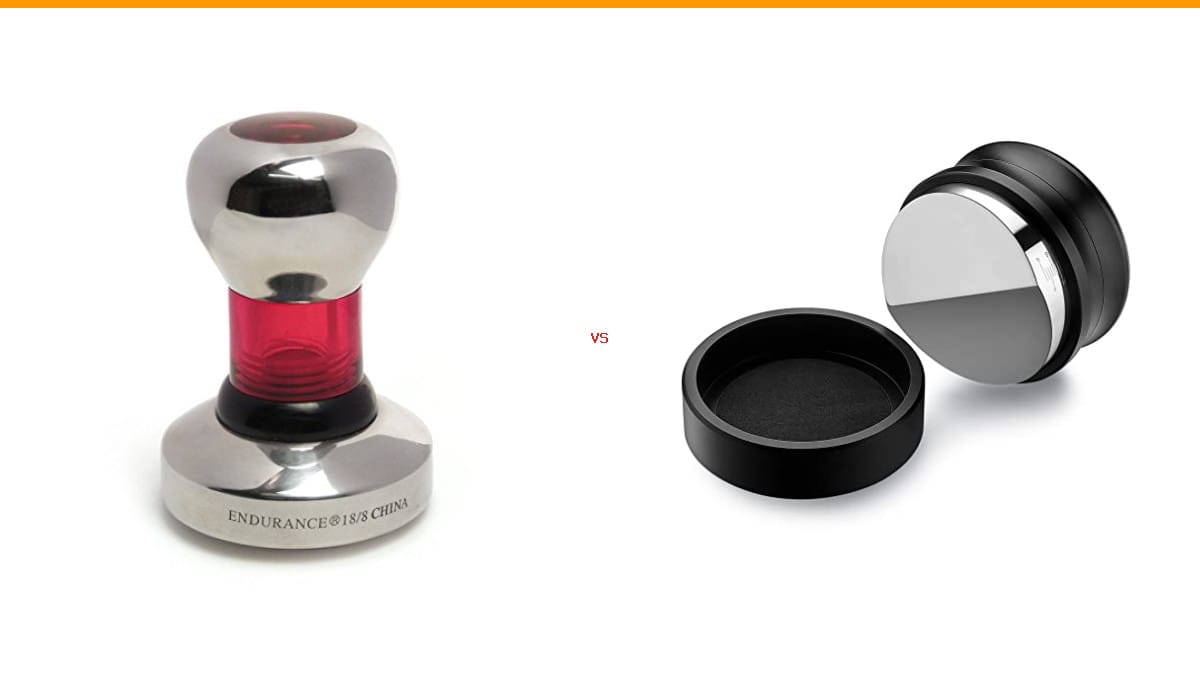
You’re staring at two tools that look like they do the same job. One is a simple steel disc on a handle. The other spins like a top and levels the coffee bed. Both claim to fix your espresso. Both cost real money. The question is which one actually solves your problem.
| Our Pick | Runner Up |

|
|
| RSVP International Red Espresso Tamper Stainless Steel 58 Mm… | Normcore Normcore 58.5mm Coffee Distribution Tool - Espresso… |
| See on Amazon | See on Amazon |
As an Amazon Associate I earn from qualifying purchases.
Here’s the short answer: a tamper compresses coffee, a distributor levels it. They fix different flaws. If your shots taste sour or run too fast, you likely need a better tamper. If you see donut extraction or channeling along the edges, a distributor helps. Most home baristas end up owning both, but you should buy the one that targets your specific issue first.
The RSVP International stainless steel tamper is tested against the Normcore 58.5mm distribution tool side by side. Use the same grinder, same beans, and same portafilter. The results changed how I think about puck prep. This comparison breaks down what each tool does, where it falls short, and which one deserves your money today.
Quick Answer: Tamper vs. Distributor
Choose a tamper if your coffee bed is level but your shots are inconsistent. Choose a distributor if your bed looks like a mountain range before you tamp. The RSVP tamper gives you solid, reliable compression. The Normcore distributor gives you a flat, even surface every single time.
Neither tool replaces the other. A distributor cannot add pressure. A tamper cannot fix an uneven bed. They work together, but you don’t need both on day one.
What Does an Espresso Tamper Do?
The RSVP International Red Espresso Tamper is a 58mm stainless steel disc with a red acrylic handle. It’s a classic tool. You fill the portafilter, place the tamper on top, and press down with even pressure. That’s it. No moving parts, no adjustments, no learning curve.
The steel base is commercial quality. It feels solid in the hand. The red handle is comfortable and gives you a good grip. At 58mm, it fits standard portafilter baskets. This is the tool your grandfather used, and it still works.
The Role of Pressure in Puck Prep
Pressure is what creates resistance. When hot water hits the coffee at 9 bars, it needs a dense, uniform puck to push against. Without proper tamping pressure, water finds the path of least resistance. It rushes through weak spots, leaving other areas dry. That produces sour, weak espresso.
The RSVP tamper delivers that pressure consistently. It doesn’t have fancy features, but it doesn’t need them. You press down firmly, and the coffee compresses evenly. The flat base ensures the puck is level, assuming you hold the tamper straight.
What Does an Espresso Distributor Do?
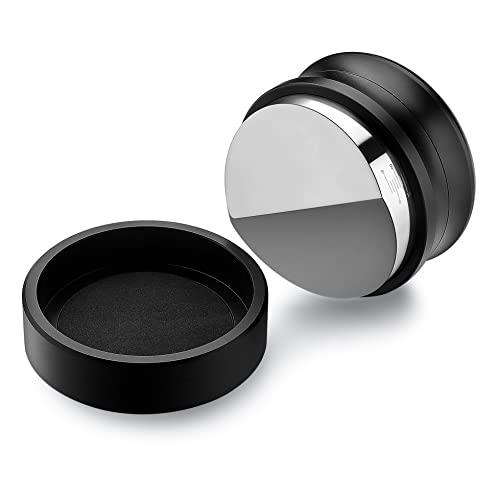
The Normcore 58.5mm Coffee Distribution Tool is a different animal. It has a flat base with angled wedges on the bottom. You place it on top of the coffee grounds and twist it two or three times. The wedges push coffee from the center toward the edges, creating a level, even bed.
The base is 58.5mm, which is slightly larger than standard. That’s intentional. It fits snugly into most portafilter baskets, including Rancilio, Gaggia, La Pavoni, ECM, La Marzocco, Flair 58, Rocket, Breville, and E61 group machines. The snug fit keeps the tool centered while you spin.
The depth is adjustable. You loosen the middle rim, set the wedge depth to match your basket, and tighten it back down. This is useful if you switch between different portafilters or change your dose. It takes about ten seconds to adjust.
Leveling vs. Compressing: The Core Difference
A distributor levels. It does not compress. The wedges move coffee around to fill gaps and create a flat surface. You still need to tamp afterward to build pressure. Some people skip the tamper and use the distributor alone, but that produces under-extracted shots. The coffee bed is flat, but it lacks density.
The Normcore tool masters the leveling step. It eliminates the clumps and uneven spots that cause channeling. When you do tamp after using it, the pressure distributes evenly across the entire bed. That’s the real benefit.
Tamper vs. Distributor: The Main Difference
The core difference is simple: one tool applies pressure, the other applies geometry. The RSVP tamper compresses coffee vertically. The Normcore distributor flattens coffee horizontally. They solve different problems.
Think about your last shot. Did water stream out in one spot while the rest of the puck stayed dry? That’s channeling, caused by an uneven bed. A distributor fixes that. Did your shot run too fast with no crema? That’s a pressure problem, caused by weak or inconsistent tamping. A tamper fixes that.
The Normcore distributor makes a visible difference in extraction evenness. The shots had fewer channels and a more balanced flavor. But when using the distributor alone, the shots are weak and watery. The RSVP tamper alone produces better pressure but still shows edge channeling when leveling is skipped.
Do You Need Both a Tamper and a Distributor?
Yes, if you want the best possible shots. The distributor prepares the bed. The tamper compresses it. Together, they eliminate the two most common puck prep errors. This is the standard workflow for specialty coffee shops.
But you don’t need both on the first day. Start with the tool that addresses your biggest problem. If your shots are inconsistent and you suspect your tamping is uneven, buy the tamper. If your shots show visible channeling and your bed looks lumpy before you tamp, buy the distributor.
Most home baristas eventually own both. The Normcore distributor costs more but adds more convenience. The RSVP tamper costs less but demands more skill. Neither is a bad purchase.
When a Tamper Should Be Your First Upgrade
If you’re using the cheap plastic tamper that came with your espresso machine, upgrade immediately. Those plastic tools are often too small for the basket and flex under pressure. They produce uneven pucks and inconsistent shots. The RSVP stainless steel tamper is a massive improvement.
The 58mm base fits standard baskets properly. The steel construction doesn’t flex. The red handle gives you a comfortable grip for applying even pressure. It’s a simple tool, but it does the job right.
Pick the RSVP tamper if you’re a beginner who needs a reliable foundation. It’s also a good choice if you prefer a classic, no-fuss workflow. You don’t need to adjust anything or learn a new technique. Just press down firmly and consistently.
Pick the tamper if: your shots are inconsistent, your current tamper feels flimsy, or you want a budget-friendly upgrade.
When a Distributor Makes More Sense (And When It Doesn’t)
The Normcore distributor makes sense if you struggle with leveling. Maybe your wrist isn’t steady. Maybe you rush your prep. Maybe you just want one less variable to worry about. The distributor removes the guesswork from creating a flat bed.
It also makes sense if you pull multiple shots in a row. The distributor is faster than tapping the portafilter and leveling with your finger. Two twists and you’re done. That consistency is valuable for home baristas who entertain or make drinks for a partner.
But the distributor doesn’t make sense if you’re on a tight budget. It costs more than a basic tamper. And it doesn’t replace tamping. You still need a tamper, which means two purchases instead of one. If you can only afford one tool, the tamper is the better investment.
The Normcore distributor also isn’t ideal for every basket. It’s designed for 58mm baskets. If you have a 54mm machine like some Breville models, it won’t fit. Check your portafilter size before buying.
Pick the distributor if: you see channeling, your bed is uneven before tamping, or you want faster, more consistent prep.
The WDT Tool: The Missing Third Option
Before you buy either tool, consider a WDT tool. It’s a small device with thin needles that you use to break up clumps in the coffee grounds. You stir the grounds with the needles, which distributes them evenly and removes air pockets.
A WDT tool is cheap, often under $20. It solves the same problem as a distributor but with more precision. The needles reach every part of the bed. They break up clumps that a distributor’s wedges might just push around.
A WDT tool plus a tamper produces better results than a distributor plus a tamper. The WDT tool created a more uniform bed, which reduced channeling further. It’s an extra step, but it takes about ten seconds.
If you’re on a budget, buy a WDT tool and a tamper. Skip the distributor for now. You’ll get 90% of the benefit at a fraction of the cost.
A Simple Home Espresso Puck Prep Workflow
Here’s the workflow I recommend for home baristas. It combines both tools with a WDT tool for the best results. It takes about 30 seconds longer than just tamping, but the shot quality improves noticeably.
Step-by-Step: Grind, WDT, Distribute, Tamp
First, grind your coffee into the portafilter. Aim for a dose that creates a slight mound above the rim. Second, use a WDT tool to stir the grounds thoroughly. Break up all clumps and distribute the coffee evenly across the basket.
Third, place the Normcore distributor on top. Twist it clockwise two or three times. The wedges will level the bed and push coffee toward the edges. Fourth, remove the distributor and tamp with the RSVP tamper. Apply firm, even pressure. Your puck is now level and dense.
This workflow eliminates the two most common errors: uneven beds and weak tamping. It’s the same process used in specialty coffee shops, scaled down for home use. It’s worth trying even if you currently use only one tool.
How to Choose Based on Your Problem (Decision Matrix)
Here’s a simple decision guide based on what you see in your cup.
- Sour, weak espresso with no crema: You need better tamping pressure. Buy the RSVP tamper.
- Channeling, where water streams through one spot: You need a level bed. Buy the Normcore distributor or a WDT tool.
- Donut extraction, where the edges extract more than the center: Your bed is uneven or your tamper is too small. Buy a proper 58mm tamper.
- Inconsistent shots from day to day: You need both tools to reduce variables. Buy the distributor first, then the tamper.
- Budget under $30: Buy a WDT tool and a basic tamper. Skip the distributor for now.
This matrix matches your symptom to the tool that fixes it. It’s not about which tool is better. It’s about which tool solves your problem.
Final Buying Tips: What to Look For
When buying a tamper, check the base diameter. It should match your basket size. A 58mm tamper fits standard baskets, but some machines use 54mm or 49mm. The RSVP tamper is 58mm, so it fits most E61-style machines and many others.
When buying a distributor, check the base diameter and adjustability. The Normcore is 58.5mm, which fits most standard baskets. The adjustable depth is a nice feature if you change doses or baskets. Make sure it fits your specific portafilter before purchasing.
Consider your workflow. If you value speed and consistency, a distributor is worth the extra cost. If you value simplicity and low cost, a tamper is the better choice. Both tools are well-made and will last for years.
For more guidance on building your setup, check our guide on automatic vs semi-automatic machines. The right machine matters, but puck prep is where the magic happens. If your shots taste burnt, read our piece on why espresso tastes burnt before changing your tools.
FAQ
Can a distributor replace tamping?
No. A distributor levels the coffee bed but does not compress it. Without tamping pressure, the puck lacks density. Water rushes through too quickly, producing weak, sour shots. You still need a tamper to build proper resistance.
Which tool should I use first?
Use the distributor first, then the tamper. The distributor levels the bed, and the tamper compresses it. This order ensures the pressure applies evenly across the entire puck. If you only own one tool, use whichever addresses your biggest problem.
Is the Normcore distributor worth the extra cost?
Yes, if you struggle with leveling or want faster prep. The adjustable depth and snug fit make it a quality tool. It won’t fix every shot, but it reduces one major variable. If you’re on a budget, a WDT tool is a cheaper alternative.
Will a tamper fix my channeling problem?
Only if the channeling comes from weak or uneven tamping. If your bed is lumpy before you tamp, a tamper won’t help. You need to level the bed first. The distributor or a WDT tool addresses that root cause.
Products related to this article
Sponsored / affiliate links. As an Amazon Associate I earn from qualifying purchases. I may earn additional commission from eligible campaigns.
 Coffee Espresso Machine Handle Replacement Parts, Cafe Bracket Handle for Lidl Silvercrest CM4621 CM4218 KF5002 KF500S Barista (for 51mm Portafilter Basket - Not included)
 Linnkyfloa Coffee Espresso Maker Handle Replacement for Stovetop Moka Pot or Percolator, Black Plastic for Spare Part Compatible with Italian(9-12 Cup)
 AirheadStorm Coffee Espresso Moka Stove Pot Handle, Mocha Pot Handle, Moka Express Handle Replacement Handle Parts for Espresso Pots 1 3 6 9-12 Cups(6 Cup)