You just pulled a great shot, the crema is perfect, and you think: how many years do I have left with this machine? It’s a fair question. A semi-automatic espresso machine is a serious purchase, and most owners want it to last a decade or more. The honest answer is not a single number. It’s a range, and where you land depends on parts, water, and how often you press that brew button.
This guide breaks down the lifespan by individual component, not just the whole box. You’ll learn what wears out first, what you can fix yourself, and when it makes financial sense to walk away. I’ve tested machines side by side for years, and the difference between a 5-year paperweight and a 20-year workhorse comes down to a few specific habits you can start today.

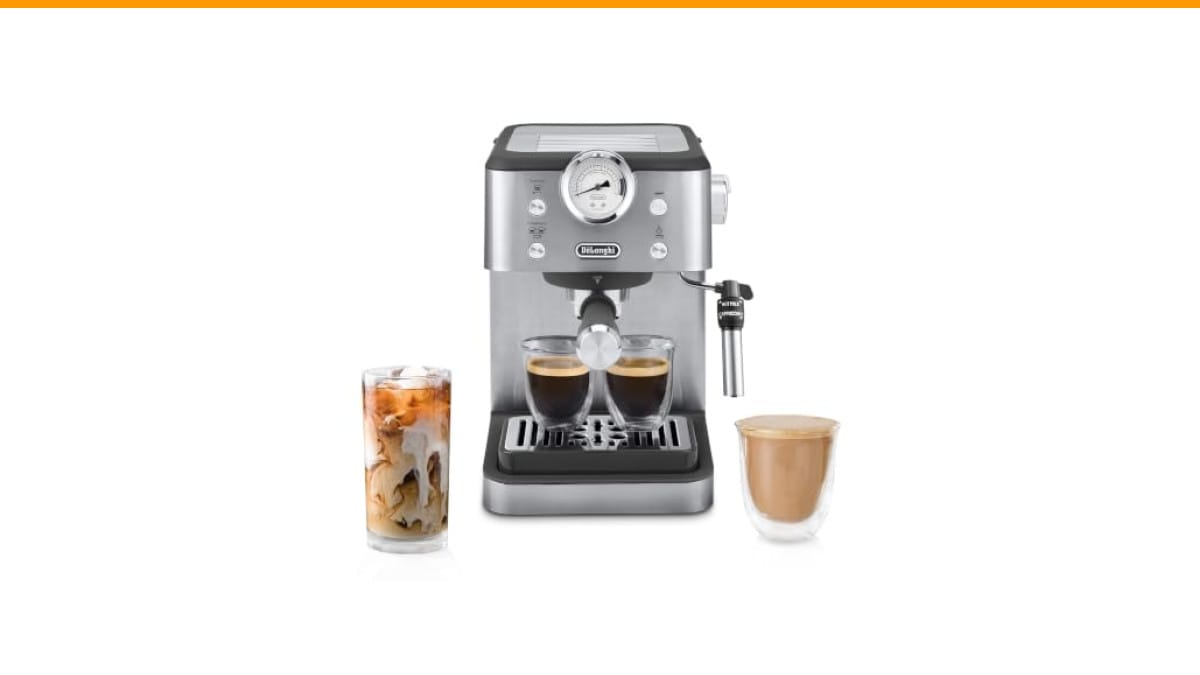
De'Longhi
De'Longhi Classic Signature Espresso Machine, Adjustable Milk…
- #1 Worldwide Espresso Machine Maker* *Independent Research Institute, Sales Leader, Full Year 2025
- OPTIMAL EXTRACTION: Achieve expertly extracted espresso with a 15-bar Italian professional pump delivering the perfect pressure fo…
- PERFECT TEMPERATURE: Instantly reach the perfect temperature, thanks to Thermoblock technology, providing fast, precise, and stabl…
As an Amazon Associate I earn from qualifying purchases.
If you’re shopping now and want a solid starting point, the De'Longhi Classic Signature Espresso Machine is a popular pick for home users. It uses a 15-bar Italian pump and Thermoblock heating, which keeps the design simple and serviceable for its price class.
The Short Answer: What to Expect from a Semi-Automatic
For a typical home user pulling 1–3 shots daily, a well-maintained semi-automatic machine lasts 7 to 15 years. That’s a wide gap because some machines are built to be repaired, while others are designed to be replaced. A budget machine with a vibe pump might die at year 4. A prosumer model with an E61 group head can easily hit 20 years with routine part swaps.
The 10-year rule you see online is a myth. It’s an average, not a guarantee. Treat it as a rough midpoint. Some machines die at 5, others run at 15. The real story is in the components.
Lifespan by Component (Not Just the Whole Machine)
Stop thinking of your espresso machine as one device. It’s a system of pumps, heaters, and valves. Each part has its own life expectancy.
The Pump
Most semi-automatics use a vibratory pump (vibe pump) or a rotary vane pump. Vibe pumps are cheap and common in home machines. They typically last 5 to 8 years with normal use. They work hard, pulsing at 50–60 Hz, and the internal diaphragm wears out. Rotary pumps, found in higher-end machines, are quieter and last 10 to 15 years because they run smoother with less friction. When a vibe pump fails, you’ll hear a loud buzz but no water flow. Replacement cost is low, often under $100 for the part.
The Boiler
This is where build quality matters most. A single boiler made of aluminum might last 6–8 years before corrosion sets in, especially if you use hard water. Brass boilers are heavier and resist corrosion better, often lasting 12–15 years. Stainless steel boilers are the gold standard, but they’re rare in home machines. The biggest killer here is scale buildup, not the metal itself. A thick layer of limescale insulates the heating element, causing it to overheat and burn out. If you descale regularly, the boiler can outlive every other part on the machine.
The Group Head and Gaskets
The group head is the metal block where your portafilter locks in. It’s a passive part, so it rarely fails. The rubber gasket inside it, however, is a consumable. It dries out, hardens, and starts leaking after 1–2 years of daily use. That’s normal. Replacing a group head gasket takes 10 minutes and costs a few dollars. The shower screen also needs a periodic soak in cleaner. If you ignore these, water will start spraying around the portafilter, and you’ll think the machine is dying when it’s just a $5 rubber ring.
The 5 Factors That Actually Determine Longevity
You can buy two identical machines, and one will die at year 3 while the other runs perfectly at year 10. Here’s why.
Build Quality: E61 vs. Modern Consumer Builds
The E61 group head is a legendary design from the 1960s. It’s heavy brass, uses a thermal siphon for temperature stability, and is still made by dozens of manufacturers today. Why does that matter? Parts are standardized. You can buy a replacement E61 gasket, shower screen, or even a whole group head from multiple vendors. That repairability extends the machine’s life indefinitely. Modern consumer builds often use proprietary plastic parts. When one breaks, you’re stuck waiting for a specific shipment or buying a new machine.
Usage Frequency: Shots Per Day
A machine pulling 1 shot a day is doing about 365 cycles a year. A machine in a small office pulling 20 shots a day does 7,300 cycles. That’s 20 times the wear. Most home machines are rated for light residential use. If you’re hosting a party and pulling 15 shots in an afternoon, the pump and boiler will get hot, but they’ll recover. Doing that every day is a different story. If you need that volume, look for a machine with a rotary pump and a larger boiler, or consider a separate machine for heavy use.
Water Chemistry: The #1 Silent Killer
Hard water is the fastest way to shorten your machine’s life. Calcium and magnesium build up inside the boiler and pipes. This scale acts as an insulator, forcing the heating element to work harder and eventually fail. The fix is simple: use filtered water. A basic pitcher filter removes most of the hardness. Better yet, use water with a moderate mineral content, like a mix of distilled and tap water. The ideal total dissolved solids (TDS) range for espresso is 100–150 ppm. Also, never use pure distilled or reverse osmosis water, as it can leach metals from the boiler.
Maintenance: The Difference Between 5 and 20 Years
Here’s the brutal truth. Two identical machines with different owners will have wildly different lifespans. The owner who backflushes weekly, descales quarterly, and changes gaskets as needed gets 15+ years. The owner who never cleans and uses hard tap water gets 4–5 years. It’s not about the machine’s quality; it’s about the maintenance schedule. I’ve seen cheap machines run for a decade because the owner was meticulous, and I’ve seen expensive machines die in two years from neglect. Your habits matter more than the brand badge.
The Real Cost of Ownership: Cheap vs. Premium
Let’s talk money. A $300 machine that lasts 5 years costs $60 per year. A $1,500 prosumer machine that lasts 15 years costs $100 per year. The premium machine is more expensive upfront, but the cost-per-year difference is small, and you get a better shot every single day. Compare that to a super-automatic that costs $1,000, lasts 8 years, and requires expensive proprietary maintenance. The semi-automatic is often the cheaper long-term bet because you can repair it yourself.
| Machine Type | Average Price | Avg. Lifespan | Cost Per Year | Repairability |
|---|---|---|---|---|
| Budget Semi-Auto | $300 | 5 years | $60 | Low (often throwaway) |
| Mid-Range Semi-Auto | $700 | 8–10 years | $70–$90 | Moderate (parts available) |
| Prosumer (E61) | $1,500 | 15+ years | $100 | High (standardized parts) |
| Super-Automatic | $1,000 | 8 years | $125 | Low (proprietary parts) |
This table assumes you’re doing basic maintenance. If you skip descaling, subtract half the lifespan from every row. The prosumer machine still wins on longevity, but only if you treat it like a tool that needs care.
Signs Your Machine is Dying (And What to Fix First)
Not every symptom is fatal. Here are the common warning signs and the likely culprit.
- Weak or slow extraction: Check the pump first. If it sounds strained, it may be losing pressure. Also check for a clogged shower screen.
- Water leaking from the group head: That’s the gasket. Replace it. It’s a 10-minute job.
- Machine turns on but no heat: This is often a tripped thermal fuse or a failed heating element. If it’s the element, it’s usually due to scale. Descale first, then test again.
- Loud, rattling noises: Could be air in the line or a failing vibe pump. Bleed the system first. If the noise persists, the pump is on its way out.
- Steam wand has no pressure: Check for a blocked tip. Unscrew it and soak in hot water. If that doesn’t work, the steam valve or boiler might be scaled up.
Before you panic, run a descaling cycle. It fixes a surprising number of issues. If the problem persists, then start looking at specific parts.
Repair vs. Replace: A Simple Decision Guide
Here’s a practical rule I use. If the repair costs less than 50% of the machine’s current replacement value, fix it. If it’s more, replace the machine. But there’s a catch. If your machine is over 10 years old and the boiler is shot, that’s a sign the rest of the machine isn’t far behind. In that case, even a 40% repair cost might not be worth it.
For example, a $150 pump on a $300 machine is a 50% repair. I’d skip it and buy new. A $150 pump on a $1,500 machine is a 10% repair. That’s a no-brainer; fix it. The exception is if you have an E61 machine. Those are worth fixing regardless of age because the rest of the machine is so robust. A new boiler for an E61 is expensive, but it’s still cheaper than a new machine of the same class.
Maintenance Schedule That Guarantees a Decade of Service
You don’t need to be a technician to keep your machine alive. You need a routine. Here’s a schedule that works.
- Daily: Flush the group head for 3–5 seconds before and after pulling a shot. Wipe the steam wand with a damp cloth immediately after use. Empty and rinse the drip tray.
- Weekly: Backflush with plain water. If you use a blind basket, run a few cycles to clear coffee oils from the group head. Do this every week if you pull more than 2 shots a day.
- Monthly: Backflush with a dedicated espresso machine cleaner (like Cafiza). This removes oily residue that water can’t touch. Replace the water in your reservoir daily to keep it fresh.
- Quarterly: Descale the machine. The frequency depends on your water hardness. If you use filtered water, quarterly is fine. If you use tap water, do it monthly. Use a proper descaling solution, not vinegar, which can damage seals.
- Annually: Replace the group head gasket and shower screen. They’re cheap. Inspect the steam wand tip and the water lines for any cracks or wear.
This schedule takes about 5 minutes a day and 30 minutes a month. That’s a small price for an extra decade of use. For a deeper dive on cleaning, check out this deep clean guide.
FAQ: Quick Answers on Semi-Automatic Lifespan
Is 10 years a realistic lifespan for a semi-automatic espresso machine?
Yes, for most mid-range and prosumer machines, 10 years is realistic if you maintain them. Budget machines often fall short of this mark. The 10-year figure is a good planning number, but not a guarantee. It’s more of a milestone than a limit.
Does using a water filter really make a difference?
It makes a massive difference. Scale buildup is the number one cause of boiler failure. Using filtered water with a TDS around 100–150 ppm will dramatically reduce scale. It’s the single cheapest insurance policy for your machine. Skipping this is like never changing the oil in your car.
My machine is 8 years old and leaking. Should I fix it or buy a new one?
First, identify the leak. If it’s from the group head, it’s just a gasket, which is a $5 fix. If it’s from the bottom of the boiler, that’s more serious. Get a repair quote. If it’s under 50% of the replacement cost and the machine has been reliable, fix it. If it’s a budget machine, the math usually says replace it.
Are expensive machines worth the extra cost for longevity?
Often, yes. The cost-per-year analysis shows that a $1,500 machine lasting 15 years is only slightly more expensive per year than a $300 machine lasting 5 years. You also get better temperature stability and a more forgiving shot. The catch is that you have to actually do the maintenance. An expensive machine neglected will die just as fast as a cheap one.
Can I extend the life of my machine by using it less?
Not really. Espresso machines are designed to be used. Letting one sit idle for weeks can cause seals to dry out and lubricants to harden. A machine that sits unused for a month might have more issues than one used daily. The key is consistent, moderate use. Don’t run it 24/7, but don’t be afraid to pull a few shots a day.
Final Verdict
The lifespan of a semi-automatic espresso machine is not a fixed number. It’s a variable you control. A cheap machine with a diligent owner can outlast an expensive one that’s ignored. Focus on water quality, stick to a cleaning schedule, and learn to swap out a gasket.
- Plan for 7–15 years of service, not a single magic number.
- Treat the pump and boiler as consumables, not permanent parts.
- Use filtered water with a TDS of 100–150 ppm to prevent scale.
- Backflush weekly and descale quarterly at a minimum.
- Repair a machine when the cost is under 50% of replacement value.
- Buy a machine with standard parts (like an E61) for easier repairs.
- Don’t let it sit unused for weeks; regular use keeps seals healthy.
If you’re comparing your options, the choice between an automatic vs semi machine affects lifespan too. And if you hear strange sounds, check this guide on noisy espresso machines before assuming the worst. A little knowledge goes a long way in keeping your espresso machine running for years.
Products related to this article
Sponsored / affiliate links. As an Amazon Associate I earn from qualifying purchases. I may earn additional commission from eligible campaigns.
 Coffee Espresso Machine Handle Replacement Parts, Cafe Bracket Handle for Lidl Silvercrest CM4621 CM4218 KF5002 KF500S Barista (for 51mm Portafilter Basket - Not included)
 Meat Cutter Machine, Stainless Steel Electric Meat Slicer Machine with Three functional modes & Inclined Discharge Port Shredded Cutting Machine for Home Restaurants Supermarket (15mm)
 Linnkyfloa Coffee Espresso Maker Handle Replacement for Stovetop Moka Pot or Percolator, Black Plastic for Spare Part Compatible with Italian(9-12 Cup)