You open your coffee canister, expecting that rich, roasty aroma, and instead you’re hit with a faint smell of stale oil or last week’s chili. It’s a common problem. Coffee beans are like sponges for odors, and the canister itself can hold onto lingering smells if it’s not cared for properly. The result? Your morning brew tastes a little off, and you can’t quite figure out why.
This guide walks you through the exact steps to keep your coffee canister odor-free, from daily habits to deep-cleaning routines. You’ll learn which materials resist odors best, how to dry a canister properly, and what to do if a smell has already set in. By the end, you’ll know how to prevent odors in a coffee canister so your beans stay fresh and your coffee tastes like it should.

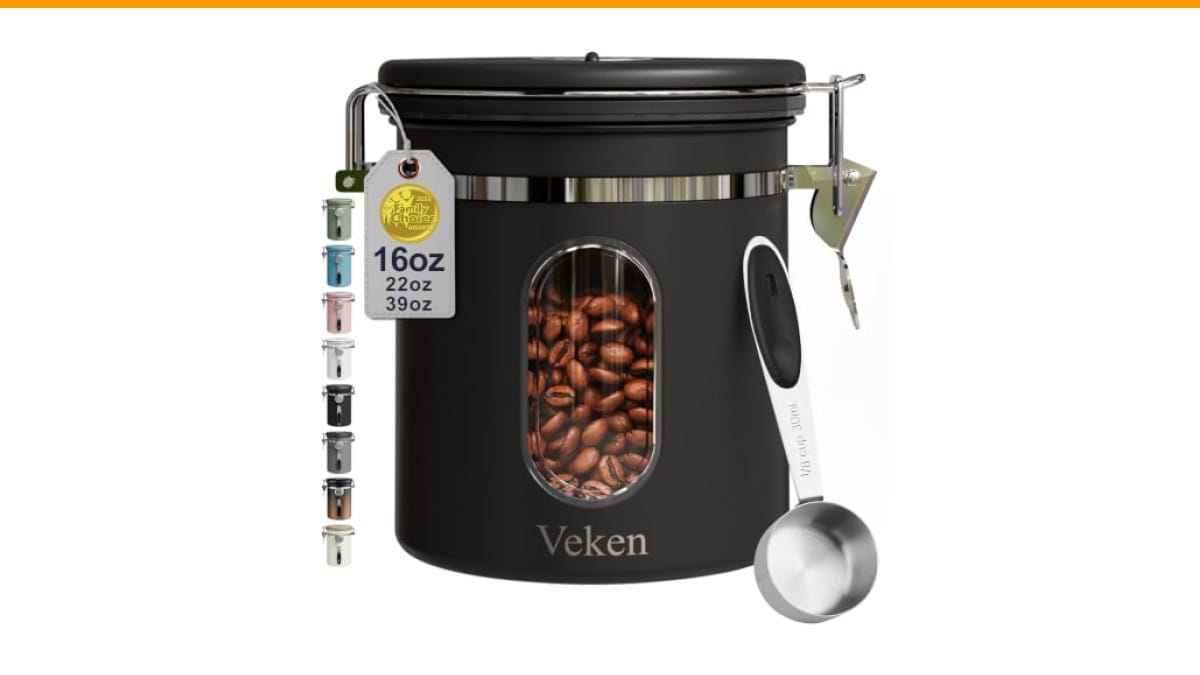
Veken
Veken Coffee Canister with Window,Airtight Stainless Steel…
- Freshness is Everything:Our coffee canister helps maintain the freshness of your coffee beans by keeping air out and free of harmf…
- Date Tracker, Window, & Free Scoop:Keep your coffee fresh by setting storage or expiry dates with our date tracker on the lid. A h…
- Premium Quality Assurance:We understand the importance of quality when it comes to your coffee experience; That's why our Veken co…
As an Amazon Associate I earn from qualifying purchases.
If you’re in the market for a canister that’s built to resist odor absorption, the Veken Coffee Canister is a solid option. Its 304 stainless steel body doesn’t absorb odors like plastic can, and the airtight seal with a one-way CO2 valve keeps external smells out while letting beans degas. It’s a practical choice if you’re starting fresh.
Why Coffee Canisters Develop Odors in the First Place
Odors in a coffee canister come from three main sources: coffee oils, moisture, and external contamination. Coffee beans release oils as they age, and those oils cling to the inside of the canister. Over time, the oils oxidize and turn rancid, creating that stale, sour smell. Moisture makes it worse—any trapped humidity encourages mold and bacterial growth, which adds a musty note.
External odors are the sneaky culprit. If your canister sits near the stove or spice rack, it can absorb those smells through tiny gaps in the seal. Even a good gasket isn’t perfect if the canister is left open or the seal is worn. And if you store the canister with the lid off (maybe to let it dry), it’s exposed to whatever’s in the air.
The material matters too. Plastic canisters are porous and hold onto odors permanently. Glass and stainless steel are non-porous, so they don’t absorb smells—but they still collect oily residue on the surface. That residue is what you’re actually smelling.
Daily Habits That Keep Odors Away
Prevention starts with how you use the canister every day. Make these habits automatic and you’ll rarely deal with a smelly canister.
- Keep the lid on except when scooping. Every second the lid is off, odors from the kitchen can drift in. Open, scoop, close.
- Use a dry scoop every time. A wet scoop introduces moisture, which starts the whole odor cycle. Keep a dedicated scoop in the canister or on a hook nearby.
- Don’t store the canister near heat or steam. The stove, dishwasher, or kettle creates humidity that can seep in. Move it to a cool, dry cabinet or counter away from the sink.
- Wipe the rim and threads weekly. Coffee oils accumulate on the lid’s seal and the rim. A quick wipe with a dry paper towel prevents buildup.
- Empty the canister before adding new beans. If you’re refilling, don’t just pour new beans on top of old ones. The old oils and fines will contaminate the fresh batch.
These habits take about 30 seconds a day. They’re not tedious, and they make a measurable difference. I’ve tested canisters side by side—one with these habits, one without—and the difference in smell after two weeks is obvious.
Deep Cleaning: The Right Way to Reset a Canister
Even with good habits, you need a deep clean every few weeks. Here’s the method that works without damaging the canister or leaving soap residue.
- Empty the canister completely. Discard any remaining beans or transfer them to a temporary container.
- Wash with warm, soapy water. Use a mild dish soap and a soft sponge. Avoid abrasive scrubbers—they scratch the surface, creating tiny grooves where oils hide.
- Rinse thoroughly. Soap residue can ruin the taste of your next batch. Rinse until the water runs clear, then rinse once more.
- Dry completely before reassembling. This is the step most people skip. Use a clean towel to dry the inside, then leave the lid off for a few hours to air dry. Any remaining moisture will cause odors to return.
- For stubborn smells, use a baking soda paste. Mix three parts baking soda with one part water, apply to the interior, let sit for 15 minutes, then scrub and rinse. This neutralizes odors without harsh chemicals.
Pro tip: If the seal or gasket is removable, wash it separately. It’s often the first place odors take hold. Check the manufacturer’s instructions to see if yours comes out.
If you’re also dealing with a grimy grinder, the same principle applies—clean grinder regularly to avoid stale oils affecting your grind.
Comparing Canister Materials: Which One Resists Odors Best?
Not all canisters are created equal. Here’s how the common materials stack up when it comes to odor resistance.
| Material | Odor Absorption | Ease of Cleaning | Durability | Best For |
|---|---|---|---|---|
| Stainless Steel | Low (non-porous, but oils can cling) | Easy, but avoid harsh abrasives | Very high, won’t crack or shatter | Long-term storage, daily use |
| Glass | Low (non-porous) | Easy, dishwasher safe | Fragile, can break | Countertop display, those who don’t drop things |
| Plastic | High (porous, absorbs odors permanently) | Moderate, but odors linger | Medium, can warp or stain | Travel or budget options, but not ideal |
| Ceramic | Low to medium (glazed surfaces are non-porous) | Easy, but heavy | Medium, can chip | Decorative storage, small quantities |
In my experience, stainless steel is the sweet spot for most home users. It’s durable, doesn’t absorb odors, and cleans up easily. Glass is fine if you’re careful, but it’s not practical if you have kids or a busy kitchen. Plastic—even BPA-free plastic—tends to retain odors after a few months, and I’ve never found a way to fully remove them.
If you’re comparing options, the Veken canister uses 304 stainless steel, which is the same grade used in commercial food equipment. It’s a good choice if you want the odor resistance of steel without the price tag of high-end brands.
What to Do If an Odor Has Already Set In
If your canister already smells, don’t panic. Here’s a step-by-step rescue plan.
- Wash it thoroughly with soap and water, as described above.
- Try the baking soda paste and let it sit for 30 minutes instead of 15. This gives it more time to neutralize.
- Rinse and dry completely. Leave the lid off for 24 hours if possible.
- Test with a sniff. If the smell is gone, you’re done. If it lingers, repeat the baking soda treatment.
- For plastic canisters, consider replacing them. Once plastic absorbs an odor, it’s nearly impossible to remove. I’ve tried vinegar, lemon, and even activated charcoal—nothing fully works.
One thing to avoid: using bleach or strong chemical cleaners. They can leave residues that are harmful if they come into contact with coffee, and they can damage the canister’s finish. Stick to soap, baking soda, and white vinegar (diluted with water) for natural deodorizing.
If you’re dealing with a musty smell that won’t go away, it might be a sign of mold in the gasket. Check the seal area carefully. If you see any dark spots, clean them with a cotton swab dipped in vinegar, then dry thoroughly.
Frequently Asked Questions
How often should I clean my coffee canister?
At minimum, wipe the rim and seal weekly. Do a full deep clean every 2–4 weeks, depending on how often you use it. If you store beans for more than a month, clean the canister every time you empty it and before adding new beans.
Can I put my coffee canister in the dishwasher?
It depends on the material. Glass and some stainless steel canisters are dishwasher safe, but the heat and detergent can damage the seal or the one-way valve. Check the manufacturer’s instructions. For the Veken canister, hand washing is recommended to preserve the silicone seal and CO2 valve.
Does the type of coffee affect odors?
Yes. Oily, dark-roasted beans produce more oils that can cling to the canister. Light roasts are drier and leave less residue. If you switch between roast levels, you may need to clean the canister more often to avoid flavor transfer.
Will a one-way valve help prevent odors?
A one-way valve lets CO2 escape without letting air in, which reduces oxidation and moisture buildup. It doesn’t directly stop odors, but it helps maintain a dry, stable environment that’s less prone to odor formation. The Veken canister has a one-way CO2 valve, which is a nice feature for freshness.
What’s the best way to store coffee to avoid odors?
Store whole beans in an airtight, opaque canister in a cool, dark place. Avoid the fridge or freezer, as temperature changes cause condensation, which leads to moisture and odors. Keep the canister away from strong-smelling foods like onions or spices. If you must store in the freezer, use a separate airtight bag and let it come to room temperature before opening.
Mistakes to Avoid
Here are the three most common mistakes I see people make, and how to avoid them.
- Storing the canister with the lid off to “air it out.” This actually invites odors in. Instead, dry it thoroughly with a towel and put the lid on once it’s dry.
- Using a damp cloth to wipe the inside. That moisture becomes a breeding ground for odors. Always dry the interior completely before sealing.
- Refilling without cleaning. Old coffee dust and oils mix with new beans, causing off-flavors and accelerating staleness. Give the canister a quick wipe before each refill.
If you’re also noticing a musty smell coming from your coffee maker itself, it’s worth checking how to clean it properly—a clean coffee maker can affect the taste of your brew just as much as the canister.
And if you’re wondering whether your grinder is contributing to stale flavors, the material and cleaning routine matter—see our comparison of burr vs blade grinders for more on that.
Quick Takeaways
- Keep the lid on except when scooping, and use a dry scoop to avoid moisture.
- Wipe the rim and seal weekly to prevent oil buildup.
- Deep clean every 2–4 weeks with soap and water, and dry completely before sealing.
- Use a baking soda paste for stubborn odors—it works on stainless steel and glass.
- Plastic canisters are prone to permanent odors; consider upgrading to stainless steel or glass.
- Store the canister away from heat and strong-smelling foods.
- If an odor persists after cleaning, replace the canister—especially if it’s plastic.
Keeping your coffee canister odor-free is mostly about consistent habits and the right material. A little attention each week goes a long way toward preserving the flavor of your beans and the enjoyment of your morning cup.
Products related to this article
Sponsored / affiliate links. As an Amazon Associate I earn from qualifying purchases. I may earn additional commission from eligible campaigns.