You bought a bag of coffee, ground it fresh, and brewed a pot. The result? Muddy, bitter sludge at the bottom of your mug. The culprit is often a paper filter that was folded wrong, placed crooked, or simply not rated for your machine. I have tested dozens of filters across cheap drip machines and pricier pour-over setups. The fix is almost always in the basics of how you seat and prep the filter.
This guide covers the two main filter shapes, how to prep each one, and the mistakes that ruin a brew. You will also see a side-by-side comparison of filter materials and a few answers to questions I get asked weekly.

Amazon Basics
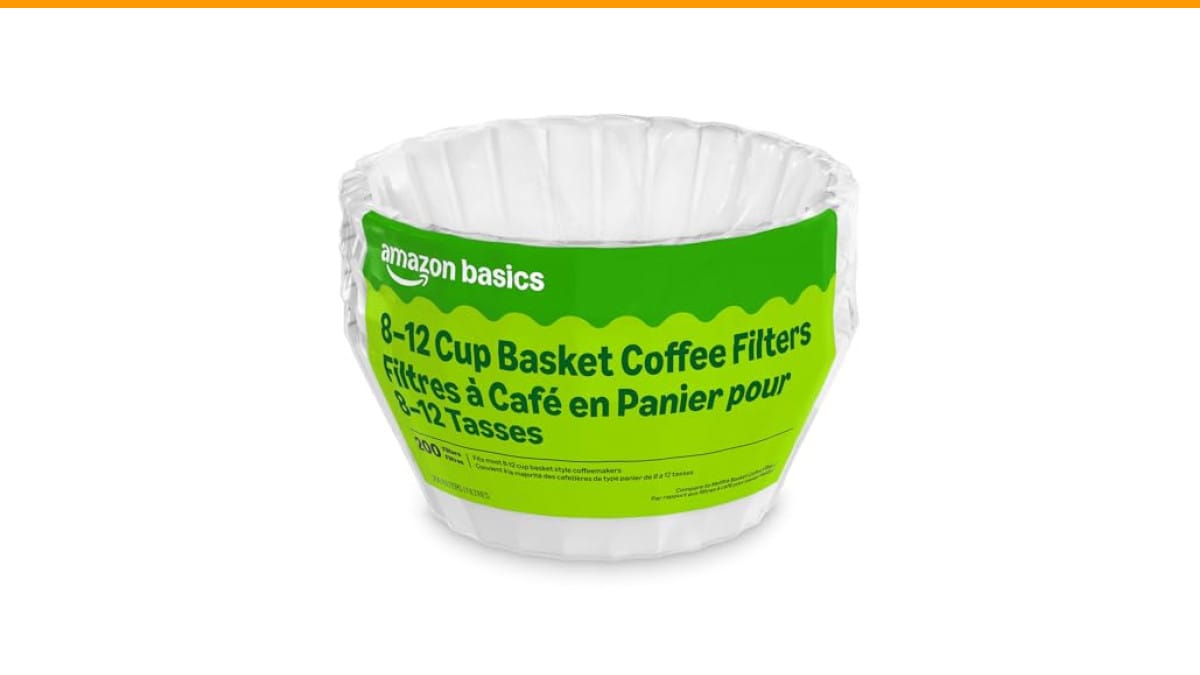
Amazon Basics Basket Coffee Filters for 8-12…
- SHIPMENT CONTAINS: 200 white basket coffee filters that fit most 8-12 cup basket coffeemakers
- SUPERIOR FILTRATION: Provides excellent coffee filtration that eliminates gritty sediment while allowing the great coffee taste to…
- INDUSTRIALLY COMPOSTABLE DESIGN: Filter meets ASTM D6868-11 standard and can be composted where municipal or industrial composting…
As an Amazon Associate I earn from qualifying purchases.
If you use a standard drip coffeemaker, a solid starting point is the Amazon Basics Basket Coffee Filters. They fit most 8–12 cup basket machines, and the 200-count box means you won’t restock every week. The filtration is tight enough to stop grit but open enough for the coffee oils to pass through.
Know Your Filter Shape: Basket vs. Cone
Your coffeemaker dictates which filter you need. It is not a choice. A basket filter is flat-bottomed with pleated sides. A cone filter is pointed, like a V. Put a cone filter in a basket machine and you will get a mess. Put a basket filter in a cone brewer and the grounds will slide off the sides and under-extract.
Check the manual or look inside the brew basket. If the bottom is flat with a small hole, it is a basket. If the bottom is a funnel with a single hole, it is a cone. Most standard drip machines from Mr. Coffee, Hamilton Beach, and Cuisinart use basket filters. Chemex and most pour-over drippers use cone filters.
There is a third style: the #4 cone filter. It is larger than the #2 cone. It fits brewers like the classic V60 and many ceramic drippers. The #2 is smaller and suits single-cup drippers. Using a #2 in a #4 dripper forces you to overfill it, which causes the paper to tear or the grounds to spill over.
How to Use a Basket Coffee Paper Filter
Basket filters are the easiest to use correctly. Open the filter, and it is already shaped like a bowl. Place it into the brew basket with the pleats facing up and outward. The paper should sit flush against the sides. If the filter is too small, it will collapse. If it is too large, it will fold over the rim and let grounds slip around the edge.
Before adding coffee, wet the filter with clean water. This is not mandatory for a drip machine, but it does two things: it removes the papery taste, and it seals the filter against the basket walls. Run just enough water to wet the entire surface. For a 10-cup basket, that is about a quarter cup of water.
Add your ground coffee. Level it off with a spoon or shake the basket gently. Do not tamp it down. Paper filters need loose coffee for water to flow through evenly. If you press the grounds into a puck, the water will channel through one spot and leave the rest dry.
One thing I see often: people fold the edges of a basket filter to make it fit a smaller machine. Do not do this. Folding creates gaps where coffee fines escape into the pot. Buy the right size instead. A #4 basket filter is roughly 8 inches across. A #2 is closer to 6 inches. Measure your basket before ordering.
How to Use a Cone Coffee Paper Filter
Cone filters require a specific fold along the sealed seam. Most cone filters arrive with a crimped edge running down one side. Fold that seam over about half an inch. This opens the filter into a full cone shape and lets it sit flush in the dripper.
Place the folded filter in the dripper. Press it down gently with your fingers so the paper touches the ribs of the dripper. Those ribs are not decorative; they create air channels for water to flow through. If the paper blocks the ribs entirely, you get a stalled brew. Wet the filter with hot water. This pre-heats the dripper and your mug or carafe. It also kills that cardboard flavor. Pour the rinse water out before adding coffee.
Add coffee and level the bed. For a pour-over, the water should hit the center of the grounds and spiral outward. Keep the water level below the top edge of the paper. If you fill it to the brim, the paper will sag and overflow. For a Chemex filter, the thicker paper requires a slower pour. The brew time will be longer than a standard cone, and that is normal.
Common Mistakes That Ruin a Filtered Brew
Most bad pots are not the coffee’s fault. Here are the four mistakes I see in my testing kitchen:
- Using the wrong filter size. A filter that is too small collapses into the hole. A filter that is too large folds over the rim. Both cause channeling and weak coffee.
- Skipping the rinse. Unrinsed paper adds a dry, papery note to the cup. It is subtle in a drip machine but very obvious in a pour-over. Rinse every time.
- Overfilling the filter. Coffee expands when it blooms. If the filter is packed to the top, the grounds will swell past the paper and spill into the brew. Leave at least an inch of headroom.
- Forgetting to clean the brew basket. A dirty basket has old oils that clog the paper. The filter can only do so much. A clean machine is part of the equation. Check our coffee maker cleaning guide for the full routine.
There is also the matter of disposal. Paper filters are compostable in industrial facilities, not always in your backyard pile. The Amazon Basics basket filters meet the ASTM D6868-11 standard for compostability. That is a real spec, not marketing talk. If your city has industrial composting, toss them in the green bin. Otherwise, they go in the trash.
Paper vs. Metal vs. Cloth: Which Filter Wins?
I have used all three side by side on the same grinder and the same beans. The differences are clear.
| Filter Type | Body in Cup | Oils & Flavor | Cleanup | Cost Over Time |
|---|---|---|---|---|
| Paper (basket or cone) | Clean, no sediment | Bright, crisp, less body | Throw away | Recurring, but cheap |
| Metal mesh | Fine silt at bottom | Heavy, oily, full body | Rinse under water | One-time purchase |
| Cloth (cotton/hemp) | Very little sediment | Balanced, smooth | Rinse and boil weekly | Replace every 3–6 months |
Paper filters remove the most sediment. That is why a paper-filtered cup tastes cleaner and brighter. Metal filters let the oils through, which adds body but also a bit of grit at the end of the cup. Cloth is a nice middle ground, but it holds onto oils and can go rancid if you do not clean it properly.
For a standard drip machine, paper is the right call. It is consistent, disposable, and does not require the maintenance that cloth does. If you switch to a metal filter, expect a different cup. Not better or worse, just heavier.
Can I reuse a paper coffee filter?
Technically yes, but you should not. A used filter has clogged pores and trapped oils. The second brew will be slower and taste flat. Rinsing it does not restore the flow rate. At a few cents per filter, reuse is not worth the bad cup.
Why does my paper filter collapse during brewing?
Two reasons. The filter is too small for the basket, or you did not wet it before adding coffee. A dry filter sits loose and can fold inward when water hits it. Wetting the filter first seals it against the walls and keeps it open.
Do I need to fold the seam on a cone filter?
Yes, for most cone filters. The crimped seam is stiff. If you do not fold it, the filter will not sit flush against the dripper, and water will run down the outside of the paper, bypassing the coffee. Fold the seam, then press the filter into the cone.
Are bleached filters bad for you?
No. The bleaching process used for white filters is oxygen-based, not chlorine-based. The FDA and other health bodies have reviewed these papers and found no significant dioxin residue. If you still prefer unbleached, brown filters work exactly the same. They just look different in the basket.
Can I use a paper filter in a French press?
Yes, you can. Some people place a paper filter over the plunger screen to catch the fines that normally end up in the cup. It works, but it slows the plunge and filters out the oils that make French press coffee distinct. I would only do this if you hate the grit.
Quick Checks Before You Brew
You do not need a scale or a fancy kettle to get this right. You just need to check a few things before hitting the brew button.
- Confirm the filter shape matches your brewer. Basket for flat-bottom, cone for V-shaped.
- Wet the filter before adding coffee. It removes paper taste and seals the sides.
- Leave headroom in the filter for the coffee to bloom and expand.
- Level the coffee bed so water extracts evenly.
- Keep your brew basket and machine clean. Old oils will clog any filter. Follow a clogged coffee maker fix if you notice slow flow.
- Compost the used filter if your city supports industrial composting. Otherwise, trash it.
- Buy the right size in bulk. A 200-count box like the Amazon Basics basket filters lasts a couple of months with daily brewing.
Get these steps down, and the paper filter becomes the easiest part of your morning routine. The coffee will taste cleaner, the pot will pour without grit, and you will stop blaming the beans for a problem that was in the basket.
Products related to this article
Sponsored / affiliate links. As an Amazon Associate I earn from qualifying purchases. I may earn additional commission from eligible campaigns.
 Stainless Steel Moka Pot Coffee Filter Disc for Espresso Brewing, Coffee Maker Replacement Filter Plate for Home Office Coffee Bar Cafe (FOR 4 Cups)
 HomeBeyond Espresso Coffee Maker 12 Cups, Classic Stovetop Espresso Maker, 600ml / 20oz Coffeemaker for Gas & Ceramic Stovetops (Silver)
 For silver Moka Pot Funnel Filter Aluminum Replacement, for 1, 2, 3, 6, 9, 12 Cup Espresso Coffee Maker Parts(450ML)