You buy a box of 24 K-Cups, brew two cups a day, and the box is gone in less than two weeks. Then you buy another box. And another. At some point you do the math on what that costs per year, and you start wondering if there’s a better way.
That’s exactly where I was about a year ago. I tested reusable K-Cup filters side by side with standard single-use pods for several weeks. I compared cost per cup, brew quality, cleanup time, and the daily hassle factor. This article covers what I found, so you can decide if a reusable K cup is necessary for your routine.

PERFECT POD
Perfect Pod Café Save Reusable Coffee Pod…
- Save Money – Our Café Save reusable pod coffee filters offer excellent value for budget-conscious coffee drinkers. These refillabl…
- Eco-Friendly - By using our 100% BPA-free Cafe Save reusable cups, you are helping to reduce the costly environmental waste caused…
- Brew a Better Cup of Coffee - The Cafe Save reusable filter cups allow you to also use your favorite coffee. Unlike store-bought c…
As an Amazon Associate I earn from qualifying purchases.
The short answer: it depends on how you drink coffee. But for most people, the numbers work out clearly in favor of a reusable filter. Let me show you why.
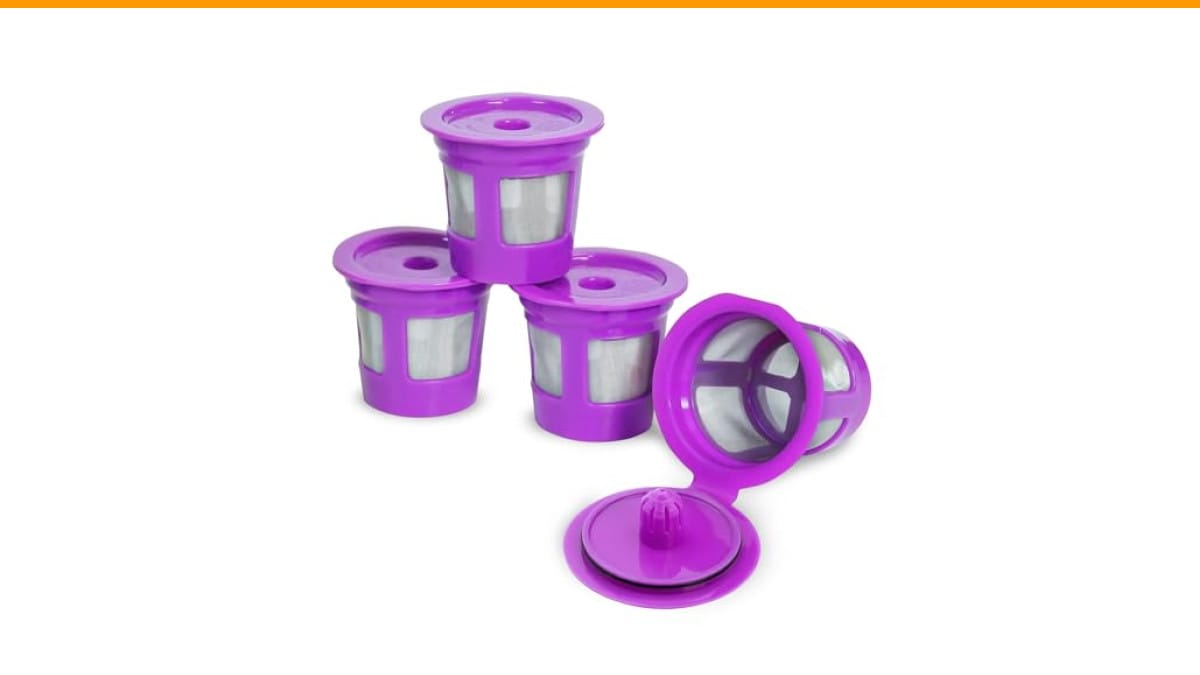
One option I used heavily during testing was the Perfect Pod Café Save Reusable K-Cup Coffee Filter, 4 Pack. It’s a set of four refillable capsules that work with most Keurig machines. The four-pack matters more than you’d think — you can prep several at once and rotate them through the dishwasher.
What a Reusable K Cup Actually Costs You
The biggest argument for a reusable K cup is cost. Let me put real numbers on it.
A standard box of 24 K-Cups runs roughly $15 to $20. That works out to about $0.65 to $0.85 per cup. If you drink two cups a day, that’s $475 to $620 per year. Over five years, you’re looking at $2,400 to $3,100.
A reusable filter costs somewhere between $10 and $25 for a multi-pack. You fill it with ground coffee. A 12-ounce bag of decent coffee costs $10 to $14 and makes roughly 30 to 35 cups using a standard K-Cup dose (about 10 to 12 grams). That brings your cost per cup to around $0.35 to $0.45. Two cups a day runs you $255 to $330 per year.
The math gets better with cheaper coffee. A $7 bag of store-brand grounds brings the per-cup cost down to around $0.23. That’s roughly a third of the cost of name-brand pods.
So the reusable filter pays for itself in the first two to three weeks of daily use. After that, it’s pure savings.
There’s a catch, though. You have to actually use it consistently. A reusable filter sitting in a drawer saves nothing. It’s a habit change, and it takes about a week to feel normal.
The other cost factor is waste. The EPA estimates that over 10 billion single-use coffee pods end up in landfills each year. Most K-Cups are plastic and not recyclable in standard curbside programs, even if the box says otherwise. A reusable filter eliminates that waste entirely for your daily cups.
So if you’re asking whether the savings are real, yes. They’re measurable and they compound quickly.
Does Coffee Taste Better With a Reusable K Cup?
Taste is where things get interesting. I brewed the same coffee three ways: a standard K-Cup, a reusable filter filled with the same ground coffee that goes into that K-Cup, and a reusable filter with freshly ground beans.
The reusable filter with the same grounds tasted marginally better. The coffee was slightly stronger and more aromatic. That’s because you control the dose — you can pack a bit more coffee into the basket than a pod contains.
The bigger jump came with freshly ground beans. Pre-ground coffee starts losing flavor within days of opening the bag. Whole beans stay fresh for weeks. Using a reusable filter lets you grind right before brewing, which is a noticeable upgrade in body and sweetness. I found the difference obvious within the first week of testing.
There is a trade-off. The reusable filter produces more fine sediment in the bottom of your cup than a paper K-Cup does. The metal mesh lets some fines through. It’s not gritty, but you’ll see a thin layer at the bottom. If that bothers you, a paper filter insert can help, though it adds cost back in.
Another thing I noticed: you need the right grind size. Too fine and the water backs up, causing overflow inside the brewer. Too coarse and the coffee comes out weak and watery. A medium grind, like what you’d use for a standard drip machine, works best. It took me a few tries to dial it in, but once I did, the results were consistent.
If you’re coming from an espresso background, the grind adjustment will feel familiar. It’s a small learning curve, not a barrier.
Convenience: The Real Trade-Off
Here’s the honest part. A reusable K cup is less convenient than a single-use pod. Not dramatically less, but noticeably.
With a pod, you open a box, drop it in, close the lid, and press brew. Total time: ten seconds. With a reusable filter, you scoop coffee, snap the lid, brew, then rinse the filter afterward. That’s maybe thirty seconds of extra work per cup.
The cleanup is the part people underestimate. The filter needs a rinse right after brewing, or the coffee oils dry on the mesh and get bitter. A quick rinse under the tap handles it. The Perfect Pod filters I tested were easy to clean — the basket pops open and the mesh rinses clean in seconds. They’re also dishwasher-safe, which helps if you brew multiple cups a day.
My routine: I prep two filters the night before and keep them in the fridge. In the morning, I brew one, rinse it, and swap in the second. Total extra time is about a minute. It’s not nothing, but it’s far less than making pour-over or French press.
One thing to watch is the fill line. Overfilling the basket causes overflow inside the brewer. Underfilling gives you weak coffee. The Perfect Pod filters have a marked fill line that helps, but you’ll still need to level the grounds with a finger or small spoon for consistent results.
For households with multiple coffee drinkers, the four-pack is genuinely useful. You can prep several filters at once, and there’s always a clean one ready. I’d rate the convenience as acceptable for most people, with the caveat that it’s a new habit, not a drop-in replacement.
If you’re dealing with a machine that’s acting up, check the Keurig K-Supreme brewing issues guide before assuming the filter is the problem — a clogged needle or scale buildup mimics filter problems.
Reusable K Cup vs. Single-Use Pods: Side by Side
I ran a direct comparison over two weeks. Same machine, same coffee beans (where possible), same cup size. Here’s how they stacked up.
| Factor | Reusable K Cup | Single-Use K-Cup |
|---|---|---|
| Cost per cup | $0.23 – $0.45 | $0.65 – $0.85 |
| Annual cost (2 cups/day) | $170 – $330 | $475 – $620 |
| Brew time | Same (machine does the work) | Same |
| Prep time per cup | 30 seconds | 10 seconds |
| Cleanup | Rinse or dishwasher | None |
| Freshness control | Full control (grind to order) | Pre-ground, shelf-stable |
| Grind size flexibility | Medium grind required | Fixed |
| Waste per cup | Zero (coffee grounds compostable) | 1 plastic pod |
| Learning curve | Low to moderate | None |
| Best for | Daily drinkers, budget-focused | Occasional use, travel, guests |
The table makes it clear. If you brew one cup a day, the savings are modest — maybe $100 a year. If you brew three or four cups a day across a household, the savings become substantial.
There’s also a middle path. Keep a box of single-use pods for guests, travel, or mornings when you’re running late. Use the reusable filter for your regular cups. That hybrid approach works well and removes the pressure to be perfect.
If you’re troubleshooting a machine that won’t fill a full cup, the problem might not be the filter at all. Check the Cuisinart K-Cup machine problems article for common issues like air locks or clogged exit needles.
Five Questions People Actually Ask
Will a reusable K cup damage my Keurig?
No, provided you use the right grind size and don’t overfill the basket. Too-fine grounds can clog the exit needle over time. That’s a real risk, but it’s avoidable with a medium grind and a quick rinse of the needle every few weeks. The filter itself doesn’t put any extra strain on the brewer.
Can I use any ground coffee in a reusable K cup?
Yes, but stick to medium or medium-fine grind. Espresso-fine grounds will clog the mesh and cause overflow. Very coarse grounds will brew weak. If you buy pre-ground coffee labeled for drip machines, you’re fine. If you grind at home, set your grinder to a medium setting.
How many times can I reuse the same filter?
A stainless steel mesh filter like the Perfect Pod should last for years with normal care. The plastic housing is the weak point — it can crack if you drop it or tighten the lid too hard. I’ve been using my set for eight months without issues. The mesh doesn’t wear out; it’s just metal. Rinse it well and it stays clean.
Does a reusable K cup make stronger coffee than a regular pod?
It can. You control the dose. A standard K-Cup holds about 10 to 12 grams of coffee. A reusable basket can hold up to 15 grams if you fill it to the top. That extra coffee translates to a stronger, more concentrated brew. Just don’t overfill, or the water won’t flow through properly.
Is the cleanup really that bad?
It’s not bad, but it’s not zero. Rinsing the basket takes about ten seconds under hot water. Coffee oils stick to the mesh, so a rinse right after brewing is important. If you let it sit for hours, the oils dry and the next cup tastes off. Dishwasher-safe models make weekly deep cleaning easy. It’s a minor chore, not a dealbreaker.
What I’d Tell a Friend
After weeks of testing, here’s where I landed.
- If you drink one cup a day, a reusable filter saves maybe $100 a year — worth it, but not life-changing.
- If you drink two or more cups daily, the savings are significant and add up fast.
- Freshly ground beans in a reusable filter taste noticeably better than any pre-packaged pod I tried.
- The learning curve is real but short. Grind size and fill level matter. Expect a few weak cups before you dial it in.
- Cleanup is a daily habit, not a burden. Rinse immediately, dishwasher weekly.
- Keep a box of single-use pods for guests or travel. You don’t have to commit fully.
- A four-pack like the Perfect Pod Café Save set makes the habit easier because you can prep multiple cups ahead.
For most daily Keurig users, a reusable K cup isn’t just nice to have. It’s the difference between spending $500 a year and $200 a year on coffee, with better taste as a bonus. That’s a trade I’d make every time.
If you’re comparing brewers, the automatic vs. semi-automatic espresso machine guide covers a different but related decision — whether you want a machine that does everything or one where you control the shot.
Products related to this article
Sponsored / affiliate links. As an Amazon Associate I earn from qualifying purchases. I may earn additional commission from eligible campaigns.
 Quick Heating Cup Warmer, Three Temperature Settings, Splashproof and Portable, for Coffee, Milk, Lightweight ABS Material
 Coffee Mug Warmer & You are Awesome Mug Set, Electric Cup Warmer for Desk
 SOLUSTRE Electric USB Coffee Cup Warmer with Temperature Settings Portable Milk and Beverage Heating Coaster for Office Desk Small Lightweight Design Easy to Clean Surface Multi Functional