You just spent good money on specialty beans, and the bag says to grind right before brewing. You pull out your old blade grinder, hit the button, and get a cloud of dust mixed with boulders. The coffee tastes bitter and sour at the same time. That’s the moment most people start looking for a manual grinder.
This guide covers what actually matters when you’re trying to figure out how to choose a manual coffee grinder. You’ll learn about burr geometry, grind adjustment mechanisms, capacity, and portability. You’ll also see a direct comparison of the main grinder types so you can match one to your daily routine.
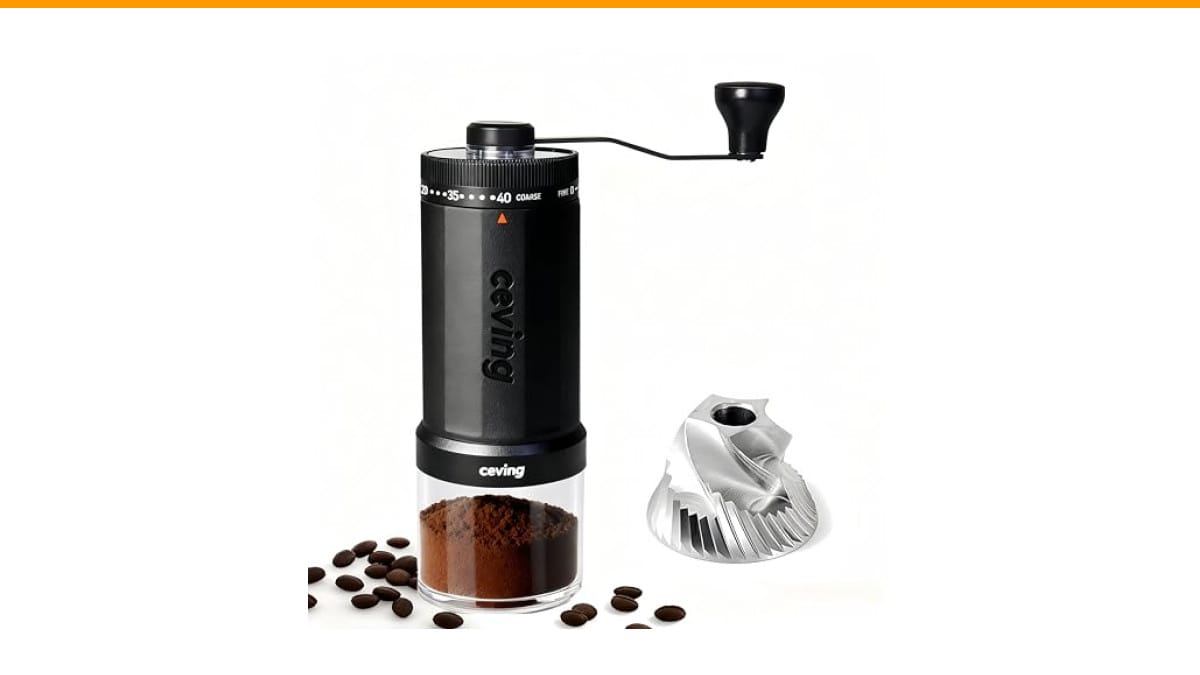
One option that solves several of these problems at once is the CEVING World's First 60g Large Capacity Manual Coffee Grinder. It’s a good example of a modern hand grinder that focuses on capacity and external adjustment, two things that used to be weak points in this category.
Burr Type: Conical vs. Flat vs. Blade
Your grinder’s heart is the burr set. This is the part that actually crushes the beans into uniform pieces. There are two real options for manual grinders, plus the blade grinders you should avoid.
Conical burrs are the standard for hand grinders. They work well at low speeds, which is exactly what you get when you turn a crank. The beans fall between a cone-shaped inner burr and a ring-shaped outer burr. Gravity feeds the beans through, and the grind size is set by the gap between the two.
Flat burrs are rare in manual grinders. They’re faster and often produce a more uniform particle size, but they need high RPM to work correctly. Your wrist can’t spin fast enough. When you do find a manual flat burr grinder, it’s usually expensive and slow.
Blade grinders chop beans with a spinning propeller. They create a wide range of particle sizes, which ruins extraction. You get over-extracted fines that taste bitter and under-extracted chunks that taste sour. The burr grinder vs blade difference is night and day once you taste both side by side.
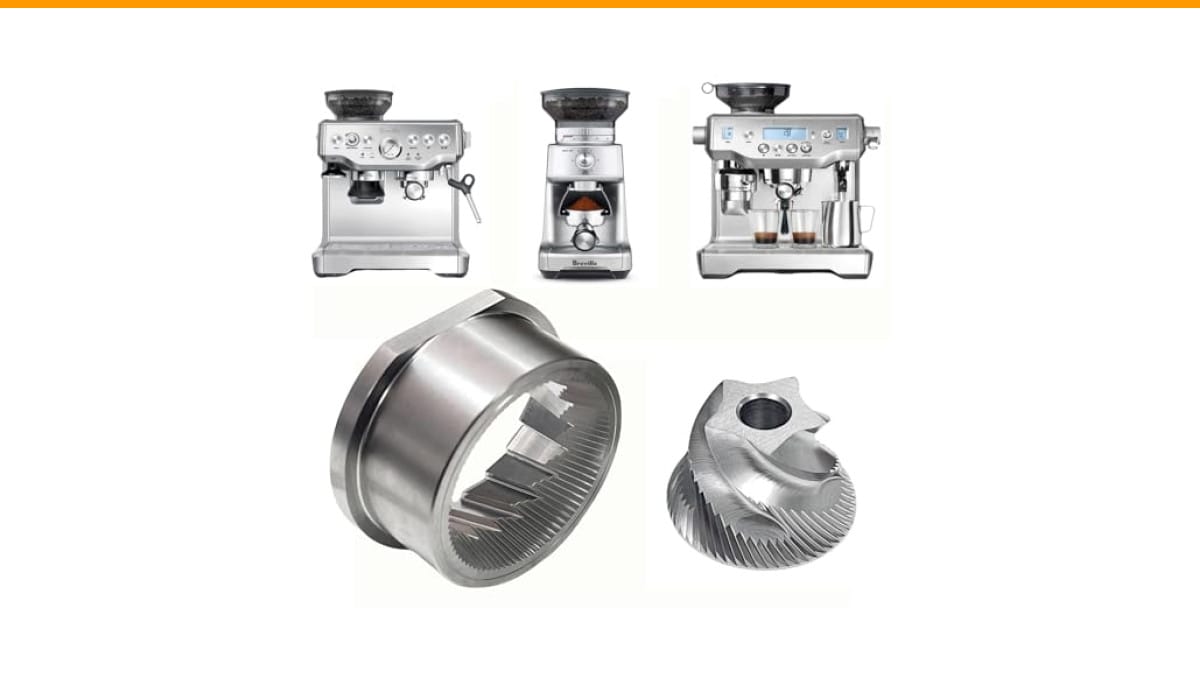
The CEVING grinder uses CNC steel conical burrs. Steel burrs are harder than ceramic ones, so they stay sharp longer and grind faster. Ceramic burrs are cheaper but can chip if you drop them or if a small rock sneaks into your beans. For daily use, steel is the safer bet.
Grind Adjustment: External vs. Internal
You need to change grind size when you switch from espresso to French press. The question is how you make that change.
Internal adjustment means you take the grinder apart, turn a dial on the shaft, and reassemble it. This is the old-school approach. It’s cheap to manufacture, but it’s a pain. You lose your previous setting, you get coffee grounds on your counter, and you have to guess where you were before.
External adjustment lets you turn a ring or dial on the outside of the grinder without taking it apart. You can see the number or click position. This is a massive quality-of-life improvement. The CEVING grinder has 40 external click settings, with each click moving the burrs by 0.05mm. That’s fine enough that you can dial in a pour-over and then switch to espresso without losing your place.
For most home users, external adjustment is the feature that separates a daily-use grinder from a weekend toy. If you only brew one method and never change, internal is fine. But once you start experimenting, you’ll want the external ring.
Capacity and Portability: What Do You Actually Need?
Most manual grinders hold between 20 and 30 grams of beans. That’s barely enough for a single 12-ounce pour-over. If you’re brewing for two people or making cold brew, you’re grinding twice. That doubles the grinding time and the wrist fatigue.
The CEVING grinder holds 60 grams, which is double the standard. You can grind a full French press batch or a large cold brew jar in one session. For camping trips or big family mornings, that’s a real advantage. It weighs 416 grams and measures 2.7 x 7.8 x 5.3 inches, so it’s still portable. It’s not the smallest grinder on the market, but it’s light enough to throw in a backpack.
Think about your actual usage. If you brew one cup at a time, a 20-gram capacity is fine. If you make a 1-liter French press every morning, you need at least 50 grams. Don’t buy a grinder that forces you to empty it and refill it mid-brew. That’s a workflow killer.
Manual vs. Electric: Which One Fits Your Routine?
This isn’t a competition. Both types have legitimate uses, and many coffee lovers own both.
| Feature | Manual Grinder | Electric Grinder |
|---|---|---|
| Price | Lower entry point, but premium manual can cost as much as electric | Higher for quality burr sets |
| Grind Speed | Slow, 30-60 seconds per dose | Fast, under 10 seconds |
| Portability | Excellent, no power needed | Bulky, requires outlet or battery |
| Noise | Quiet, just burr sounds | Loud, like a blender |
| Grind Consistency | Excellent with quality burrs | Excellent, more uniform at high speed |
| Capacity | Usually 20-30g, some up to 60g | Usually 50-100g hopper |
| Maintenance | Simple, brush out burrs | More parts, need to clean coffee grinder regularly |
Manual grinders win on price, portability, and noise. Electric grinders win on speed and batch capacity. The real question is where you brew. If you’re at a desk or in a camper van, manual makes sense. If you’re pulling back-to-back espresso shots for a crowd, electric is the better tool.
One honest caveat: manual grinding takes effort. A 20-gram dose of light roast takes about 45 seconds of steady cranking. That’s fine for a single cup, but it gets old if you’re grinding for four people. The 60g capacity of the CEVING helps, but you’re still cranking for a solid two minutes for a full batch.
Build Quality and Materials: What to Look For
Cheap grinders feel like toys. The handle wobbles, the burrs slip, and the adjustment ring strips after a month. You don’t need to spend $200 to get a decent grinder, but you should avoid anything under $30 that claims to be a burr grinder. It’s usually a fake burr set with a blade underneath.
Look for a full metal body or a high-quality plastic that doesn’t flex. The CEVING uses a stainless steel burr set and a body that feels solid in the hand. The handle should lock into place with no play. The adjustment ring should click firmly, not slide freely. If you can wiggle the burr shaft by hand, the alignment is bad and your grind will be inconsistent.
Cleaning matters too. You should brush out the burrs every couple of weeks to keep performance consistent. The step-by-step cleaning guide on this site covers the process in detail. A grinder with removable burrs is much easier to maintain than one where you have to dig grounds out of a crevice with a toothpick.
Real Questions People Ask About Manual Grinders
Is a manual grinder worth it if I already have an electric one?
Yes, for travel and for single doses. Electric grinders with hoppers keep beans exposed to air, which speeds up staling. A manual grinder lets you grind exactly what you need, when you need it. Many people use an electric for daily batches and a manual for camping, office, or travel. The manual also serves as a backup if the electric breaks.
How long does it take to grind coffee by hand?
For a typical 15-20 gram dose, expect 30 to 60 seconds. Light roasts are denser and take longer than dark roasts. A grinder with sharp steel burrs, like the CEVING, cuts faster than ceramic burrs. If you’re grinding a 60-gram batch, budget around two minutes. It’s not fast, but it’s quiet and gives you a moment to boil water.
Can a manual grinder do espresso?
Yes, but only if it has fine adjustment. You need to make tiny changes, around 0.02 to 0.05mm per step, to dial in espresso properly. A grinder with only 8 or 10 coarse steps won’t work. The CEVING’s 40 external settings with 0.05mm increments are enough for most home espresso machines. You’ll still need to adjust based on your specific machine and beans.
What’s the difference between steel and ceramic burrs?
Steel burrs are harder, sharper, and last longer. They grind faster and produce less heat, which preserves aroma. Ceramic burrs are cheaper and lighter but can chip if you drop the grinder or hit a hard object. For daily use, steel is the better investment. The CEVING uses precision CNC steel burrs, which is a good sign for durability.
How do I know what grind size to use?
Start with a reference chart and adjust by taste. For espresso, you want a fine, powdery grind that feels like table salt. For pour-over, aim for medium-fine, like sand. For French press, go coarse, like sea salt. The key is consistency and adjustment. If your brew tastes sour, grind finer. If it tastes bitter, grind coarser. Your grinder’s adjustment ring is your main tool for this.
What to Actually Do Next
You don’t need a $300 grinder to make great coffee. You need a grinder with sharp steel burrs, external adjustment, and a capacity that matches your brewing volume. The CEVING 60g option checks those boxes at a reasonable price point. It’s not the smallest or the lightest, but the large capacity and 40-click adjustment make it a strong everyday choice.
- Always choose burr grinders over blade grinders. The particle consistency is the whole game.
- External adjustment rings beat internal dials for daily use. You’ll actually change your grind size.
- Match capacity to your brew batch. A 60g grinder handles a full French press without refilling.
- Steel burrs outlast ceramic and grind faster. Worth the small price premium.
- Check the current price on Amazon before buying. Prices fluctuate, and you might catch a deal.
- Clean your grinder every few weeks. A brush and a few minutes keeps the burrs sharp and the coffee tasting clean.
- Buy a grinder that fits your routine, not the one with the most features. A simple grinder you use daily beats a complex one you ignore.
If you’re still on the fence about manual vs. electric, read our grinder comparison for a deeper look. And once you own a grinder, keep it in good shape with proper cleaning to get the most out of your beans.
Products related to this article
Sponsored / affiliate links. As an Amazon Associate I earn from qualifying purchases. I may earn additional commission from eligible campaigns.
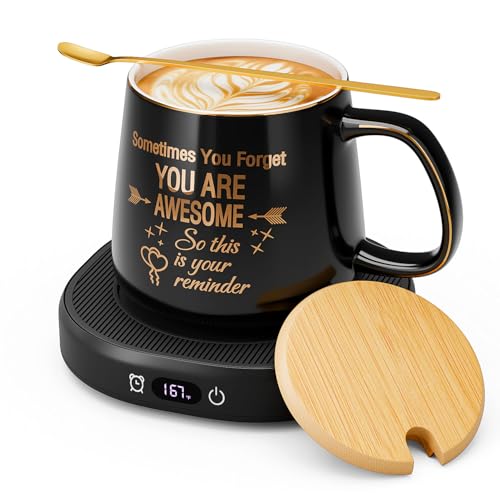 Coffee Mug Warmer & You are Awesome Mug Set, Electric Cup Warmer for Desk
 Coffee Espresso Machine Handle Replacement Parts, Cafe Bracket Handle for Lidl Silvercrest CM4621 CM4218 KF5002 KF500S Barista (for 51mm Portafilter Basket - Not included)
 Coffee Mug Warmer & You are Awesome Mug Set, Electric Cup Warmer for Desk