You just finished your coffee, the mug is sitting on the counter, and you are wondering if you can just toss it in the drawer. With a regular ceramic mug, sure. But a self heating coffee mug holds a lithium-ion battery, a heating element, and sensitive electronics. Treat it like a regular mug and you will eventually kill the battery or ruin the seal.
This guide covers the right way to store these mugs for daily use, overnight, and long-term travel. I will get into specific temperatures, charge levels, and cleaning habits that most people get wrong. You will also learn why the lid is often the first thing to fail and how to prevent that.

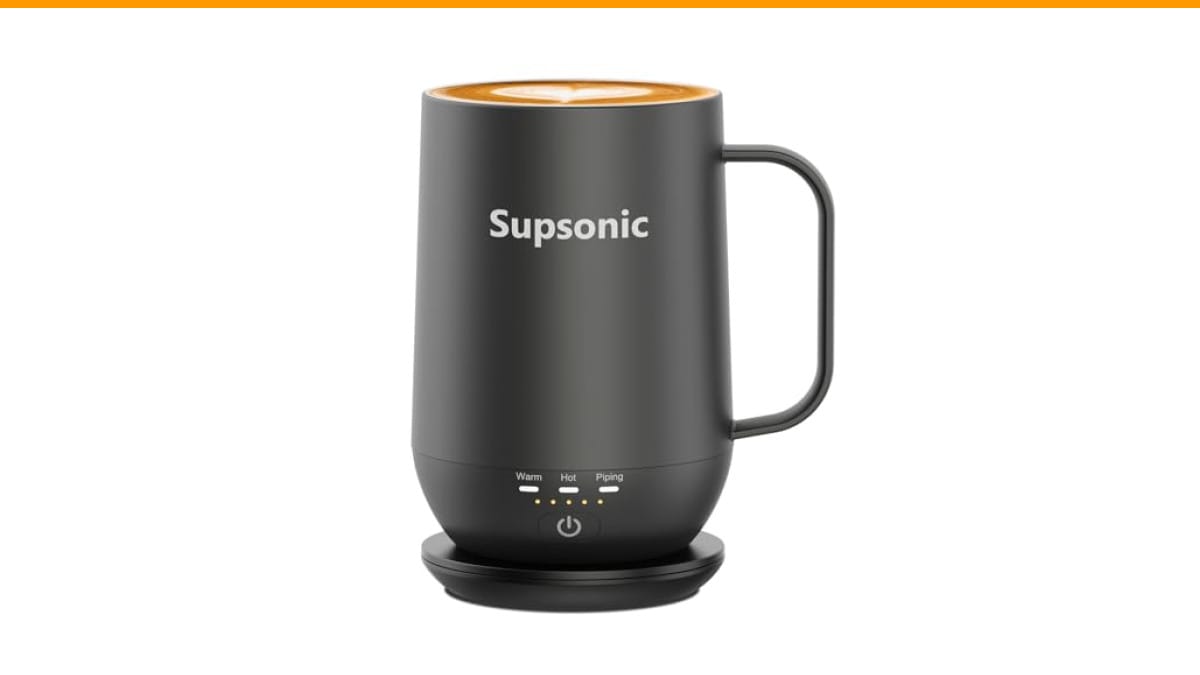
Supsonic
Supsonic - 16oz Self Heating Coffee Mug,…
- 3-Touch Precision: Get barista-level temperature control at your fingertips. Choose Piping (149°F) for a fresh-brewed feel, Hot (1…
- Warmth That Lasts: Supsonic heated coffee mug features a built-in battery that provides long-lasting power, enough to meet your ne…
- Smart Safety: Designed for real life. Supsonic self heating mugs feature a 2-hour auto-shutoff and dry boil protection keep you sa…
As an Amazon Associate I earn from qualifying purchases.
I have tested several self heating mugs over the last year, including the Supsonic S2 16oz self heating mug. It is the one I keep on my desk because the direct-contact heating plate gets coffee to 149°F fast, and the 2-hour auto shutoff means I do not have to worry about it running all day.
Why Storage Conditions Matter for a Heated Mug
The battery inside a self heating mug is the same type of lithium-ion cell used in phones. Heat degrades it. Cold degrades it. Leaving it at 100% charge for weeks also degrades it. The difference is that your phone sits in a climate-controlled room. Your mug might sit in a hot car, a cold garage, or a damp cabinet.
Most manufacturers, including Supsonic, recommend storing the mug in a dry place between 32°F and 95°F. That is a wide range, but the real sweet spot is around 60°F to 70°F. I keep mine in a kitchen cabinet away from the dishwasher and stove. The heat from the oven vent alone can push a cabinet above 100°F if you bake often.
Moisture is the bigger enemy. The charging contacts on the bottom are exposed metal. If you store the mug in a humid area or put it away while still damp, those contacts can corrode. I have seen this happen on a cheaper mug where the charger stopped making a solid connection after three months.
The Right Way to Store It Daily (After Every Use)
Here is the routine I follow after finishing a drink. It takes two minutes and prevents most common issues.
- Empty the mug completely. Do not leave coffee or tea sitting in it overnight. The stainless steel interior is taste-neutral, but the heating element is behind that steel. Acidic drinks left to sit can eventually degrade the seal around the base.
- Rinse with warm water. Use a soft sponge. Avoid abrasive scrubbing pads on the interior. The steel is durable, but scratches create tiny crevices where residue collects.
- Dry the exterior, especially the bottom. Wipe the charging contacts with a dry cloth. Any water left on those contacts when you set the mug on the dock can cause a short or corrosion over time.
- Store with the lid off. This is the step most people skip. The lid has a silicone gasket that holds in heat and prevents spills. If you store the mug with the lid sealed, moisture gets trapped inside. That trapped moisture can cause mold in the gasket area and a musty smell that is hard to remove.
- Set it on the charging dock or a dry shelf. If you use it daily, keeping it on the dock is fine. The dock trickle-charges the battery. If you skip the dock, store it on a flat, dry surface.
One thing I learned the hard way: never store the mug upside down. The lid might seal, but the heating element and battery are in the base. Any residual liquid can pool near the electronics.
Long-Term Storage and Travel (What to Do Before You Put It Away)
If you are not going to use the mug for a week or more, do not just empty it and toss it in a drawer. Lithium-ion batteries have specific storage requirements.
The ideal charge level for long-term storage is between 40% and 60%. A full charge stresses the battery chemistry. A dead battery can drop below the minimum voltage and become unrecoverable. I check the charge level on the mug’s LED indicator before storing it. If it is above 80%, I use it a few more times. If it is below 30%, I put it on the dock for about an hour.
For travel, the same rules apply, but you also need to protect the base. The charging contacts are on the bottom, and they can get scratched if the mug rattles around in a bag. I wrap the base in a soft cloth or use a padded sleeve. The Supsonic mug comes with a charging dock, and I have thrown the dock in my carry-on with the mug. The dock is slim enough to fit in a side pocket.
If you are flying, check the airline policy on lithium-ion batteries. Most allow devices with batteries under 100 watt-hours in carry-on luggage. A self heating mug is well below that limit, but the TSA may want to inspect it. I have flown with mine twice and never had an issue, but I always keep it in my carry-on, never in checked luggage.
Before you store it long-term, clean it thoroughly and let it air dry completely. I also recommend a quick wipe of the charging contacts with a dry cotton swab to remove any film.
Cleaning Mistakes That Shorten the Mug’s Life
You should never submerge a self heating mug in water. The base is not waterproof. I know the stainless steel interior makes it look like a regular thermos, but the electronics are in the base. Submerging it can permanently damage the heating element.
Most manufacturers, including Supsonic, say the mug is hand-wash only. You can rinse the interior, but you should not soak it. For the lid, you can wash it separately in warm soapy water, but check if the lid has any electronics. The Supsonic lid is a simple plastic lid with a rubber gasket, so it is safe to hand wash.
For deep cleaning the interior, I use a mixture of warm water and a drop of dish soap. I swirl it around, let it sit for a few minutes, then rinse thoroughly. For stubborn coffee stains, a paste of baking soda and water works well. Avoid vinegar for long soaks because it can be acidic and potentially damage the seal over time. If you want to know more about cleaning coffee gear in general, check out our coffee maker cleaning guide.
Comparing Storage Methods for Different Scenarios
| Storage Scenario | Best Method | Charge Level | Key Risk |
|---|---|---|---|
| Daily use (next day) | On charging dock, lid off | 100% (trickle charge) | Moisture on contacts |
| Weekend away (2-3 days) | Dry shelf, lid off | 50-80% | Battery drain |
| Long-term (1 month+) | Dry cabinet, padded bag | 40-60% | Battery degradation |
| Travel (carry-on) | Padded sleeve, base protected | 50-80% | Contact scratches |
| Travel (checked bag) | Not recommended | N/A | Battery restrictions |
Notice the pattern: the more time in storage, the lower the target charge level. This is not just a preference; it is how lithium-ion chemistry works. High voltage stress causes the electrolyte to break down faster. Keeping the cell at half charge slows that breakdown significantly.
Also note the lid rule. I always store the mug with the lid off, regardless of the scenario. The only exception is travel, where the lid stays on to prevent spills, but I make sure the interior is bone dry first.
Frequently Asked Questions
Can I put a self heating mug in the dishwasher?
No. The base contains the battery and heating element, and it is not sealed against water pressure. Dishwasher detergent is also more aggressive than hand soap and can degrade the plastic or the seal over time. Hand wash the interior and the lid only.
Is it safe to leave the mug on the charging dock all day?
Yes, for most models. The Supsonic mug has overcharge protection and an auto shutoff. The dock stops charging once the battery is full. Leaving it on the dock does not harm the battery as long as the contacts are dry. I leave mine on the dock every day and have not noticed any battery degradation.
Can I store the mug with coffee still in it?
Technically yes, but you should not. Coffee is acidic and can break down the seal over time. More importantly, the heat retention of the mug will keep the coffee warm for a while, which encourages bacterial growth. Always empty and rinse the mug before storage.
Does cold weather damage the battery?
Extreme cold can reduce battery capacity temporarily. Storing the mug below freezing is not recommended. The electrolyte in lithium-ion batteries can thicken at low temperatures, which reduces the ability to deliver current. If you leave the mug in a cold car overnight, let it warm up to room temperature before charging or using it.
How do I clean the charging contacts?
Use a dry cotton swab or a soft microfiber cloth. Gently rub the metal contacts on the bottom of the mug and on the dock. If there is visible corrosion, a tiny bit of isopropyl alcohol on a swab can help, but make sure it is completely dry before charging. Do not use water.
What I Do Every Night (A Simple Routine)
- Empty the mug and rinse it with warm water immediately after the last drink.
- Dry the interior and exterior with a cloth, paying extra attention to the bottom contacts.
- Leave the lid off to let the gasket air out.
- Place the mug on the charging dock, unless the battery is above 80%.
- If I am traveling the next day, I wrap the mug in a soft cloth and pack it in my carry-on.
That is the whole routine. It takes less than two minutes and it has kept my Supsonic mug working perfectly for months. The only issue I have had is a slightly loose lid gasket after a lot of use, but that is a wear item, not a storage problem.
For anyone who uses their mug daily, the biggest takeaway is to keep the contacts dry and the lid off when not in use. For occasional users, check the charge level before storing it away for weeks. And if you are looking for more ways to keep your coffee gear in top shape, read our guide on coffee machine maintenance or the grinder comparison if you are also upgrading your setup.
Products related to this article
Sponsored / affiliate links. As an Amazon Associate I earn from qualifying purchases. I may earn additional commission from eligible campaigns.