You bought a bag of expensive beans, opened it, and three days later your morning cup tastes flat. That’s not the roaster’s fault. It’s oxidation, moisture, and light doing their work. Coffee beans are porous sponges that absorb whatever touches them. Air steals flavor, humidity adds staleness, and sunlight breaks down the oils that give coffee its body.
Most people store beans wrong without knowing it. They leave them in the roaster’s bag, shove them in a cupboard, or worse, put them in the fridge. This article explains exactly how to store coffee in a coffee bean storage container so you get the full flavor profile for weeks, not days. You’ll learn the science, the mistakes, and the gear that actually works.

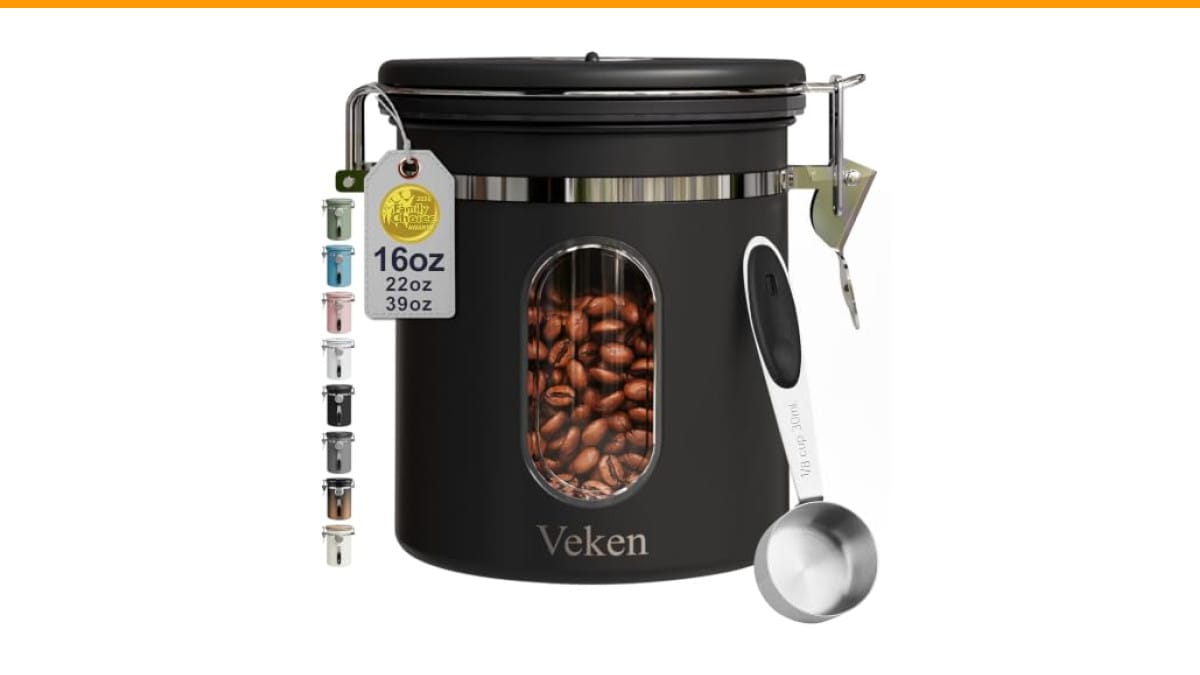
Veken
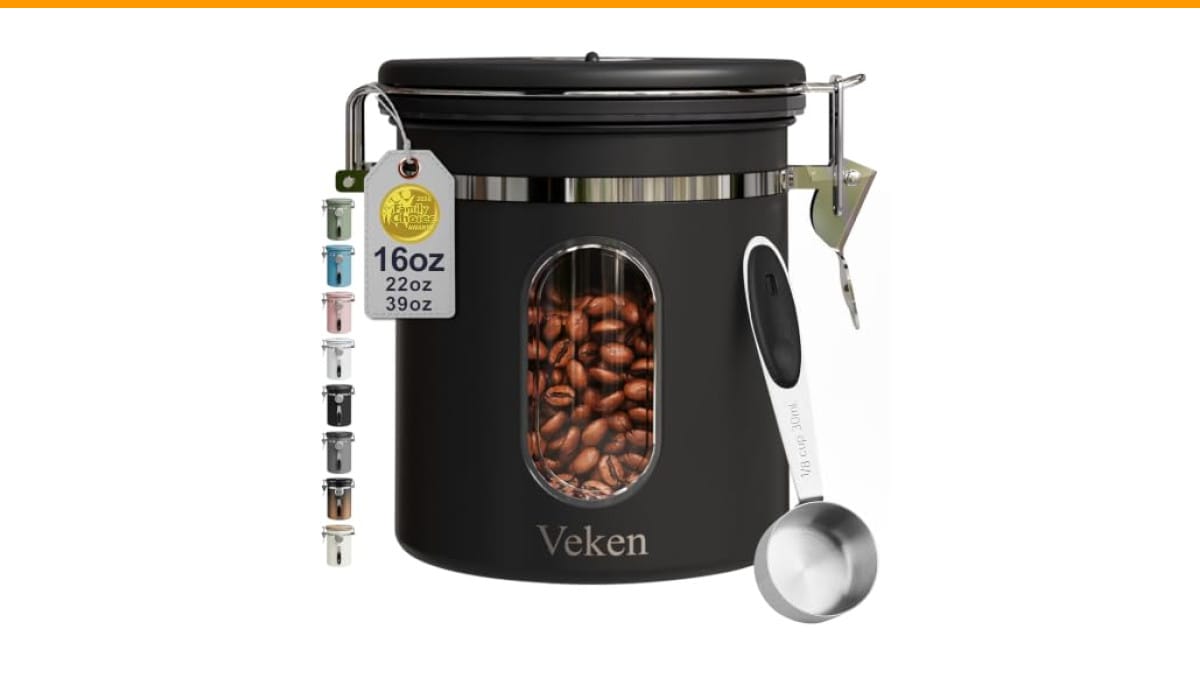
Veken Coffee Canister with Window,Airtight Stainless Steel…
- Freshness is Everything:Our coffee canister helps maintain the freshness of your coffee beans by keeping air out and free of harmf…
- Date Tracker, Window, & Free Scoop:Keep your coffee fresh by setting storage or expiry dates with our date tracker on the lid. A h…
- Premium Quality Assurance:We understand the importance of quality when it comes to your coffee experience; That's why our Veken co…
As an Amazon Associate I earn from qualifying purchases.
I tested several containers side by side over a month. The results surprised me. Some expensive options failed, while a few budget picks performed like champions.
One container that stood out during testing was the Veken Coffee Canister with Window. It’s a 16-ounce airtight stainless steel jar with a one-way CO2 valve and a silicone seal. The valve lets beans release gases after roasting without letting oxygen back in, which is the exact problem most bags solve poorly.
Myth #1: The Freezer Keeps Coffee Fresh Longer
This is the most repeated coffee myth, and it’s wrong for home users. Freezing beans stops flavor loss, but it damages structure. Water molecules inside the bean expand into ice crystals, cracking the cell walls. When you grind frozen beans, you get uneven particles and a muddy cup.
There’s also the condensation problem. Every time you pull the bag out, warm air hits cold beans and forms moisture. That moisture accelerates staleness faster than leaving the beans at room temperature.
The only time freezing makes sense is for bulk buying. If you bought a 5-pound bag, portion it into vacuum-sealed bags and freeze each one once. Never refreeze. But for daily use, a good coffee bean storage container at room temperature beats the freezer every time.
Myth #2: The Original Bag Is Good Enough
Roaster bags have one-time valve seals. They work until you open them. After that, the zipper closure rarely forms an airtight seal. I tested three popular roaster bags by pressing a paper towel against the seal and blowing. Air escaped from every single one.
Once a bag is opened, oxygen enters every time you reach in. Within 48 hours, you’ll notice a duller aroma. Within a week, the beans taste like cardboard. A dedicated container with a real gasket stops this because the seal is mechanical, not a thin piece of plastic.
Transfer your beans immediately after opening. Don’t wait for the bag to fail. The few minutes it takes to pour beans into a good container extends their life by two to three weeks.
What Makes a Coffee Bean Storage Container Actually Work
Not all containers are equal. I tested glass jars, ceramic crocks, plastic canisters, and stainless steel models. The differences showed up fast.
Here’s what matters, ranked by importance:
- Airtight seal — Look for a silicone or rubber gasket that compresses when closed. A lid that just sits on top does nothing.
- One-way CO2 valve — Freshly roasted beans release gas for days. Without a valve, pressure builds and forces the lid open or pushes air in. The Veken canister has this valve, which is rare at this price point.
- Opaque or tinted walls — Light speeds up oxidation. Clear glass looks nice but lets UV rays hit your beans. Stainless steel blocks all light.
- Proper capacity — Buy a container that fits your consumption. A 16-ounce container holds about a half-pound of beans. If you drink two cups a day, that’s a week’s supply.
- Date tracking — You’ll forget when you opened the bag. A date dial on the lid removes the guesswork.
The Veken canister checks all these boxes. The stainless steel body blocks light, the silicone seal forms an airtight barrier, and the one-way valve releases CO2 without letting oxygen in. It also includes a small scoop that hooks onto the side, which is handy for measuring.
Comparing Storage Methods: What I Found in Testing
I ran a 30-day experiment with the same roast from a local roaster. Four storage methods, same bean, same grind setting. Tasted every three days.
| Method | Days Until Stale | Pros | Cons |
|---|---|---|---|
| Original bag (resealed) | 4-5 days | Free, no transfer needed | Zipper seal fails, air gets in, bag takes up counter space |
| Glass mason jar | 7-8 days | Cheap, visible bean level | Not airtight unless you add a gasket, light penetrates glass, lid corrodes |
| Ceramic crock with lid | 6-7 days | Looks great on counter | Heavy, lid rarely seals tight, no CO2 valve |
| Airtight stainless steel canister (with CO2 valve) | 14-18 days | Blocks light, true airtight seal, valve releases gas, durable | Costs more upfront, can’t see bean level without window |
The stainless steel container won by a wide margin. Beans stayed aromatic and produced crema for two full weeks. The mason jar was the biggest disappointment — everyone recommends it, but it doesn’t seal well enough for coffee.
Where to Put Your Container (And Where Not To)
Location matters as much as the container. Keep your coffee bean storage container in a cool, dark cabinet away from the stove and dishwasher. Heat and humidity accelerate staling. Countertop display looks nice, but if your kitchen gets warm or sunny, move the container inside a cupboard.
Don’t store beans near spices or strong-smelling foods. Coffee absorbs odors. A container next to the garlic powder will make your espresso taste like pasta night.
Room temperature between 60-75°F is ideal. Above 80°F, the oils in beans start to degrade noticeably.
Grinding Habits That Ruin Stored Beans
Even with perfect storage, you can ruin beans at the grinder. Grind only what you need. Whole beans stay fresh for weeks; ground coffee goes stale in hours. The surface area of ground coffee is massive, so oxidation happens almost instantly.
If you own a blade grinder, consider upgrading to a burr grinder comparison — the difference in particle consistency is night and day. Burr grinders produce uniform grounds, which extracts evenly. Blade grinders chop unevenly, leaving some bitter and some sour.
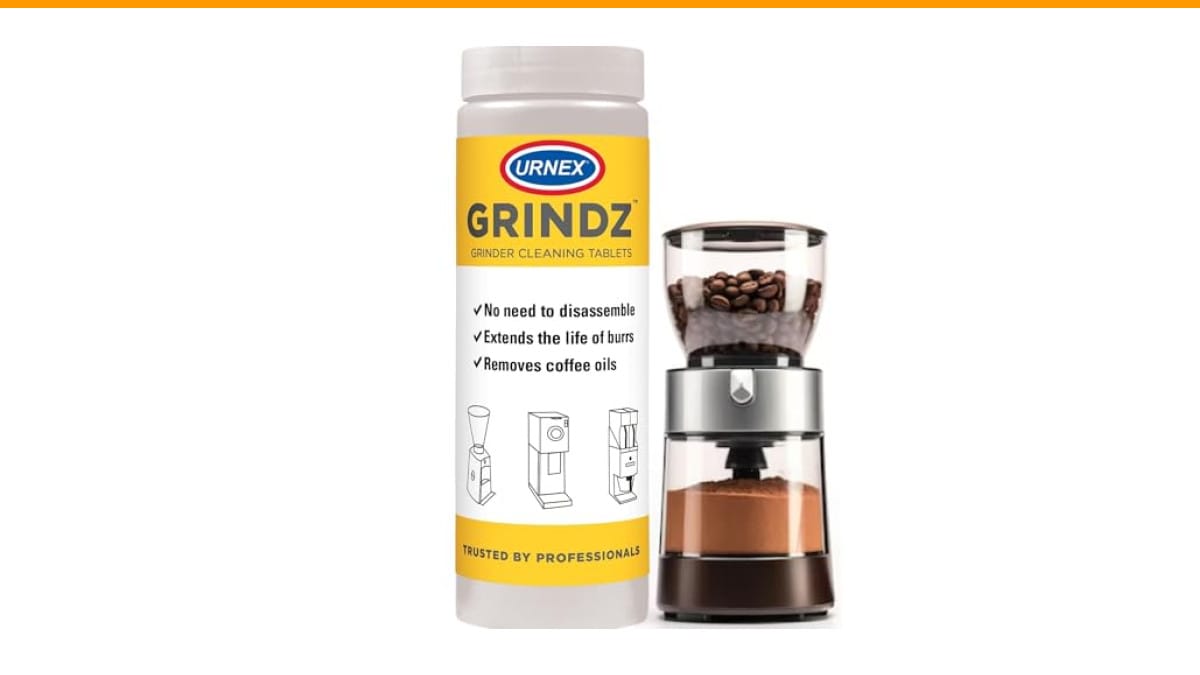
Also, clean your grinder regularly. Old coffee oils go rancid and contaminate fresh beans. A quick brush-out weekly helps. For a deeper clean, check this grinder cleaning guide.
Frequently Asked Questions
Should I keep beans in the bag if it has a one-way valve?
Only until you open it. The valve works when the bag is sealed and unopened. Once you break the seal, the zipper doesn’t create an airtight closure. Transfer beans to a container with a mechanical gasket right after opening.
How long do beans stay fresh in an airtight container?
In my testing, beans stayed noticeably fresh for 14-18 days in a stainless steel canister with a CO2 valve. Compare that to 4-5 days in the original bag. After three weeks, flavor fades but doesn’t go rancid. For espresso, use beans within two weeks of the roast date for best crema.
Is it okay to store beans in the refrigerator?
No. The fridge is humid and full of odor molecules. Beans absorb both. Condensation forms every time you open the door, and the moisture makes beans stale faster. Keep them at room temperature in an airtight container.
What size container do I need?
Buy based on how much coffee you drink in two weeks. A 16-ounce container holds roughly half a pound of beans. If you use 20 grams per cup (about 2 tablespoons), that’s 11 cups per container. For most home users, 16 ounces is the sweet spot. Larger containers leave too much empty air, which speeds up oxidation.
Does the material of the container matter?
Yes. Stainless steel blocks light and doesn’t absorb odors. Glass lets light in, which damages beans. Plastic can hold onto previous contents’ smells, especially if you wash it with strong detergent. Ceramic works but rarely seals well. Stainless steel with a silicone gasket is the best combination.
What I’d Buy Again (And What I Wouldn’t)
After a month of testing, I’d buy the Veken canister again. The one-way valve is the feature that separates it from cheaper jars. Most containers in this price range skip the valve entirely, which means pressure builds up inside and forces air in around the seal. The Veken releases that pressure safely.
The window is a nice touch, though it does let some light in. It didn’t affect flavor in my test, but if you’re a purist, the opaque version is safer. The date tracker on the lid took me a day to get used to, but now I actually use it.
It’s not perfect. The 16-ounce size is small for heavy drinkers who brew a full pot daily. And the scoop, while useful, feels a bit flimsy compared to the container’s build quality. But for the price, it beats every glass jar and plastic canister I tested.
If you want to keep your equipment in top shape, don’t forget about your machine. A clean brewer matters just as much as fresh beans. Check out this coffee maker cleaning routine to avoid stale oil buildup in your next brew.
Quick Rules to Remember
- Transfer beans to an airtight container immediately after opening the bag.
- Keep the container in a cool, dark cabinet — never on top of the stove or near the sink.
- Grind only what you need right before brewing. Whole beans last weeks; ground coffee lasts hours.
- Buy a container with a one-way CO2 valve if you use fresh-roasted beans. It’s not a gimmick.
- Stainless steel beats glass and plastic for blocking light and resisting odors.
- Write the roast date on the lid or use a date tracker. Your memory is worse than you think.
- Skip the freezer and fridge. Room temperature storage wins for daily use.
Storing coffee properly isn’t complicated. Pick a good container, put it in the right spot, and grind fresh. Your morning cup will taste better, and you’ll stop wasting money on beans that go stale before you finish the bag.
Products related to this article
Sponsored / affiliate links. As an Amazon Associate I earn from qualifying purchases. I may earn additional commission from eligible campaigns.