You just unpacked a shiny new automatic espresso machine. The manual is thin. The buttons look simple. And yet, your first shot tastes sour, or bitter, or it comes out watery. You’re not alone. Most people give up on these machines after a week because nobody explained the two or three settings that actually matter.
This guide covers the real workflow: water, beans, grind size, dose, extraction time, and milk texturing. You’ll learn what each dial does, why your shots fail, and how to fix them in under a minute. No barista certification required.

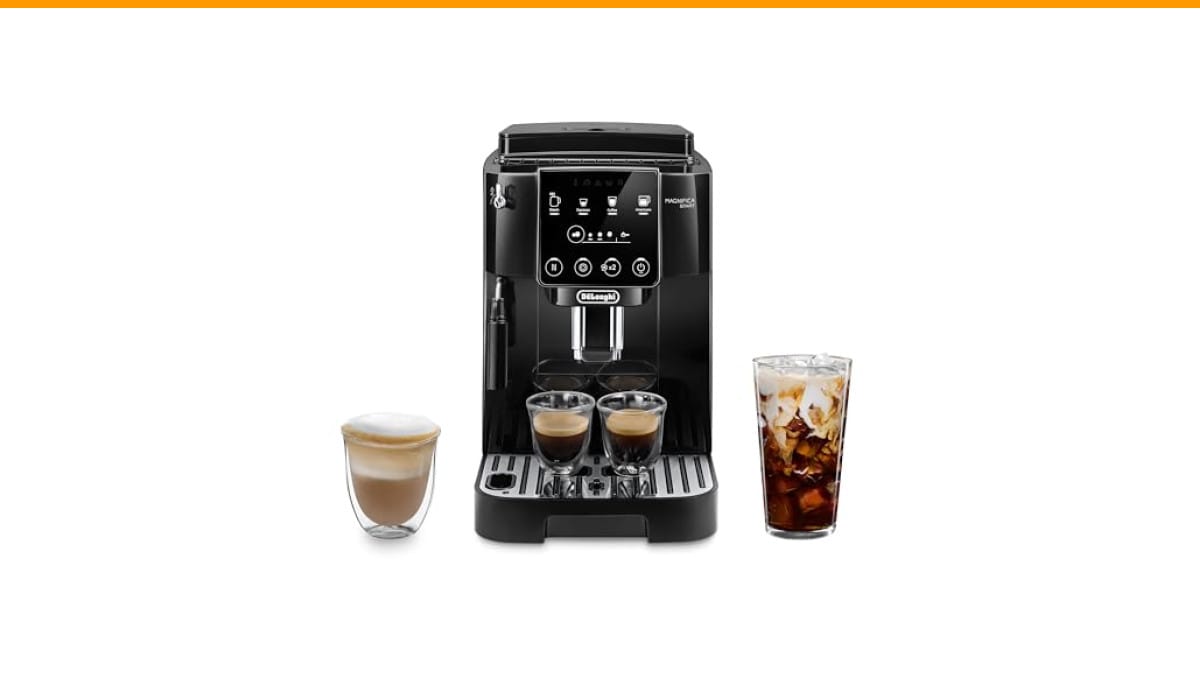
De'Longhi
De'Longhi Magnifica Start Automatic Espresso Machine, Milk…
- #1 Worldwide Espresso Machine Maker* *Independent Research Institute, Sales Leader, Full Year 2025
- 3 ONE-TOUCH RECIPES: Enjoy Espresso, Coffee, and Americano at the touch of a button. Easily adjust the intensity to fit your prefe…
- PERFECT GRINDING: 13 grind settings means all of your bean varieties are optimally prepared for extraction. The conical burr grind…
As an Amazon Associate I earn from qualifying purchases.
We’ll use the automatic espresso machine vs semi comparison as a backdrop, because knowing which parts are automated and which are still on you changes everything about the daily routine.
One machine that makes this whole process easier is the De’Longhi Magnifica Start Automatic Espresso Machine. It handles the grinding and dosing for you with a conical burr grinder that has 13 settings, so you only worry about the beans and the cup. We’ll reference it as we go because its controls are typical of most super-automatics.
Before Your First Shot: Setup and Priming
Take the water tank out and fill it with filtered water. Cold, not hot. Hot water can damage the internal boiler on some models. Plug the machine in, place a cup under the spout, and run a blank cycle (water only, no coffee) to prime the pump and flush any factory residue.
Do this twice. The first cycle clears the lines; the second warms up the brew group. A cold machine steals heat from your coffee and makes it taste flat. This step takes 90 seconds and prevents half of the troubleshooting calls you’d otherwise make.
Grind Size: The Single Most Important Dial
Your automatic machine has a burr grinder, not a blade grinder. That’s good. But the grind setting is the difference between a 25-second shot and a 10-second gusher. Start at the middle setting (usually 5 or 6 on a 13-step dial, like on the Magnifica Start). Pull a shot. Watch the stream.
If the coffee drips out like molasses and tastes burnt, your grind is too fine. Move one step coarser. If it pours fast and thin like tea, go one step finer. Wait: you must pull a full shot between each adjustment. Changing the grind size only shows its effect on the next extraction.
Here’s the rule of thumb: a proper shot takes 25–30 seconds from the moment water hits the puck. If you’re under 20 seconds, go finer. Over 35 seconds, go coarser. The machine’s pump pressure stays constant, so grind size is your only lever for flow rate.
One honest caveat: the first few shots will be bad. That’s normal. Dialing in a new bag of beans takes 2–3 attempts. Keep a small notebook or a note on your phone with the grind setting and the bean name. You’ll thank yourself later.
Dose and Tamping: What the Machine Does (and Doesn’t)
On a semi-automatic, you weigh the beans, grind, distribute, and tamp by hand. On a super-automatic like the Magnifica Start, the machine grinds and compresses the puck automatically. You don’t need to tamp. But you do need to set the dose.
Most machines have a dial or button for aroma strength or dose. This controls how many grams of ground coffee go into the brew unit. Start with the medium setting. A standard double shot is 14–18 grams of coffee. If your machine has a display, it might show this as a number from 1 to 5.
Under-dosing is the most common mistake. The puck is too thin, water rushes through, and you get a sour, weak shot. Over-dosing causes the puck to swell and block the shower screen. If your machine makes a loud grinding noise or the shot stops halfway, you’ve likely over-dosed. On the Magnifica Start, you can adjust this with the aroma dial before each brew.
Compare this to a loud noise issue — often that’s just the grinder hitting a dense bean or a too-fine setting, not a mechanical failure. Knowing the difference saves you a service call.
Brewing the Three Standard Drinks
Most super-automatics have one-touch buttons for espresso, coffee, and americano. Here’s what each actually does, and when to use it.
- Espresso: A 1:2 ratio of coffee to water, about 30–40 ml. Intense and syrupy. Use this for a straight shot or as the base for milk drinks.
- Coffee: A longer brew, usually 120–180 ml. It’s not a true Americano; it’s a longer extraction. Expect a milder body with more bitterness.
- Americano: A shot of espresso with hot water added. The machine brews the shot first, then adds water. This keeps the crema intact.
- Always use filtered water. Tap water with high mineral content will scale up your machine faster and dull the flavor.
- Dial in the grind first, then the dose. Don’t change both at once — you won’t know which one fixed the problem.
- Run a blank shot to warm the cup and the brew group before your first espresso.
- Clean the steam wand immediately after frothing. Ten seconds of wiping saves you a scrubbing session later.
- Keep a log of your favorite beans and the grind setting that worked. Coffee changes with humidity, so be ready to adjust by one step.
- Descale on a schedule, not when the machine starts sputtering. Set a calendar reminder every 3 months.
- Don’t ignore the drip tray. A full tray breeds bacteria and makes the machine smell. Empty it daily.
If you want a larger drink, adjust the water volume in the settings menu, not by pressing the button twice. Double-pressing often makes a double shot, which is fine, but it also doubles the caffeine. Know the difference.
For milk drinks, the manual frother on the Magnifica Start is a traditional steam wand. This is not automatic. You hold the pitcher and angle it. Here’s the method: submerge the tip just below the milk surface, open the steam valve, and keep the tip near the surface for the first 10 seconds to stretch the milk. Then lower the pitcher so the tip is deeper, creating a whirlpool. Stop when the pitcher is too hot to hold comfortably (about 140–150°F).
Milk alternatives behave differently. Oat milk froths well but separates if you overheat it. Almond milk is thin and produces weak foam. Whole milk gives the thickest microfoam. If you’re using a plant-based milk, look for one labeled barista blend; it has added stabilizers that help it foam.
Daily Cleaning vs. Deep Descaling
Automatic machines have more internal parts than a drip coffee maker, so they demand more care. The brew unit, the grinder, and the milk frother all need attention. Skip this and your shots will taste like old oil within two weeks.
Every day: remove the drip tray, rinse the brew unit under cold water, and wipe the steam wand with a damp cloth after each use. Milk residue bakes onto the wand and becomes impossible to remove. Run a water-only cycle through the wand after frothing to clear the internal tube.
Every week: empty and wash the drip tray and the spent coffee grounds container. The grounds container holds about 8–10 pucks. If you leave it too long, mold forms.
Every 2–3 months: run a descaling cycle. Hard water deposits calcium inside the boiler and the brew group, which restricts flow and lowers brew temperature. Use a liquid descaler, not vinegar. Vinegar can damage the internal seals. Follow the same descaling steps for your machine exactly as the manual says.
The Magnifica Start has removable, dishwasher-safe parts for the drip tray and water tank, which cuts the daily chore down to about two minutes. That’s a real advantage if you’re lazy about maintenance, like most of us.
Comparing Super-Automatic vs. Semi-Automatic Workflow
If you’re still deciding which type fits your morning, here’s a side-by-side look at the actual effort involved.
| Step | Super-Automatic | Semi-Automatic |
|---|---|---|
| Grinding | Automatic, built-in | Separate grinder, manual |
| Dosing | Automatic, adjustable | Weigh and measure each shot |
| Tamping | Automatic | Manual, requires practice |
| Milk frothing | Manual wand or auto (varies) | Manual wand only |
| Time to first drink | ~60 seconds | ~3–4 minutes |
| Learning curve | Low | Steep, but rewarding |
| Control over flavor | Moderate | Total |
If you want convenience and consistency, a super-automatic is the right call. If you enjoy the ritual and want to chase a perfect shot, a semi-auto gives you more room to experiment. Read our full guide to the best automatic espresso machines if budget is a factor.
Five Questions People Actually Ask
Why does my espresso taste sour?
Sour means under-extracted. The water moved through the puck too fast. Your grind is too coarse. Move the dial one step finer and pull another shot. If it’s still sour, your dose might be too low. Increase the aroma strength by one level.
Why does my espresso taste bitter?
Bitter means over-extracted. The grind is too fine, or the water is too hot. Go one step coarser. Also check your water temperature setting — most machines default to 200°F, but some beans taste better at 195°F. Dark roasts are more forgiving at lower temps.
Can I use pre-ground coffee in an automatic machine?
Yes, most super-automatics have a bypass chute for pre-ground coffee. But you lose the freshness. Ground coffee goes stale in hours, not days. Use the built-in grinder whenever possible. If you must use pre-ground, buy it in small batches and store it in an airtight container away from light.
How often should I replace the water filter?
Every 2 months, or after 50 liters of water, whichever comes first. A clogged filter slows the flow and changes the taste. Set a reminder on your phone. The Magnifica Start has a filter indicator light, which is handy.
Why is my machine making a loud noise?
Usually it’s the grinder. If you just changed to a darker roast, the beans are harder and the grinder works harder. Sometimes it’s a foreign object like a small stone in the beans. If the noise persists, check the troubleshooting guide for loud noises before calling support.
Quick Wins to Remember Tomorrow Morning
Products related to this article
Sponsored / affiliate links. As an Amazon Associate I earn from qualifying purchases. I may earn additional commission from eligible campaigns.
 Coffee Espresso Machine Handle Replacement Parts, Cafe Bracket Handle for Lidl Silvercrest CM4621 CM4218 KF5002 KF500S Barista (for 51mm Portafilter Basket - Not included)
 HomeBeyond Espresso Coffee Maker 12 Cups, Classic Stovetop Espresso Maker, 600ml / 20oz Coffeemaker for Gas & Ceramic Stovetops (Silver)
 Quick Heating Cup Warmer, Three Temperature Settings, Splashproof and Portable, for Coffee, Milk, Lightweight ABS Material