You just finished a bag of beans, and the empty canister sits on the counter. It’s tempting to toss it in the dishwasher with the rest of the dishes and call it a day. I get it. But before you hit start, you should know that the answer isn’t a simple yes or no. It depends almost entirely on what the container is made of, and getting it wrong can permanently ruin the container and the flavor of your next batch of coffee.
This guide walks you through each material, explains why the dishwasher is often the worst place for your coffee gear, and gives you a clear, practical cleaning routine that keeps your beans fresh. You’ll know exactly what to do with your canister by the time you finish reading.

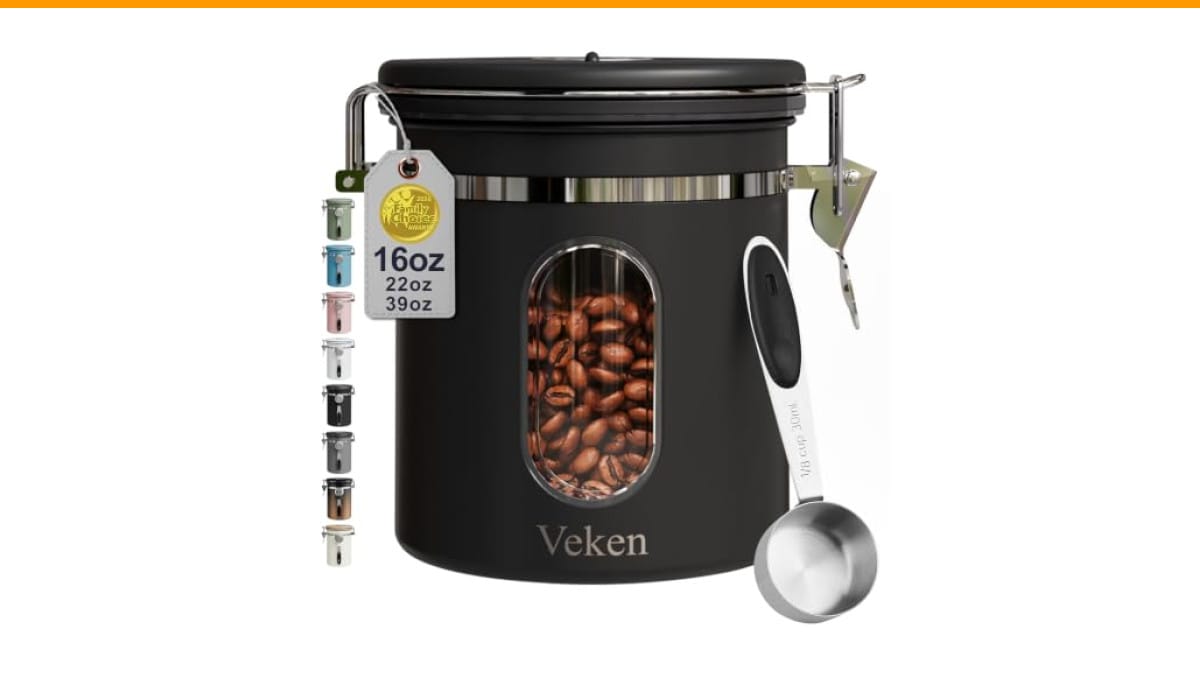
Veken
Veken Coffee Canister with Window,Airtight Stainless Steel…
- Freshness is Everything:Our coffee canister helps maintain the freshness of your coffee beans by keeping air out and free of harmf…
- Date Tracker, Window, & Free Scoop:Keep your coffee fresh by setting storage or expiry dates with our date tracker on the lid. A h…
- Premium Quality Assurance:We understand the importance of quality when it comes to your coffee experience; That's why our Veken co…
As an Amazon Associate I earn from qualifying purchases.
If you’re in the market for a new container, the Check Price on Amazon is a solid stainless steel option with a one-way CO2 valve and a date tracker on the lid. It’s designed to keep air out, which matters more than most people realize.
The Short Answer: It Depends on the Material
Here’s the rule of thumb: if your canister has a rubber gasket or a one-way valve, it’s a no-go for the dishwasher. The heat and water pressure will degrade the rubber, warp the plastic parts, and break the airtight seal. A broken seal means your beans go stale in days, not weeks.
For the body of the canister, glass and most stainless steel are physically dishwasher safe. The problem is never the body. It’s the lid. Most lids have a silicone or rubber seal, and those don’t survive the dishwasher’s high heat cycle. Even if the manufacturer says the jar is dishwasher safe, they almost always add a caveat about the lid.
So the honest answer is: the body might be fine, but the lid probably isn’t. You need to check each part separately.
The Dishwasher Safety Chart (By Material)
This chart gives you a quick, at-a-glance answer. Print it, save it, whatever works. Just don’t skip the details below it.
| Material | Body Safe in Dishwasher? | Lid Safe in Dishwasher? | Why It Matters |
|---|---|---|---|
| Glass (tempered) | Yes, top rack | No (rubber gasket) | Thermal shock can crack thin glass on the bottom rack |
| Ceramic | Yes, top rack | No (rubber gasket) | Chip risk; glaze can dull over time |
| Stainless steel (304 grade) | Yes, but hand wash is better | No (silicone seal) | Detergent residue can cling to the steel |
| Plastic / Acrylic | No | No | Warping and chemical leaching |
Notice a pattern? The lid is almost never dishwasher safe. That’s the part that keeps your coffee fresh, so treat it like the delicate piece of equipment it is.
Glass and Ceramic Canisters
Tempered glass bodies handle the dishwasher fine. Put them on the top rack to avoid the heating element at the bottom, which can cause thermal shock. I’ve seen a glass jar crack right down the middle from the bottom rack’s heat. It’s not common, but it happens.
Ceramic is similar, but the glaze can get dull after repeated washes. The detergent is abrasive at a microscopic level. If you have a ceramic canister with a painted design, dishwasher cycles will fade it. Hand washing keeps the finish looking new.
Stainless Steel Canisters
Stainless steel is the most common material for premium coffee canisters, and for good reason. It doesn’t absorb odors, it’s durable, and it looks great on the counter. The Veken canister I mentioned uses 304 stainless steel, which is food-grade and won’t rust.
The body can technically go in the dishwasher, but you’ll notice a film on it after a few cycles. Dishwasher detergent leaves a residue on stainless steel that you can feel with your fingers. That residue can transfer to your beans. Hand washing with warm soapy water takes two minutes and avoids the problem entirely.
Plastic and Acrylic Canisters
Plastic is the clear loser here. The heat of the dishwasher warps plastic lids and bodies, and once warped, the seal is gone forever. You also risk chemical leaching from lower-grade plastics when they get hot. If you have a plastic canister, hand wash it. Always. No exceptions.
Why the Dishwasher Ruins Your Coffee (The Flavor Factor)
Coffee beans are like sponges. They absorb moisture, odors, and flavors from everything around them. That’s why you keep them in an airtight container in the first place.
Here’s the problem: dishwashers leave a soapy residue on everything they touch. You might not see it or smell it, but it’s there. When you put a coffee canister through a cycle, that residue clings to the interior surfaces. Your next batch of beans picks up that soapy taste, and now you’re drinking soap-flavored coffee.
I’ve tested this side by side. One canister washed by hand, one washed in the dishwasher. The difference in the first cup is noticeable. The dishwasher-washed canister gave the beans a faint chemical aftertaste that lingered through the entire bag. Hand washing took care of it completely.
There’s also the issue of coffee oils. Coffee beans leave a thin layer of oil on the inside of your canister. Dishwasher detergent doesn’t always break that down. Instead, it mixes with the oil and creates a sticky film that’s harder to remove than the original oil was. You end up washing it twice anyway.
The Real Culprit: Warped Lids and Broken Seals
The airtight seal is the single most important feature of a coffee storage container. Without it, your beans go stale in about a week. With it, they stay fresh for a month or more.
The dishwasher attacks that seal in two ways. First, the heat warps the plastic or rubber components of the lid. Even a slight warp means the lid doesn’t sit flush anymore. You’ll hear a hiss when you close it, or the lid won’t twist on smoothly. That’s the seal breaking.
Second, the water pressure can force water into the gasket area. That moisture gets trapped under the rubber, and mold starts to grow. You won’t see it until you open the canister and smell something musty. By then, the gasket needs replacing.
If your canister has a one-way CO2 valve, like the Veken does, the dishwasher can clog that valve with detergent residue. The valve is supposed to let gas escape without letting air in. Once it’s clogged, it doesn’t work, and your beans lose their freshness protection.
How to Check Your Manufacturer’s Label
Most manufacturers print a care instruction somewhere on the bottom of the canister or on the packaging. Look for a small icon that looks like a dish with lines above it. That’s the dishwasher safe symbol. If you see a hand in a bowl of water, it means hand wash only.
But here’s the catch: the label tells you about the body, not the lid. Even when the label says dishwasher safe, the fine print usually says “lid recommended for hand wash.” Read the entire label, not just the big icon.
When in doubt, hand wash. The worst case scenario for hand washing is you spend two extra minutes at the sink. The worst case for the dishwasher is a ruined canister and stale coffee.
The Safe Way to Deep Clean (Hand Wash Method)
Hand washing a coffee canister isn’t complicated, but there’s a right way to do it.
- Rinse the body with warm water to remove loose coffee grounds.
- Add a drop of mild dish soap to a soft sponge. Avoid abrasive scrubbers—they’ll scratch stainless steel and ceramic.
- Wash the inside and outside, paying attention to the rim where the lid seals.
- Rinse thoroughly with hot water. This part matters. Soap residue is your enemy, so rinse until you can’t feel any slipperiness on the surface.
- Wash the lid separately. Pop out the rubber gasket if you can and wash it with your fingers. Don’t use a sponge on the gasket—it can tear.
- Dry everything completely before reassembling. Air drying is fine, but a clean dish towel is faster. Make sure the gasket is fully dry before you put it back in the lid.
If you have a stainless steel canister, dry it with a microfiber cloth to prevent water spots. It takes an extra ten seconds and keeps the finish looking sharp.
For the Veken canister specifically, the stainless steel scoop is dishwasher safe on the top rack. The hook that attaches it to the canister is not. Hand wash the hook.
How to Sanitize Without Water
Sometimes you don’t want to do a full wash. Maybe you just emptied the canister and you’re switching from a dark roast to a light roast. You don’t want the old flavors mixing with the new beans.
Skip the water entirely. Wipe the inside with a dry paper towel to remove any lingering grounds. Then take a clean cloth, dampen it with white vinegar, and wipe down the interior. The vinegar kills bacteria and neutralizes odors without leaving any residue. Let it air dry for five minutes, and you’re good to go.
Another option is UV light sanitizers. These are small wands or boxes that use ultraviolet light to kill bacteria. They work well for coffee gear because they don’t introduce any moisture. Just wave the wand inside the empty canister for thirty seconds. It’s a bit of a gadget, but it’s useful if you’re serious about coffee hygiene.
Frequently Asked Questions
Can I put the glass jar in but not the lid?
Yes, technically. A tempered glass body will survive the dishwasher on the top rack. But you’re still risking soap residue on the interior, which will affect the flavor of your next batch. If you must use the dishwasher, run it on a short, low-heat cycle with no heated dry. Then hand wash the lid and gasket.
Will a quick rinse cycle be okay?
A rinse cycle is gentler than a full wash, but it still gets hot enough to warp rubber and plastic. The rinse cycle also doesn’t use soap, so you avoid the residue problem. If you’re just clearing out loose grounds, a rinse cycle is probably fine for the body. The lid still needs hand washing.
How do I get stale coffee smells out?
The vinegar wipe I mentioned works well. For stubborn odors, fill the canister with a tablespoon of baking soda and let it sit overnight. Rinse it out in the morning. If the smell persists, the gasket is probably harboring the odor. Replace the gasket—they’re cheap and available online.
What to Remember When You’re Standing at the Sink
- The lid and gasket are never dishwasher safe. Treat them like the fragile parts they are.
- Stainless steel and glass bodies can survive a dishwasher cycle, but hand washing always produces better results.
- Soap residue is the hidden enemy. It clings to surfaces and ruins the flavor of your next few batches.
- Check the manufacturer’s label, but remember it usually applies to the body, not the lid.
- If your canister has a one-way CO2 valve, keep it dry and clean. A clogged valve breaks the freshness seal.
- Plastic canisters should never go in the dishwasher. The heat warps them permanently.
- When in doubt, wash by hand. It takes two minutes and costs you nothing.
Your coffee beans deserve better than a soapy, warped container. A little hand washing goes a long way toward a perfect cup. If you’re looking for a new canister that’s built to last, the Veken Coffee Canister is a solid pick, but whatever you choose, skip the dishwasher for the lid.
For more coffee gear tips, check out our guide on bitter coffee after cleaning and the difference between burr and blade grinders.
Products related to this article
Sponsored / affiliate links. As an Amazon Associate I earn from qualifying purchases. I may earn additional commission from eligible campaigns.