You just unboxed a shiny new super-automatic espresso machine. You read the manual, which warns about scale buildup and tells you to use filtered water. So you grab a pitcher from the fridge and fill the tank. That should be fine, right?
Not necessarily. The term “filtered water” covers a lot of ground, from basic carbon pitchers to reverse osmosis systems. Some of those options will protect your machine. A few will actually damage it. The difference comes down to minerals, not just taste.

possiave
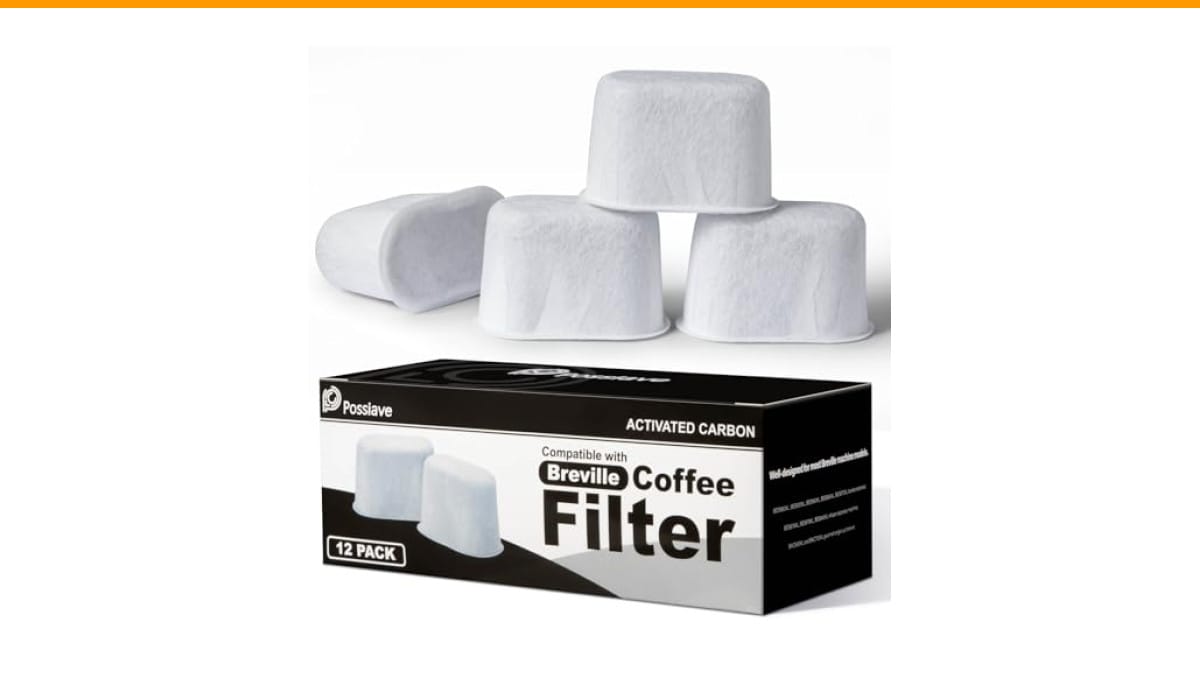
Possiave 12-Pack Water Filters Compatible with Breville…
- SUITABLE FOR MOST OF BREVILLE MACHINES - Well -designed for all Breville machine models: BES980XL, BES920XL, BES900XL, BES860XL, B…
- IMPROVE FLAVOR - Filter out chlorine, calcium, bad odors and impurities with purest coconut shell charcoal. The pore structure and…
- CONVENIENT TO STORAGE - For convenient storage, we provide individual package for each two water filters, which can also keep othe…
As an Amazon Associate I earn from qualifying purchases.
This guide walks through what kind of filtered water works, how to test your tap water at home, and which filtration method gives you the best balance of machine longevity and espresso flavor. You’ll also get a clear maintenance routine to keep everything running clean.
If your machine uses a replaceable cartridge like the Breville BWF100, a solid option is the Possiave 12-Pack Water Filters. These drop into the reservoir and remove chlorine and impurities using coconut shell charcoal. They won’t soften hard water, but they handle the taste side of things well.
The Short Answer: Yes, But Only the Right Kind of Filtered Water
You can absolutely use filtered water in an automatic espresso machine. The catch is that “filtered” means different things depending on the system. A basic carbon filter removes chlorine and improves taste. An ion-exchange filter actually reduces hardness minerals. Reverse osmosis strips almost everything out, which creates a new problem.
The ideal water for espresso sits in a specific range. The Specialty Coffee Association recommends a total dissolved solids (TDS) level between 150 and 300 ppm, with a hardness of 50 to 175 ppm as calcium carbonate. Water that falls outside this range either leaves scale or corrodes metal parts.
So the real question isn’t whether filtered water works. It’s whether your specific filtration method produces water in that sweet spot.
Why Your Espresso Machine’s Health Depends on Water Chemistry
Your machine’s boiler, heating element, and internal valves all touch water. That water leaves behind minerals when it heats up. Over time, those minerals build into scale that insulates the heating element and blocks flow. The result is longer brew times, weaker shots, and eventually a dead boiler.
The Scale Threat: How Hard Water Kills Your Boiler
Hard water contains calcium and magnesium. When heated, these minerals precipitate out and form scale. A machine running on very hard water (above 300 ppm) can develop significant scale in under six months. Descaling helps, but it’s harsh on internal seals and gaskets. Repeated descaling cycles shorten the lifespan of o-rings and valves.
I’ve seen machines that look fine on the outside but have a boiler crusted with a quarter-inch of scale. That machine is effectively dead. The heating element can’t transfer heat efficiently, so it runs hotter and wastes energy. Eventually the thermal fuse trips or the element burns out.
The Corrosion Threat: Why Distilled Water is a Silent Killer
Distilled water and reverse osmosis water without remineralization are too pure. They have almost zero TDS. That sounds clean, but pure water is aggressive. It wants to dissolve minerals, so it leaches them from metal components. Brass fittings, copper lines, and even stainless steel can corrode over time.
This is called aggressive water. It also makes espresso taste flat. Water needs some minerals to extract flavor compounds from coffee. Without them, the shot tastes sour and hollow. So the opposite problem — water that’s too clean — hurts both your machine and your cup.
The 3-Step Test: How to Know Your Water’s Hardness and TDS
Before you buy any filter, test your tap water. This takes ten minutes and saves you from guessing wrong.
- Get a TDS meter. These cost around $15 and give you a number in parts per million. Dip it in a glass of tap water and record the reading. If it’s below 150, your water is soft. Above 300, it’s hard.
- Use hardness test strips. These measure calcium carbonate specifically. Dip a strip, wait a minute, and compare the color to the chart. This tells you whether you need an ion-exchange filter or just a carbon one.
- Check your local water report. Most municipalities publish annual water quality reports online. Look for the hardness value and TDS. If you’re on well water, you’ll need to test yourself.
Pro tip: If your TDS reads between 150 and 300 and hardness is under 175 ppm, you might not need any filtration beyond a carbon filter for taste. Your water is already in the ideal range.
The Best Filtration Methods for Super-Automatic Machines (Ranked)
Once you know your water chemistry, you can pick a filtration method. Here’s how the common options stack up.
Inline Filters (Best for Built-in Tanks)
Many super-automatic machines have a dedicated filter cartridge that sits inside the water tank. These are typically carbon-based with some ion-exchange resin. They reduce chlorine, some hardness, and organic impurities. The Breville BWF100 is a common example, and the Possiave replacement filters work with most Breville models.
These filters are convenient because they’re designed for the machine. You replace them every two to three months or after 40 to 60 liters of water. They don’t soften water as aggressively as a dedicated softener, but they handle moderate hardness well.
Remineralized Reverse Osmosis (Best for Plumbed-In)
If your machine connects directly to a water line, a reverse osmosis system with a remineralization stage is the gold standard. RO removes nearly everything, then the remineralization stage adds back calcium and magnesium to reach the ideal TDS range. This gives you consistent, scale-free water with good flavor.
The downside is cost and complexity. A decent under-sink RO system with remineralization runs several hundred dollars, plus installation. It also wastes a few gallons of water for every gallon it produces. For home users with a plumbed-in machine, it’s worth it. For a countertop machine with a tank, it’s overkill.
Pitcher Filters (The Budget Option with Caveats)
Brita and similar pitcher filters use activated carbon to remove chlorine and improve taste. They do not soften water. If you have hard tap water, a Brita pitcher will not protect your machine from scale. You’ll still need to descale regularly.
Some pitchers use ion-exchange resin in addition to carbon. These remove some hardness, but they’re not designed for the volume an espresso machine uses. You’ll replace the filter cartridge much more often than the manufacturer suggests. It works in a pinch, but it’s not the best long-term solution.
| Method | Removes Chlorine | Reduces Hardness | Ideal TDS Output | Cost Over 5 Years | Best For |
|---|---|---|---|---|---|
| Inline filter (BWF100 style) | Yes | Some | 200-300 ppm | $50-$100 | Countertop machines |
| Pitcher (carbon only) | Yes | No | Same as tap | $60-$120 | Soft tap water |
| Pitcher (ion-exchange) | Yes | Moderate | 150-250 ppm | $100-$200 | Moderately hard water |
| Remineralized RO | Yes | Yes | 150-200 ppm | $400-$800 | Plumbed-in machines |
The Taste Test: Does Filtered Water Actually Make Better Espresso?
Yes, and the difference is noticeable in a side-by-side comparison. I brewed the same beans with tap water and with filtered water from an inline cartridge. The tap water shot had a flat, slightly bitter finish. The filtered shot had brighter acidity and a cleaner sweetness. The difference comes down to chlorine and other impurities masking flavor compounds.
Water hardness also affects extraction. Calcium and magnesium help extract more flavor from coffee grounds. That’s why completely pure water makes weak, sour espresso. You need some minerals. The ideal range of 150-300 ppm TDS gives you enough minerals for good extraction without risking scale.
One mild caveat: if your tap water is already soft and tastes fine, filtration won’t transform your espresso. It’ll be a small improvement, not a night-and-day change. The bigger win is protecting your machine from scale.
The Cost of Bad Water vs. The Cost of Filtration
Let’s talk real numbers. A replacement boiler for a super-automatic machine costs $150 to $400 including labor. A full descaling service runs $80 to $150. If you descale twice a year, that’s $160 to $300 annually. Over five years, that’s $800 to $1500 just in maintenance.
Now look at filtration. A 12-pack of inline filters costs around $40, and you replace one every two to three months. That’s roughly $20 to $40 per year, or $100 to $200 over five years. Even a mid-range pitcher filter costs less than a single descaling visit.
The math is clear. Spending $40 a year on filters beats spending $200 a year on descaling chemicals and service calls. And that’s before factoring in the cost of a new machine if scale kills the boiler entirely.
Maintenance Checklist: Keeping Your Filter and Tank Clean
Using filtered water doesn’t mean you can ignore maintenance. The filter and tank still need attention to prevent bacterial growth and keep the machine running right.
- Replace the filter on schedule. Set a reminder every two months or after 40 liters of water. A clogged filter stops filtering effectively and can harbor bacteria.
- Wipe the tank interior weekly. Empty the reservoir, wipe it with a damp cloth, and let it air dry. Don’t use soap — residue can affect taste and create foam.
- Clean the filter housing. When you swap filters, rinse the housing and the rubber gasket under running water. Check for slime or discoloration.
- Flush the machine monthly. Run a water-only cycle through the brew unit to clear any stagnant water in the internal lines.
- Check the auto-fill sensor. If your machine has a float or optical sensor, keep it clear of debris. A dirty sensor can cause false readings and overflow.
One thing I learned the hard way: don’t leave water sitting in the tank for weeks. Stagnant water grows biofilm, which then coats the internal lines. If you don’t use the machine daily, empty the tank and refill fresh before each session.
Final Verdict: The Perfect Water Recipe for Your Machine
Here’s the simple formula that works for most home setups:
- Test your tap water to know your starting TDS and hardness.
- If TDS is under 300 and hardness under 175 ppm, use a carbon-based inline filter for taste and chlorine removal.
- If TDS is above 300, use an ion-exchange filter or a remineralized RO system.
- Never use distilled or straight RO water without remineralization.
- Never use softened water from a sodium-based softener. The sodium exchanges for calcium and magnesium, and high sodium levels can corrode the boiler and make bitter espresso.
- Change filters on schedule and clean the tank regularly.
Follow this and your machine will last years longer than one running on hard tap water. Your espresso will taste cleaner and brighter, too.
FAQ: Can I Use Brita? Is Spring Water Safe? How Often Do I Change the Filter?
Can I use Brita filtered water in my espresso machine?
Yes, but with a caveat. A Brita pitcher removes chlorine and improves taste, but it doesn’t soften water. If your tap water is hard, you’ll still get scale. Check your water hardness first. If it’s under 175 ppm, Brita is fine. If it’s higher, you need an ion-exchange filter or a descaling routine.
Is bottled spring water safe for espresso machines?
Most spring water brands fall within the ideal TDS range of 150-300 ppm, so they’re safe. Check the label for mineral content. Avoid distilled water and any water labeled “purified” without added minerals. Also, bottled water gets expensive — at a liter per day, that’s over $300 a year.
How often should I replace the water filter in my espresso machine?
Most manufacturers recommend every two to three months or after 40 to 60 liters of water. If you use the machine daily, that’s roughly every two months. Set a recurring reminder on your phone. A spent filter doesn’t just stop filtering — it can become a breeding ground for bacteria.
What’s the difference between softened water and filtered water?
Softened water comes from a salt-based water softener that replaces calcium and magnesium with sodium. Filtered water removes chlorine, sediment, and organic impurities without adding anything. Softened water is bad for espresso machines because the sodium can corrode the boiler and makes coffee taste salty and flat. Never use softened water in an espresso machine.
Can I use reverse osmosis water in my espresso machine?
Only if it’s remineralized. Plain RO water has a TDS near zero, which makes it aggressive and corrosive to metal parts. It also extracts poorly, giving you sour, weak shots. A remineralization stage adds back calcium and magnesium to reach the ideal range. Without it, don’t use RO water.
What Most People Get Wrong
Three mistakes come up again and again. First, people assume any filtration is enough. A carbon-only pitcher won’t stop scale. Second, people over-filter and use distilled or plain RO water, which corrodes the machine. Third, people forget to replace filters on time, then blame the machine when shots start tasting off.
Avoid those three and you’re ahead of most home baristas. If you’re dealing with a leak or loud noise from your machine, check our guides on espresso machine leaks and noisy machines for troubleshooting. And if you’re still choosing between automatic and semi-automatic models, that comparison covers the trade-offs.
Products related to this article
Sponsored / affiliate links. As an Amazon Associate I earn from qualifying purchases. I may earn additional commission from eligible campaigns.
 Coffee Espresso Machine Handle Replacement Parts, Cafe Bracket Handle for Lidl Silvercrest CM4621 CM4218 KF5002 KF500S Barista (for 51mm Portafilter Basket - Not included)
 SOLUSTRE Electric USB Coffee Cup Warmer with Temperature Settings Portable Milk and Beverage Heating Coaster for Office Desk Small Lightweight Design Easy to Clean Surface Multi Functional
 Linnkyfloa Coffee Espresso Maker Handle Replacement for Stovetop Moka Pot or Percolator, Black Plastic for Spare Part Compatible with Italian(9-12 Cup)