You’ve dialed in your grind size, weighed your beans, and timed your brew. Yet the cup still tastes flat, or worse, slightly bitter. You blame the beans. But the real culprit is likely the water. Most tap water contains chlorine, calcium, and other impurities that dull coffee’s flavor and slowly coat your machine’s internal tubing with scale.
So, can you use filtered water in a drip coffee maker? The short answer is yes — and in most cases, you should. But the longer answer involves water chemistry, mineral balance, and what type of filter you’re actually using. This guide breaks down how different water sources affect extraction, why too-pure water tastes bad, and how to pick the right filtration method for your brewer.

BRENSTEN
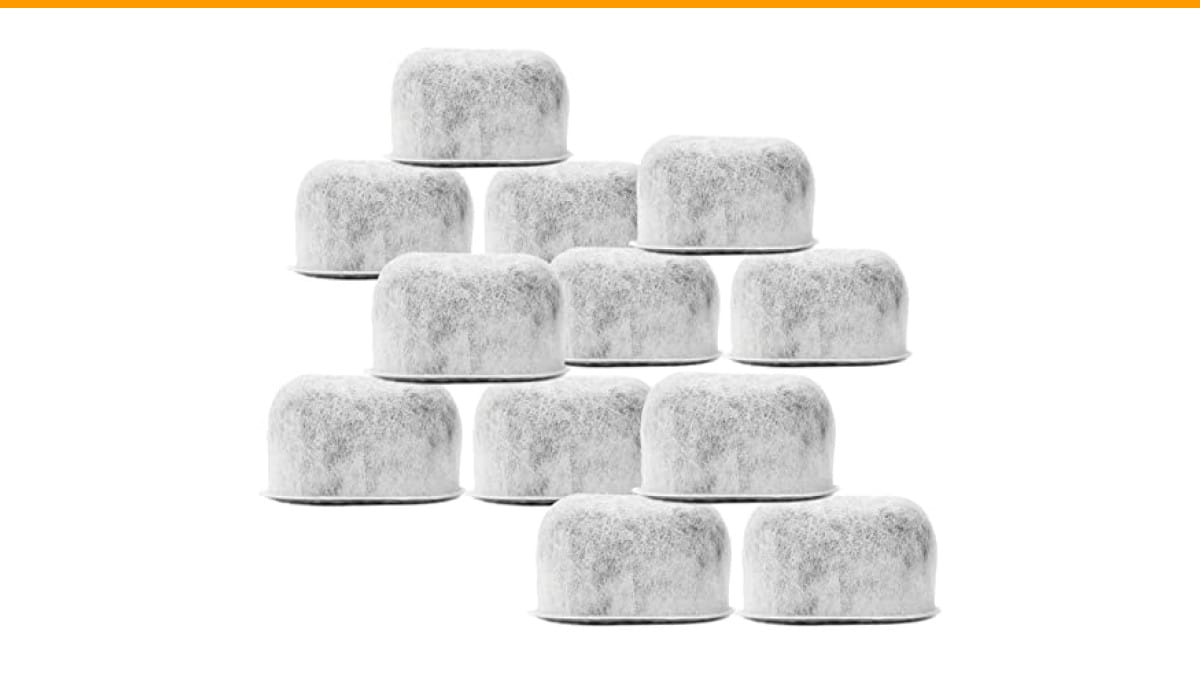
12 Pack Replacement Charcoal Water Filters for…
- ENJOY THE DELICIOUS TASTE AND AROMA OF BREWED COFFEE - Removes chlorine, odors, calcium, and other water impurities prior to brewi…
- COMPATIBLE WITH CUISINART COFFEE MAKERS – Specially designed for Cuisinart coffeemakers, these set of charcoal filter refills will…
- EASY TO INSTALL – Not only will these filters provide a less expensive way for you to enjoy delicious coffee, but they are also ve…
As an Amazon Associate I earn from qualifying purchases.
You’ll walk away knowing exactly what to pour into your reservoir, how often to change filters, and what to do when your coffee still tastes off.
If your machine uses a built-in charcoal filter, like most Cuisinart models, you’ll need replacements every 30 days. The BRENSTEN 12-pack charcoal water filters fit both newer and older Cuisinart brewers, removing chlorine and odors before they hit your grounds. It’s a cheap way to keep your machine running clean without buying bottled water every week.
Why Water Quality Matters More Than Your Beans
Coffee is 98% water. If your water tastes off, your coffee will taste off. That sounds obvious, but most home brewers spend money on specialty beans while ignoring the water that extracts those beans.
Water does two jobs in a drip brewer. It carries heat into the grounds, and it dissolves soluble compounds — sugars, acids, oils — that create flavor. The water’s mineral content directly controls how fast those compounds dissolve. Too few minerals, and extraction stalls. Too many, and it runs wild, pulling out bitter tannins.
Your tap water’s mineral content varies wildly depending on where you live. Hard water (high calcium and magnesium) extracts coffee faster. Soft water (low minerals) extracts slower. Neither is inherently bad, but both need different grind adjustments to taste right.
Chlorine is the bigger enemy. Municipal water treatment adds chlorine to kill bacteria, but it also reacts with coffee’s organic compounds, producing chlorophenols. Those taste like a swimming pool smells. A simple activated carbon filter removes chlorine quickly, which is why even basic filtration improves flavor more than switching bean origins.
Filtered vs. Tap vs. Bottled: A Direct Comparison for Drip Brewers
Let’s put the three common water sources side by side. Test each in the same brewer, same beans, same grind — only the water changed.
| Water Source | Flavor Impact | Machine Health | Cost Per Year | Environmental Impact |
|---|---|---|---|---|
| Tap water | Chlorine taste, flat or bitter depending on hardness | Scale buildup in boiler and lines | $0 (but descaling chemicals add $20-$40) | Lowest — no packaging waste |
| Bottled spring water | Clean, consistent if the brand has stable mineral content | Safe, minimal scale | $300-$600 for daily brewing | High — plastic waste and shipping emissions |
| Pitcher filter (Brita-type) | Removes chlorine, leaves moderate minerals | Good, reduces scale but doesn’t eliminate it | $40-$80 for filters | Moderate — filter cartridges end up in landfill |
| Built-in charcoal filter | Removes chlorine and odors, keeps most minerals | Good, but doesn’t soften hard water | $20-$40 for replacement packs | Moderate — small cartridges |
| Reverse osmosis (RO) | Too pure — coffee tastes flat and sour | Excellent — no scale at all | $100-$200 for membrane replacement | High water waste (3-4 gallons wasted per gallon produced) |
The clear winner for most households is a carbon-based filter — either a pitcher or a built-in charcoal disc. It removes chlorine and odors while preserving the minerals coffee needs for proper extraction. Bottled water works, but it’s expensive and wasteful for daily brewing. Distilled or RO water alone produces a noticeably hollow, acidic cup.
If you’re troubleshooting a machine that won’t brew at all, water quality isn’t the cause — that’s a mechanical issue. Check our guide on Mr. Coffee troubleshooting for pump and flow problems.
The Science of Minerals: Why “Too Pure” Water Tastes Bad
Here’s where most advice gets vague. People say “use filtered water” without explaining which minerals matter or why. The Specialty Coffee Association (SCA) publishes a water standard for brewing: 150 parts per million (ppm) Total Dissolved Solids (TDS), with calcium hardness between 50-175 ppm and alkalinity around 40-70 ppm.
Magnesium and calcium are the stars. They bind to coffee’s flavor compounds during extraction, pulling them into the cup. Without them, water can’t extract efficiently. That’s why distilled water — zero TDS — produces a weak, sour cup no matter how fresh your beans are. The water simply doesn’t have the ionic strength to dissolve coffee’s soluble solids.
Bicarbonate acts as a buffer. It keeps the water’s pH stable during extraction. Too much bicarbonate, and it neutralizes coffee’s natural acids, making the cup taste chalky and dull. Too little, and the coffee turns sharp and acidic.
So the ideal filtered water isn’t the purest water. It’s water with a balanced mineral profile. A standard carbon pitcher filter (Brita, PUR) leaves most of these minerals intact while removing chlorine. That’s why it works so well.
Reverse osmosis strips everything out. If you have an RO system, you need to remineralize the water before brewing. Some people add a pinch of sea salt or use a commercial remineralizing cartridge. Others blend RO water with tap water at a 50/50 ratio to restore mineral content.
Your brewer’s built-in charcoal filter — like the ones Cuisinart ships — is designed specifically for this balance. It removes chlorine, calcium, and odors without nuking the entire mineral profile. That’s the sweet spot for drip coffee.
How to Choose the Right Filter for Your Drip Machine
Not all filtration is equal. The right choice depends on your tap water’s starting quality and your brewer’s design.
Pitcher Filters vs. Built-In Filters vs. Reverse Osmosis
Pitcher filters (Brita, PUR, ZeroWater) are the most flexible. You can use them with any coffee maker, and you control when the water is filtered. The downside is they need regular refilling, and the filter media degrades over time. Replace the cartridge every 40 gallons or two months, whichever comes first.
Built-in charcoal filters are convenient — they sit right in the machine’s reservoir. Cuisinart and several other brands use them. They’re small, so they need replacing every 30 days, especially with hard water. The BRENSTEN 12-pack I mentioned earlier makes this affordable — you’re looking at roughly $1 per filter, which beats buying bottled water by a mile. Just remember to soak the new filter in water for five minutes before installing it.
Reverse osmosis systems are overkill for coffee. They produce water that’s too pure, and the waste water ratio is terrible. If you already have one installed for drinking water, don’t use it straight for coffee. Blend it with tap water or add a remineralization stage.
One more option: distilled water. It’s cheap and widely available, but it’s the worst choice for brewing. Zero minerals means zero extraction efficiency. You’ll get a sour, thin cup. If you use distilled water, you must add a commercial coffee mineral packet — that’s extra cost and hassle.
For most home users, a pitcher filter or a built-in charcoal disc is the right call. Both remove chlorine and sediment without stripping beneficial minerals.
Step-by-Step: How to Prep Your Filtered Water for the Perfect Brew
- Test your tap water. A simple TDS meter costs $10 and tells you your starting mineral load. Aim for 150 ppm. If you’re above 300 ppm, you’ll want a filter that reduces hardness.
- Filter your water. Whether you use a pitcher or the machine’s built-in filter, always filter cold water. Hot water passes through the filter faster but picks up more contaminants from the housing.
- Use fresh, cold water. Don’t use water that’s been sitting in the reservoir for days. Stale water grows bacteria and picks up off-flavors. Fill the reservoir right before brewing.
- Match your grind to your water. If you have hard water (high minerals), you can get away with a slightly coarser grind. If your water is soft, grind finer to increase extraction.
- Brew at the right temperature. Drip machines should hit 195-205°F. If your machine runs cooler, the coffee will be under-extracted and sour. Filtered water doesn’t fix a temperature problem.
Keep your machine clean too. Old coffee oils go rancid and ruin even the best water. Check our coffee maker cleaning frequency guide for a schedule that keeps your brewer fresh.
Maintenance: Protecting Your Machine from Mineral Buildup
Filtered water reduces scale, but it doesn’t eliminate it. Even carbon-filtered water contains calcium and magnesium. Over months, those minerals deposit as white scale on your boiler and heating element.
Scale acts as an insulator. It makes your machine work harder to heat water, which increases brew time and can cause the machine to overheat or shut off prematurely. A heavily scaled machine brews cooler coffee because the heating element can’t transfer heat efficiently through the mineral crust.
Descale every three months if you use filtered water, or monthly if your tap water is very hard. Use a commercial descaler or a 1:1 white vinegar and water solution. Run a full cycle, then run two cycles with plain water to rinse thoroughly. Vinegar leaves a residual smell, so the rinse is non-negotiable.
If your machine stops pumping water entirely, scale might be the culprit. But it could also be an air lock or a failed pump. Our guide on Braun brewer won’t brew covers similar symptoms and fixes.
Troubleshooting: Why Your Filtered Coffee Still Tastes Off
You switched to filtered water, but the coffee still doesn’t taste right. Here’s what to check.
Your filter is too aggressive. If you’re using ZeroWater or a similar ion-exchange filter, it strips everything — including the minerals that make extraction work. The fix is to blend the filtered water with a bit of tap water to restore mineral balance.
Your filter is expired. A charcoal filter past its prime stops adsorbing chlorine and can even release trapped contaminants. Replace it. BRENSTEN filters have a 30-day lifespan; mark your calendar when you install one.
Your water is too soft. If your TDS reads below 100 ppm, extraction will be sluggish. Grind finer or add a pinch of magnesium sulfate (Epsom salt) to the water to bump up mineral content.
Your beans are stale. Filtered water won’t resurrect beans roasted six months ago. Coffee peaks within 2-4 weeks of roasting. If your water is fine and your grind is right, the beans are the problem.
Your machine is dirty. Old coffee oils coat the brew basket and carafe, imparting rancid flavors. A monthly vinegar descale plus a soapy scrub of the removable parts fixes this.
Don’t forget the obvious: check your water-to-coffee ratio. The golden standard is 1:16 — one gram of coffee to 16 grams of water. If you’re guessing with scoops, you’re probably off by 20% or more.
FAQs: Quick Answers on Water and Drip Coffee Makers
Is bottled spring water better than filtered tap water for coffee?
Not necessarily. Spring water has a consistent mineral profile, which helps with repeatability. But quality carbon-filtered tap water is chemically similar at a fraction of the cost. The environmental waste from plastic bottles is a real downside. If your tap water is safe to drink, filter it and save your money.
Can I use distilled water in my drip coffee maker?
Technically yes, but you’ll get a terrible cup. Distilled water has zero minerals, so it can’t extract coffee properly. The result is sour, flat, and weak. It also doesn’t harm the machine — no scale — but the flavor trade-off isn’t worth it. If you must use distilled, add a mineral packet designed for coffee brewing.
How often should I replace the water filter in my Cuisinart?
Every 30 days, or every 60 brew cycles, whichever comes first. Hard water wears out filters faster. If you notice a chlorine smell returning, replace it early. The BRENSTEN 12-pack gives you a year’s supply, so you can stick to a strict schedule without running out.
Will filtered water prevent scale buildup in my coffee maker?
It reduces it significantly, but it won’t stop it completely. Carbon filters remove some calcium, but not all. You’ll still need to descale every few months. The buildup happens slower with filtered water, which extends your machine’s life and keeps brew temperatures consistent.
What’s the ideal water hardness for brewing coffee?
The SCA recommends 50-175 ppm of calcium hardness. If your water tests below 50 ppm, add minerals. If it’s above 175 ppm, you’re at risk of over-extraction and rapid scale buildup. Most municipal tap water falls in the 100-200 ppm range, which is why simple carbon filtration works so well.
So, Is Filtered Water Worth the Effort?
- Yes — filtered water removes chlorine and odors that ruin flavor, and it’s the single cheapest upgrade to your daily cup.
- Use a carbon-based filter (pitcher or built-in charcoal disc) to keep beneficial minerals while removing impurities.
- Never use distilled or RO water alone; you need 50-175 ppm of minerals for proper extraction.
- Replace built-in charcoal filters every 30 days — a 12-pack like BRENSTEN makes this painless.
- Descale your machine every 3 months even with filtered water; scale buildup is slower but still happens.
- If coffee tastes flat with filtered water, check your TDS — your filter might be stripping too much.
- Test your tap water once with a cheap TDS meter so you know your starting point.
Filtered water isn’t a magic bullet for bad beans or a dirty machine. But it removes the most common flavor killer — chlorine — and protects your brewer from premature scale damage. That’s a win on both taste and longevity.
Products related to this article
Sponsored / affiliate links. As an Amazon Associate I earn from qualifying purchases. I may earn additional commission from eligible campaigns.
 HomeBeyond Espresso Coffee Maker 12 Cups, Classic Stovetop Espresso Maker, 600ml / 20oz Coffeemaker for Gas & Ceramic Stovetops (Silver)
 Quick Heating Cup Warmer, Three Temperature Settings, Splashproof and Portable, for Coffee, Milk, Lightweight ABS Material
 SOLUSTRE Electric USB Coffee Cup Warmer with Temperature Settings Portable Milk and Beverage Heating Coaster for Office Desk Small Lightweight Design Easy to Clean Surface Multi Functional