You just pulled a shot that tasted sour and flat, so you blame the beans. You swap roasters, change grind size, and still get that harsh bite. Then it hits you: the water. Most people never think about it, but water makes up over 98% of your espresso. If it’s wrong, nothing else matters.
Plenty of folks assume any filtered water is safe for a home espresso machine. That assumption can cost you a boiler. Filtered water from a pitcher removes chlorine and some odors, but it often leaves behind the minerals that cause scale. On the flip side, water that’s too pure, like distilled, can corrode metal parts. The goal is a specific mineral balance, not just cleanliness.

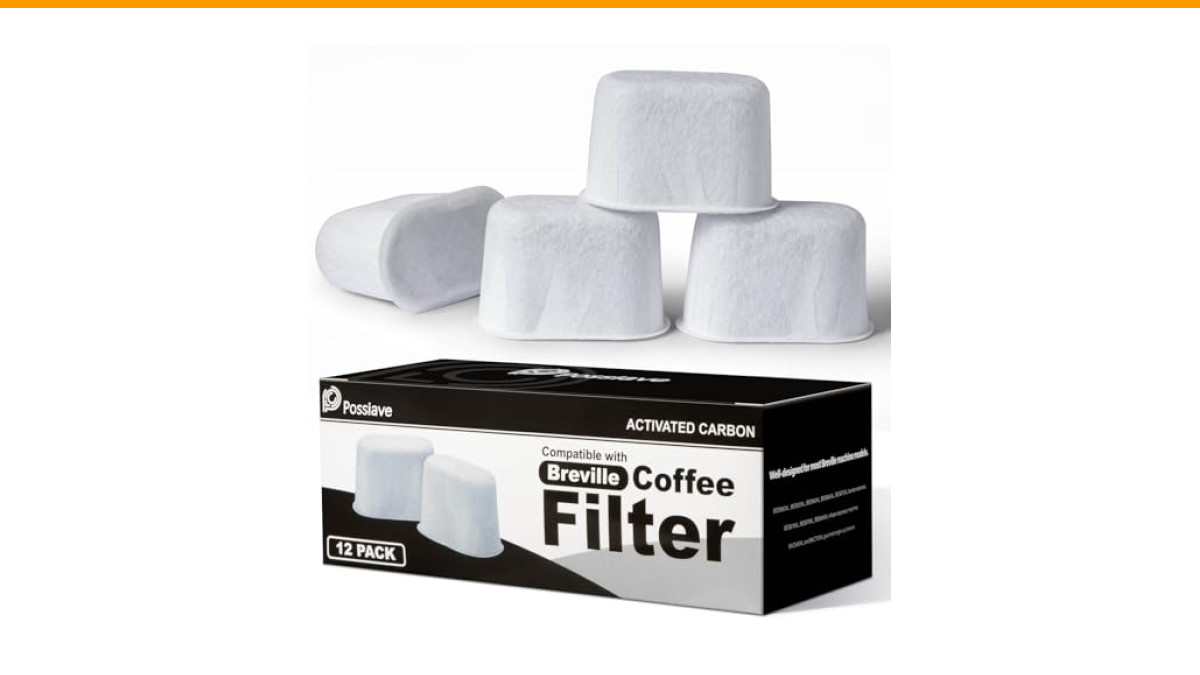
possiave
Possiave 12-Pack Water Filters Compatible with Breville…
- SUITABLE FOR MOST OF BREVILLE MACHINES - Well -designed for all Breville machine models: BES980XL, BES920XL, BES900XL, BES860XL, B…
- IMPROVE FLAVOR - Filter out chlorine, calcium, bad odors and impurities with purest coconut shell charcoal. The pore structure and…
- CONVENIENT TO STORAGE - For convenient storage, we provide individual package for each two water filters, which can also keep othe…
As an Amazon Associate I earn from qualifying purchases.
This guide walks through the exact water chemistry your machine needs, ranks the five most common water types from best to worst, and gives you a cheap, repeatable recipe for great espresso without wrecking your equipment. You’ll also learn how milk steaming changes the equation, what to do with a new machine, and how to handle travel setups.
If you own a Breville, a simple swap of the internal filter helps. The Possiave 12-Pack Water Filters Compatible with Breville BWF100 Machines fit most popular models like the Barista Express and Infuser. They use coconut shell charcoal to pull out chlorine and impurities, which improves flavor noticeably. It’s not a hardness solution, though, so keep reading for the full picture.
The Short Answer: Yes, But ‘Filtered’ Isn’t Enough
You can absolutely use filtered water in a home espresso machine. The catch is that most pitcher filters only address taste and odor. They do not manage hardness or alkalinity, which are the two numbers that dictate whether your machine builds scale or corrodes.
Think of it this way: a Brita filter makes tap water taste better, but it doesn’t stop calcium from depositing on your boiler’s heating element. Over months, that scale acts like insulation, making your machine work harder and eventually fail. So yes, filtered water works, but only if you know what your filter removes and what it leaves behind.
For most home setups, the best approach is a two-step process: filter out contaminants, then adjust the mineral content to hit a target range. That sounds scientific, but it’s actually simple once you know the numbers.
Why Water Chemistry Matters More Than You Think (Taste vs. Scale)
There’s a direct trade-off between water that tastes great and water that’s safe for your machine. High mineral content, measured as TDS (total dissolved solids), extracts more flavor from coffee. But those same minerals are what form scale. Low TDS water prevents scale but produces weak, sour espresso because it can’t extract properly.
You want a middle ground. The Specialty Coffee Association (SCA) recommends a TDS range of 150 to 250 ppm, with hardness between 50 and 175 ppm and alkalinity around 40 to 75 ppm. That’s the sweet spot. It’s enough mineral content to extract rich flavors, but low enough to keep scale manageable.
Ignore water that tastes ‘too pure.’ Distilled and reverse osmosis water without remineralization will strip metal ions from your boiler over time, leading to pinhole leaks. That’s a slow death for an expensive machine. The fix is remineralization, which we’ll cover later.
The 3 Numbers You Need to Know (Hardness, Alkalinity, TDS)
Hardness is the concentration of calcium and magnesium. These are the scale builders. If your water is hard, you’ll see white crust on your kettle. That same crust coats your boiler.
Alkalinity is the water’s ability to buffer acids. Too much alkalinity makes coffee taste flat and chalky. Too little, and the coffee tastes sharp and sour. It’s the buffer that keeps pH stable during extraction.
TDS is the total dissolved solids, which includes hardness minerals plus other stuff. It’s the easiest number to measure with a cheap handheld meter. But TDS alone doesn’t tell you the ratio of hardness to alkalinity, so use it as a quick check, not the final word.
The 5 Water Types You Can Use (Ranked from Best to Worst)
Not all water is created equal. Here’s how the common options stack up for espresso, based on my own testing and teardowns.
The ‘Set-and-Forget’ Winner: Remineralized RO Water
Reverse osmosis removes nearly everything, both good and bad. The trick is adding minerals back. You can do this with a product like Third Wave Water, which comes in small packets designed for a gallon of distilled or RO water. It’s precise, consistent, and takes about 30 seconds to mix.
This is the best option for anyone who wants zero guesswork. The water chemistry is dialed to SCA standards every single time. It costs more per gallon than tap water, but it eliminates scale buildup almost entirely and dramatically extends the time between descaling cycles.
The downside is upfront cost: a good RO system runs a few hundred dollars. But if you already have one for drinking, just buy remineralization packets and you’re set.
The ‘Good Enough’ Budget Option: Pitcher Filters (And Their Limits)
A standard pitcher filter like Brita or PUR is better than raw tap water, but it’s not a complete solution. These filters use activated carbon to remove chlorine, some heavy metals, and bad tastes. They do not soften water significantly. If your tap water is hard, your filtered water will still be hard.
So can you use filtered water in a home espresso machine from a pitcher? Yes, if your tap water is already soft to moderately hard. You’ll need to descale more often, but it’s workable. If your water is very hard, a pitcher alone won’t cut it.
One thing that helps: replace the pitcher filter on schedule. Most brands say every 40 gallons or two months. I’ve found that after about a month, the flow rate drops and the taste starts to change. Mark your calendar.
The $50 ‘Good Enough’ Setup: A Step-by-Step Recipe
You don’t need a lab or an RO system to get decent water. Here’s the exact setup I use in my own kitchen, and it costs under $50 to start.
- Buy a ZeroWater pitcher filter. It uses ion exchange to remove all dissolved solids, bringing TDS to 0. It costs around $30 to $40. This is the key difference from Brita.
- Test the filtered water with the included TDS meter. It should read 0 ppm. If it reads above 10, the filter is spent.
- Buy a bottle of Third Wave Water or a DIY remineralization mix. A box of Third Wave Water packets costs about $15 and treats 12 gallons.
- Add one packet to one gallon of the ZeroWater filtered water. Shake well.
- Use that water in your espresso machine. That’s it.
This gives you the exact same water chemistry as a $300 RO system, for a fraction of the cost. The ZeroWater filter needs replacing every 20 to 30 gallons depending on your source water, but the TDS meter tells you exactly when.
One honest caveat: ZeroWater filters are slower than Brita. It takes a couple of minutes to filter a full pitcher. That’s a minor inconvenience for the control it gives you.
How to Test Your Water Without a Science Degree (GH/KH Drops)
If you want to know exactly what you’re working with, skip the fancy digital meters and buy a GH/KH test kit. These are liquid drop tests used in aquariums, and they cost about $10 on Amazon. They measure general hardness (GH) and carbonate hardness (KH), which maps directly to what your espresso machine cares about.
Fill a small tube with your water, add one drop of the reagent at a time, and count until the color changes. Each drop equals one degree of hardness. One degree of GH equals about 17.9 ppm of calcium carbonate. So if you get 5 drops, your hardness is around 90 ppm, which is right in the SCA range.
This takes five minutes and tells you more than a TDS meter ever will. Test your tap water, your filtered water, and your bottled water. You’ll quickly see which ones are safe and which ones are scale bombs.
The Hidden Factor: How Milk Steaming Changes Your Water Needs
Most water guides ignore this, but it matters a lot. When you steam milk, you’re evaporating a small amount of water and concentrating the minerals left in the boiler. Over time, that concentration increases the hardness of the water inside the boiler, even if your input water is fine.
What does this mean practically? If you only pull straight espresso shots, you can get away with slightly harder water. If you make lattes and cappuccinos daily, you’re concentrating scale-forming minerals every time you steam. Your descaling interval needs to be shorter, or your water needs to be softer.
I recommend targeting the lower end of the SCA hardness range (around 50 to 75 ppm) if you steam milk regularly. It’s a small adjustment that prevents a big headache later.
The New Machine Checklist: First 24 Hours
You just unboxed a shiny new espresso machine. Before you pull your first shot, do these four things to protect the boiler.
- Read the manual’s water section. Some brands void warranties if you use water outside their spec.
- Flush the system with fresh water. Run a full reservoir through the group head and steam wand to clear out any manufacturing residue.
- Install the water filter that came with the machine. Most Breville machines include a charcoal filter in the box. If you lose it, the Possiave replacement filters work as a direct swap.
- Test your water hardness. Use the GH/KH drops before you ever fill the boiler. Adjust your water source if needed.
This first-day routine takes about 20 minutes and sets the tone for the machine’s lifespan. Skipping it means you might be pulling shots with water that’s slowly killing your boiler.
The ‘Travel/Office’ Water Hack for Portable Espresso
Portable espresso makers like the Flair or Nanopresso are great, but they’re picky about water. You often don’t control the water source in a hotel or office. The hack is to bring your own.
Buy a small pack of Third Wave Water packets, which are about the size of a sugar packet. Then find any source of distilled water, which is sold in most grocery stores. Mix one packet into a 16.9 oz bottle of distilled water, shake, and you’ve got perfect espresso water anywhere.
This costs about 50 cents per shot and takes 10 seconds. It’s way better than using the hotel’s hard tap water or the office’s reverse osmosis dispenser, which will make your espresso taste flat.
Daily Habits to Prevent Scale (And When to Descale)
Prevention beats descaling every time. A few habits make a real difference.
- Empty the boiler if you won’t use the machine for more than a week. Stagnant water promotes mineral buildup.
- Use fresh water daily. Don’t leave yesterday’s water sitting in the reservoir.
- Wipe the steam wand after every use to prevent milk residue from baking on.
- Backflush with a blind basket and cleaner once a week if you use the machine daily.
As for descaling, the frequency depends on your water hardness. With remineralized RO water, you might descale every six months. With hard tap water, it could be every month. Watch for signs: slower flow, louder pump, or a white crust on the drip tray. When you see those, it’s time to descale.
If you notice your machine leaking from the bottom, that can be a sign of scale damage. Check our guide on espresso machine leaks before you panic.
FAQ: Distilled Water, Softened Water, and Bottled Water Myths
Is distilled water safe for espresso machines?
No. Pure distilled water has zero minerals, so it will leach metal ions from the boiler and cause corrosion over time. Always remineralize it before use.
Can I use water from a home water softener?
Usually not. Softened water swaps calcium for sodium, which doesn’t scale but leaves a salty taste in your espresso. It also has high alkalinity, which flattens flavor. Avoid it.
Is bottled spring water good for espresso?
It depends on the brand. Check the label for TDS. Many spring waters have TDS above 300 ppm, which is too hard. Look for a brand with TDS between 150 and 250 ppm.
How often should I replace my pitcher filter?
Every 40 gallons or two months, whichever comes first. If you notice a change in taste or flow, replace it sooner.
Does boiling water remove hardness?
No. Boiling concentrates minerals because water evaporates. It might kill bacteria, but it makes scale worse.
The Bottom Line: Your Water Strategy, Simplified
You don’t need to become a water chemist to make great espresso. You just need a repeatable system.
- Test your water hardness with GH/KH drops once, so you know where you stand.
- Use a ZeroWater pitcher plus remineralization drops for a budget solution under $50.
- Steam milk daily? Target the lower end of the hardness range.
- Replace your machine’s internal filter on schedule, like the Possiave Breville filters, to remove chlorine and impurities.
- Never use distilled or RO water without adding minerals back.
- Descale when you see scale, not on a fixed calendar.
- For travel, carry a few remineralization packets and buy distilled water on the road.
For more on keeping your machine running, read about automatic vs. semi-automatic machines to understand your gear better, or check the best automatic machines under $1000 if you’re shopping. Your water is the cheapest upgrade you’ll ever make, and now you know exactly how to do it right.
Products related to this article
Sponsored / affiliate links. As an Amazon Associate I earn from qualifying purchases. I may earn additional commission from eligible campaigns.
 Coffee Espresso Machine Handle Replacement Parts, Cafe Bracket Handle for Lidl Silvercrest CM4621 CM4218 KF5002 KF500S Barista (for 51mm Portafilter Basket - Not included)
 AirheadStorm Coffee Espresso Moka Stove Pot Handle, Mocha Pot Handle, Moka Express Handle Replacement Handle Parts for Espresso Pots 1 3 6 9-12 Cups(6 Cup)
 Linnkyfloa Coffee Espresso Maker Handle Replacement for Stovetop Moka Pot or Percolator, Black Plastic for Spare Part Compatible with Italian(9-12 Cup)