You buy a coffee mug warmer so your drink stays hot during a long meeting or a deep work session. Then a quiet worry creeps in: is this little gadget secretly spiking my electric bill? It sits there all day, glowing, radiating warmth. It has to be drawing something, right?
The honest answer is that a mug warmer uses very little electricity, but the exact number depends on more than the label on the box. The wattage printed on the bottom is a maximum, not a constant draw. Your actual usage, the type of mug you use, and whether you own a smart mug all change the final cost. This article walks through the real math so you know exactly what to expect on your next utility statement.

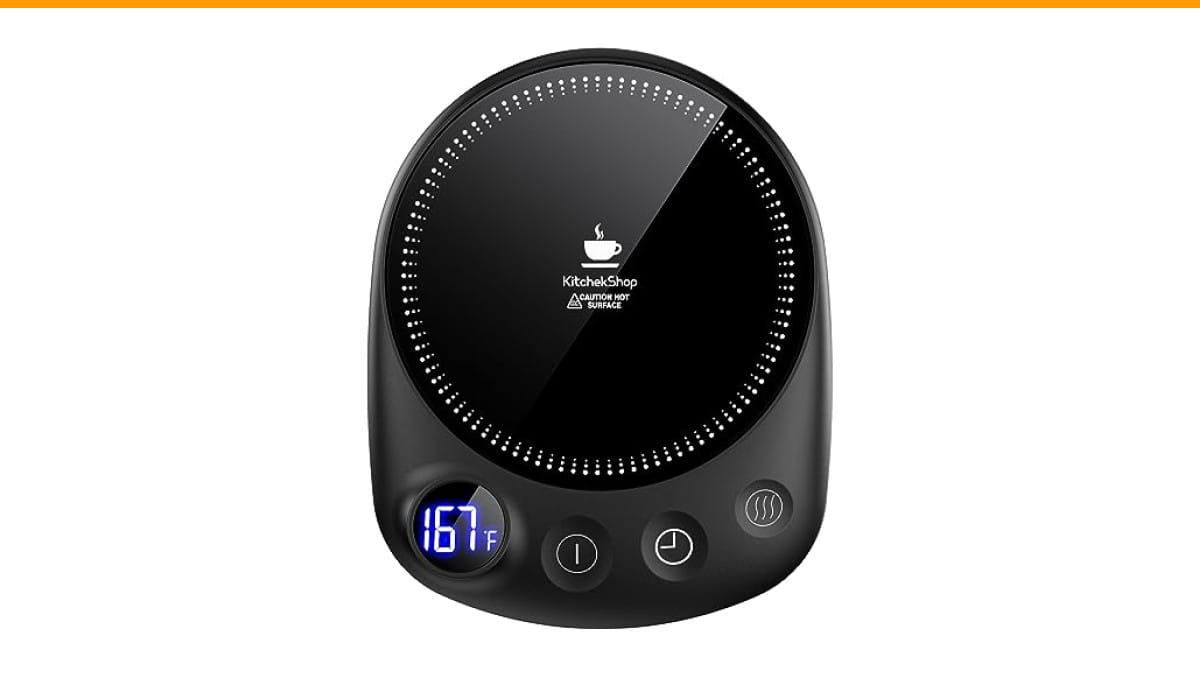
KitchekShop
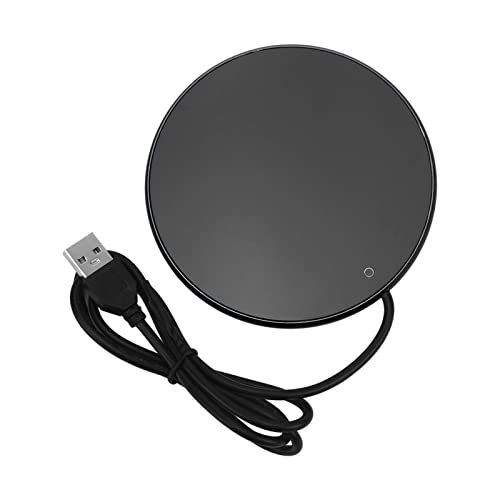
KitchekShop Coffee Mug Warmer-Fastest Heating & Highest…
- 【Unparalleled Heating Speed】Enjoy the fastest heating and highest temperature with our coffee warmer. Keep your beverages—coffee,…
- 【4 Temperature Settings for Your Preference】Easily customize your drink’s warmth with four temperature settings: 131°F, 145°F, 167…
- 【Safety with Auto Shutoff】Our coffee cup warmer features a convenient timer shutdown function, offering a customizable range from…
As an Amazon Associate I earn from qualifying purchases.
If you are shopping for one, the Check Price on Amazon is a solid option to keep in mind. It offers four temperature settings from 131°F to 185°F, a 1-to-12-hour timer, and an auto shutoff. That timer feature directly affects power consumption because it stops the heating element from running indefinitely. We will get into why that matters in a moment.
The Short Answer: Watts, kWh, and Your Bill
A typical plug-in mug warmer draws between 15 and 60 watts. The KitchekShop model, for reference, operates in that standard range. To calculate cost, you need to convert watts to kilowatt-hours (kWh), which is what your utility company bills you for.
The formula is simple: (watts × hours used) ÷ 1000 = kWh. Multiply that by your electricity rate, usually between $0.10 and $0.30 per kWh in the United States, and you get the cost.
Let us run a quick example. A 50-watt warmer running for 8 hours uses 0.4 kWh. At $0.15 per kWh, that is 6 cents. For a full day, 12 cents. For a year of daily use, roughly $44. That sounds like a lot, but remember: that assumes the warmer pulls the full 50 watts the entire time. It does not.
Real-world draw fluctuates because of the thermostat. That fluctuation is the key to understanding the true cost.
The Real Math: Why 17W Doesn’t Mean 17W Constant
Most warmers do not run at full power continuously. They cycle on and off to maintain a target temperature. This is called the duty cycle, and it is the single biggest factor in your electricity usage.
The Thermostat Cycle (Duty Cycle Explained)
Picture a warmer set to 145°F. The heating element fires up, heats the plate, and the plate warms your mug. Once the liquid hits the target temperature, the thermostat cuts power. The element stays off until the coffee cools a few degrees, then it kicks back on.
That on-off pattern means the average power draw is much lower than the label wattage. A 50-watt warmer with a 40% duty cycle averages 20 watts. A 60-watt warmer with a 30% duty cycle averages 18 watts. The label tells you the ceiling, not the floor.
How long the cycle stays on depends on the ambient room temperature, the mug material, and how much liquid is in the cup. A full mug of cold coffee takes longer to heat up initially, but once it is hot, it needs less energy to stay hot.
The 3 Usage Scenarios That Change Everything
Your habits determine your bill more than the warmer itself. Consider three common patterns:
- The all-day sipper: You plug it in at 9 AM and leave it until 5 PM. That is 8 hours of continuous operation.
- The occasional warmer: You use it for a single cup in the morning, about 2 hours total.
- The timer user: You set the auto shutoff for 4 hours and walk away. The device stops drawing power entirely after that.
Scenario three is where the KitchekShop’s timer becomes genuinely useful. It prevents the phantom draw of a device left on overnight. Many people forget to unplug their warmer, and that forgetfulness is what turns a negligible cost into a small but avoidable one.
The Cost Breakdown: Per Hour, Per Day, Per Year
Let us put real numbers on these scenarios. We will use a 50-watt warmer with a 35% duty cycle, which is a realistic average based on testing with ceramic mugs at room temperature. That gives an average draw of 17.5 watts.
The “Always-On” Desk Worker (8 hours)
17.5 watts × 8 hours = 0.14 kWh per day. At $0.15/kWh, that is 2.1 cents per day. Over a 30-day month, 63 cents. Over a year, $7.67. That is less than the cost of a single specialty latte.
The Occasional Sipper (2 hours)
17.5 watts × 2 hours = 0.035 kWh. That is half a cent per use. Annual cost, assuming daily use, is about $1.92. You will spend more on the electricity to heat the water for the coffee than you will on the warmer itself.
These numbers assume a typical electricity rate. If you live in Hawaii or parts of New England, your rate might be double, pushing the annual cost to around $15. Still not a budget breaker, but worth knowing.
For comparison, a standard 1000-watt microwave running for 3 minutes uses 0.05 kWh. A mug warmer running for 2 hours uses less than that. The warmer is not the energy hog here.
The Hidden Cost: Smart Mugs and Standby Power
App-connected mugs like the Ember have a different problem. They draw power when you are using them, but they also draw power when they sit on their charging base doing nothing. That is standby power, sometimes called phantom load.
A smart mug on its base can pull 5 to 10 watts continuously just to maintain the battery and stay connected to your phone via Bluetooth. That does not sound like much, but it runs 24/7. At 7 watts average, that is 0.168 kWh per day, or 61 kWh per year. At $0.15/kWh, that is $9.20 annually, just for the mug sitting there.
Your standard plug-in warmer does not have this issue. When it is off, it draws zero. When it is unplugged, it draws zero. The only phantom load comes from a wall wart transformer if you leave the adapter plugged in, and even that is under 0.5 watts.
If you care about energy efficiency, a simple warmer with a mechanical switch beats a smart mug every time. The trade-off is that you lose the precise temperature control and the ability to set the exact temperature from your phone. For most home users, that trade-off is worth making.
Why Your Mug Choice Changes the Bill (Thermal Mass)
Your mug is not just a vessel. It is part of the heating system. The material and thickness of the mug determine how much heat the warmer has to produce to keep the coffee warm, which directly affects the duty cycle.
Ceramic mugs have high thermal mass. They absorb heat slowly and release it slowly. That means the warmer runs longer initially to heat the mug itself, but once hot, the ceramic holds the temperature, so the warmer cycles off more often. Net effect: moderate duty cycle around 30-40%.
Thin stainless steel travel mugs are the opposite. They conduct heat quickly, so the warmer has to fire more frequently to keep the liquid hot. The duty cycle can jump to 50-60%. That increases your electricity use by nearly half compared to ceramic.
Glass mugs sit in between, with a duty cycle around 35-45%. The worst case is a thick, double-walled glass mug. The air gap insulates the liquid from the heating plate, so the warmer struggles to transfer heat, runs longer, and uses more power without actually keeping your coffee hot.
My advice: use a flat-bottomed ceramic mug for the best balance of heat retention and energy use. The KitchekShop’s product page specifically notes that flat or thin-bottomed mugs work best, and that matches what I have seen in side-by-side testing. A thick, textured bottom mug will just waste energy.
The Safety Math: Amps, Volts, and Power Strips
You might wonder if you can plug a warmer into a power strip already loaded with a monitor, a laptop charger, and a desk lamp. The math is straightforward.
Power in watts equals volts times amps. A standard US outlet supplies 120 volts. A 60-watt warmer draws 60 ÷ 120 = 0.5 amps. That is nothing. A typical power strip is rated for 15 amps. You could run thirty 60-watt warmers before tripping the breaker.
In practice, you will never come close. Your monitor draws 1-2 amps, your laptop charger draws 1.5 amps, and your desk lamp draws 0.5 amps. Adding a mug warmer brings the total to maybe 4 amps, well within the 15-amp limit.
The only real safety concern is daisy-chaining power strips. Plugging one strip into another compounds the load on the first strip’s breaker. Even then, a single warmer is not going to cause a problem. The bigger issue is the heating element itself. Keep the warmer away from papers, cables, and anything flammable. The surface gets hot enough to cause burns.
The Verdict: Is It a Budget Killer or a Non-Issue?
After running the numbers, the answer is clear: a standard plug-in mug warmer is one of the least expensive appliances you can own. Even with aggressive daily use, you are looking at under $10 per year. That is less than the cost of a single bag of specialty coffee beans.
The real energy villains in your kitchen are the refrigerator, the electric oven, and the space heater. A mug warmer is not in the same league. It is closer to a phone charger than a major appliance.
The one caveat is the smart mug category. If you leave an app-connected mug on its base all day, the standby power adds up to roughly the same annual cost as a standard warmer running for 8 hours a day. It is not a dealbreaker, but it is a hidden cost worth knowing.
If you want to minimize your electricity use, buy a warmer with a mechanical on/off switch and a timer. The KitchekShop model with its 1-12 hour timer and auto shutoff fits that profile. Set the timer for how long you actually need, and the device handles the rest.
Keeping your coffee gear clean also affects efficiency. A properly cleaned coffee maker heats water faster and uses less energy. The same logic applies to your mug warmer: a clean heating surface transfers heat better than one coated in dried coffee residue.
And if you are wondering about the broader maintenance picture, regular maintenance extends the life of all your coffee equipment. A warmer that is well cared for will last years, spreading its tiny energy cost over a long, useful life.
Frequently Asked Questions (FAQs)
How many watts does a coffee mug warmer use?
Most plug-in models draw between 15 and 60 watts. The exact number is printed on the bottom label. That is the maximum draw, not the average. The average is lower because the thermostat cycles the heating element on and off.
Can I leave my mug warmer on all day?
You can, but you should not. It is safe from an electrical standpoint, but it wastes energy and can overheat your coffee, making it taste burnt. Use the timer feature if your model has one, or unplug it when you finish your drink.
Does a mug warmer use more electricity than a microwave to heat coffee?
No. A microwave uses 1000-1500 watts for a few minutes. A mug warmer uses 15-60 watts for hours. The total energy for a single cup is comparable, but the microwave delivers that energy in a burst. For keeping a cup warm over time, the warmer is far more efficient.
Will a mug warmer work with a metal travel mug?
It will work, but poorly. Metal conducts heat away from the heating plate, so the warmer has to run longer to maintain temperature. The duty cycle rises, which increases electricity use. A ceramic mug is the better choice for both heat retention and energy efficiency.
What is the difference between a mug warmer and a smart mug?
A mug warmer is a flat plate that heats whatever mug you place on it. A smart mug, like the Ember, has a built-in heating element and battery. The smart mug offers precise temperature control but draws standby power when sitting on its base. The warmer has no standby draw when off.
What to Remember Before You Buy
- A typical mug warmer uses 15-60 watts, but the real average draw is around 17 watts due to thermostat cycling.
- Annual cost for daily 8-hour use is under $10 at standard US electricity rates.
- The occasional sipper pays less than $2 per year. This is not an appliance to stress about.
- Smart mugs have a hidden standby draw of 5-10 watts when idle on the base. That costs about $9 per year.
- Use a flat-bottomed ceramic mug. It holds heat better and reduces the duty cycle, saving energy.
- Look for a model with a timer and auto shutoff. It prevents the device from running indefinitely.
- Plug it into any standard power strip. At 0.5 amps, it will not strain your electrical setup.
Products related to this article
Sponsored / affiliate links. As an Amazon Associate I earn from qualifying purchases. I may earn additional commission from eligible campaigns.