You wake up, stumble to the kitchen, and hit the brew button. Later, you wonder if that daily ritual is quietly inflating your electric bill. It’s a fair question. Small coffee makers look harmless sitting on the counter, but they do pull real power when heating water.
The short answer: a typical small coffee maker uses between 550 and 900 watts while brewing. That translates to roughly 0.1 to 0.15 kWh per pot, which costs about 1.5 to 2.5 cents. But the details matter more than the headline number. The real cost depends on how long the machine runs, whether it keeps a hot plate on, and how much standby power it draws while you’re at work.
This article breaks down the actual wattage of different brewer types, calculates the exact cost per cup, and covers a few things most guides skip—like running a coffee maker off a solar generator and why that auto-off button might not save you a dime.
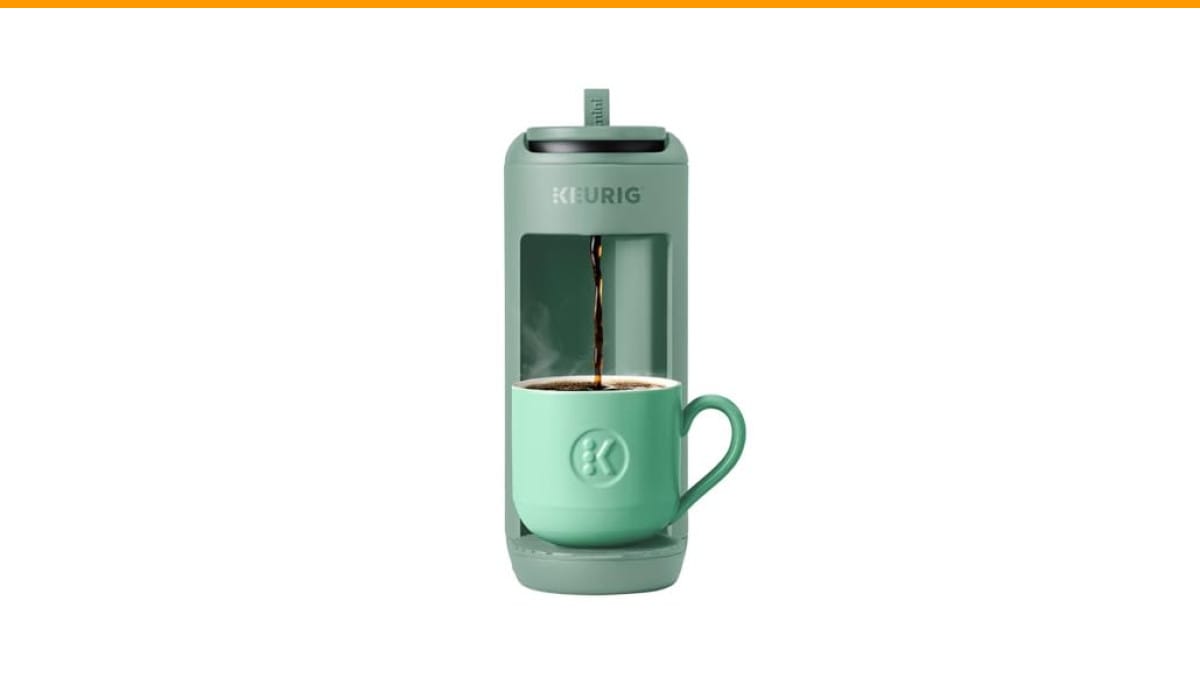
If you’re short on counter space, the Keurig K-Mini Mate is a good example of a compact single-serve machine. It’s only 4 inches wide, so it fits on a crowded shelf or a dorm room desk, and it brews up to a 12-ounce cup straight into a travel mug. It still uses the same heating element technology as bigger Keurigs, so the energy draw is similar—around 800 to 900 watts during the brew cycle.
Why Wattage Alone Doesn’t Tell You the Cost
Most people look at the wattage sticker on the bottom of a coffee maker and assume that number equals what they pay. It doesn’t. Wattage is the instantaneous power draw, but your electric bill charges you for energy over time—measured in kilowatt-hours (kWh).
Here’s the distinction: a 900-watt coffee maker running for 10 minutes uses 0.15 kWh. The same 900-watt machine running for 30 minutes uses 0.45 kWh. The wattage didn’t change. The time did.
So when you compare a 550-watt drip brewer to an 1100-watt espresso machine, the espresso machine might actually cost less per cup if it finishes in 45 seconds while the drip brewer takes 8 minutes. Time is the hidden variable.
Also pay attention to voltage. Most US countertop brewers run on 120V. A 240V model (common in Europe) draws half the current for the same wattage, but the electricity cost per kWh is what matters. Voltage doesn’t change the math—wattage and run time do.
Real Electricity Usage by Coffee Maker Type
Test several machines side by side with a Kill A Watt meter to get real numbers. Here’s what the average session actually looks like.
Drip Coffee Makers (with and without hot plates)
A standard 12-cup drip brewer pulls about 900 watts during brewing. The brew cycle lasts 8 to 10 minutes. That’s 0.12 to 0.15 kWh per pot.
The hot plate is the real killer. A warming plate draws between 200 and 400 watts, and it stays on until you turn it off or the machine times out. Leave it on for an hour and you’ve added another 0.2 to 0.4 kWh. That more than doubles your cost per pot.
Smaller 5-cup models use less during brewing—around 550 to 700 watts—but they often lack a timer, so the hot plate runs until you remember to switch it off.
Single-Serve Pod Machines (Keurig, Nespresso)
Keurig-style brewers draw 800 to 900 watts, but only for about 60 to 90 seconds per cup. That works out to roughly 0.02 kWh per cup. At the national average of 16 cents per kWh, that’s about a third of a cent per cup.
Nespresso machines are similar. The Vertuo line pulls around 1200 watts briefly, but the extraction is fast—30 seconds for espresso, 60 for a full mug. The per-cup cost stays under half a cent.
The catch with pod machines is the warm-up time. Many models keep the internal boiler hot for several minutes after the light turns green. That standby draw is small (10 to 20 watts) but it adds up if you leave the machine on all day.
Espresso Machines (semi-auto vs. super-auto)
Espresso machines are the energy hogs of the coffee world. A semi-automatic like a Gaggia Classic pulls 1100 to 1400 watts, but the boiler cycles on and off to maintain temperature. If you leave it on for 30 minutes, you’re looking at 0.3 to 0.5 kWh just for warm-up and idle time.
Super-automatics are worse. They draw similar wattage but use more energy for grinding and the extra electronics. A typical super-auto left on all day can consume 1 to 2 kWh—that’s 16 to 32 cents daily just for standby.
The workaround is a machine with a fast heat-up time. Some modern models reach brew temperature in 30 seconds, which cuts energy use dramatically compared to a machine that needs 15 minutes to warm up.
Manual Methods (French press, pour-over, cold brew)
Manual methods shift the energy cost to your kettle. An electric kettle draws 1200 to 1500 watts but only runs for 2 to 3 minutes to boil water. That’s 0.05 to 0.075 kWh per boil.
For a single cup, you’re boiling maybe 300 ml of water. That’s cheaper than any electric brewer. A French press or pour-over costs about 0.1 cents per cup in electricity. Cold brew uses zero electricity if you make it in the fridge.
If you already own a stove, a whistling kettle on a gas burner costs even less, though gas efficiency varies.
The Hidden Cost: Standby Power and Warming Plates
Standby power is the electricity a device draws when it’s off but still plugged in. Coffee makers are notorious for this because they have clocks, timers, and LED displays that never really sleep.
Most drip brewers draw 2 to 5 watts in standby. That doesn’t sound like much, but multiply it by 24 hours a day, 365 days a year, and you get 17 to 44 kWh annually. At 16 cents per kWh, that’s $2.75 to $7 per year for a machine you’re not using.
The auto-off feature on many newer models helps with the hot plate, but it doesn’t help with standby. If the machine is plugged in, the clock still runs. Unplugging is the only way to eliminate standby draw entirely.
One caveat: some users report that unplugging and replugging a coffee maker resets the clock, which is annoying. If that bothers you, plug it into a power strip with a switch and just flip that.
How to Calculate Your Exact Cost Per Cup
You don’t need a meter to figure this out. Use this formula:
- Find the wattage on the machine’s label (usually on the bottom).
- Time how long the machine actually runs for one brew cycle.
- Convert minutes to hours (divide by 60).
- Multiply wattage by hours, then divide by 1000 to get kWh.
- Multiply kWh by your electricity rate (check your bill, typically $0.10 to $0.30 per kWh).
Example: A 900-watt drip maker runs for 9 minutes. That’s 0.15 hours. 900 × 0.15 = 135 watt-hours, or 0.135 kWh. At 16 cents per kWh, that’s 2.16 cents per pot. If you brew 10 cups, that’s 0.2 cents per cup.
For a single-serve Keurig: 850 watts × 0.025 hours (90 seconds) = 21.25 watt-hours, or 0.021 kWh. At 16 cents, that’s 0.34 cents per cup.
That’s the universal metric: cost per cup. Everything else is noise.
Energy-Saving Tips That Actually Work
Skip the vague advice. Here’s what actually moves the needle.
- Unplug the machine when not in use. This kills standby power completely. It’s the single biggest savings for most households.
- Turn off the hot plate immediately after brewing. Pour your cup, then switch it off. Every minute on the plate costs more than the brew itself.
- Use a thermal carafe if you buy a new brewer. A thermal carafe keeps coffee hot without any electricity. It costs more upfront but pays for itself within a year.
- Brew only what you’ll drink. A half pot in a full-size brewer uses nearly the same energy as a full pot because the heating element runs the same length of time.
- Boil only the water you need for manual methods. Overfilling the kettle wastes energy and time.
- Skip the pre-heat cycle. Many espresso machines have a pre-heat feature that runs longer than necessary. Check the manual and use the shortest heat-up setting.
One myth worth debunking: the energy-saving mode on modern coffee makers. It does reduce standby draw, but if you unplug the machine anyway, the feature saves you nothing. It’s a convenience, not a cost-saver.
Can You Run a Coffee Maker on a Battery or Solar Generator?
This is a common question for RV owners and campers. The math is straightforward, but the answer surprises most people.
A 900-watt drip coffee maker running for 10 minutes needs 0.15 kWh. A typical portable power station like a Jackery 500 or EcoFlow River 2 has about 0.5 kWh of usable capacity. So yes, you can brew two or three pots before draining the battery.
The problem is the surge. Most coffee makers have a heating element that draws more power at startup—often 20% to 30% above the rated wattage for a second or two. A 900-watt machine might spike to 1200 watts momentarily. That’s fine for a power station rated at 1000 watts continuous, but it will trip a smaller 500-watt unit.
For solar, a 100-watt panel produces roughly 0.3 to 0.5 kWh per day in good sun. That covers one pot of drip coffee or three to four single-serve cups. An espresso machine with a 1400-watt draw is risky on a small solar setup—you’d need a 2026-watt inverter and a battery bank of at least 1 kWh.
If you’re off-grid, a French press and an electric kettle is the most efficient route. The kettle draws high wattage but for such a short time that it’s easy on a battery.
Frequently Asked Questions
Does a Keurig use more electricity than a drip coffee maker?
Per cup, yes. Per pot, no. A Keurig uses about 0.021 kWh per 12-ounce cup. A drip brewer uses about 0.135 kWh per 10-cup pot—that’s 0.0135 kWh per cup. The drip maker is slightly cheaper per cup, but only if you brew a full pot. Brewing two cups in a drip maker still uses the full 0.135 kWh, which makes the Keurig cheaper for small batches.
Is it cheaper to use a French press or an electric coffee maker?
A French press with an electric kettle costs about 0.1 cents per cup in electricity. A drip brewer costs about 0.2 cents per cup. The difference is negligible—less than a dollar per year for a daily drinker. The real savings come from not buying paper filters or pods.
How many watts does a small 5-cup coffee maker use?
Most 5-cup models draw between 550 and 750 watts during brewing. The brew cycle is shorter than a 12-cup machine, so total energy per pot is lower—around 0.08 to 0.1 kWh. That’s about 1.3 to 1.6 cents per pot at the national average rate.
Does leaving a coffee maker plugged in waste electricity?
Yes, but it’s small. Most machines draw 2 to 5 watts in standby mode. Over a year, that’s 17 to 44 kWh, or $2.75 to $7. It’s not a major expense, but it’s pure waste. Unplugging the machine or using a switched power strip eliminates it entirely.
Can I use a solar generator to power an espresso machine?
You can, but you need the right size. A semi-automatic espresso machine draws 1100 to 1400 watts. You’ll need a power station with at least 1500 watts of continuous output and 1 kWh of battery capacity to be safe. That’s a $800 to $1500 investment, which is hard to justify for coffee alone. A manual lever machine or a moka pot on an induction burner is a cheaper off-grid option.
The Bottom Line: Is Your Coffee Maker Worth the Electricity?
Here’s what the numbers actually say:
- A typical small coffee maker uses 0.08 to 0.15 kWh per brew cycle, costing 1.5 to 2.5 cents.
- Single-serve pod machines cost about 0.3 to 0.5 cents per cup—cheaper than drip if you only brew one or two cups.
- Espresso machines are the most expensive to run, especially if left on for long warm-up cycles.
- Standby power adds $3 to $7 per year per machine. Unplug it or use a switched power strip.
- Hot plates double or triple your per-pot cost if left on for an hour. Use a thermal carafe instead.
- Off-grid brewing works fine with a 500-watt power station for drip or single-serve, but espresso needs a bigger investment.
- Manual methods (French press, pour-over) cost the least in electricity, but the difference is under a dollar per year for most households.
The honest take: your coffee maker is not the reason your electric bill is high. Even a heavy daily habit costs less than $20 a year in electricity. The bigger expenses are the coffee itself and the convenience of pods. If you want to save money, brew larger batches, skip the hot plate, and unplug the machine when you’re done. That’s the whole game.
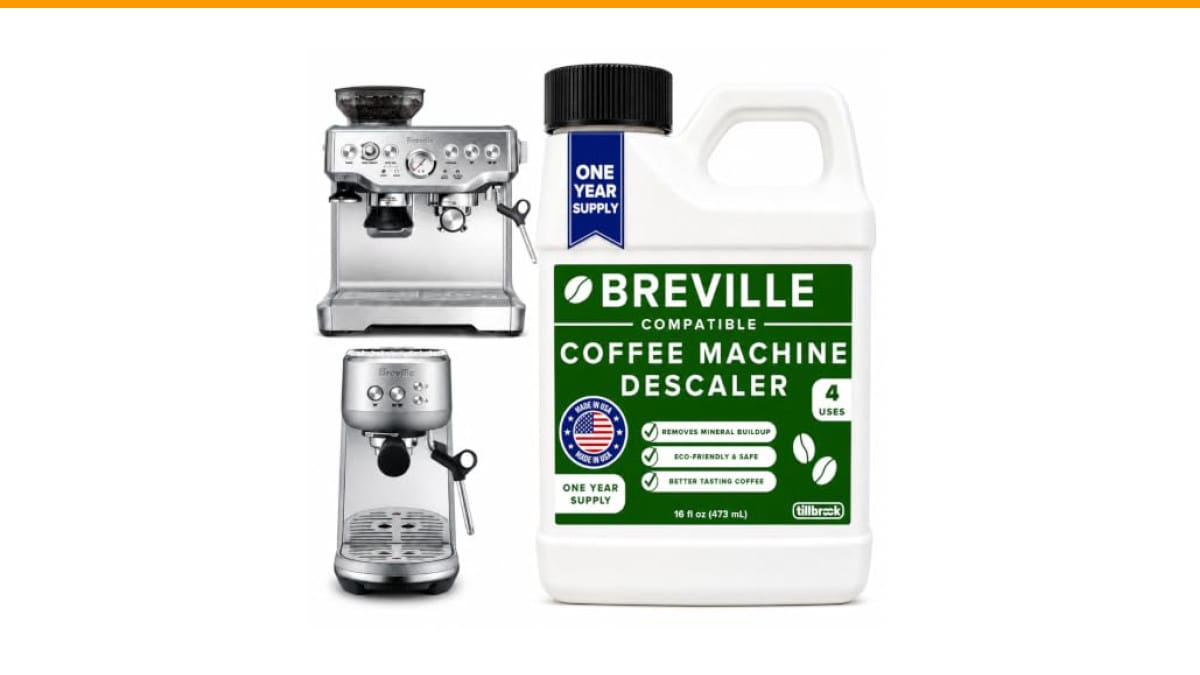
Before you go, it’s worth remembering that a clean coffee maker runs more efficiently. Scale buildup makes the heating element work harder and longer. If you haven’t descaled in a while, check our guide on vinegar cleaning and the importance of regular cleaning. A clean machine uses less energy and tastes better.
Products related to this article
Sponsored / affiliate links. As an Amazon Associate I earn from qualifying purchases. I may earn additional commission from eligible campaigns.
 HomeBeyond Espresso Coffee Maker 12 Cups, Classic Stovetop Espresso Maker, 600ml / 20oz Coffeemaker for Gas & Ceramic Stovetops (Silver)
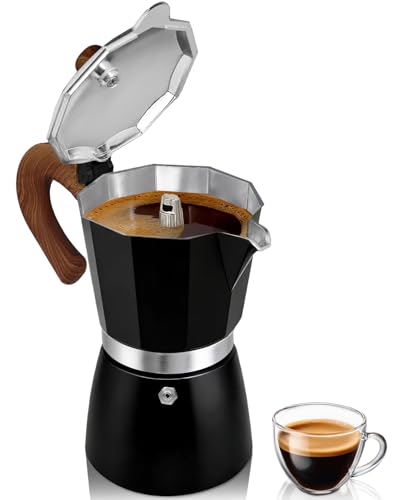 Belly Moka Coffee Maker Stovetop Espresso Maker 9 Cup Aluminum Moka Pot Percolator 15oz 450ml Easy Brewing for Electric Ceramic Stoves Home Camping Italian Cuban Café Classic Black
 Belly Moka Coffee Maker Stovetop Espresso Maker 6 Cup Aluminum Moka Pot Percolator 10oz 300ml Easy Brewing for Electric Ceramic Stoves Home Camping Italian Cuban Café Classic Silver