You probably don’t think about the meter when you hit the brew button. You should. Most people assume a drip coffee maker is a power hog because it heats water, but the reality is far more interesting. The machine sits there for 10 minutes, draws a surge of power, then idles on a hot plate. That pattern changes the math completely.
This article walks through the actual wattage, the three distinct phases of a brew cycle, and the exact cost of a single pot. You’ll leave knowing whether your morning ritual costs a penny or a quarter, and what you can do about it.
Keurig
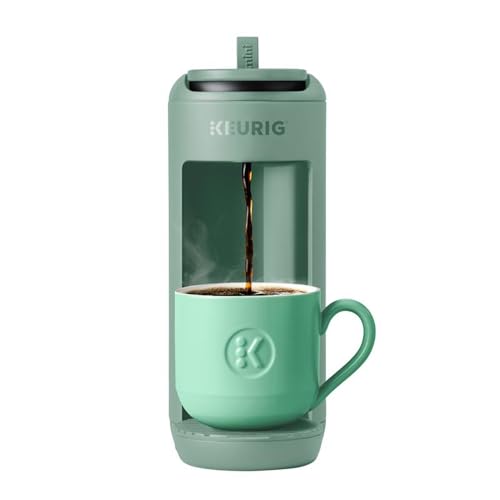
Keurig K-Mini Mate Single Serve K-Cup Pod…
- SMALL SPACE SAVER: Compact at 4" wide for brewing the perfect cup of coffee in small kitchens, dorm rooms, offices, and surfaces w…
- 12 OZ CUP: Features a One Cup reservoir for a freshly brewed cup, up to 12 oz.
- TRAVEL MUG FRIENDLY: Fits up to a 7.25” to-go coffee cup so you can brew and go!
As an Amazon Associate I earn from qualifying purchases.
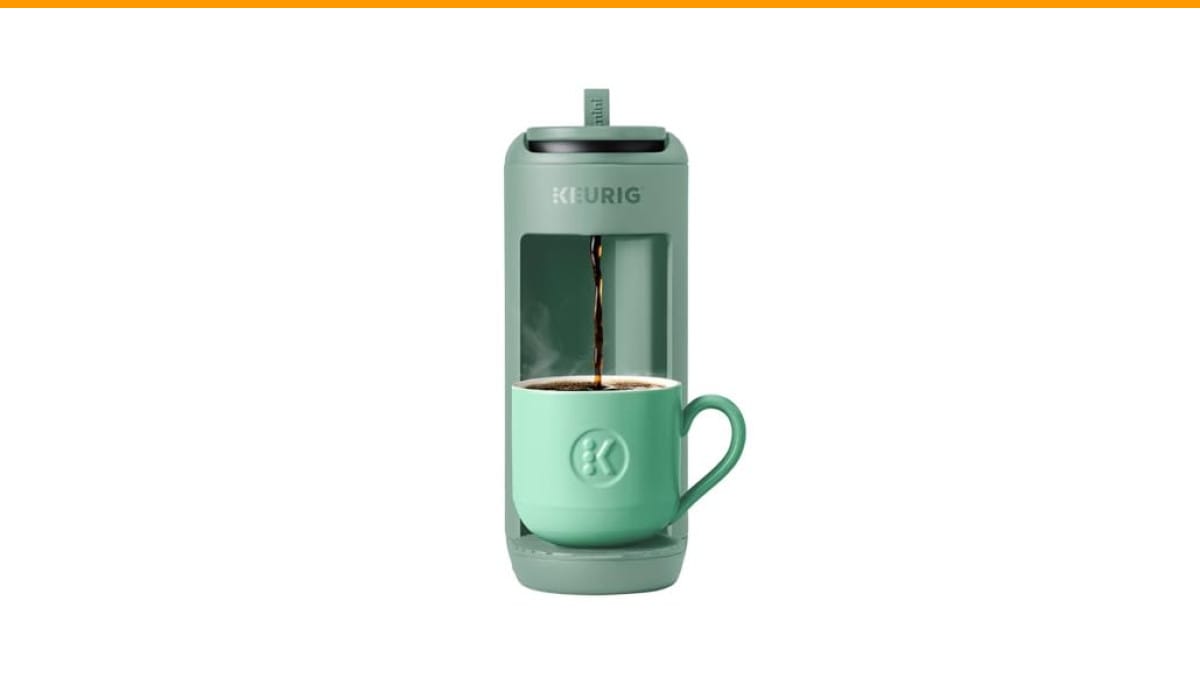
If you are in the market for a smaller machine, the Keurig K-Mini Mate fits a different niche entirely. It is a single-serve pod brewer that draws power only when you press it, so there is no hot plate and no carafe to keep warm. That design sidesteps the biggest energy waste in this article.
The Short Answer: Drip Coffee Makers Are Energy Lightweights
A standard 10-cup drip maker pulls between 600 and 1200 watts during the brew cycle. The average hovers around 900 watts. That sounds like a lot, but the cycle only lasts 8 to 12 minutes. The result is roughly 0.15 to 0.2 kilowatt-hours (kWh) per full pot.
At the US national average of about 16 cents per kWh, one pot costs between 2.4 and 3.2 cents. That is not a typo. You are paying three pennies for a full carafe of coffee.
Compare that to an electric kettle (1500W for 3 minutes) or a Keurig (1500W for 2 minutes). Both use less energy per cup than a drip machine because they heat less water. But the drip maker’s keep-warm plate changes the story if you leave it on for an hour.
So the short answer is: drip coffee makers use very little electricity. The long answer involves phase breakdowns, phantom loads, and why your half-pot habit is costing you more than it should.
Watts vs. Electricity: What You’re Actually Paying For
Watts measure the rate of energy use at a single moment. Electricity bills charge you for total energy, which is watts multiplied by time. That is the kilowatt-hour (kWh). A 1000W machine running for one hour uses 1 kWh.
Your drip maker does not run for an hour. It runs for 10 minutes. So the math is simple: 900W divided by 60 minutes equals 15W per minute. Multiply that by 10 minutes and you get 150 watt-hours, or 0.15 kWh.
Voltage and amps matter for circuit planning, not for your bill. Most drip makers draw about 7.5 amps on a standard 120V US outlet. That is well within a typical 15-amp kitchen circuit, so you never need to worry about tripping a breaker unless you run it on the same circuit as a toaster and microwave simultaneously.
What you actually pay for is the heating element. That resistive coil converts electricity into heat with nearly 100% efficiency. There is no waste. The machine is doing exactly what it was designed to do, and it does it quickly.
The 3-Phase Energy Breakdown of a Brew Cycle
Most people think a coffee maker draws one steady amount of power. It doesn’t. The wattage swings dramatically across three distinct phases, and understanding those swings explains everything about your bill.
Phase 1: The Heating Element Surge (600–1200W)
When you flip the switch, the heating element goes to full power. This is the surge. The element stays at maximum until the water in the reservoir reaches brewing temperature, which takes about 2 to 3 minutes. During this phase, the machine draws its highest wattage.
This surge is why you see the lights dim briefly when you start a pot. The element is pulling hard. But it is short-lived. Once the water hits temperature, the element cycles on and off to maintain it.
Phase 2: The Brew Cycle (Steady State)
During the actual brewing, the element cycles on for about 30 seconds, then off for 30 seconds. The average draw drops to roughly 300 to 400 watts. This phase lasts 6 to 8 minutes for a full pot.
The water drips through the grounds slowly, so the element doesn’t need to run constantly. It just needs to keep the water hot enough to extract flavor. The duty cycle is roughly 50%, which is why the average wattage is half the rated wattage.
Phase 3: The Keep-Warm Plate (The Hidden Cost)
This is where the drip maker stops being efficient. The hot plate draws 100 to 200 watts continuously. Leave it on for an hour, and you add 0.1 to 0.2 kWh to your total. That doubles the cost of the brew cycle.
The plate is a simple resistive heater with no thermostat on many models. It just stays on until you turn it off. If you brew at 7 AM and forget to shut it off until noon, you have spent more on the plate than on the coffee itself.
My advice: pour your cup and kill the machine. The coffee in a glass carafe will cool quickly, but reheating a mug in the microwave for 30 seconds uses less energy than an hour on the plate.
How Much Does One Pot Actually Cost? (The Per-Brew Math)
Let’s do the exact math for a typical 10-cup machine rated at 900 watts.
- Warm-up surge: 900W for 2.5 minutes = 37.5 watt-hours
- Brew cycle: 350W average for 7 minutes = 40.8 watt-hours
- Keep-warm (if you turn it off immediately): 0 watt-hours
Total: 78.3 watt-hours, or 0.078 kWh. At 16 cents per kWh, that pot costs 1.25 cents. Even if you pay 30 cents per kWh (California or Hawaii rates), you are looking at 2.3 cents per pot.
Now factor in the keep-warm plate for 30 minutes at 150W. That adds 75 watt-hours, bringing the total to 0.153 kWh. At 16 cents, that is 2.4 cents. At 30 cents, it is 4.6 cents.
Monthly cost depends entirely on your habits. One pot per day with immediate shut-off costs about 38 cents per month. One pot per day with a 30-minute warm-up costs about 72 cents per month. Two pots a day with a forgetful streak could push you toward $2 per month.
That is the whole picture. A drip coffee maker is one of the cheapest appliances in your kitchen to run, but only if you manage the hot plate.
Glass Carafe vs. Thermal Carafe: The Energy Savings Showdown
Thermal carafes are double-walled vacuum flasks. They keep coffee hot for hours without any electricity. Glass carafes need the hot plate to stay warm. That single design difference changes your energy usage by up to 40%.
A machine with a thermal carafe has no keep-warm plate. The brew cycle finishes, and the machine shuts off or drops to a trickle of power. The coffee stays at drinking temperature for 2 to 4 hours because of the insulation, not because of electricity.
Here is a side-by-side comparison of the annual cost for one pot per day, assuming 16 cents per kWh:
| Carafe Type | Brew Cycle Energy | Warm-Up Energy (30 min) | Daily Energy | Annual Cost |
|---|---|---|---|---|
| Glass (with plate) | 0.078 kWh | 0.075 kWh | 0.153 kWh | $8.94 |
| Thermal (no plate) | 0.078 kWh | 0.000 kWh | 0.078 kWh | $4.56 |
| Glass (shut off immediately) | 0.078 kWh | 0.000 kWh | 0.078 kWh | $4.56 |
The thermal carafe saves you about $4.38 per year. That is not a fortune, but it also keeps your coffee tasting better. The hot plate scorches the coffee after an hour, giving it that burnt, bitter flavor. A thermal carafe avoids that entirely.
If you already own a glass carafe machine, the simplest fix is to shut it off after brewing and pour into a pre-heated thermos. You get the same energy savings without buying a new machine.
Phantom Load: The Cost of Leaving It Plugged In
Phantom load, also called standby power, is the electricity a device draws when it is off but still plugged in. Your drip coffee maker has a clock, a timer, or an LED display. Those components draw a small amount of power constantly.
The typical standby draw for a drip maker is 1 to 3 watts. That sounds negligible. But 2 watts running 24 hours a day, 365 days a year, adds up to 17.5 kWh annually. At 16 cents per kWh, that is $2.80 per year for absolutely nothing.
The irony is that the phantom load costs more than the actual brewing. A single pot per day costs under $5 per year, but the standby clock is eating $2.80 of that total. You are paying nearly as much for the clock as for the coffee.
The fix is simple: unplug the machine when you are not using it. Or plug it into a power strip with a switch and kill the whole strip. If you have a programmable timer model, you lose the timer function, but you save the money.
I keep my own machine on a smart plug that cuts power at 10 AM every day. That way I never forget, and the clock resets every morning. It is a small habit that pays for itself over a year.
How to Run a Drip Maker on Solar or a Portable Power Station
If you are camping, living off-grid, or just want to run your coffee maker from a battery backup, you need to understand surge ratings. A drip coffee maker’s heating element draws its full wattage for the first few minutes, and that surge matters for inverters.
A 900W drip maker needs an inverter rated for at least 1500W of surge capacity. The surge lasts only a few seconds as the element heats up, but a cheap inverter rated at exactly 900W will shut down or alarm. Get a 1500W or 2000W pure sine wave inverter to be safe.
For battery capacity, do the math from the brew cycle. A full pot uses about 0.08 kWh. That is 80 watt-hours. A typical 500Wh portable power station can brew six pots before needing a recharge. A 1000Wh station gives you twelve pots.
The keep-warm plate changes this calculation dramatically. Running the plate for an hour draws 150W, which drains a 500Wh battery in about three hours. If you are off-grid, brew and shut it off. Use a thermos instead.
Solar panels sized for the battery are the next step. A 100W panel produces about 300Wh per day in good sun, which covers three to four brew cycles. That is more than enough for a household’s coffee habit, provided you are not also running a refrigerator.
The Half-Pot Trap: Why Batch Brewing Saves More Energy
Here is a quirk of physics that costs you money: brewing a half pot uses nearly the same electricity as a full pot. The heating element runs at the same wattage regardless of water volume. It just runs for a slightly shorter time.
A full pot takes about 10 minutes. A half pot takes about 8 minutes. The warm-up surge is identical, and the brew cycle is only slightly shorter. You save maybe 20% of the energy while making 50% less coffee. That is a terrible trade.
If you drink two cups in the morning, brew a full pot and store the rest in a thermos. You pay the same energy cost either way, but you get twice the coffee. Batch brewing is the single most effective way to cut your per-cup energy cost.
The same logic applies to a single-serve machine like the Keurig K-Mini Mate. It heats only the water you need, so a 12 oz cup uses about 0.02 kWh. That is a quarter of the energy of a full drip pot, but you only get one cup. For a single person, that is the efficient choice.
Final Verdict: Is Your Drip Maker Worth the Watts?
Yes, absolutely, with one caveat. The brewing itself costs pennies. The hot plate and the phantom clock cost more than the coffee. Manage those two, and your drip maker is one of the most energy-efficient appliances you own.
Here is what I would do tomorrow morning:
- Brew a full pot, not a half pot, and store the extra in a thermos.
- Shut the machine off the second the brew cycle finishes.
- Unplug it or put it on a timer switch to kill the phantom load.
- If you are buying new, choose a thermal carafe model over a glass one.
- Ignore the wattage rating. Focus on the keep-warm plate and the standby draw.
- Keep the machine clean. Mineral scale makes the heating element work harder and longer, which raises energy use. A vinegar descale every few months keeps it efficient.
- If you only drink one cup, a pod machine or pour-over with an electric kettle is cheaper per cup.
Your drip coffee maker is not the villain of your electricity bill. The refrigerator, the water heater, and the HVAC system are. Your coffee habit costs less than a dollar per month, and that is a bargain for the ritual.
If you notice your machine taking longer to brew or the coffee tasting off, regular cleaning keeps it running at peak efficiency. A slow brew cycle means scale buildup, which means more energy wasted on heat that never reaches the water.
Products related to this article
Sponsored / affiliate links. As an Amazon Associate I earn from qualifying purchases. I may earn additional commission from eligible campaigns.
 HomeBeyond Espresso Coffee Maker 12 Cups, Classic Stovetop Espresso Maker, 600ml / 20oz Coffeemaker for Gas & Ceramic Stovetops (Silver)
 Coffee Mug Warmer & You are Awesome Mug Set, Electric Cup Warmer for Desk
 SOLUSTRE Electric USB Coffee Cup Warmer with Temperature Settings Portable Milk and Beverage Heating Coaster for Office Desk Small Lightweight Design Easy to Clean Surface Multi Functional