You’ve just finished dialing in your espresso shot, and the milk is sitting there, cold. You grab your frother, press the button, and a familiar whir fills the kitchen. Thirty seconds later, you have velvety microfoam. But in that brief moment, did you ever wonder what that little motor is actually pulling from your wall? Most people don’t. They assume a small gadget means a small bill, which is true. But the numbers are more interesting once you start looking at the hidden costs.
This guide covers the actual electricity consumption of milk frothers—not just the sticker wattage, but the real-world draw during heating and frothing phases. You’ll walk away with a precise cost-per-cup figure, a breakdown of standby power, and a clear comparison against manual and battery-powered alternatives.

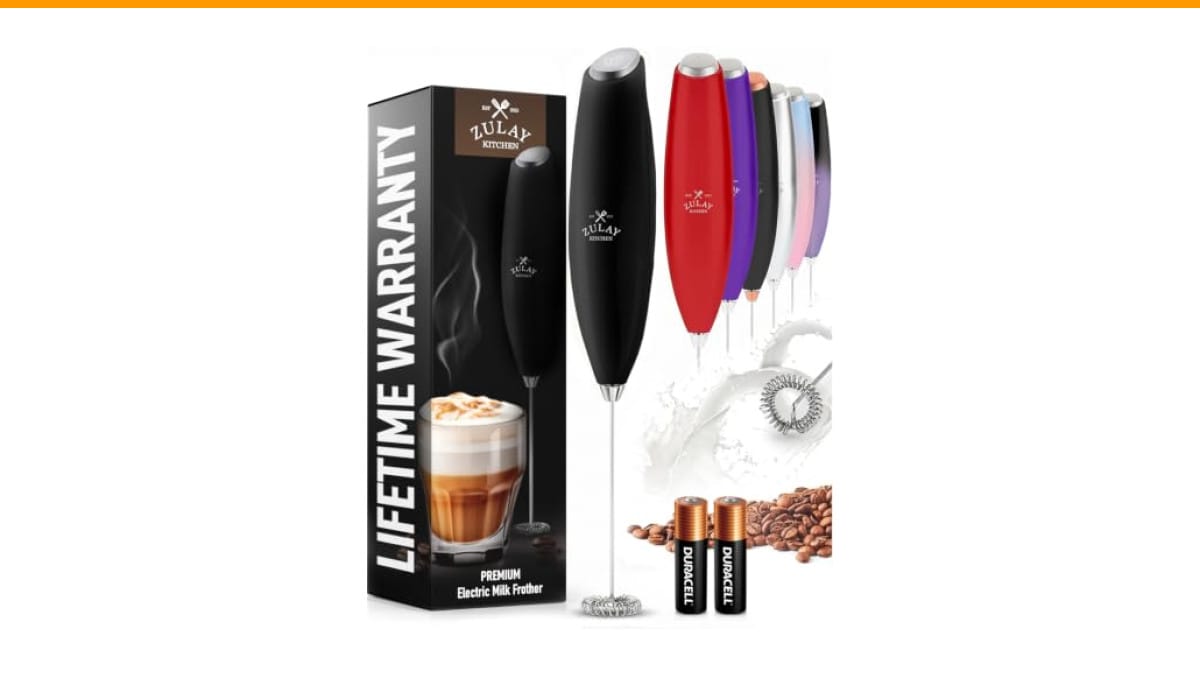
Zulay Kitchen
Zulay Kitchen Milk Frother Handheld Electric Whisk…
- CREAMY VELVETY FROTH IN SECONDS: Making coffee-shop-style recipes at home is as simple as it can be with this milk frother. The 13…
- SIMPLE COFFEE MAKING EXPERIENCE: We have designed this hand blender with a comfortable grip and a simple on/off button. From your…
- LIFETIME FROTHING ACCESSORY: This drink mixer, with rust-resistant stainless steel and a sleek nylon body, is built to be your cof…
As an Amazon Associate I earn from qualifying purchases.
For most home setups, a simple handheld unit is the most efficient option. The Zulay Kitchen Milk Frother Handheld Electric Whisk runs on two AA batteries, which completely eliminates standby power draw. You only use energy when you press the button. It spins at 13,000 RPM, which is plenty for latte art or a quick hot chocolate mix.
Why Wattage Ratings Are Misleading
Look at the base of any electric frother. You’ll see a number like 500W or 600W printed next to the voltage. That’s the maximum power the heating element can draw, not what it uses every second. The rated wattage is a ceiling, not an average.
Consider a typical countertop induction frother. It might be rated at 600W. During the initial heating phase, it draws close to that number to warm the milk from 40°F to 150°F. But once the milk hits temperature, the thermostat cycles the heating element off. The motor that spins the whisk draws only 15 to 30 watts. So your average power consumption over a 90-second cycle is closer to 200W, not 600W.
Handheld frothers are simpler. The Zulay model uses a DC motor rated around 5 watts. Since it doesn’t heat anything, that’s the total draw for the entire session. The difference between a 5W motor and a 600W heater is massive, but the total energy per serving is still tiny because the runtimes are short.
The Real Cost Per Frothing Session (with Math)
Let’s put actual numbers on this. The average US electricity rate is about 16 cents per kilowatt-hour (kWh). A kilowatt-hour is 1,000 watts running for one hour.
For a handheld frother (like the Zulay):
- Power draw: 5 watts
- Frothing time: 45 seconds (0.0125 hours)
- Energy per session: 5W × 0.0125h = 0.0000625 kWh
- Cost per session: 0.0000625 × $0.16 = $0.00001
That’s one hundredth of a cent. You could froth milk every morning for a year and spend less than half a cent on electricity.
For a countertop electric frother with a heating element:
- Average power draw during cycle: 200W (heating + whisking)
- Cycle time: 90 seconds (0.025 hours)
- Energy per session: 200W × 0.025h = 0.005 kWh
- Cost per session: 0.005 × $0.16 = $0.0008
Still under a tenth of a cent per use. Even if you froth twice daily, the annual cost for a countertop model is around 58 cents. It’s a rounding error on your utility bill.
Calculating Your Exact Cost per Cup
Want your specific number? Check your latest electricity bill for the rate per kWh. Then multiply that by the wattage of your device (divided by 1000) and the hours you run it.
Formula: (Watts ÷ 1000) × Hours Used × Cost per kWh = Cost per Session
For a 600W induction frother running a full 3-minute cycle with the heater on half the time, you’re looking at 0.015 kWh. At 16 cents, that’s 0.24 cents per cup. Compare that to a $5 café latte, and the savings are obvious.
Standby Power: The Hidden Electricity Drain
Here’s where most energy guides miss the mark. Countertop frothers that stay plugged in draw power even when they’re sitting idle. The digital display, the LED indicator, and the internal control board all sip electricity 24/7.
This phantom load typically ranges from 1 to 3 watts. It doesn’t sound like much, but it adds up. A 2W standby draw running all year consumes 17.5 kWh. At 16 cents, that’s $2.80 per year—just for doing nothing. That’s roughly 60 times the cost of actually frothing milk.
Handheld battery-powered units avoid this entirely. They have no standby draw because they’re not connected to the grid. If you’re leaving a countertop frother plugged in 24/7, the standby power costs more than the actual frothing does. Unplug it, or put it on a switched power strip.
Electric vs. Manual vs. Battery-Powered: A True Energy Comparison
You have three main options for frothing milk at home. Each has a different energy profile.
| Method | Power Source | Energy Per Use | Annual Cost* | Notes |
|---|---|---|---|---|
| Handheld battery (Zulay) | 2 AA batteries | 0.00006 kWh | $0.004 (plus batteries) | Zero standby, but battery replacement adds up |
| Countertop electric | 120V AC outlet | 0.005–0.015 kWh | $0.30–$0.90 | Standby draw can exceed use cost |
| Manual (French press or whisk) | Your arm | 0 kWh | $0.00 | Free energy, but more effort and inconsistent foam |
*Based on one use per day at $0.16/kWh.
The Battery Replacement Cost Trap
Battery-powered frothers look great on an energy bill, but you’re trading electricity for disposable batteries. The Zulay frother takes two AA batteries. A decent set of alkalines costs about $1.50 and lasts roughly 3 months with daily use.
That’s $6 per year in batteries. Compare that to $0.60 in electricity for a countertop model. The countertop unit is cheaper to operate over a year, even with standby draw. The real advantage of battery-powered is convenience, not cost. You can use it anywhere, and there’s no cord to manage.
If you want the best of both worlds, use rechargeable NiMH AA batteries. They cut the annual battery cost down to almost nothing and keep the standby draw at zero.
How Scale and Maintenance Impact Electricity Use
Here’s a detail nobody talks about: mineral buildup makes your frother work harder. When calcium deposits coat the heating element, they act as an insulator. The element has to run longer and hotter to transfer the same amount of heat to the milk. This increases both energy consumption and cycle time.
A heavily scaled frother can draw 10–15% more power per session. It also takes longer to reach temperature, which compounds the wasted energy. The fix is simple. Descale every 4–6 weeks with a citric acid solution or white vinegar. Run the cycle, rinse thoroughly, and you’re back to peak efficiency. This is especially important if you live in an area with hard water.
The same logic applies to the whisk mechanism. A clogged or bent whisk forces the motor to work harder. Keep it clean and replace it if it warps. A little maintenance goes a long way toward keeping your steam wand or frother running efficiently.
Comparing a Frother to Your Kettle, Microwave, and Espresso Machine
Putting frother consumption in context helps. A milk frother uses almost nothing compared to other kitchen appliances.
- Electric kettle: 1500W for 2 minutes = 0.05 kWh per boil. That’s 10 times more than a countertop frother’s full cycle.
- Microwave: 1000W for 1 minute = 0.0167 kWh to heat a mug of milk.
- Espresso machine: 1200W for 20 minutes (warm-up + brew) = 0.4 kWh per session. The frother is a fraction of a percent of this.
- Milk frother (countertop): 0.005–0.015 kWh per full cycle.
Your espresso machine’s warm-up time alone uses more electricity in one morning than a frother would in a year of daily use. If you’re worried about energy consumption, focus on the big appliances first. The frother is not the problem.
That said, there’s a practical difference in how you heat milk. Microwaving milk can create hot spots and scorch the bottom of the cup. A dedicated frother heats gently and incorporates air simultaneously, which is why the texture is better. For the tiny energy cost, the quality improvement is worth it.
Practical Steps to Cut Your Frother’s Energy Bill
You can’t really save money on a device that costs pennies per year, but you can avoid wasting energy. These steps matter more for countertop models with standby draw.
- Unplug it when not in use. This eliminates the 1–3W phantom load entirely.
- Use a switched power strip. Plug the frother, grinder, and espresso machine into one strip. Flip it off after your morning routine. This also protects against power surges.
- Descale regularly. Scale buildup increases heat-up time and energy draw. A clean frother is an efficient frother.
- Match the portion to your needs. Don’t heat 500ml of milk when you only need 150ml. The heating element runs longer for larger volumes.
- Consider a handheld model. If you’re buying new, a battery-powered frother like the Zulay has zero standby draw and uses negligible energy per use.
- Use rechargeable batteries. If you go the handheld route, NiMH batteries cut the long-term cost and reduce waste.
- Don’t pre-boil milk. Frothing cold or room-temperature milk directly is more efficient than boiling it on the stove first and then frothing it.
If you’re noticing a bitter taste in your espresso after cleaning, the issue might be leftover cleaning solution in the group head. Check our guide on why coffee tastes bitter after cleaning to troubleshoot that specific problem.
Frequently Asked Questions
Does a higher wattage frother use more electricity?
Yes, but only if it runs for the same amount of time. A 600W frother uses more power per second than a 300W model, but it may heat milk faster. The total energy (wattage × time) could be similar or even lower for the higher-wattage unit if it finishes quicker. The rated wattage is a maximum draw, not a constant consumption. In practice, a higher wattage means shorter cycles, which often nets out to roughly the same energy per serving.
Is it cheaper to heat milk in a microwave then froth manually?
Microwaving is slightly cheaper per use if you’re comparing just the heating phase. A 1000W microwave running for 60 seconds uses 0.0167 kWh, about three times more than a countertop frother’s full cycle. But the microwave method requires a second vessel, creates more cleanup, and often produces inferior foam. The frother’s total cost is so low that the convenience and texture difference justify the extra fraction of a cent.
Can I use a power strip to eliminate standby drain?
Yes. Plug your countertop frother into a power strip with a switch, then turn the strip off when the frother isn’t in use. This cuts the phantom load completely. It also works for your espresso machine, grinder, and kettle. One switch controls the whole coffee station, which is a practical habit to build. Just remember the frother won’t be ready instantly if you need it mid-day.
How much does it cost to run a milk frother for a year?
For a countertop model used once daily, expect an annual electricity cost between $0.30 and $0.90, depending on your local rate and the frother’s wattage. Add standby power, and the total creeps up to around $3.50 per year if left plugged in. A handheld battery model costs about $0.01 per year in electricity, but battery replacement adds roughly $6 annually if you use disposable AAs.
Does a milk frother use more electricity than an espresso machine?
No. A typical espresso machine draws 1200W and runs for 20–30 minutes including warm-up and brewing. That’s 0.4 to 0.6 kWh per session. A milk frother uses between 0.005 and 0.015 kWh per cycle. The espresso machine uses roughly 40 times more energy. If you’re looking to reduce your coffee-related electricity use, the machine’s warm-up time is where the savings are, not the frother.
What You Actually Need to Remember
- A milk frother uses between 0.00006 kWh (handheld) and 0.015 kWh (countertop) per session.
- At average US rates, that’s less than one cent per use. The annual cost is under $1 for most models.
- Standby power from a plugged-in countertop frother costs more per year than the actual frothing does.
- Battery-powered frothers have zero standby draw but cost more in battery replacements over time.
- Scale buildup increases energy consumption by 10–15%. Descale every 4–6 weeks.
- Your espresso machine uses roughly 40 times more electricity than your frother. Prioritize efficiency there first.
- Unplugging the frother or using a switched power strip eliminates phantom load completely.
Products related to this article
Sponsored / affiliate links. As an Amazon Associate I earn from qualifying purchases. I may earn additional commission from eligible campaigns.
 Quick Heating Cup Warmer, Three Temperature Settings, Splashproof and Portable, for Coffee, Milk, Lightweight ABS Material
 Coffee Mug Warmer & You are Awesome Mug Set, Electric Cup Warmer for Desk
 Coffee Mug Warmer, Heating Cup Mat Electric Cup Warmer Pad Electric Thermostat Coaster USB Cup Heater Electric Beverage Warmers for Office Home (A)