You watched a barista pour silky microfoam into a latte and thought, I could do that at home. Then you opened Amazon and saw hundreds of frothers. Handheld wands for twelve dollars. Electric jugs for a hundred. Steam wands that require a whole espresso machine. The choice paralysis is real.
Here is what you actually need to know: the best milk frother is not the most expensive one. It is the one that matches how you drink coffee, what milk you use, and how much cleanup you tolerate. This guide walks through a five-step decision framework that narrows the field to one clear winner for your kitchen.
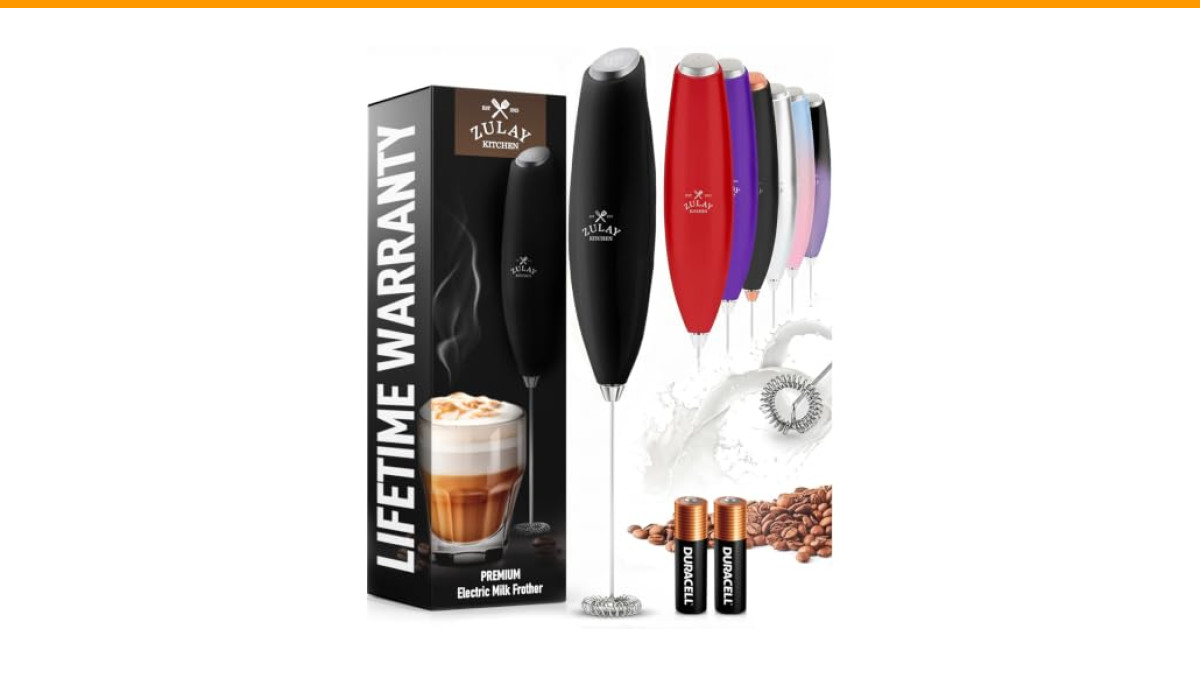
If you want a quick fix right now, the Zulay Kitchen Handheld Milk Frother is a solid starting point. It spins at 13,000 RPM with 25 spiral rings, which is enough power for latte foam, matcha, or protein shakes. It runs on two included Duracell batteries and cleans under running water. Not a bad place to begin if you are new to frothing.
The 3 Core Types of Milk Frothers (And Which One You Are)
Every frother on the market falls into one of three categories. Each has a different trade-off between foam quality, convenience, and price. Your personality determines the right pick.
Handheld Wands (Budget & Portable)
These are the pen-shaped gadgets with a small whisk on the end. You dip them into a mug of warm milk, press the button, and move them up and down for 20 to 30 seconds.
The Zulay Kitchen frother mentioned above belongs here. It is powered by two AA batteries, so it travels well and takes up almost no drawer space. The motor spins at 13,000 RPM, which produces thick foam but not true microfoam. You get large bubbles and a decent foam cap, not the velvety texture a steam wand creates.
Handheld wands work best for people who make one drink at a time. They are also handy for non-coffee uses like whisking eggs or mixing matcha powder. The main downside is inconsistency. You control the foam texture manually, and results vary until you practice a few times.
Electric Jug Frothers (Set & Forget)
Electric jug frothers look like small insulated pitchers with a base. You pour milk in, press a button, and walk away. They heat and froth automatically, usually finishing in 90 to 150 seconds.
These are the best choice for households with two or more coffee drinkers. Most jugs handle 4 to 8 ounces of milk per batch. They also offer separate settings for hot foam, cold foam, and warm milk without foam.
The trade-off is size and price. A good electric jug costs four to eight times more than a handheld wand. It also takes up counter space and needs a quick rinse after every use. But if you want consistent results without thinking, this is your category.
Steam Wands (The Barista Standard)
Steam wands attach to espresso machines. They inject steam into cold milk, heating it while creating microfoam with tiny, uniform bubbles. This is what professional cafes use.
Steam wands produce the best texture by far. The foam is glossy, pourable, and perfect for latte art. They also give you total control over temperature and texture.
The catch is cost and skill. You need an espresso machine with a steam wand, which starts around three hundred dollars. You also need to learn the technique: position the tip just below the surface, stretch the milk, then submerge to texture. It takes practice, but the payoff is real.
If you already own an espresso machine with a steam wand, you do not need a separate frother. If you do not, decide whether you want the learning curve or the convenience.
How to Choose a Milk Frother: The 5-Step Decision Framework
Forget comparing specs for a second. Work through these five questions in order. Each answer eliminates part of the market until one option remains.
Step 1: Match the Frother to Your Milk Type (Dairy vs. Oat vs. Almond)
Whole milk froths beautifully because of its protein and fat content. Skim milk produces lots of foam but a thinner texture. Non-dairy milks behave differently.
Oat milk is the best non-dairy option for frothing. It has a neutral taste and creates a creamy foam, especially the barista blends. Almond milk froths poorly with handheld wands because it is watery; it needs the higher pressure of a steam wand or the specialized whisking of an electric jug. Soy milk froths well but can curdle if the temperature gets too high.
If you only drink oat milk or whole dairy milk, any frother type works. If you drink almond milk, skip the handheld wand and get an electric jug with a fine mesh whisk. If you drink multiple milk types, choose a frother with adjustable speed or a jug with separate settings.
Step 2: Determine the Right Capacity for Your Household
Count how many milk-based drinks you make per day. This number decides the capacity you need.
Single drink per day: a handheld wand is plenty. You froth directly in your mug, so there is no extra pitcher to clean. The Zulay wand handles 8 to 12 ounces of milk easily.
Two to four drinks per day: get an electric jug with at least 8 ounces of capacity. Some jugs advertise 16 ounces, but the foam doubles in volume, so the actual liquid capacity is about half. Check the minimum fill line too. Most jugs need at least 4 ounces to operate, which is useless for a single small latte.
More than four drinks per day: consider a steam wand on a decent espresso machine. Frothing multiple batches in an electric jug gets tedious because you have to rinse between batches.
Step 3: Prioritize Temperature Control (Hot vs. Cold Foam)
Do you drink iced lattes in the summer? Then cold foam matters. Cold foam is frothed cold milk with a thick, whipped texture that floats on top of iced drinks.
Handheld wands make cold foam poorly. The motor spins fast enough, but the small whisk struggles to incorporate air into cold milk. You end up with thin, watery bubbles.
Electric jugs with a cold foam setting are the winner here. They use a different whisk or a slower agitation pattern that whips cold milk into a dense foam. The Nespresso Aeroccino line is known for this, but other brands like Breville offer similar functionality.
Steam wands cannot make cold foam at all. They only heat. If you want both hot and cold foam, an electric jug is the only practical choice.
Step 4: Evaluate Noise, Cleaning, and Durability
Noise is a hidden factor. Handheld wands are surprisingly loud for their size, often hitting 70 to 80 decibels at the motor. That is roughly the level of a vacuum cleaner. Electric jugs are quieter, around 50 to 60 decibels, because the motor is enclosed in the base. Steam wands are the loudest, with a hissing noise that lasts the entire steaming process.
Cleaning is where most frothers fail in real life. Handheld wands clean best: run the whisk under warm water and pulse it for a few seconds. Electric jugs need a rinse and a wipe of the interior, and the lid and whisk detach for washing. Steam wands require the most maintenance. You must purge the wand after each use and wipe it down to prevent milk scale buildup. Follow a regular steam wand cleaning routine or you will notice the performance drop within a month.
Durability varies by type. Handheld wands typically last one to two years with daily use before the motor burns out. Electric jugs last three to five years. Steam wands last as long as the espresso machine, which is often a decade or more. The Zulay wand covers its own bases with a lifetime guarantee, which is rare at that price point.
Step 5: Set a Realistic Budget (Cheap vs. Premium Trade-offs)
You can spend anywhere from ten dollars to five hundred dollars on frothing equipment. Here is what each price tier actually gets you.
Under $25: handheld wands. They froth, but you control the quality. The motor is weak, the batteries die faster than you expect, and the foam is inconsistent. Fine for occasional use or travel.
$50 to $150: electric jug frothers. This is the sweet spot for most home users. You get automatic heating, cold foam settings, and consistent texture. The Nespresso Aeroccino and similar models live here.
$300 and up: espresso machines with steam wands. The cost is high, but you get the best foam and the ability to make real espresso. Only go this route if you want the full coffee hobby experience.
My honest opinion: do not buy the cheapest handheld wand you can find. The motor burns out in two months. Spend a little more on a known brand like Zulay Kitchen or PowerLix, or skip straight to an electric jug.
The 7 Best Milk Frothers of 2026 (Quick Comparison Table)
Here is a side-by-side look at the most popular frothers across all three categories. Prices change constantly, so check current listings before buying.
| Model | Type | Capacity | Cold Foam | Noise Level | Best For |
|---|---|---|---|---|---|
| Zulay Kitchen Handheld | Handheld wand | Single mug | No | Moderate | Budget, travel, one drink |
| PowerLix Handheld | Handheld wand | Single mug | No | Moderate | Budget alternative |
| Nespresso Aeroccino 4 | Electric jug | 8 oz liquid | Yes | Quiet | Automatic hot and cold foam |
| Breville Milk Cafe | Electric jug | 12 oz liquid | Yes | Quiet | Larger households |
| Secura Automatic | Electric jug | 8 oz liquid | Yes | Quiet | Budget electric jug |
| Breville Barista Express | Steam wand | Unlimited | No | Loud | Home baristas, espresso |
| Gaggia Classic Pro | Steam wand | Unlimited | No | Loud | Enthusiasts on a budget |
The table shows a clear pattern. Handheld wands are cheap and portable but lack cold foam. Electric jugs cost more but do everything automatically. Steam wands are the professional choice but require an espresso machine investment.
Handheld Frother Reviews (Top 3 Picks)
Zulay Kitchen Handheld Milk Frother
This is the wand I recommend to most people who want to start frothing without spending much. The 13,000 RPM motor is strong for the category, and the 25 spiral rings create a surprisingly thick foam for a handheld device.
It uses two AA batteries, which are included. That is a small detail, but it means you can use it immediately. The stainless steel shaft resists rust, and the nylon body feels sturdy in the hand. The button is a simple on/off toggle, so there is no learning curve.
Cleaning is the best part. Run the whisk under warm water, pulse the button, and it is clean in five seconds. The lifetime guarantee is unusual at this price and gives peace of mind.
- Pros: Inexpensive, portable, easy to clean, lifetime warranty, works for matcha and protein shakes
- Cons: No cold foam, inconsistent texture until you practice, battery powered
Check the current price on Amazon if this sounds right for you.
PowerLix Handheld Milk Frother
PowerLix is the main competitor to Zulay in the handheld space. It has a similar motor speed and whisk design. The main difference is the battery configuration: PowerLix uses two AAA batteries instead of AA, which means slightly less runtime.
The build quality is fine, but the button placement is a bit awkward if you have larger hands. It works well for hot milk but struggles with cold milk, just like every other wand.
- Pros: Cheap, lightweight, decent foam for hot milk
- Cons: Short battery life, no cold foam, button placement
Zulay Kitchen Pro (Upgraded)
The upgraded Zulay model adds a stronger motor and a detachable whisk. The detachable whisk makes cleaning even easier, but the connection point can loosen over time. It is a marginal upgrade over the standard model, so only buy it if you want the extra power.
- Pros: Stronger motor, detachable whisk
- Cons: More expensive, connection can loosen
Electric Jug Frother Reviews (Top 3 Picks)
Nespresso Aeroccino 4
The Aeroccino 4 is the benchmark for automatic frothers. It has settings for hot foam, cold foam, and warm milk. The cold foam function is genuinely good, producing a dense whipped texture that holds up on iced lattes.
It is quiet, finishes in about 90 seconds, and has a non-stick interior that rinses clean. The downside is capacity. It only holds about 8 ounces of liquid milk, which makes one large latte or two small ones.
- Pros: Excellent cold foam, quiet, easy to clean, multiple settings
- Cons: Small capacity, pricey for the size
Breville Milk Cafe
Breville’s offering is larger, with a 12-ounce liquid capacity. It also has a cold foam setting and a separate whisk for different textures. The motor is robust, and the build quality feels premium.
The main drawback is the cleaning. The lid and whisk have more parts to disassemble, and the interior needs a more thorough wipe than the Aeroccino. It also takes up more counter space.
- Pros: Larger capacity, two whisk options, durable build
- Cons: More parts to clean, bulky
Secura Automatic Milk Frother
Secura is the budget pick in the electric jug category. It does hot and cold foam, though the cold foam texture is thinner than the Aeroccino. The build quality is decent, but the motor whine is slightly more audible.
It is a fine choice if you want the convenience of an automatic frother without paying premium prices. Just temper your expectations on foam density.
- Pros: Affordable, does hot and cold foam
- Cons: Thinner cold foam, louder motor
Steam Wand & Espresso Machine Options (Top 2 Picks)
Breville Barista Express
This is the most popular home espresso machine with a steam wand. The wand produces real microfoam, and the learning curve is manageable with practice. The machine itself is a workhorse, with a built-in grinder and consistent temperature control.
I have used this machine for years. The steam wand is powerful enough to texture milk for two lattes back to back, though it takes a few seconds to recover between drinks. The downside is the maintenance. You must purge the wand after every use and descale the boiler regularly. If you skip that, the wand clogs. Refer to a Breville maintenance guide for the details.
- Pros: Real microfoam, built-in grinder, durable
- Cons: Expensive, requires practice, regular maintenance
Gaggia Classic Pro
The Gaggia Classic Pro is the budget enthusiast choice. It has a commercial-style steam wand that produces excellent foam, but it requires more skill than the Breville. The boiler is smaller, so you cannot steam and brew espresso simultaneously.
If you are willing to learn the technique, this machine delivers cafe-quality results for less money. But it is not a set-and-forget appliance.
- Pros: Great steam power, lower price than Breville
- Cons: Cannot brew and steam at the same time, steeper learning curve
What to Avoid When Buying a Milk Frother (Common Mistakes)
Most bad frother purchases come down to a few predictable errors. Avoid these and you will be happy with your choice.
Buying a wand with a weak motor. Anything under 10,000 RPM will struggle to make foam. Look for at least 12,000 RPM, like the Zulay model.
Ignoring the minimum fill line on electric jugs. Many jugs need 4 to 5 ounces of milk minimum. If you only make tiny drinks, you will waste milk or the frother will not spin.
Assuming all non-dairy milk froths the same. Almond milk is the worst offender. If you drink almond milk, buy a frother with a fine mesh whisk, not a standard coil.
Forgetting about cleaning. A frother that takes five minutes to clean will sit in a drawer after a week. Choose one that rinses clean in under a minute.
Buying a steam wand without an espresso machine. You cannot use a steam wand standalone. Make sure you understand the full investment before going down this path.
Frequently Asked Questions (Noise, Cleaning, and Non-Dairy Milk)
How loud is a milk frother?
Handheld wands are the loudest for their size, around 70 to 80 decibels. Electric jugs are quieter, at 50 to 60 decibels. Steam wands produce a continuous hiss that is loud but brief. If you froth early in the morning while others sleep, an electric jug is the polite choice.
Can I froth cold milk with any frother?
No. Handheld wands and steam wands cannot make proper cold foam. Only electric jugs with a dedicated cold foam setting can whip cold milk into a dense, thick foam. If iced lattes are your thing, prioritize this feature.
How do I clean a milk frother properly?
For handheld wands, rinse the whisk under warm water and pulse it for a few seconds. For electric jugs, remove the whisk and lid, rinse, and wipe the interior with a damp cloth. Never submerge the base. For steam wands, purge the wand immediately after steaming and wipe the exterior with a damp cloth. A deep clean every few weeks prevents milk scale buildup.
Which milk froths best for latte art?
Whole milk is the gold standard. It has the right balance of protein and fat to create glossy microfoam that pours cleanly. Oat milk barista blends are the best non-dairy alternative. Almond milk is nearly impossible to use for latte art because the foam is too watery.
How long does a milk frother last?
A cheap handheld wand may last six months to a year with daily use. A quality handheld like the Zulay can last two years or more, especially with a lifetime guarantee. Electric jugs typically last three to five years. Steam wands last as long as the espresso machine, often a decade or more.
Final Verdict: Which Milk Frother Should You Buy?
Here is the short version for skimmers.
- If you want the cheapest option that works, get a handheld wand like the Zulay Kitchen frother. It is portable, easy to clean, and good enough for one hot latte a day.
- If you drink iced coffee or want consistent results without effort, get an electric jug frother with a cold foam setting.
- If you already own an espresso machine, use its steam wand and skip the separate gadget.
- If you drink almond milk, avoid handheld wands and choose an electric jug with a fine mesh whisk.
- If you make more than four milk drinks a day, invest in a real espresso machine with a steam wand.
- Check the noise level before buying if you froth early in the morning.
- Always prioritize a frother that cleans in under a minute. You will actually use it.
Take the five-step framework from earlier, apply it to your own habits, and you will land on the right answer. The perfect frother is the one you do not have to think about.
Products related to this article
Sponsored / affiliate links. As an Amazon Associate I earn from qualifying purchases. I may earn additional commission from eligible campaigns.
 Quick Heating Cup Warmer, Three Temperature Settings, Splashproof and Portable, for Coffee, Milk, Lightweight ABS Material
 House Gem Coffee Mug Warmer for Desk, Candle Warmer Plate, 12H Timer, Wood
 Coffee Espresso Machine Handle Replacement Parts, Cafe Bracket Handle for Lidl Silvercrest CM4621 CM4218 KF5002 KF500S Barista (for 51mm Portafilter Basket - Not included)