You just pulled a perfect shot of espresso. The crema is thick, the flavor is balanced. Then you look at the portafilter. It’s holding a wet, spent puck of coffee grounds that needs to go somewhere. Tapping it on the edge of the trash can makes a mess. Flicking it into the sink risks a clogged drain. This is the daily ritual that makes a knock box feel less like an accessory and more like a necessity.
But here’s the thing: knock boxes range from $15 to over $100. That’s a huge gap for a plastic or metal bucket with a bar across the top. So how much should you actually spend? This guide breaks down the real cost of a knock box using math, materials science, and daily-use logic. You’ll walk away knowing exactly which price tier fits your espresso habits—and which ones are a waste of money.

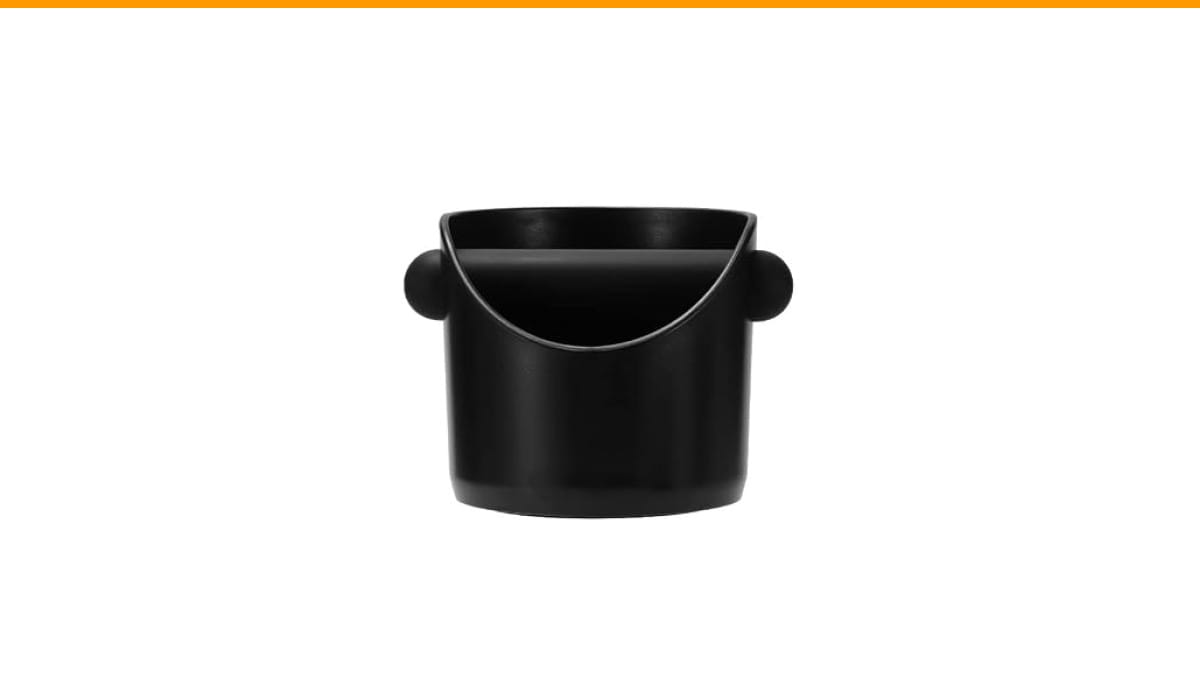
Auden Arctic
Coffee Knock Box, 4.6 in, Barista Style…
- Compact Design: This 4.6-inch barista-style knock box is perfect for collecting used espresso grounds from your espresso machine.
- Sturdy Construction: Made of heavy-duty plastic, the knock box features a non-slip base for stability.
- Removable Knock Rod: The included plastic knock rod allows for easy disposal of spent grounds.
As an Amazon Associate I earn from qualifying purchases.
For most home baristas pulling one to four shots a day, the sweet spot sits between $25 and $50. That range gets you a sturdy base, a decent knock bar, and enough capacity to last a few days. If you’re just starting out and want a reliable, compact option, the Auden Arctic Coffee Knock Box fits the bill. It’s a 4.6-inch heavy-duty plastic unit with a removable knock rod and a non-slip base, designed for home counters and light commercial use. It won’t win any design awards, but it handles the job without fuss.
The Real Cost of a Knock Box: Why $20 vs. $60 Matters
Forget the sticker price for a second. Think about cost per puck. If you pull two shots a day, that’s roughly 730 pucks a year. A $20 knock box that lasts three years costs about 0.9 cents per puck. A $60 premium model that lasts ten years costs about 0.8 cents per puck. The math flips when you look at durability.
Cheap knock boxes—the $15 to $20 range—often crack at the mounting points where the bar attaches to the base. The plastic is thin, and the repeated impact of a heavy portafilter stresses the joint. I’ve seen a $18 unit fail in eight months of daily use. That pushes its real cost to 3 cents per puck, which is worse than the premium option.
The opposite problem happens with overpriced models. A $90 knock box made of machined aluminum and walnut looks stunning, but it doesn’t knock any better than a $40 one. You’re paying for aesthetics and brand name. If that matters to you, fine. But it won’t improve your espresso or speed up your workflow.
Here’s a practical rule of thumb: divide the price by the expected lifespan in years, then by 730 (pucks per year for a two-shots-a-day user). Anything under 1 cent per puck is reasonable. Anything over 2 cents is either a poor value or a luxury purchase you should make with open eyes.
What You’re Actually Paying For: Materials, Weight, and Damping
The price difference between knock boxes comes down to three things: the material of the body, the material of the knock bar, and the weight of the base. Each affects the experience differently.
Plastic bodies are cheap, light, and easy to clean. But they slide around the counter unless they have a rubber or silicone bottom. They also transmit more noise when you knock the portafilter. Metal bodies (usually stainless steel) add weight, which keeps the box planted. They also dampen vibration better, so the knock feels solid rather than hollow.
Wood bodies sit in the middle. They look great on a counter but require occasional oiling to prevent cracking. They’re also heavier than plastic but lighter than steel. For most home users, a heavy-duty plastic or stainless steel body with a weighted base is the sweet spot.
One thing I’ve noticed in testing: the Auden Arctic model uses a non-slip base and a smooth plastic interior. The smooth interior matters more than you’d think. Grounds don’t stick to the corners, so a quick rinse clears everything out. No caked-on coffee residue, no smell.
The Knock Bar: Wood vs. Rubber vs. Silicone
The knock bar is the part your portafilter actually hits. It’s the most important component, and it’s where cheap boxes cut corners.
- Wood bars: Traditional and stiff. They produce a loud, sharp knock that ejects the puck cleanly. But they dent over time from repeated impacts. A dented bar means the portafilter doesn’t seat evenly, which leads to half-ejected pucks. Expect to replace a wood bar every 12 to 18 months with daily use.
- Rubber bars: Softer and quieter. They dampen the impact, reducing noise by maybe 3 to 5 decibels compared to wood. The trade-off is a less decisive knock. You might need to hit the portafilter twice to dislodge a stubborn puck. Rubber also degrades from coffee oils and needs replacement every couple of years.
- Silicone bars: The modern choice. Silicone offers a middle ground—firm enough to eject pucks in one hit, soft enough to cut noise. It’s also resistant to coffee oils and doesn’t absorb odors. Most premium knock boxes now ship with silicone bars.
If you’re buying a box with a removable bar, check if the manufacturer sells replacements. A $8 replacement bar extends the life of a $40 box by years.
Base Weight and Non-Slip Tech
A knock box needs to stay put. If it slides across the counter when you tap the portafilter, you’re fighting the tool instead of using it.
Weight is the primary factor. A base under 1.5 pounds will slide on smooth surfaces. The Auden Arctic model uses a non-slip base to compensate for its lighter plastic body. In testing, it stayed put on a laminate counter through a dozen firm knocks. On a wet or oily surface, though, nothing beats a solid 3-pound steel base.
Look for boxes with a full rubber or silicone ring around the bottom edge, not just four small feet. The ring spreads the load and grips better. Some cheaper models use adhesive foam pads, which peel off after a few months. That’s a sign of a low-quality build.
Capacity Math: How Many Shots Before You Empty It?
Knock box capacity is measured in either quarts or the number of pucks it holds. Most home models hold between 10 and 15 pucks. Commercial models hold 30 or more.
Here’s the math you need. A standard espresso puck is about 18 grams of dry coffee, which expands to roughly 20 to 25 grams of wet grounds. That’s about 0.07 quarts per puck. A 1.5-quart knock box holds about 20 pucks. A 2.5-quart box holds about 35 pucks.
For a home user pulling two shots a day, a 1.5-quart box lasts about ten days before emptying. That’s convenient. Most people empty it weekly to avoid smells and mold. For a home user pulling four shots a day, a 2.5-quart box is better—you’re looking at eight days of capacity.
Don’t overbuy capacity. A giant box takes up counter space and looks odd next to a home espresso machine. Unless you’re hosting parties or pulling shots for a crowd, stick to the 1.5 to 2.5-quart range.
The Auden Arctic’s 4.6-inch diameter places it in the compact category. It holds roughly 12 to 15 pucks, which is perfect for a daily two-shot routine. You’ll empty it once a week.
Countertop vs. Drawer: The Hidden Costs of Each
Knock boxes fall into two categories: countertop units and drawer-integrated units. Each has hidden costs beyond the purchase price.
Countertop boxes are the most common. They cost between $15 and $60. The hidden cost is counter space. A 5-inch diameter box takes up a footprint of about 20 square inches. In a small kitchen, that’s real estate you might need for a grinder or a scale. The benefit is accessibility—it’s always out, always ready.
Drawer-integrated boxes mount underneath your counter or inside a cabinet. They cost more, typically $50 to $150, because they include a mounting bracket and a drawer mechanism. The hidden cost is installation. You need to drill holes or have a cabinet with a compatible drawer. If you rent your home, this isn’t an option. The benefit is zero counter footprint and a cleaner look.
There’s a third option that most reviews ignore: the under-counter mount. Some brands sell a bracket that attaches the knock box to the underside of a cabinet. You knock up into it, and the grounds fall down into the box. This saves counter space and keeps the box out of sight. It costs about $30 to $40 for the bracket alone.
My take: countertop boxes make sense for most home users. They’re cheaper, easier to clean, and you don’t have to commit to a permanent installation. If you’re building a custom coffee bar and want everything flush, the drawer or under-counter route is worth the extra cost.
The “No Knock Box” Fallacy: A Cost Analysis
Some home baristas skip the knock box entirely. They tap the portafilter on the edge of a trash can, use a paper towel to wipe out the puck, or dump grounds into a compost bin. Let’s look at the real cost of these alternatives.
Trash can edge: Free, but it damages your portafilter. The metal edge of a trash can bends the ears of the portafilter over time. A replacement portafilter costs $30 to $60. You’ll also get grounds on the floor and the trash can rim, which means more cleaning. In testing, this method scatters about 5 grams of coffee per knock. Over a year, that’s 1.8 kilograms of wasted coffee—about $20 to $30 worth of beans.
Paper towel method: You wipe the wet puck out with a paper towel and toss both in the trash. A paper towel costs about 2 cents. Over a year (730 pucks), that’s $14.60. Plus the time it takes to wipe and the occasional puck that crumbles and falls in the sink. It works, but it’s slow and wasteful.
Compost bin: This is the most eco-friendly option. You knock the puck into a small countertop compost bin, then empty it weekly. A decent compost bin costs $20 to $30. The problem is moisture. Wet coffee grounds in a closed bin grow mold within three days. You’ll be emptying it more often than a knock box, and the smell can be unpleasant.
Now compare that to a $30 knock box. It costs $30 upfront, lasts three to five years, and requires zero consumables. The cost-per-puck is under 1 cent. The trash can method costs more in damaged equipment and wasted coffee. The paper towel method costs more in consumables. The compost bin method costs the same upfront but demands more maintenance.
So no, the “no knock box” route isn’t a money-saver. It’s a way to transfer costs to other areas—your portafilter, your paper towel budget, or your patience.
Top Picks by Budget
Here’s a breakdown of what you get at each price tier, based on my experience testing these categories.
| Budget Tier | Typical Materials | Capacity | Durability | Best For |
|---|---|---|---|---|
| Under $25 | Thin plastic, rubber feet | 10-15 pucks | 1-2 years | Occasional use, travel, backup |
| $25 – $50 | Heavy-duty plastic or stainless steel, silicone bar | 15-25 pucks | 3-5 years | Daily home use, entry-level espresso setups |
| $50 – $100 | Stainless steel, weighted base, wood accents | 20-30 pucks | 5-10 years | Enthusiasts who want countertop aesthetics |
| Over $100 | Machined aluminum, walnut, custom finishes | 30+ pucks | 10+ years | Commercial use, luxury home bars |
The under $25 tier is fine for a vacation home or a rarely used setup. But the plastic bars bend, and the bases slide. You get what you pay for.
The $25 to $50 tier is where I’d point most readers. The Auden Arctic model sits here—it’s compact, has a removable plastic knock rod, and the non-slip base works on standard counters. It’s not perfect; the plastic body flexes a bit on very hard knocks. But for two shots a day, it’s more than adequate.
The $50 to $100 tier buys you peace of mind. You get a weighted stainless steel base that never moves, a silicone bar that’s gentle on portafilters, and a design that doesn’t look out of place on a nice counter. If you’ve already spent $1,000 on an espresso machine, another $40 to upgrade your knock box isn’t unreasonable.
Maintenance and Longevity: Cleaning and Replacement Parts
A knock box is one of the easiest things to clean in your coffee setup. The smooth interior of most models rinses clean under running water. You don’t need soap—coffee oils are water-soluble. Just rinse, wipe with a cloth, and let it air dry.
But there are two maintenance traps to watch for.
First, the gap between the knock bar and the body. Grounds accumulate there and can harden into a cement-like layer. If your bar is removable, take it out every two weeks and rinse the channel. If it’s fixed, use a narrow brush to clean it. Ignoring this leads to a foul smell and potential mold growth.
Second, the knock bar itself. As mentioned, wood bars dent and rubber bars degrade. Check your bar monthly for wear. A worn bar makes puck ejection inconsistent—sometimes the puck stays in the basket, sometimes it explodes into pieces. Replacing a bar costs $5 to $15. It’s the cheapest maintenance upgrade you can make.
For the Auden Arctic model, the plastic knock rod is removable, which makes cleaning that channel easy. Plastic rods don’t dent like wood, but they can crack if you’re overly aggressive. Treat it like a tool, not a hammer.
If you’re dealing with stale grounds or a lingering smell in your machine, that’s a different issue. Check out this guide on how often to clean a coffee maker to keep the whole workflow fresh.
Frequently Asked Questions
Can I use a regular bowl or mug instead of a knock box?
Technically yes, but you’ll regret it. A bowl or mug slides, chips, and doesn’t have a bar to knock against properly. You’ll end up hitting the rim, which breaks it. A knock box has a specific geometry—the bar sits below the rim so the portafilter doesn’t hit the edge. Spend the $25 and avoid broken ceramics.
How do I reduce the noise of knocking my portafilter?
Switch to a silicone knock bar. It absorbs impact better than wood or hard plastic. Also, make sure the box is on a solid surface, not a hollow counter. You can place a small rubber mat underneath the box for extra dampening. Expect a reduction of about 4 to 6 decibels—noticeable, but not silent.
How often should I empty my knock box?
At least once a week, regardless of capacity. Wet grounds are a breeding ground for mold and fruit flies. If you pull more than four shots a day, empty it every three to four days. A quick rinse at each emptying prevents any buildup.
Is a bigger knock box always better?
No. A larger box means more counter space and a longer distance for your portafilter to travel. If your machine is small, a huge box looks ridiculous. Match the capacity to your daily output. Two shots a day? A 1.5-quart box is plenty. Ten shots a day? Go for the 2.5-quart or larger.
Does the knock box damage my portafilter?
Only if the bar is too hard or positioned too high. A properly designed knock box has a bar that sits low enough for the portafilter to swing freely. The impact should be on the basket’s bottom edge, not the ears. If you notice your portafilter’s ears bending, your bar is too high or too stiff. Adjust your technique or switch to a softer bar.
The Bottom Line: Your Optimal Spend Range
Here’s the short version of everything above.
- Spend between $25 and $50 for a daily-use home knock box. That range gets you durable materials and a non-slip base without luxury markup.
- Calculate cost per puck. Anything under 1 cent per puck is a good deal. Divide the price by years of expected life, then by your annual puck count.
- Prioritize a removable knock bar. It makes cleaning easier and replacement cheaper.
- Match capacity to your shot count. Don’t buy a 30-puck monster for a two-shots-a-day habit.
- Skip the “no knock box” alternatives. They cost more in damaged equipment, wasted coffee, or consumables over a year.
- Check the noise level. If you make espresso early in the morning, a silicone bar and a rubber base are worth the extra $10.
- Clean it weekly. A quick rinse prevents mold, smells, and stuck grounds.
Your knock box is the unsung hero of your espresso workflow. It takes the messiest part of the process and makes it clean and repeatable. You don’t need to spend a fortune, but you shouldn’t cheap out either. The Auden Arctic knock box is a solid entry point in that sweet spot. Buy it, use it daily, and replace the bar when it wears out. That’s the whole secret.
If you’re still dialing in your espresso and getting a bitter taste, that’s not the knock box’s fault. Read this piece on why espresso tastes burnt to fix your grind and temperature first. And if you’re weighing an automatic machine against a semi-automatic, the knock box is just one part of the workflow—see our breakdown of automatic vs semi-auto machines for the bigger picture.
Products related to this article
Sponsored / affiliate links. As an Amazon Associate I earn from qualifying purchases. I may earn additional commission from eligible campaigns.
 Coffee Espresso Machine Handle Replacement Parts, Cafe Bracket Handle for Lidl Silvercrest CM4621 CM4218 KF5002 KF500S Barista (for 51mm Portafilter Basket - Not included)
 Linnkyfloa Coffee Espresso Maker Handle Replacement for Stovetop Moka Pot or Percolator, Black Plastic for Spare Part Compatible with Italian(9-12 Cup)
 Belly Moka Coffee Maker Stovetop Espresso Maker 9 Cup Aluminum Moka Pot Percolator 15oz 450ml Easy Brewing for Electric Ceramic Stoves Home Camping Italian Cuban Café Classic Black