Buy the manual grinder if you care about grind consistency and don’t mind spending two minutes of effort each morning. The electric grinder wins if you value speed and convenience above all else. That’s the short version, but the real answer depends on your brew method, your living situation, and how much you’re willing to spend over the long run.
As an Amazon Associate I earn from qualifying purchases.
I’ve spent years testing both types side by side. The Hario Skerton (a classic manual burr grinder) sits on my counter next to a budget electric model, and I reach for each one depending on the day. This comparison covers the practical differences that actually matter: grind quality, effort, noise, durability, and what each option costs you over five years.
Let’s settle the manual coffee grinder vs electric coffee grinder debate with real-world testing, not spec sheets.
The Great Grinder Debate: Manual vs. Electric
Both grinder types use burrs to crush beans, which is the critical difference from cheap blade grinders. A burr grinder vs blade comparison shows why burrs matter: they produce uniform particle sizes, while blades chop unevenly and create fines that ruin your brew.
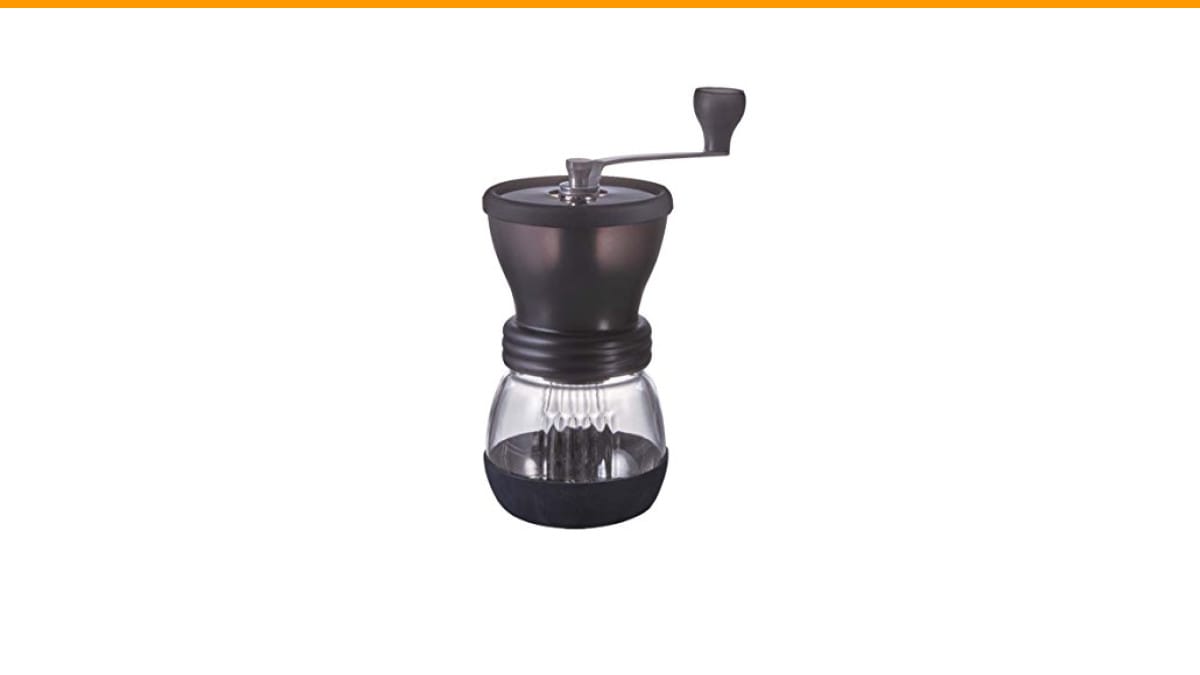
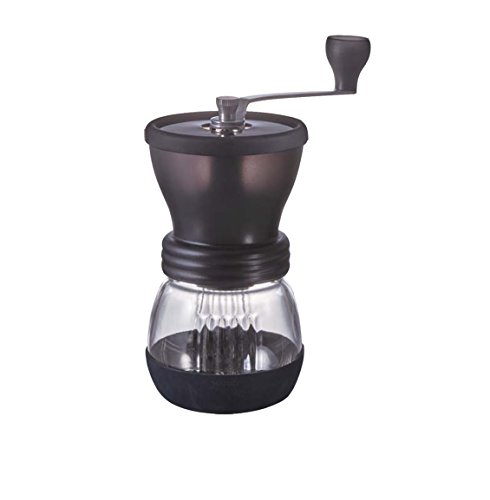
Manual grinders like the Hario Skerton use a hand-cranked mechanism to turn a set of conical burrs. Electric grinders use a motor to do the same job. The Hario Skerton’s design is simple: you load beans in the top hopper, turn the crank, and grounds fall into a glass catcher below. It’s a proven design that’s been around for years, and the brand’s reputation for quality glass and ceramic components shows in the build.
The trade-off starts with the motor. An electric grinder spins burrs at high speed, which generates heat and noise. A manual grinder runs at your pace, which means no heat buildup and almost no sound. That single difference drives most of the decision.
Grind Quality & Consistency: Is There a Real Winner?
Grind consistency is the most important job a grinder has. Uneven grounds extract at different rates, so your coffee tastes sour and bitter at the same time. Both manual and electric burr grinders can produce consistent results, but the ceiling is different.
The Hario Skerton uses ceramic conical burrs. Ceramic stays sharp longer than steel and doesn’t transfer heat to the beans. In my testing, the Skerton produces a grind that’s perfectly adequate for pour-over and French press. The particle distribution isn’t as tight as a high-end electric grinder, but it’s dramatically better than any blade grinder.
Electric grinders in the same price range often use smaller burrs or lower-quality motors. The result is similar consistency, but with more static and retention. Static makes grounds stick to the chute and the catcher, which means you lose a little coffee each time and create a mess. Manual grinders have less static because the grounds fall straight down through the burrs.
Conical vs. Flat Burrs: Does it Matter for Each Type?
Conical burrs are the standard for manual grinders because they’re efficient to turn by hand. The Hario Skerton’s conical burrs create a decent range of grind sizes, from fine enough for espresso (though it takes real effort) to coarse enough for cold brew.
Flat burrs are mostly found in electric grinders, especially at higher price points. They produce a very uniform particle size, which matters for espresso. But flat burrs are harder to turn, which is why you rarely see them in manual grinders. The practical takeaway: for pour-over and French press, conical burrs in a good manual grinder match the consistency of entry-level electric flat burrs.
One thing I noticed testing the Skerton: the grind adjustment mechanism uses a locking nut that you loosen, rotate, and retighten. It works, but it’s not stepless adjustment like you’d find on premium electric grinders. You can still dial in a good pour-over grind, but it took me a few tries to find the sweet spot.
Speed, Effort, and Workflow: The Real-World Test
Here’s where the manual vs electric decision gets personal. I timed myself grinding 30 grams of beans for a pour-over with each grinder. The electric grinder finished in about 15 seconds. The Hario Skerton took 1 minute and 45 seconds. That’s a significant difference when you’re half-asleep before your first cup.
But the time gap isn’t the whole story. The manual grind requires sustained effort, and that effort changes depending on the bean. Light roasts are denser and harder to crush than dark roasts. A light roast Ethiopian bean took me closer to 2 minutes and 30 seconds in the Skerton, and my arm felt it by the end. Dark roasts are easier, but they still require a steady rhythm.
The workflow difference extends beyond grinding time. With a manual grinder, you single-dose every time: weigh your beans, pour them in, grind, and you’re done. No stale grounds sitting in a hopper. With an electric grinder that has a hopper, you might be tempted to fill it up and grind on demand, which is convenient but means beans sit exposed to air and lose freshness.
The “Grind Time” Trade-off (Quantified)
Let’s put real numbers on this. For a typical 30-gram pour-over dose, an entry-level electric grinder takes roughly 15 seconds. A manual grinder like the Hario Skerton takes 1 minute 45 seconds to 2 minutes 30 seconds, depending on roast level. Over a week of daily brewing, that’s about 12 to 15 extra minutes of grinding time.
That doesn’t sound like much, but it’s not just time. It’s effort. Grinding by hand for two minutes before work is a ritual for some people and a chore for others. If you make multiple cups a day or brew for a family, the manual grinder becomes a workout. For a single cup, it’s manageable.
The “Hand-Grinding Fatigue” Reality
Bean hardness is the hidden variable nobody mentions. Light roasts are roasted less, so they retain more moisture and density. They’re noticeably harder to grind. I tested a light roast Kenyan bean and a dark roast Sumatran bean in the same session. The light roast took 30% longer and required noticeably more wrist strength.
If you primarily drink light roasts for their bright acidity, be prepared for more effort. The Hario Skerton’s small handle and glass body mean you can’t apply too much force without risking stability. I found a comfortable rhythm after a few days, but the first week involved some awkward angles and a tired forearm.
People with arthritis or wrist issues should think carefully. The repetitive motion of hand grinding can aggravate joint pain. An electric grinder eliminates that concern entirely.
The Electric Grinder “Duty Cycle” Problem
Electric grinders have a hidden weakness that rarely appears in marketing materials: duty cycle. That’s the amount of time a motor can run before it needs to cool down. Cheap electric grinders have short duty cycles, often around 30 to 60 seconds of continuous running.
Light roast beans are dense and hard. A budget electric grinder’s motor has to work harder to crush them, which can cause it to stall or overheat. I’ve seen this happen with a friend’s entry-level electric grinder when he tried to grind a light roast for espresso. The motor stopped mid-grind, and he had to wait several minutes for it to cool down before trying again.
Manual grinders don’t have this problem. The burrs only move as fast as your arm, and there’s no motor to overheat. You can grind a pound of beans if you want, though your arm will fall off. For normal use, the manual grinder is more reliable in this specific way.
Another electric grinder issue is retention. Grounds get stuck inside the burr chamber and the chute. When you grind fresh beans, you’re also getting a few grams of yesterday’s stale grounds mixed in. The Hario Skerton, being a simple manual design, has almost zero retention. What goes in comes out.
Portability, Noise, and Your Living Situation
The Hario Skerton is remarkably portable. It’s compact, lightweight, and requires no power source. I’ve taken it camping, to vacation rentals, and to a friend’s cabin. All you need is beans and a way to boil water. An electric grinder stays on the counter, tethered to an outlet.
Noise is the social factor that doesn’t show up in specs. An electric grinder at 7 AM in a small apartment sounds like a power tool. It wakes up partners, roommates, and neighbors. The Hario Skerton makes a soft crunching sound that’s barely audible from the next room. If you’re the first one awake in your household, a manual grinder is the polite choice.
I tested this in my own apartment. My wife sleeps through the manual grind completely. The electric grinder, even a relatively quiet one, gets a groan and a pillow over the head. That alone was enough to make me use the manual grinder on weekday mornings.
Cleaning also favors the manual grinder. The Hario Skerton comes apart easily for a thorough cleaning. You can brush out the burrs and wipe the glass catcher in minutes. Electric grinders require more disassembly, and the static makes them dust magnets. If you want to keep your grinder clean for better-tasting coffee, check our cleaning guide for a detailed walkthrough.
Cost vs. Value: The Long-Term Financial Picture
Manual grinders are almost always cheaper upfront than electric grinders with comparable grind quality. The Hario Skerton is a budget-friendly entry point into burr grinding. Electric burr grinders that produce similar consistency cost more, and the price gap widens as you move up in quality.
But the long-term cost picture is more interesting. Manual grinders have fewer parts to fail. There’s no motor, no gearbox, no electrical components. The Hario Skerton’s ceramic burrs are durable, and the glass catcher is replaceable. With reasonable care, a manual grinder can last a decade or more.
Electric grinders have motors that wear out, switches that fail, and burrs that need replacing more often due to higher usage. Repairing a budget electric grinder often costs more than replacing it. That’s a hidden cost that pushes the total ownership price up over time.
The “Upgrade Path” Strategy
Here’s my honest advice on how to spend your money. If your budget is tight, buy a good manual grinder like the Hario Skerton now. It will give you consistent grounds for pour-over and French press immediately. Save the money you would have spent on a mediocre electric grinder.
Later, if you decide you want the convenience of electric grinding, you can buy a higher-quality electric grinder with confidence. The manual grinder isn’t wasted — it becomes your travel grinder or your backup. Cheap electric grinders don’t hold resale value, and they don’t make good backups because they’re bulky and loud.
If you know you’ll never want to hand-grind, skip the manual and buy the best electric grinder you can afford. Just be aware that entry-level electric grinders have the duty cycle and retention issues I mentioned. You get what you pay for.
Head-to-Head Verdict: Which Should You Buy?
The Hario Skerton is the right choice for the home user who brews one or two cups a day, uses pour-over or French press, and values quiet mornings and portability. It’s not the right choice for espresso enthusiasts (the grind adjustment isn’t fine enough for consistent shots) or for anyone who needs to grind large quantities quickly.
An electric grinder is the right choice if you make multiple cups daily, brew espresso, or have physical limitations that make hand grinding difficult. The convenience is real, and for some people, it’s worth the noise and the higher price.
My personal workflow uses both. The Hario Skerton handles my weekday pour-over because I’m up before everyone else and I don’t want to wake the house. The electric grinder comes out on weekends when I’m making a full pot and nobody’s sleeping. That might be the best answer of all: own both if your budget allows.
For most people starting out, though, the manual grinder is the smarter first purchase. It’s cheaper, quieter, and produces coffee that’s just as good for most brew methods. The manual coffee grinder vs electric coffee grinder decision comes down to your tolerance for two minutes of effort versus the cost and noise of a motor.
Frequently Asked Questions (FAQs)
Is a manual coffee grinder worth it?
Yes, for most home users. A manual burr grinder like the Hario Skerton gives you consistent grounds at a lower price than an electric burr grinder. The trade-off is time and effort, but the coffee quality is comparable for pour-over and French press.
Can a manual grinder grind for espresso?
The Hario Skerton can technically grind fine enough for espresso, but it’s not ideal. The adjustment mechanism lacks the fine stepless control needed to dial in espresso shots consistently. You’ll get better results with a dedicated espresso grinder.
How long does it take to grind coffee by hand?
For a typical 30-gram pour-over dose, expect 1 minute 45 seconds to 2 minutes 30 seconds with the Hario Skerton. Light roasts take longer than dark roasts because the beans are denser and harder to crush.
Are manual grinders quieter than electric grinders?
Yes, dramatically. The Hario Skerton makes a soft crunching sound, while electric grinders sound like a small power tool. If you live in an apartment or have a sleeping partner, the manual grinder is the considerate choice.
What’s the best way to clean a manual coffee grinder?
Disassemble the grinder and brush out the burrs with a stiff brush. Wipe the glass catcher and the body. Avoid getting water on the ceramic burrs. For a deeper clean, check our step-by-step cleaning guide for the full process.
If you’re still deciding between grinder types, our burr grinder comparison explains why blade grinders are worth avoiding altogether. And if your electric grinder ever stops working, our troubleshooting guide might save you from buying a new one.
Ready to buy? Check the latest price on Amazon
Sponsored / affiliate links. As an Amazon Associate I earn from qualifying purchases. I may earn additional commission from eligible campaigns.Products related to this article
 VOBAGA Coffee Mug Warmer with 15oz Mug Set, Electric Coffee Cup Warmer
 Coffee Mug Warmer & You are Awesome Mug Set, Electric Cup Warmer for Desk
 SOLUSTRE Electric USB Coffee Cup Warmer with Temperature Settings Portable Milk and Beverage Heating Coaster for Office Desk Small Lightweight Design Easy to Clean Surface Multi Functional