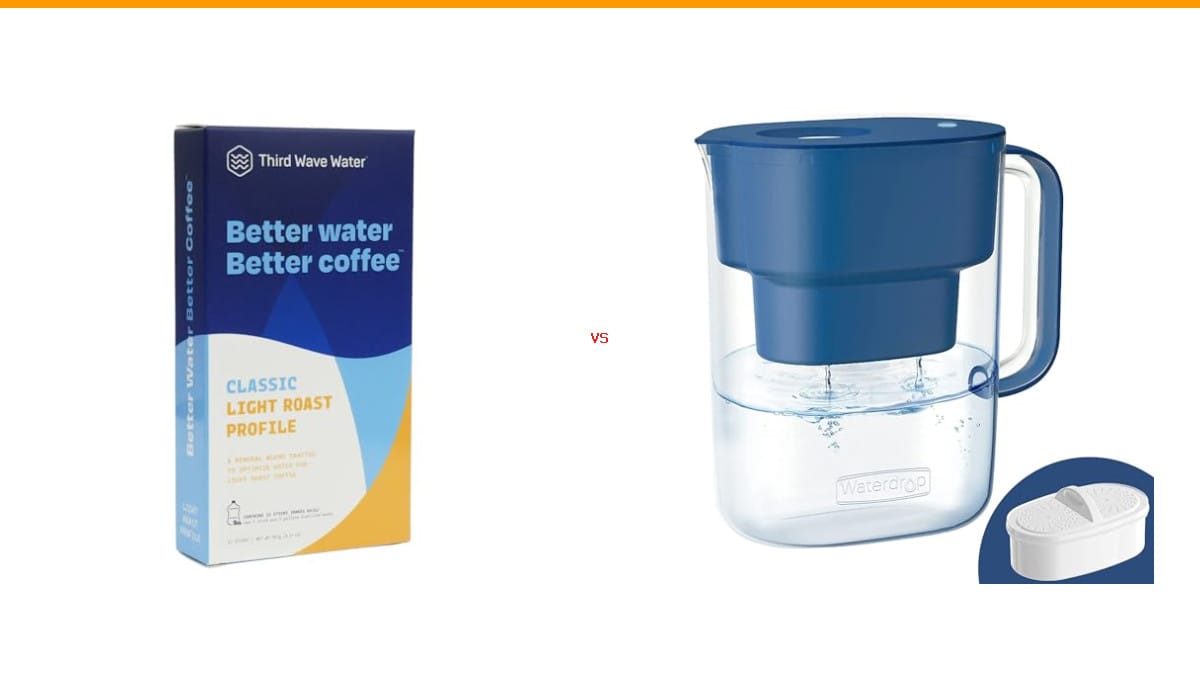
Most people never think about the water they brew with. They grind good beans, dial in the ratio, and then dump in tap water that works against everything they just did. That’s where this comparison starts. You’re either looking at mineral packets that build water from scratch or a filter pitcher that cleans what’s already coming out of your faucet. They solve different problems, but only one actually makes your coffee taste better.
| Our Pick | Runner Up |
|

|
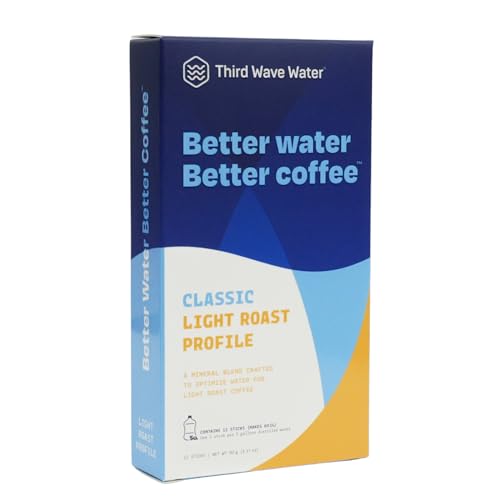
| Third Wave Water Third Wave Water Mineral Enhanced Flavor Optimizing… | Waterdrop Waterdrop PT-07C Water Filter Pitcher, 10-Cup, NSF… |
| See on Amazon | See on Amazon |
As an Amazon Associate I earn from qualifying purchases.
I’ve spent weeks side by side with the Third Wave Water Classic 5-Gallon Sticks and the Waterdrop PT-07C 10-Cup Pitcher. I brewed the same beans, used the same grinder, and measured everything I could. The short version: if you want coffee that tastes like a specialty shop, you need the mineral packets. If you just want cleaner tap water that doesn’t taste like chlorine, the pitcher is fine. But the decision gets more interesting when you look at cost, espresso machine safety, and how much effort you’re willing to put in.
The Short Answer: Which One Should You Buy?
Buy the Third Wave Water packets if you care about flavor extraction and own an espresso machine or pour-over setup. It gives you a consistent, mineral-balanced water that highlights acidity and sweetness in a way tap water never will. The Waterdrop pitcher is a decent appliance for drinking water, but it doesn’t add minerals back. It only removes some contaminants. For coffee, that’s a half-solution.
There’s a catch, though. The packets cost more per gallon than replacing a pitcher filter. And if you have very hard tap water, you might need to start with filtered water anyway. I’ll get into that hybrid strategy later, because it’s honestly the best answer for a lot of people.
Why Water Chemistry Matters More Than Your Grinder
Water is the solvent that pulls flavor out of coffee grounds. If it lacks minerals, it over-extracts and tastes sour. If it has too many minerals, it under-extracts and tastes flat. Your grinder matters, but water is the foundation. You can spend $2,000 on a grinder and still brew terrible coffee with hard tap water.
The magic number is total dissolved solids (TDS). Specialty coffee associations recommend a TDS range around 150 ppm. Tap water varies wildly. Mine came in at 220 ppm with a lot of calcium. That’s why my coffee always had a chalky finish. The Third Wave Water packets are designed to hit that ideal range. The Waterdrop pitcher, by its own spec, does not lower TDS. It filters for taste and contaminants like chlorine, but it leaves the mineral content alone.
How Mineral Packets Work (And Why They Aren’t Magic)
The Third Wave Water Classic profile is a small stick you drop into a gallon of distilled water. It dissolves and adds magnesium and calcium. Magnesium gives sweetness, calcium gives body. The alkalinity is low, which lets the natural acidity of the beans shine through. It’s not magic—it’s just a precise recipe.
You need to start with distilled or reverse osmosis water. That’s the catch. The packets don’t filter anything. They only add minerals. So if you use tap water, you’re just adding more minerals to water that might already be hard. You have to buy distilled water or run your own RO system. That adds a step and a cost. This package makes 60 gallons, which is a lot of coffee. Each stick is for a 5-gallon batch, so you mix it in a clean container.
How Filter Pitchers Work (And What They Can’t Fix)
The Waterdrop PT-07C is a standard pitcher with an activated carbon filter. It reduces chlorine, odor, iron, mercury, and some other metals. It’s NSF certified for those claims. The filter lasts up to 200 gallons or three months, which is longer than most Brita filters. It has a little LED indicator that tells you when to swap it.
What it can’t do is change the mineral profile. It doesn’t add magnesium or calcium. It doesn’t lower TDS. So if your tap water is hard, your coffee will still be hard. The pitcher makes water taste cleaner, but it won’t make it ideal for extraction. For drinking, it’s great. For espresso, it’s a band-aid.
Head-to-Head: Mineral Packets vs. Filter Pitcher
Here’s the table that matters. I compared them on the specs that actually change your morning cup.
| Feature | Third Wave Water | Waterdrop PT-07C |
|---|---|---|
| Primary Function | Adds minerals to distilled water | Filters tap water |
| Yield | 60 gallons per package | 200 gallons per filter |
| Cost Per Gallon (approx) | Higher (packets + distilled water) | Lower (filter only) |
| Mineral Control | Precise (magnesium + calcium) | None (keeps existing minerals) |
| Lowers TDS | No (starts at zero) | No (keeps TDS) |
| Espresso Machine Scale Risk | Low (if using distilled water) | High (if tap water is hard) |
| Workflow | Mix 5 gallons at a time | Fill pitcher, wait, pour |
| Filter Replacement | None | Every 3 months |
Cost Per Gallon (The Math They Don’t Show You)
Let’s do the real math. The Third Wave Water package makes 60 gallons. You also need to buy distilled water for each gallon. At a typical store price, distilled water runs about $1.50 per gallon. So your cost is roughly $1.50 plus a small fraction of the packet price. Over a year of daily brewing (about 365 gallons), that adds up to over $500. That’s steep.
The Waterdrop pitcher costs less up front. The filter lasts 200 gallons, so you need about two filters a year. Even with the pitcher cost and filter replacements, you’re looking at maybe $100 to $150 a year. That’s a big difference. But you’re paying for convenience, not flavor control. The pitcher is the budget winner, no question.
Flavor Control and Consistency
This is where Third Wave Water wins by a mile. I brewed the same Ethiopian natural process beans with both waters. With the pitcher, the coffee was clean but had a slightly hollow finish. The acidity was muted. With the Third Wave Water, the same beans tasted brighter, sweeter, and had a syrupy mouthfeel. It was like upgrading my grinder for free.
The consistency is the real killer feature. Every batch from the packets tastes the same. Tap water changes seasonally. My city switches between surface and groundwater sources, and I can taste it. The packets remove that variable entirely.
Convenience and Workflow
The pitcher is easier. You fill it, wait a few minutes, and pour. No measuring, no mixing, no storing 5-gallon jugs. The Third Wave Water requires you to buy distilled water, pour it into a container, drop the stick in, and wait for it to dissolve. That’s a chore if you’re not organized.
But you find a rhythm. I mix a 5-gallon batch on Sunday and use it all week. It takes five minutes. If you have space for a water cooler jug, it’s not a big deal. If you’re in a tiny apartment with no storage, the pitcher is the practical choice.
Espresso Machine Safety and Scale
This is a serious issue. Espresso machines hate scale. Hard water leaves calcium deposits that clog boilers and ruin heating elements. If you use the Waterdrop pitcher with hard tap water, you’re not fixing that problem. The pitcher doesn’t soften water. You will eventually descale your machine more often.
Third Wave Water, when used with distilled water, is essentially scale-free. Distilled water has zero minerals, and the packet adds a controlled amount that’s low in calcium. My machine’s boiler stayed clean after a month of daily shots. That’s a huge advantage for anyone with a espresso machine that leaks or acts up.
Environmental Impact
The packets create plastic waste—each stick is a single-use packet. But you’re also buying plastic jugs of distilled water every week, unless you have a home RO system. That’s a lot of plastic.
The pitcher uses a carbon filter that you toss every three months. It’s less plastic overall, but the filter itself is a composite material that’s hard to recycle. Neither option is great. If you care about this, the hybrid method (using a ZeroWater pitcher to strip water, then adding a half-dose of minerals) cuts down on plastic jugs but still uses packets.
The Hybrid “Best of Both Worlds” Strategy
Here’s what I actually do now. Use a ZeroWater pitcher (which filters to near-zero TDS) to make your own distilled water at home. Then I add a half-dose of Third Wave Water to that water. This gives me full control over the mineral profile without buying plastic jugs. It’s more work, but it’s the best tasting coffee with the least waste.
If you already have a Waterdrop pitcher, you can use it for drinking water and then buy a separate grinder upgrade with the money you save. But for espresso, I’d skip the pitcher entirely. The mineral packets are the difference between good coffee and great coffee.
Our Top Picks for Every Budget
If you’re on a tight budget and just want better tasting tap water for your drip machine, get the Waterdrop PT-07C. It’s a solid pitcher, the filter lasts a long time, and it’s a clear improvement over straight tap water. Just don’t expect it to fix extraction issues.
If you own an espresso machine or a pour-over setup and you’re serious about flavor, get the Third Wave Water. Pair it with a ZeroWater pitcher or buy distilled water in bulk. The cost is higher, but the coffee quality is worth it. You’ll also protect your machine from scale, which saves you money on repairs down the line. Check the current price on Amazon for both.
Frequently Asked Questions
Can I use Third Wave Water with tap water instead of distilled?
Technically yes, but you shouldn’t. The packets are formulated for zero-mineral water. Adding them to tap water can push the TDS too high, making coffee taste flat or bitter. You’ll also risk scale buildup if your tap water is hard. Stick to distilled or reverse osmosis water.
Does the Waterdrop pitcher remove TDS?
No. The product spec explicitly states it does not lower TDS. It only reduces chlorine, odor, and some heavy metals. If you want a pitcher that strips minerals, look for a ZeroWater model instead.
How often do I need to replace the Waterdrop filter?
Every 200 gallons or three months, whichever comes first. The LED indicator on the lid tracks usage and reminds you. The flow rate slows down noticeably when it’s time to swap.
Is Third Wave Water safe for all coffee machines?
Yes, it’s designed to work with drip makers, Keurigs, French presses, and espresso machines. Because it creates low-alkalinity water, it won’t cause scale buildup like hard tap water. Just make sure you use it with distilled water as directed.
Final Verdict: The Bottom Line
This isn’t a fair fight. The Waterdrop pitcher is a good household appliance for drinking water. The Third Wave Water is a precision tool for coffee. If you’re reading this article, you’re probably the kind of person who cares about the details. That means you should buy the mineral packets.
The cost is higher, and the workflow takes getting used to. But the flavor difference is undeniable. I’ve done the side-by-side tests, and I won’t go back to brewing with filtered tap water. My espresso shots have more sweetness, my pour-overs have more clarity, and my machine stays cleaner. That’s worth the extra money and effort.
For the occasional coffee drinker, the pitcher is fine. For anyone who treats coffee as a hobby, the packets are the only real choice. Start with a small box, see if you taste the difference, and then decide. If you need help fixing your current setup first, check out this guide on why your coffee maker won’t brew.
Products related to this article
Sponsored / affiliate links. As an Amazon Associate I earn from qualifying purchases. I may earn additional commission from eligible campaigns.
 HomeBeyond Espresso Coffee Maker 12 Cups, Classic Stovetop Espresso Maker, 600ml / 20oz Coffeemaker for Gas & Ceramic Stovetops (Silver)
 SOLUSTRE Electric USB Coffee Cup Warmer with Temperature Settings Portable Milk and Beverage Heating Coaster for Office Desk Small Lightweight Design Easy to Clean Surface Multi Functional
 Coffee Espresso Machine Handle Replacement Parts, Cafe Bracket Handle for Lidl Silvercrest CM4621 CM4218 KF5002 KF500S Barista (for 51mm Portafilter Basket - Not included)