Use a 1:16 drip coffee ratio as your default: 1 gram coffee to 16 grams water, or about 2 tablespoons per 6 ounces as a rough home estimate; move to 1:15 for a fuller cup and 1:17 for a lighter one. Too little coffee leaves the brew thin. Too much can push bitterness and waste grounds. This guide gives a drip coffee ratio calculator, exact measurements for common brew sizes, and quick fixes for weak or bitter coffee.
How is this calculated?
Press Calculate to see the math with your numbers.
Dialing in your drip strength from 1:14 to 1:18

The simplest way to calculate drip coffee is by weight. Start with 1:16 for a balanced cup, which sits inside the common drip range of about 1:14 to 1:18 and lines up with the 1:15 to 1:18 starting points many brew guides use for filter coffee. That means 30 g coffee needs about 480 g water, and 60 g coffee needs about 960 g water.
Use a kitchen scale when you can. It measures coffee and water directly, which is more reliable than scoops, tablespoons, or machine cup marks. A scale also makes it easier to keep the same result when you change brewer type, grind size, or batch size.
Choose a stronger or lighter ratio
Move to 1:15 when you want more body or your brewer runs a little fast. Move to 1:17 when the cup tastes too heavy or your machine already extracts on the higher side. Specialty guides often place drip comfort zones around 1:14 to 1:18, while Coffee Bros lists Autodrip mild at 1:18, average at 1:17, and strong at 1:13. Brewculator also gives 1:15 as a standard drip ratio, with 1:13 stronger and 1:17 lighter.
Do not treat one ratio as fixed for every machine. Flat-bottom baskets, cone baskets, and specialty brewers can extract differently because water spends different amounts of time in contact with the grounds. A standard auto-drip machine usually uses a gravity-fed basket and carafe setup, with a brew cycle around 4 to 8 minutes.
Convert grams to cups and ounces
For water, 1 gram is the same as 1 milliliter, so gram-based ratios are easy to scale. A 6-ounce drip cup is about 177 ml, while many drip machine “cups” are 4 to 6 oz and often do not match true cup sizes. That is why a 12-cup machine may produce 12 cups of about 4 to 6 ounces rather than 12 full 8-ounce servings.
For coffee, the exact scoop count changes with grind size, roast density, and packing. A tablespoon estimate can help in a pinch, but it is a fallback, not a precision tool.
How much coffee do I use for 12 cups of drip coffee?
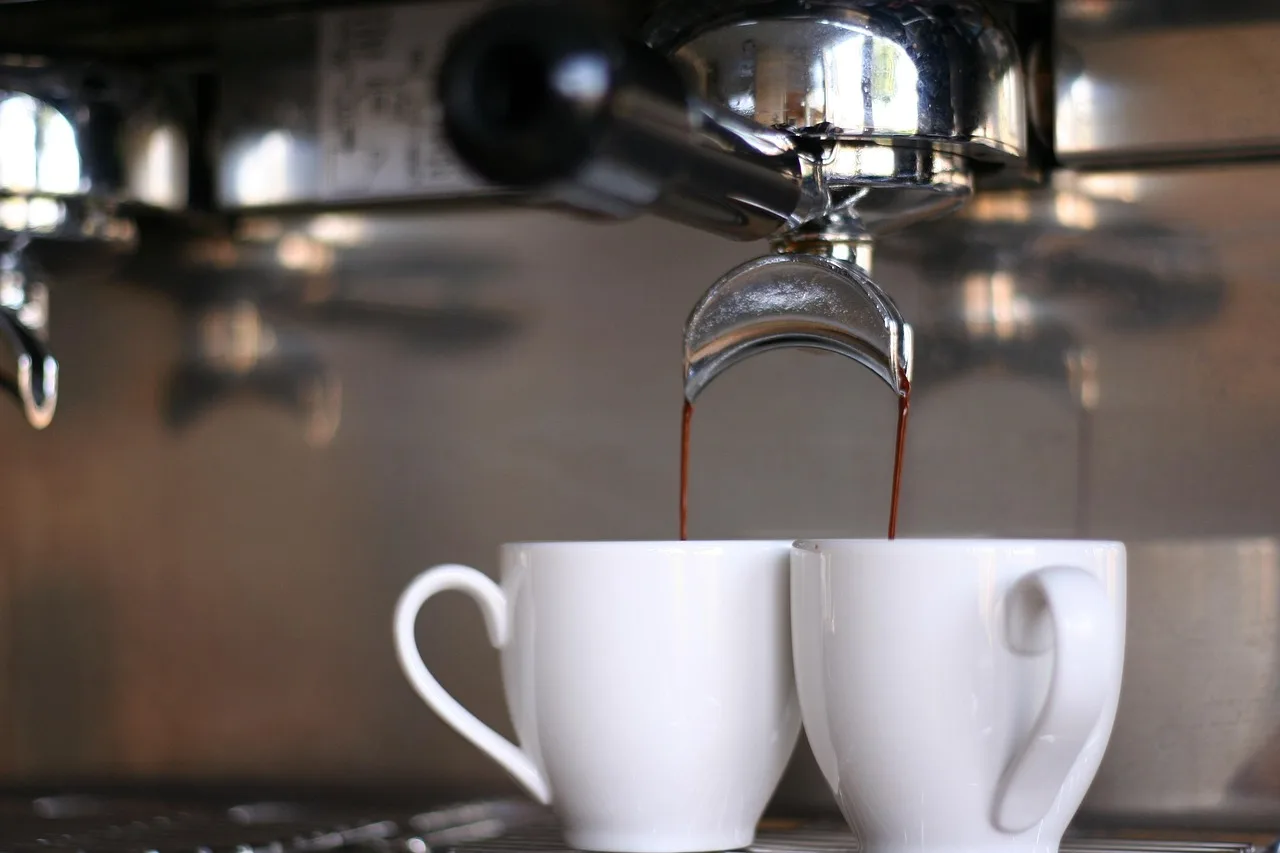
For a 12-cup machine, start by checking the brewer’s cup mark before you measure coffee. Many drip makers label a cup as about 4 to 6 ounces, so 12 machine cups may equal about 48 to 72 ounces of brewed coffee, not 96 ounces. At a 1:16 ratio, that batch often needs about 85 to 135 grams of coffee, depending on the actual water fill.
True cups vs machine markings
If your machine’s 12-cup line equals about 60 ounces of water, a 1:16 ratio lands near 113 grams of coffee. If the same machine uses a smaller internal cup standard, the dose drops. That is why the label matters less than the actual water volume you add.
Suppose you fill a 12-cup machine to its max line and the coffee tastes weak. The first check is not the filter. Check whether the machine’s “cup” is a 5-ounce mark, then verify the coffee dose against the real water volume before changing anything else.
12-cup pot examples by ratio
| Water volume | 1:15 coffee | 1:16 coffee | 1:17 coffee |
|---|---|---|---|
| 600 g water | 40 g coffee | 37.5 g coffee | 35.3 g coffee |
| 900 g water | 60 g coffee | 56.3 g coffee | 52.9 g coffee |
| 1200 g water | 80 g coffee | 75 g coffee | 70.6 g coffee |
When to adjust for a larger batch
Large batches sometimes need a small ratio shift. If a full pot tastes flat, move from 1:16 to 1:15 before changing everything else. If the cup tastes heavy or bitter, move from 1:15 to 1:16 or coarsen the grind a little. Brew time and temperature matter here too: Brewculator lists 195 to 205°F and a 4 to 6 minute drip brew time, while Coffee Bros gives 194 to 200°F for medium roast automatic drip.
What ratio should you use?
Start with the same ratio for most single cups and full pots, then adjust based on brewer style and taste. Use 1:16 for a balanced cup, 1:15 for a fuller cup, and 1:17 when the coffee tastes too intense. For a benchmark-style starting point, 55 g per liter translates to about 1:18, which is useful as a lighter starting point rather than a rule for every machine.
Single cup
A single cup is a good place to start at 1:16 because small doses are easy to correct. For 250 g water, use about 15.6 g coffee. If the result tastes thin, raise the dose before you change the grinder. If it tastes bitter, check grind and water temperature first.
Half pot
For a half pot, keep the same ratio unless the brewer runs unusually fast or slow. A half pot of 600 g water needs about 37.5 g coffee at 1:16. That keeps the calculation simple and gives you a clean baseline for later changes.
Full pot
For a full pot, the same ratio still works, but brew behavior matters more. A basket that drains too quickly can taste weak even with enough coffee. A basket that stalls can taste bitter even if the dose is correct. That is why brew time and grind size should be checked alongside ratio.
SCA-style starting point
If you want a lighter benchmark-style starting point, use about 1:18. That is close to the Specialty Coffee Association Golden Cup translation used by many pour-over guides, and it can work well on machines that extract strongly. If the cup tastes weak at 1:18, move toward 1:17 or 1:16 before adjusting the grinder.
Drip ratio table
This decision table turns common brewing situations into a first move. Use it to choose a starting ratio, estimate coffee grams, and decide whether the first correction should be ratio, grind, or brew settings. It is a starting map, not a fixed rule for every brewer.
| Scenario | Recommended ratio | Estimated coffee grams | First adjustment |
|---|---|---|---|
| Single cup, 250 g water | 1:16 | 15.6 g | Change ratio by 1 step if needed |
| Half pot, 600 g water | 1:16 | 37.5 g | Check grind consistency |
| Full pot, 1200 g water | 1:15 | 80 g | Check brew time |
| Weak cup | 1:15 | For 300 g water: 20 g | Add coffee first |
| Bitter cup | 1:17 | For 300 g water: 17.6 g | Coarsen grind first |
| Sour cup | 1:15 | For 300 g water: 20 g | Grind finer first |
| Fast brew | 1:15 | For 500 g water: 33.3 g | Grind finer first |
| Slow brew | 1:17 | For 500 g water: 29.4 g | Grind coarser first |
| Cheap machine | 1:15 | For 600 g water: 40 g | Check temperature and flow |
| SCA-certified machine | 1:17 | For 600 g water: 35.3 g | Start lighter, then adjust |
| Scale user | 1:16 | Exact by weight | Keep the same ratio |
| Tablespoon-only user | About 1:16 | About 2 tbsp per 6 oz | Use level spoons and watch taste |
What grind size should you use?
Use a medium grind for drip coffee, about the texture of table salt. That is the common starting point for auto-drip brewers and appears in multiple brew guides, including Coffee Bros and Brewculator. Medium grind gives water enough contact time without choking the basket or racing through too fast.
How grind affects brew speed
Too fine a grind slows flow and can push bitterness because water stays with the grounds longer. Too coarse a grind speeds flow and can leave the cup weak or sour. If your machine brews outside the usual 4 to 8 minute window, grind should be one of the first checks.
How grind changes taste
Medium-fine can work on some automatic drip setups, especially if the brewer runs a little fast. If the cup tastes sour and thin, try a slightly finer grind. If the cup tastes harsh or the basket drips slowly, move coarser by one step.
Why your drip coffee tastes weak or bitter
Weak coffee usually points to underdosing, too-coarse grind, or a brew that finished too quickly. Bitter coffee usually points to too-fine grind, water that ran too hot, or a brew that lingered too long. Sour coffee often means the grounds were too coarse or the brew under-extracted.
Weak coffee: first checks
Start by checking the grind size and the brew path before changing the dose. If the basket drains fast and the grounds look barely saturated, move the grinder finer and keep the ratio at 1:16 or 1:15. If the coffee still tastes weak, then add more coffee. Weak cups are often a ratio problem first, then a grind problem.
Bitter coffee: first checks
Start by coarsening the grind one step and checking water temperature. Water around 195 to 205°F is the usual target, and hotter water can push bitter notes. If the machine runs slowly, a fine grind may be holding water in the bed too long.
A common first-timer mistake is to make the grind finer and add more coffee at the same time. That hides the real cause. Change one thing first, taste again, then make the next move.
Sour coffee: first checks
Start by grinding finer. Sour coffee often means the water moved through too quickly or the coffee dose was too light for the batch size. If the machine also runs cool, fix the temperature next. A cup that tastes flat can move in the same direction as sour, but the first correction is usually still finer grind or a slightly stronger ratio.
Brew settings that change the ratio
Ratio does not work alone. Temperature, brew time, and brewer design all change extraction. A standard auto-drip machine uses gravity-fed flow through a basket and carafe, while specialty brewers can hold temperature and flow more tightly. That is why a ratio that tastes fine in one machine can taste weak or bitter in another.
Water temperature target
Water that is too hot can taste bitter. Water that is too cool can taste flat or sour.
Brew time target
For many drip machines, a full cycle around 4 to 8 minutes is a practical range. Brewculator lists 4 to 6 minutes, which suits many home brewers. If your brew finishes much faster, the cup may taste weak even with the right dose. If it runs much slower, bitterness is more likely.
Cheap machine vs specialty machine
Cheaper machines can vary more in temperature or flow, so a 1:15 or 1:16 ratio may need a finer grind or a slightly different brew setting. Specialty or SCA-style machines tend to hold a steadier brew, so a lighter 1:17 starting point can work well. That is one reason the coffee-to-water ratio should shift with brewer type.
How to measure without a scale
If you do not have a scale, use tablespoons as a rough fallback. For drip coffee, a common home estimate is about 2 tablespoons per 6 ounces of water for a balanced cup. Keep in mind that this is approximate only; roast density, grind size, and how tightly the spoon is filled all change the result.
Tablespoon estimates for drip coffee
For 4 cups of drip coffee, a reasonable starting estimate is about 8 tablespoons if your “cup” means 6 ounces. If your machine uses a smaller 4-ounce cup mark, the spoon count drops. That is why tablespoon math works best as a quick guide, not a final answer.
Why the estimate shifts
Dark roasts are less dense than light roasts, so a level tablespoon can weigh less. Fine grounds pack more tightly than coarse grounds. Heaped spoons also vary from kitchen to kitchen. A spoon chart can get you close, but it will not stay exact the way a scale does.
Best fallback method
- Check your machine’s cup mark against ounces or milliliters.
- Start near 2 tablespoons per 6 ounces of water.
- Use the same spoon fill each time.
- Taste, then adjust by one spoon per few cups if needed.
Picture a 4-cup brew on a machine that labels 1 cup as 5 ounces. If the result tastes weak, the fix may be more coffee, not a different roast. If the result tastes bitter, keep the dose steady and move the grind coarser before changing the spoon count.
Frequently asked questions
What is the ratio for drip coffee?
A practical default is 1:16, meaning 1 gram of coffee for every 16 grams of water. Many drip guides place the workable range around 1:14 to 1:18, with 1:15 often used for a fuller cup and 1:17 or 1:18 for a lighter one.
What is the best coffee to water ratio for drip coffee?
There is no single best ratio for every brewer, but 1:16 is a strong starting point for most home drip setups. If you want a fuller cup, move to 1:15. If you want a lighter cup or your machine extracts strongly, move toward 1:17 or the lighter SCA-style benchmark near 1:18.
How many tablespoons of coffee for 4 cups of drip coffee?
If your “cup” is 6 ounces, 4 cups is about 24 ounces of water and a common estimate is about 8 tablespoons of coffee. That number changes with grind size, roast level, and how the spoon is filled. For repeatable results, switch to a scale when you can.
What grind size should I use for drip coffee?
Use a medium grind, about table-salt size, for standard drip coffee. If the brew runs too fast and tastes weak or sour, go a little finer. If it runs too slowly or tastes bitter, go a little coarser. Coffee Bros and Brewculator both point to medium or medium-fine for drip.
Does the coffee-to-water ratio change for different drip machines?
Yes. Standard auto-drip, cone-basket brewers, flat-bottom baskets, and specialty machines do not all extract the same way. A brewer that runs hot and fast may need a lighter ratio or coarser grind. One that runs cool or slowly may need a stronger ratio or finer grind.
Can I use the same ratio for a single cup and a full pot?
Yes, you can start with the same ratio for both, such as 1:16. The difference is that full pots reveal machine behavior more clearly, so brew time, temperature, and grind become more important. If the single cup tastes fine but the full pot does not, adjust the brewer settings before changing the ratio.
Products related to this article
Sponsored / affiliate links. As an Amazon Associate I earn from qualifying purchases. I may earn additional commission from eligible campaigns.
 HomeBeyond Espresso Coffee Maker 12 Cups, Classic Stovetop Espresso Maker, 600ml / 20oz Coffeemaker for Gas & Ceramic Stovetops (Silver)
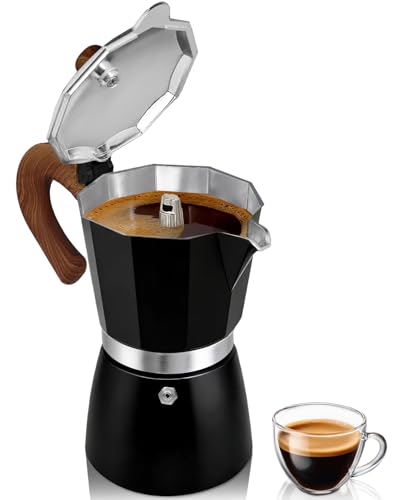 Belly Moka Coffee Maker Stovetop Espresso Maker 9 Cup Aluminum Moka Pot Percolator 15oz 450ml Easy Brewing for Electric Ceramic Stoves Home Camping Italian Cuban Café Classic Black
 Belly Moka Coffee Maker Stovetop Espresso Maker 6 Cup Aluminum Moka Pot Percolator 10oz 300ml Easy Brewing for Electric Ceramic Stoves Home Camping Italian Cuban Café Classic Silver