A caffeine half-life calculator estimates how much caffeine remains in your body after each drink, using a typical half-life of about 5 hours, so you can judge bedtime exposure. Miss the stacked total, and a late coffee plus an afternoon cola can leave more caffeine in your system than one drink suggests. This guide shows how to use the calculator for real-day schedules, mixed beverages, and bedtime timing.
How is this calculated?
Press Calculate to see the math with your numbers.
What the calculator does and how to use it
A caffeine half-life calculator estimates remaining caffeine at a chosen time, often bedtime, from the amount you consumed and when you consumed it. Good tools also let you set a target sleep time so you can see whether caffeine may still be measurable when you want to fall asleep.
What you enter
Most calculators ask for three things: the caffeine amount, the time you drank it, and a target bedtime or sleep window. Some also let you choose a half-life adjustment or a metabolism setting. That matters because the same dose can leave very different amounts in the body by night.
- Enter the caffeine amount in milligrams.
- Enter the time of each drink, not only the first one.
- Set your bedtime or target sleep time.
- Check whether the tool offers pregnancy, smoker, age, weight, or CYP1A2 settings.
- Read the remaining amount at bedtime and the cutoff-time estimate.
What the output means
The output is an estimate, not a lab result. Some tools also estimate a latest cutoff time for a new drink if you want little or no caffeine left at bedtime. That cutoff is a planning aid, especially for people with irregular hours or split sleep windows.
How caffeine half-life works
Caffeine half-life is the time it takes for the body to reduce caffeine by half. In healthy adults, the average is about 5 hours. After one half-life, half remains; after two, about a quarter remains; after three, about an eighth remains.
Average half-life in healthy adults
One tool says caffeine’s average half-life is 5 hours, and another defaults to a 5-hour half-life for remaining-caffeine estimates. That average is useful for quick planning, but it is still only an average. Your result shifts when dose timing, pregnancy, smoking status, age, medications, or genetics change clearance.
Why the estimate changes over time
The same amount looks very different at 2 p.m. and at midnight because the clock keeps working after the drink is gone. A morning dose has more time to fall before bed than an afternoon dose. That is why full-day timing matters more than single-drink math.
Caffeine half-life table

The table below shows plain-text examples for a 10 p.m. bedtime. The estimates use a 5-hour half-life unless noted. The numbers are approximate, so use them as decision support, not exact personal lab measurements.
| Scenario | Input time | Total mg | Estimated remaining mg at bedtime | Implied last-safe cutoff |
|---|---|---|---|---|
| Single morning coffee | 8:00 a.m. | 120 mg | about 8 mg | about 5:00 p.m. for a new 120 mg drink |
| Two-dose day | 8:00 a.m. and 2:00 p.m. | 240 mg total | about 31 mg | about 12:00 p.m. for a same-size afternoon dose |
| Afternoon energy drink | 4:00 p.m. | 160 mg | about 85 mg | about 6:00 a.m. for a new 160 mg drink |
| Slow-metabolizer variant | 4:00 p.m. | 160 mg | about 113 mg | about 2:00 a.m. for a new 160 mg drink |
These examples show why stacked doses matter. The two-dose day leaves more caffeine at bedtime than the morning coffee alone, even though neither drink is extreme by itself. The afternoon energy drink leaves far more caffeine in the system because the clock starts later.
Say your day begins with an 8 a.m. 12-ounce coffee, then includes a 2 p.m. cola. If the coffee has about 120 mg and the cola adds about 40 mg, the later drink can keep the bedtime number meaningfully higher than the coffee alone. That difference is easy to miss without a full-day calculator.
Which inputs change the result?

The estimate changes most when metabolism is slower or faster than average. A good caffeine half-life calculator may include CYP1A2, pregnancy, smoking, age, weight, or medication settings. Those inputs help adjust the clearance rate, but they still produce estimates rather than exact personal readings.
CYP1A2 gene status
CYP1A2 affects caffeine metabolism speed. Some calculators label it fast, normal, or unknown. If you do not know your status, normal or unknown is usually the default. A faster setting lowers the bedtime estimate; a slower setting raises it.
Pregnancy
Pregnancy slows caffeine metabolism, so some tools include a pregnancy adjustment in advanced settings. That is one reason many people use a more conservative caffeine plan during pregnancy. Caffeine during pregnancy is often limited to 200 mg per day, which is a common guide, not a universal rule for every person.
Smoking status
Smoking status can speed caffeine clearance, so some calculators include a smoker adjustment. If clearance is faster, the same drink may leave less caffeine at bedtime. That does not make late caffeine harmless; it only changes the estimate.
Age, medications, and body factors
Age in years and body weight in kilograms appear in some advanced settings. Certain medications can also slow or speed clearance. The practical point is simple: if your schedule or health factors change, the cutoff time may change too.
Picture a shift worker who drinks the same 150 mg latte after a night shift and then sleeps from 9 a.m. to 2 p.m. The caffeine problem is not the size of the drink alone. The issue is the sleep window, which moves the remaining-caffeine estimate into a different part of the day.
How much caffeine is in common drinks?
Common drinks help you enter the calculator correctly, but brand and serving size matter. Coffee, tea, soda, and energy drinks can vary a lot. A calculator is only as accurate as the amount you put in.
Coffee and espresso
Brewed coffee is often the largest source in a typical day. Espresso shots are smaller in volume but still meaningful because the caffeine is concentrated. If you switch from a single shot to a double shot, the bedtime estimate can change quickly.
Tea, cola, and energy drinks
Tea often has less caffeine than coffee, but not always by a huge margin. Cola usually has less than coffee, yet a late can still matter when it stacks onto earlier drinks. Energy drinks can range widely, so the label matters more than the category name.
Why brand and serving size matter
One large coffee may equal more caffeine than two smaller cups combined. A 12-ounce coffee and a 20-ounce coffee are not interchangeable in a calculator. Use the serving listed on the menu or can whenever possible, then sum the total across the day.
What is a safe cutoff time before bed?

A safe caffeine cutoff time before bed depends on your dose, your bedtime, and how fast you clear caffeine. A calculator can estimate when to stop so you have little or no caffeine left at sleep time. For some people, a smaller late dose is better than skipping caffeine all day and taking a larger drink late.
Using bedtime targets in the calculator
Start with your real bedtime, not an ideal one. Then test different cutoff times until the remaining amount is low enough for your goal. Some tools target zero caffeine at bedtime; others aim for near-zero. The right target depends on how cautious you want to be.
When a smaller dose makes more sense than a late drink
If you need caffeine late, a smaller amount may leave less at bedtime than a full serving. That is especially useful when you can move from a full coffee to a half-caf or tea. A smaller dose is not always enough, but it is often easier to fit into a bedtime target than a full-strength drink.
Caffeine remains active for about 5 hours per half-life, and another says it takes about 10 hours for caffeine to be completely eliminated. Those figures help explain why a late drink can still matter at bedtime, even when it feels like enough time has passed.
Why does caffeine affect sleep differently on different days?
Caffeine affects sleep differently when the timing, total dose, or clearance rate changes. A single morning coffee may be mostly gone by bedtime, while the same coffee plus a late cola may not be. Sleep also shifts on days with irregular hours, split sleep windows, or late naps.
Why stacked doses matter more than one drink
Stacked doses add up across the day because each drink starts its own countdown. If you drink 100 mg in the morning and another 100 mg late afternoon, the bedtime amount is not the same as one 200 mg dose at noon. The later drink usually carries more weight in the estimate.
A common first-timer mistake is checking only the first drink of the day. That misses the afternoon top-up and can make bedtime feel unexpectedly alert. The calculator works best when every caffeine source is included, even tea, cola, and energy drinks.
Why shift work and split sleep windows need different timing
Shift work changes the question from “How much is left tonight?” to “How much is left before my next sleep window?” A split schedule may need two separate cutoff times. The calculator helps most when you enter the sleep target that matches the actual rest period.
Frequently asked questions
What is the half life for caffeine?
The average caffeine half-life is about 5 hours in healthy adults. That means the amount in the body falls by half across each 5-hour period. Your real estimate can be higher or lower depending on pregnancy, smoking, age, medications, and genetics.
What’s the half life of caffeine?
It is the time it takes for caffeine levels to drop to half of the previous amount. A caffeine half-life calculator uses that clock to estimate what remains at bedtime. For many adults, the default estimate starts with a 5-hour half-life unless a tool offers a specific adjustment.
How long is caffeine half life?
For many healthy adults, caffeine half-life is about 5 hours. That does not mean caffeine is gone after 5 hours. It means the amount has been cut in half, so a second 5-hour period leaves much less, but still not necessarily zero.
What is the half-life of caffeine?
The half-life of caffeine is the interval over which the body clears half the current amount. Calculator results are useful because they connect that decline to a sleep target. If bedtime matters, the timing of the last drink often matters more than the total across the day.
How much caffeine is left in my body at bedtime?
The answer depends on dose, time, and your clearance rate. A morning coffee may leave very little by bedtime, while a late energy drink may leave a noticeable amount. If you want a practical estimate, enter the full day and check the bedtime output rather than guessing from one cup.
What is a safe caffeine cutoff time before bed?
There is no single cutoff that fits everyone. A calculator can give you a bedtime-based estimate, which is the better way to judge your own schedule. If you are pregnant, more cautious planning is reasonable, and many people use the 200 mg daily guide as a stricter ceiling.
Products related to this article
Sponsored / affiliate links. As an Amazon Associate I earn from qualifying purchases. I may earn additional commission from eligible campaigns.
 8 Pcs Wooden Coffee Spoon, Long Handle Wwood Spoons for Eating
 Simple Wooden Spoon Fork Set Long Handle Design for Heavy Bottomed Container Natural Finish Kitchenwares Sturdy Cooking Utensils Japanese Long Handle Wooden Spoon Fork Set
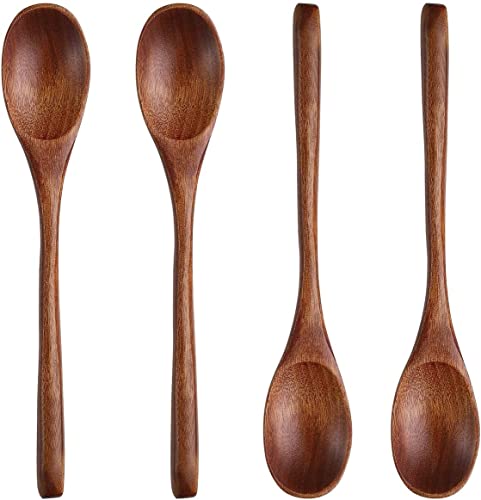 Long Handle Wooden Spoon For Mixing Coffee Tea Jam and Bath Salt In Kitchen, Environmentally Friendly Table Spoon, 8.6 Inches,4 Pieces…