Use a caffeine intake calculator to total every source in milligrams, then compare the result with common daily limits such as about 400 mg/day for most adults, about 200 mg/day in pregnancy, and a sleep cutoff of about 6 to 8 hours before bed. Missed caffeine can lead to jitters, worse sleep, palpitations, or a limit breach you do not notice. This guide shows how to count coffee, tea, energy drinks, chocolate, and supplements, then set a safer daily cap and bedtime cutoff.
How is this calculated?
Press Calculate to see the math with your numbers.
How the calculator works
A good caffeine intake calculator does three jobs: it totals caffeine from each source, checks the total against a daily limit, and helps you pick a bedtime cutoff based on how long caffeine stays active. That matters because one day can include coffee, tea, cola, chocolate, and supplements, each with a different amount.
Start with the drinks and products you had or plan to have today. Then enter a serving size and an estimated milligram amount for each one. Use the total to see whether you are below, near, or over a limit that fits your age, pregnancy status, and caffeine sensitivity.
What to enter
- Coffee-shop drinks, including single or double espresso-based drinks
- Home-brewed coffee, drip coffee, or instant coffee
- Tea, cola, energy drinks, chocolate, and custom amounts
- Supplements or medicines that list caffeine on the label
That last item is easy to miss. Some pain relievers, pre-workout products, and alertness aids contain caffeine, so the total can rise even if you only had one cup of coffee.
Caffeine intake table
A mixed day is easier to judge when you write out each source, the serving size, the estimated milligrams, and the running total. The sleep-risk note is the useful part: it tells you whether that item pushes caffeine later into the day, where it can still matter at bedtime.
| Source | Serving size | Estimated mg | Cumulative total | Sleep risk note |
|---|---|---|---|---|
| Filter coffee | 1 mug | 140 | 140 | Fine for morning use; check later servings carefully |
| Tea | 1 cup | 50 | 190 | Usually mild, but afternoon tea can still delay sleep |
| Cola | 1 can | 35 | 225 | Small dose, but it adds up with coffee |
| Energy drink | 1 can | 160 | 385 | Late-day use can push you near the adult ceiling |
| Chocolate | 1 serving | 20 | 405 | Small amount, but enough to cross a limit in a stacked day |
That example day ends at about 400 mg of caffeine. For most adults, that is above the common 400 mg/day ceiling. For a pregnant person, it is well above the 200 mg/day limit commonly used in guidance, so the same pattern would call for a lower target.
Say your morning starts with a large coffee-shop latte, then you have an afternoon tea and a square of dark chocolate after dinner. If the latte used two espresso shots, the coffee may carry far more caffeine than a small home mug, and the evening chocolate can be the extra amount that pushes sleep later.
How do you calculate caffeine from drinks?

Use the label when it exists, then estimate the rest from serving size and drink type. Coffee-shop drinks are the hardest to guess because shot count, cup size, and brew strength all change the number. Tea, cola, energy drinks, and chocolate also vary by product and serving.
Coffee-shop drinks, home brew, and espresso shots
A coffee-shop drink can contain one, two, or more espresso shots, and the cup size does not tell you the caffeine by itself. Home-brewed coffee is similar: the amount depends on how strong the brew is, how much grounds were used, and how large the mug is.
For a practical estimate, count the source, not the label name. A “latte” is not a number. Two shots in a 16-ounce drink can differ a lot from one shot in a small cup, so the best method is to use the actual shot count when it is listed.
Tea, cola, energy drinks, chocolate, and supplements
Tea is often lower than coffee, but not always negligible. StyleCraze lists 50 mg caffeine per cup of tea and 140 mg caffeine per mug of filter coffee. Those are useful reference points, but the real number still depends on brew strength and serving size.
Energy drinks usually list caffeine on the can, which makes them easier to count. Chocolate contributes less per serving, but frequent snacking can matter. Supplements and medicines need label reading because caffeine may be listed in milligrams per tablet or scoop.
Why labels and recipes can change the number
One tea bag brewed briefly is not the same as a strong steeped mug. One espresso shot is not the same as a double. The calculator works best when you enter the actual amount you had, not a generic drink name.
- List every caffeine source from the day.
- Write the serving size you actually had.
- Use the label or a reliable estimate in milligrams.
- Add the numbers to get your daily total.
- Compare the total with your personal limit and bedtime cutoff.
What daily limit should you use?
The right daily limit depends on the person, not only the beverage. Most healthy adults are within the recommended daily limit at 400 mg of caffeine, but that is a ceiling, not a target for everyone. Pregnancy usually calls for a lower ceiling, and younger people need less.
Adults
The FDA adult guidance of 400 mg/day is a common ceiling used by many calculators. It is not a one-size-fits-all threshold. Some adults feel fine below that amount, while others notice sleep loss, anxiety, jitteriness, or palpitations at much lower totals.
Pregnancy
Pregnant women are shown a lower recommended caffeine limit of 200 mg or less per day. Metabolism can slow during pregnancy, which means caffeine can stay in the body longer. Clinician guidance matters here, especially if there is nausea, reflux, insomnia, or blood pressure concern.
Teens and children
Adolescents are given a limit of no more than 100 mg per day. Children under 12 are not recommended to consume caffeine. Lower tolerance is common in both groups, so a “small” drink can still be too much when it is combined with cola, chocolate, or energy products.
A common first-timer mistake is counting only the morning coffee and ignoring the afternoon soda, tea, or pre-workout scoop. That pattern can put a person over the limit even when no single item looks large.
How much caffeine can you have by body weight?
Body weight can help you set a more personal limit, especially when the flat adult ceiling feels too high or too low for your situation. A common approach is a mg/kg calculation. CTRL Calculator uses a body-weight formula for caffeine dosage in mg/kg.
Use a mg/kg formula
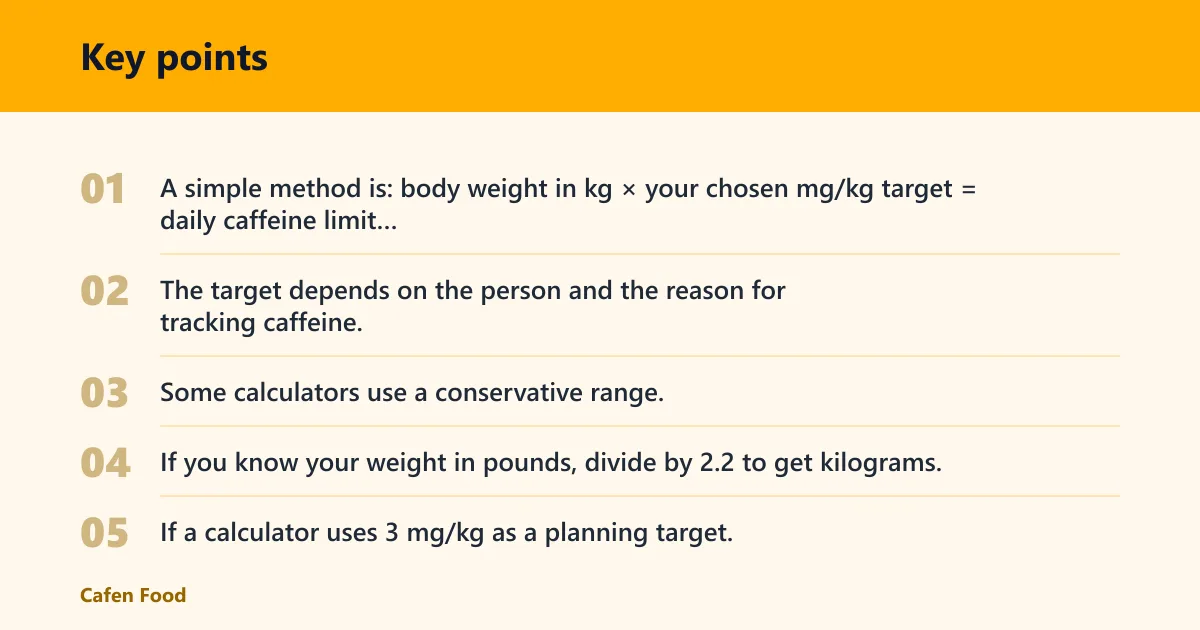
A simple method is: body weight in kg × your chosen mg/kg target = daily caffeine limit in mg. The target depends on the person and the reason for tracking caffeine. Some calculators use a conservative range, while others use a general adult ceiling as a comparison point.
Convert pounds to kilograms
If you know your weight in pounds, divide by 2.2 to get kilograms. A 176 lb adult weighs about 80 kg. If a calculator uses 3 mg/kg as a planning target, that person would be looking at about 240 mg for the day.
When weight-based limits matter more than a flat cap
Weight-based limits can be useful for smaller adults, teens, and people who notice symptoms at modest doses. They are also useful when you want a stricter target than 400 mg/day. If a person is pregnant, taking stimulant medication, or sensitive to caffeine, the lower, person-specific limit should guide the day.
Suppose a 60 kg person has two coffees and an energy drink before mid-afternoon. Even if the total is under 400 mg, the same amount may be too much for sleep or anxiety control. In that case, the weight-based target and the symptom response are more useful than the generic ceiling.
How long does caffeine stay in your system?
Caffeine has a half-life of approximately 5-6 hours in healthy adults. That means your body clears it slowly, not all at once. The leftover amount can still affect sleep, especially if your last dose lands in the late afternoon or evening.
Why sleep timing changes the cutoff
Calculator.info says caffeine consumed even 6 hours before bedtime can reduce total sleep time by more than 1 hour. It also notes that 300 mg at 8 AM leaves about 75 mg at 8 PM. That is why a same-day cutoff matters even when you are not near the daily ceiling.
A practical rule is to stop caffeine about 6 to 8 hours before bed if sleep is a concern. If bedtime is 10 PM, the last meaningful caffeine dose should usually be earlier in the afternoon. People who are sensitive often need an even earlier cutoff.
Why full clearance takes much longer
Half-life is not the same as complete elimination. After one half-life, only part of the caffeine is gone. Several half-lives are needed before the amount becomes very small, which is why a late drink can still matter the next night.
What changes your personal caffeine limit?

Sensitivity changes the limit. Some people metabolize caffeine quickly; others clear it slowly and feel symptoms at lower doses. Jitteriness, anxiety, insomnia, and palpitations are common signs that the practical limit should be lower than the standard adult ceiling.
Sensitivity, anxiety, jitteriness, and insomnia
If caffeine makes you shaky, restless, or wired, the problem may be the dose, the timing, or both. Sleep loss makes this more noticeable. Even a normal amount can feel too strong if it is taken late in the day or stacked from several sources.
Pregnancy, medications, and slower metabolism
Pregnancy can slow caffeine clearance. Some medicines can also change how caffeine feels or how long it lasts. That includes medications that affect the nervous system, heart rhythm, or stomach symptoms. If a label or clinician has given a lower ceiling, use that lower number.
When to ask a clinician about a lower target
A lower target is worth a medical conversation if you have arrhythmia-sensitive symptoms, ongoing anxiety, reflux that worsens with caffeine, or poor sleep despite an early cutoff. Breastfeeding can also call for individual advice, because infant sensitivity and maternal sleep both matter.
Do not use a calculator result as a green light if symptoms are building. A person who feels palpitations after a modest amount should not “push through” to the adult ceiling. The better move is to lower the target and, if needed, get clinical guidance.
Frequently asked questions
How much caffeine is too much per day?
For most healthy adults, 400 mg/day is the common ceiling, not a universal goal. Symptoms and timing can make the practical limit lower.
How do I calculate my caffeine intake from coffee and tea?
List each drink, write the actual serving size, and estimate the milligrams for that specific cup or shot count. Then add them together. A mug of filter coffee can be very different from a small tea, and the total matters more than any single drink.
What is the recommended daily intake of caffeine?
The most common adult guidance is 400 mg/day, but that is a ceiling for many healthy adults, not a one-size-fits-all target.
How much caffeine can I have if I weigh a certain amount?
Use a mg/kg formula: body weight in kilograms multiplied by your chosen milligram target per kilogram. If you only know pounds, divide by 2.2 to convert to kilograms. This method is useful when you want a more personal limit than a flat adult cap.
How do I measure caffeine intake from different drinks?
Read labels on cans, bottles, and supplements. For coffee and tea, count the shots, cup size, and strength rather than relying on the drink name alone. Coffee-shop recipes, home brewing, and steep time can change the caffeine amount enough to affect your daily total.
How much caffeine is safe in pregnancy?
Pregnant women are shown a lower recommended caffeine limit of 200 mg or less per day. Because caffeine can clear more slowly during pregnancy, clinicians may advise an even lower limit. If you are pregnant and tracking caffeine, use the lower target first and confirm it with your clinician.
Products related to this article
Sponsored / affiliate links. As an Amazon Associate I earn from qualifying purchases. I may earn additional commission from eligible campaigns.