You watched the videos. The barista pulls the shot, and a perfect tiger-striped stream flows from the naked portafilter into the cup. No splatter, no drama. Then you try it at home. Coffee sprays everywhere, the stream looks like a spider, and your kitchen counter needs a bath. Sound familiar?
That mess is normal. Almost everyone who switches to a bottomless portafilter goes through a phase of ugly shots and wasted beans. The good news is that the portafilter is not the problem. It is a magnifying glass for your puck prep. This guide covers the specific mistakes beginners make, how to read the spray, and a step-by-step way to fix it without changing five things at once.

fogkay
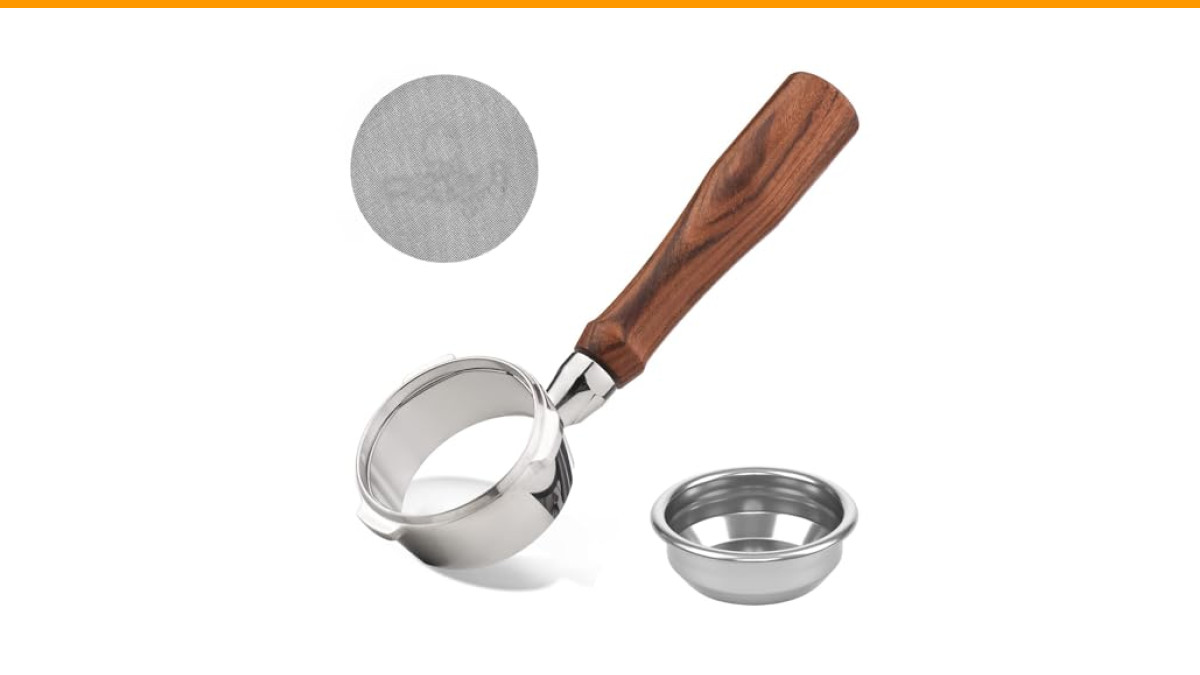
58mm Bottomless Portafilter for CASABREWS Ultra and…
- Compatible Models: This 58mm bottomless portafilter with three ears is compatible with the CASABREWS Espresso Machine Ultra, 4700G…
- Useful Tips: We recommend using fresh coffee beans to grind your own ground coffee. Adjust the grinder to a finer setting for opti…
- 2 Cup Filter Basket and Puck Screen Included: A 58mm stainless steel filter basket with a 2-cup capacity, holding up to 21 grams o…
As an Amazon Associate I earn from qualifying purchases.
You’ll walk away knowing exactly which variable to adjust first, when to ignore the visual chaos, and whether a bottomless portafilter even makes sense for how you drink coffee.
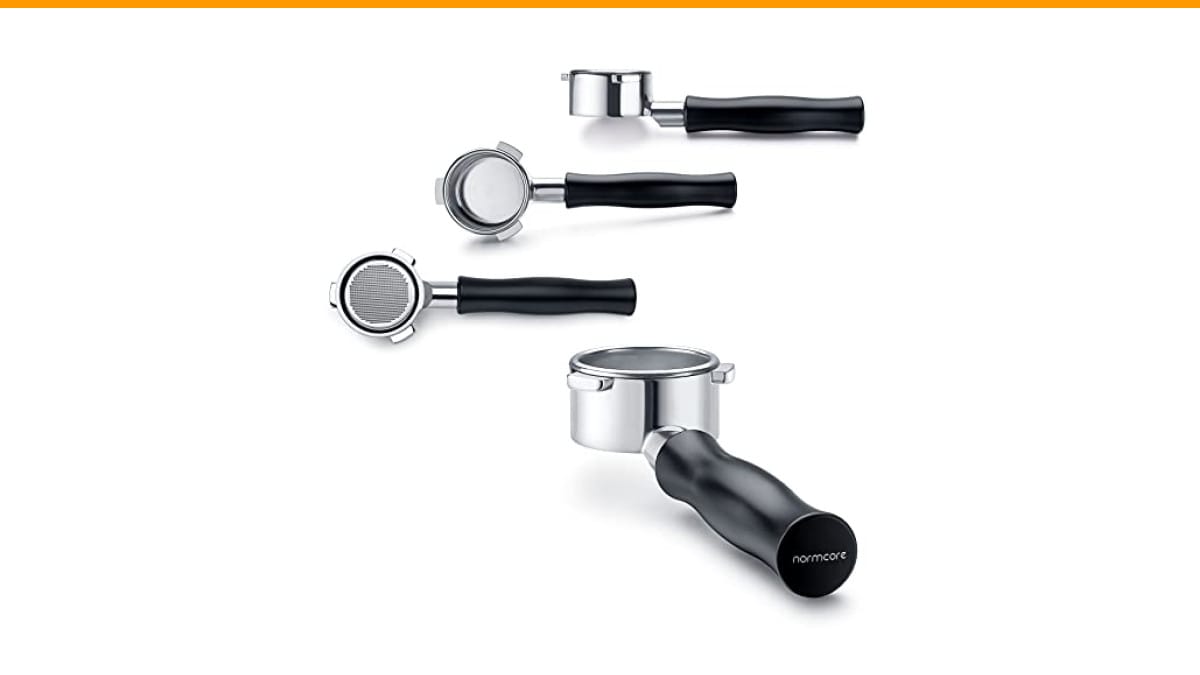
If you are using a CASABREWS Ultra or a Gevi ECMI0-SS0A1, a compatible option like this 58mm bottomless portafilter from fogkay gives you the same diagnostic window. It includes a 2-cup stainless basket and a puck screen, so you can start troubleshooting immediately without buying extra gear.
Who Should (and Shouldn’t) Read This
This article is for people who want to improve their espresso. You are already pulling shots with a pressurized basket and you want more control. Or you just bought a machine and you think a bottomless portafilter will make it look cool. It will, but it also exposes every flaw in your routine.
If you only drink milk drinks, stop reading. Not because you cannot learn, but because the visual feedback from a bottomless portafilter is nearly useless when you pour milk into the cup. You will not see channeling. You will not see the stream. You will taste the result, but you will not know why it tastes off. For milk drinkers, a bottomless portafilter is a hindrance, not a help. Focus on timing and taste instead.
For everyone else, this is your troubleshooting coach.
What a Bottomless Portafilter Actually Reveals
A standard portafilter has a spout and a double wall. The coffee hits the bottom, mixes, and comes out in two streams. That hides a lot of sins. A bottomless portafilter removes the floor. You see the coffee emerge directly from the basket.
That view shows you three things: distribution, channeling, and grind consistency. If the stream starts at the center and stays there, your puck is even. If it sprays or sputters, water is finding a weak path through the coffee. That is called channeling. It happens when the water flows faster through one area because the coffee there is less dense.
Channeling ruins extraction. The water over-extracts the path it takes and under-extracts the rest. The result is sour, bitter, and thin coffee all at once. The bottomless portafilter does not cause channeling. It just shows you what was always happening behind the spout.
The 5 Most Common Beginner Mistakes (and the Fix)
Most people make the same five errors when they switch to a naked portafilter. Here is what they are and how to fix them.
Mistake #1: Buying the Wrong Size or Fit
Not every 58mm portafilter fits every machine. The ears (the tabs that lock into the group head) vary in thickness and angle. A portafilter that is 1mm too thick will not lock in. One that is too thin will wobble and leak.
Before you buy, measure your original portafilter. Check the diameter of the basket and the thickness of the ears. The fogkay model mentioned earlier works with CASABREWS machines that use three ears, each about 5mm thick. If your machine uses a different setup, it will not fit. Do not force it. A loose fit causes channeling before you even grind a bean.
Mistake #2: Changing Too Many Variables at Once
You get a bottomless portafilter. You also buy a new grinder, fresh beans, a WDT tool, and a distributor. You change everything. Your first shot is terrible. You do not know which change caused it.
That is the fastest way to frustration. Change one variable at a time. Start with the beans and grind size you already use. Pull a shot with the bottomless portafilter and watch what happens. Then adjust the grind. Then adjust the dose. Then add the WDT. Each step tells you something specific.
Mistake #3: Misreading Spray as a Failure
Spray is not a failure. It is data. A few tiny spritzes at the start of the shot often settle into a clean stream. That is normal. The puck is still settling under pressure. Wait three or four seconds before you judge.
Constant spraying through the whole shot means you have a real problem. The fix is usually grind size. Go finer. If the spray gets worse, go coarser. This is the diagnostic loop you will use every time.
Mistake #4: Ignoring the Grinder (and Beans)
You cannot fix a bad grind with a better tamp. You cannot fix stale beans with a puck screen. The grinder is the most important tool in espresso. If your grinder produces uneven particles, your puck will have weak spots.
Fresh beans matter just as much. Beans roasted more than three weeks ago will produce excessive crema and a thin body. They will also channel more easily because they have less gas to protect the puck. Use fresh beans and a grinder that can dial in.
Mistake #5: Forgetting the “Latte Test”
Here is the reality check. If you add milk and syrup, you will not taste the difference between a good shot and a mediocre one. The visual feedback from the bottomless portafilter becomes irrelevant.
Do not chase a perfect stream if you are pouring it into a latte. Instead, time your shot and taste it straight. If it tastes balanced, the stream does not matter. If it tastes off, use the bottomless portafilter to diagnose, but judge the result by taste.
The Diagnostic Workflow: From Spray to Perfect Shot
Here is a repeatable process. It assumes your portafilter fits and your beans are fresh.
- Start with your current grind setting. Pull a shot. Watch the stream. Note the time from first drop to the end.
- If it sprays or sputters, go finer. Adjust the grinder one step. Pull another shot. Repeat until the spray stops or turns into a steady stream.
- If the shot runs fast (under 20 seconds), go finer. If it runs slow (over 35 seconds), go coarser.
- Once the stream is steady, check the dose. The puck should just barely touch the shower screen after tamping. If you see a gap, increase the dose by 0.5g. If the screen leaves an imprint, decrease it.
- Add WDT. Use a WDT tool to break up clumps and distribute the grounds evenly in the basket. This fixes most channeling that remains after grind size adjustment.
- Tamp level. A level tamp is more important than a hard tamp. Use a leveling tamper if you have one. An uneven tamp creates a weak side in the puck.
Change one variable per shot. The workflow takes time, but it is the only way to learn what each adjustment does.
Machine-Specific Quirks: Breville vs. Gaggia vs. E61
Your machine changes the learning curve. Here is how the three most common setups behave.
| Machine Type | Common Quirk | Beginner Mistake | Best Fix |
|---|---|---|---|
| Breville (Bambino, Barista) | 54mm baskets, smaller dose | Using a 58mm portafilter that does not fit | Use the correct size. Dose 16-18g. Grind fine. |
| Gaggia Classic | 58mm, 3-way solenoid, high pressure | Over-tamping to compensate for a coarse grind | Adjust grind first, not tamp pressure. |
| E61 Group Head | Large thermal mass, pre-infusion | Pulling shots too fast without waiting for the group to heat | Flush the group. Wait 10 minutes after warm-up. |
Breville machines use a 54mm basket. Most bottomless portafilters on the market are 58mm. Make sure yours matches. Gaggia machines run at 9 bars of pressure, which is standard, but they can be unforgiving with a bad grind. E61 groups need patience. The metal takes time to reach temperature.
When to Upgrade: Baskets, Screens, and Tools
You do not need a $200 basket to pull a good shot. A precision basket with straight sides and a flat bottom helps, but it will not fix a bad grind. Buy a new basket only after you have dialed in your grinder and your technique.
The same goes for puck screens. A screen distributes water over the top of the puck and keeps the group head clean. It is a nice addition, but it does not solve channeling caused by uneven distribution. The fogkay portafilter includes a puck screen, so you can test it without spending extra.
Tools that are worth the money: a WDT tool (or a 3D-printed one), a leveling tamper, and a scale that reads to 0.1g. A scale is not optional. You cannot dial in by eye. Weigh your dose and your yield every time.
If you are still using the pressurized basket that came with your machine, switch to the single-wall basket that comes with your new bottomless portafilter. That is the whole point. Pressurized baskets mask every flaw. You will not learn anything.
How to Film Your Shots for Real Learning
Filming your shots is the fastest way to improve. Your eyes miss things in real time. A slow-motion video shows exactly where the channeling starts.
Use your phone. Set it on a stable surface or a small tripod. Place it at the same height as the portafilter, not above. You want to see the stream from the side, not the top. Use a bright light or film near a window. The stream is dark and hard to see.
Shoot in 120fps or 240fps if your phone supports it. Review the footage after each shot. Look for the first sign of spray. That tells you where the weak spot is. If the spray comes from the right side, your distribution is off on that side. Fix that, not the grind.
Do not film every shot. Film when you change a variable. You will build a video log of your adjustments that is far more useful than notes.
The Bottom Line: Is It Worth the Mess?
Yes, if you drink straight espresso and you want to improve. No, if you drink lattes and you just want a clean counter.
Bottomless portafilters are not magic. They do not make coffee taste better. They make you a better barista by showing you your mistakes. That is uncomfortable at first. You will waste some beans and make a mess. The payoff is a shot that tastes better than anything from a spouted portafilter, because you finally fixed the actual problem.
If you are ready to commit, start with the basics. Make sure your portafilter fits. Use fresh beans. Change one variable at a time. And do not forget the latte test. Your taste buds are the final judge, not the camera.
- Measure your portafilter ears and basket size before buying. A 58mm portafilter is not universal.
- Change one variable per shot. Grind, then dose, then distribution, then tamp.
- Spray at the start of the shot is normal. Constant spraying means a grind problem.
- Stale beans and a weak grinder will defeat any portafilter upgrade.
- Milk drinkers: skip the bottomless portafilter. It will not help you.
- Film your shots in slow motion from the side. That is your diagnostic tool.
- Use a scale. Weigh your dose and yield. Eyeballing espresso does not work.
FAQ: Quick Answers to Common Panic Moments
Why is my bottomless portafilter spraying everywhere?
Channeling. Water is finding a path through the puck. Grind finer first. If it still sprays, check your distribution and tamp level.
Do I need a puck screen with a bottomless portafilter?
No. A puck screen helps keep the group head clean and distributes water, but it will not fix channeling. Fix your grind and distribution first.
Can I use a bottomless portafilter with a pressurized basket?
Technically yes, but it defeats the purpose. The pressurized basket creates the pressure, not your puck. You will not see any useful feedback.
Why does my shot taste sour and bitter at the same time?
That is the signature of channeling. Part of the shot is under-extracted (sour) and part is over-extracted (bitter). Use the workflow above to fix the channeling.
How long does it take to get used to a bottomless portafilter?
Most people see improvement within a week of daily use. You will still get an occasional bad shot. That is normal. The learning curve is about recognizing the pattern, not eliminating it.
Products related to this article
Sponsored / affiliate links. As an Amazon Associate I earn from qualifying purchases. I may earn additional commission from eligible campaigns.
 Coffee Espresso Machine Handle Replacement Parts, Cafe Bracket Handle for Lidl Silvercrest CM4621 CM4218 KF5002 KF500S Barista (for 51mm Portafilter Basket - Not included)
 Quick Heating Cup Warmer, Three Temperature Settings, Splashproof and Portable, for Coffee, Milk, Lightweight ABS Material
 Coffee Mug Warmer & You are Awesome Mug Set, Electric Cup Warmer for Desk