You just pulled three shots, the counter is a mess, and the tamper is sitting there covered in coffee dust. Tossing it into the dishwasher with the mugs feels like the obvious move. It’s stainless steel, right? What could go wrong?
A lot, actually. The dishwasher is the fastest way to turn a precise tamper into a wobbly, rust-speckled paperweight. This guide explains exactly what happens inside that machine, which materials survive and which don’t, and how to clean your tamper so it lasts for years instead of months.

WYLOSUA
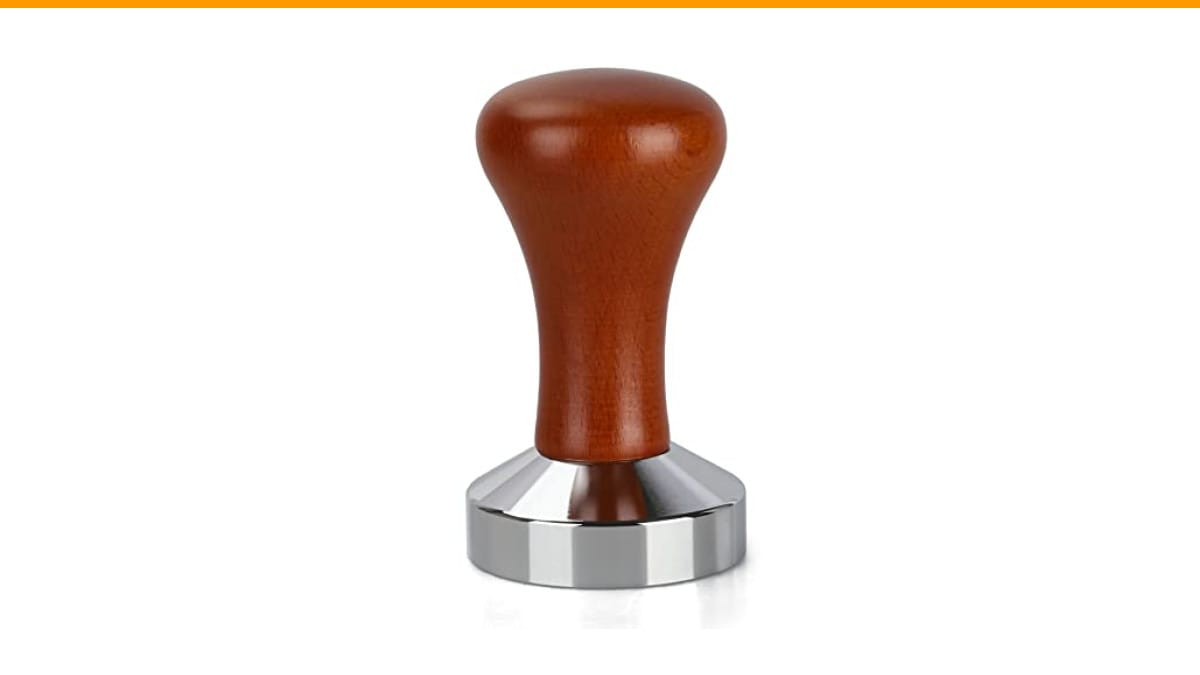
51mm Espresso Tamper-Premium Barista Coffee Tamper Coffee…
- THE DIAMETER OF THIS TAMPER IS 51MM - please check that this will fit your filter basket before purchasing.Fits all 51mm Commercia…
- UNIQUE DESIGN - The tamper has an exquisite appearance, Stainless steel design, the handles were ergonomically designed to ensure…
- PROFESSIONAL HANDMADE - Due to the high quality of the steel espresso control, the tamper has an ideal size and weight, because of…
As an Amazon Associate I earn from qualifying purchases.
If you are shopping for a new one, the Check Price on Amazon has a solid wood handle and stainless steel base, which means it needs hand washing. It’s a good-looking tool with a comfortable grip, but that wood handle will not forgive a hot, soapy cycle.
The Short Answer: Can It Go In?
No. Not if you want it to keep working properly. A single dishwasher cycle might not destroy a tamper outright, but it starts a process of slow mechanical and cosmetic failure. The heat, the caustic detergent, and the high-pressure water jets attack every part of the tool at once.
You’ll get away with it once or twice with a cheap aluminum tamper. But the moment you run a wooden-handled tamper through, you’re asking for the handle to crack or the finish to bubble. And with a precision-machined steel base, the dishwasher can actually change how flat the surface is.
Let me be clear: hand washing takes twenty seconds. The dishwasher saves you maybe fifteen minutes of waiting, and costs you a tool that should last a decade.
Why the Dishwasher Ruins Your Tamper (Even If It’s “Stainless”)
Stainless steel is corrosion-resistant, but it is not corrosion-proof. The name refers to the chromium oxide layer that forms on the surface. Dishwasher detergent is highly alkaline, and combined with heat, it can break down that protective layer over time. The result is pitting and small rust spots that appear long after the cycle ends.
But rust is only the visible problem. The real damage is mechanical.
The Hidden Damage: Calibration and Flatness
A tamper’s base needs to be perfectly flat. That flatness distributes pressure evenly across the coffee bed, which prevents channeling and gives you a proper extraction. The base of a quality tamper is machined to a tolerance of a few thousandths of an inch.
When you put that base in the dishwasher, it gets heated to around 140°F to 160°F, then cooled rapidly when the cycle ends. Metal expands and contracts with temperature changes. Over repeated cycles, this thermal cycling can introduce micro-warping. You won’t see it with your eyes, but you will taste it. The puck will have weak spots, and your shots will run fast or spray.
A tamper can go through twenty dishwasher cycles. The base looked fine, but a straightedge revealed a visible gap in the center. That tamper was done.
The Handle Joint: The Weakest Point
The joint where the handle meets the base is where most tampers fail. If the handle is glued or press-fit into the base, hot water and detergent will break down that adhesive. Moisture seeps into the gap, and over time the handle becomes loose.
With a wooden handle like the one on the WYLOSUA tamper, the wood swells, shrinks, and eventually splits. The finish blisters and peels. You end up with a wobbly handle that feels terrible in your hand, and no amount of drying will fix it.
Even a fully metal tamper with a welded joint can suffer. The dissimilar metals (say, aluminum base and steel handle) react with each other in the dishwasher’s wet, hot environment, causing galvanic corrosion at the joint.
Material-by-Material Dishwasher Risk Chart
Not all tampers are created equal. Here is what happens to each material type in the dishwasher.
| Material | Dishwasher Risk | What Happens | Verdict |
|---|---|---|---|
| Stainless Steel Base | Medium | Pitting, rust spots, micro-warping over time | Hand wash only |
| Aluminum Base | High | Rapid oxidation, white powdery corrosion, surface pitting | Never put in |
| Wooden Handle | Extreme | Swelling, cracking, finish failure, handle loosens | Never put in |
| Plastic/Resin Handle | Medium | Warping from heat, detergent residue in pores | Hand wash only |
| Calibrated Tamper (any base) | High | Thermal cycling changes the spring tension or calibration | Never put in |
The pattern is obvious. The dishwasher is a hostile environment for every material used in a tamper. The only thing that survives unscathed is a solid, single-piece stainless steel tamper with no moving parts, and even then, you’re gambling with the flatness.
I Already Put It In — How to Save It
So you already made the mistake. Don’t panic. Here’s a rescue plan that works for most tampers that have been through one or two cycles.
- Take it out immediately. Don’t let it air-dry in the dishwasher with the door closed. The trapped steam keeps attacking the metal.
- Rinse it with cool water. This stops the detergent from continuing to react with the surface. Use plain water, no soap.
- Dry it thoroughly. Use a microfiber cloth and get every drop of moisture off, especially around the handle joint and the base edge.
- Inspect the base for flatness. Place the base on a flat countertop and try to rock it. If it rocks, the base is warped. You can test it with a straightedge (a ruler works). Any visible gap means the tamper is compromised.
- Check the handle for looseness. Grip the base and try to twist the handle. If there’s any play, the adhesive has been weakened. You can try to re-glue it with a food-safe epoxy, but it’s often easier to replace the tamper.
- If you see rust spots, scrub them gently with a soft brush and a paste of baking soda and water. Rinse and dry thoroughly. This will remove surface rust, but it won’t restore the protective layer.
If the tamper passes the flatness test and the handle is solid, you got lucky. Treat it well from now on.
The Correct Way to Clean Your Tamper (Every Time)
Cleaning a tamper is not complicated. It’s a two-minute job that you should do after every session, not once a week.
The 10-Second Daily Routine
After you finish pulling shots, wipe the base with a dry or slightly damp cloth. This removes coffee residue and oils before they harden. That’s it. For most home users, that’s all you need.
If the base has stuck-on coffee grounds, rinse it under warm running water and wipe it dry. No soap needed for daily cleaning.
The Deep Clean for Stubborn Oils
Once a month, coffee oils build up and leave a sticky film on the base. Here’s how to deal with it:
- Mix a few drops of mild dish soap (like Dawn) into a bowl of warm water.
- Dip a soft cloth or sponge into the soapy water and wipe down the base and handle. Do not submerge the tamper.
- Use a cotton swab dipped in the soapy water to clean the edge where the base meets the handle.
- Rinse the cloth in clean water and wipe the tamper again to remove soap residue.
- Dry it immediately and completely with a clean towel.
This method works for every material. It’s gentle, effective, and takes less time than loading the dishwasher.
How to Sanitize Without Water (For Busy Cafés)
In a commercial setting, you might need to sanitize the tamper between uses or at the end of a shift. Water isn’t always convenient, and you shouldn’t use chemical sanitizers that could leave residue.
The best method is a food-safe sanitizing spray or wipe. Look for one labeled for food-contact surfaces. Spray the base and handle, let it sit for the contact time specified on the label, then wipe it dry with a clean paper towel.
Another option is a UV-C sanitizing wand, which is common in specialty coffee shops. It kills bacteria on the surface without any moisture. This is the safest way to sanitize a wooden-handled tamper without risking water damage.
For home use, you don’t need to sanitize your tamper at all. Hot water and soap are overkill. The coffee grounds are being brewed at 200°F anyway, which kills any bacteria.
FAQ: Dishwasher, Detergent, and Tamper Myths
What if the manufacturer says my tamper is dishwasher safe?
Marketing claims and real-world longevity are different things. A manufacturer might test a tamper through one dishwasher cycle and call it safe. But they aren’t testing for calibration loss or handle joint failure after fifty cycles. I’ve seen “dishwasher safe” tampers with loose handles and rust spots. Treat the claim as “it won’t melt,” not “it will stay precise.”
Can I put a stainless steel tamper in the dishwasher if I use a gentle cycle?
A gentle cycle reduces the risk of thermal shock, but it doesn’t eliminate it. The detergent is still caustic, and the heat still affects the metal. If you absolutely must, use the top rack, no heat dry, and remove it immediately. But you’re still rolling the dice on the flatness of the base.
Will the dishwasher ruin a wooden tamper handle?
Yes, and faster than you’d think. One cycle can cause the wood to swell and the finish to bubble. Two cycles and the handle will likely crack or split. Wood and dishwashers are fundamentally incompatible.
How do I know if my tamper is warped?
Place the base on a perfectly flat surface, like a granite countertop or a piece of float glass. Try to rock it back and forth. If you feel any movement, it’s warped. You can also use a straightedge across the base and hold it up to the light. Any gap means the surface is no longer flat.
Is it okay to use a tamper with a loose handle?
No. A loose handle means you can’t apply even pressure. You’ll end up with an uneven tamp, which leads to channeling and bitter or sour shots. It’s not safe to use, and it’s not worth trying to fix. Replace it.
What to Do From Here
- Hand wash your tamper every time. It takes less than a minute.
- Never put a wooden-handled tamper in the dishwasher. The handle will fail.
- Check the flatness of your tamper base every few months with a straightedge.
- If you see rust, clean it off immediately with baking soda paste.
- Replace a tamper with a loose handle or a warped base. A cheap replacement is better than bad shots.
- For cafés, use a food-safe sanitizing spray instead of water.
- If you’re buying a new tamper, look for one with a solid, one-piece construction or a replaceable base. The WYLOSUA 51mm tamper is a solid choice for home users, but remember to treat the wood handle with care.
Your tamper is a precision tool, not a kitchen utensil. Treat it like one, and it will serve you for years. Abuse it in the dishwasher, and you’ll be shopping for a replacement sooner than you think. For more on keeping your espresso gear in top shape, check out our guide on automatic vs semi-automatic machines and how to fix a noisy espresso machine.
Products related to this article
Sponsored / affiliate links. As an Amazon Associate I earn from qualifying purchases. I may earn additional commission from eligible campaigns.
 Coffee Espresso Machine Handle Replacement Parts, Cafe Bracket Handle for Lidl Silvercrest CM4621 CM4218 KF5002 KF500S Barista (for 51mm Portafilter Basket - Not included)
 Cascade Platinum Plus Dishwasher Detergent Pods Dish Soap Lemon 57 Count
 Linnkyfloa Coffee Espresso Maker Handle Replacement for Stovetop Moka Pot or Percolator, Black Plastic for Spare Part Compatible with Italian(9-12 Cup)