You just finished a latte, and the pitcher sits there with a thin film of dried milk. The dishwasher is right there. It’s tempting to toss it in with the rest of the load. Most stainless steel pitchers from brands like Adorever are labeled dishwasher safe. But that label hides a bigger truth.
Putting a milk frothing pitcher in the dishwasher is a false convenience. The wash cycle itself rarely destroys the metal. The damage shows up weeks later in the form of a wobbly pour spout, a chalky white film, or a handle that loosens. This guide breaks down what actually happens inside that machine, which materials survive, and the cleaning method that keeps your pitcher pouring perfectly for years.

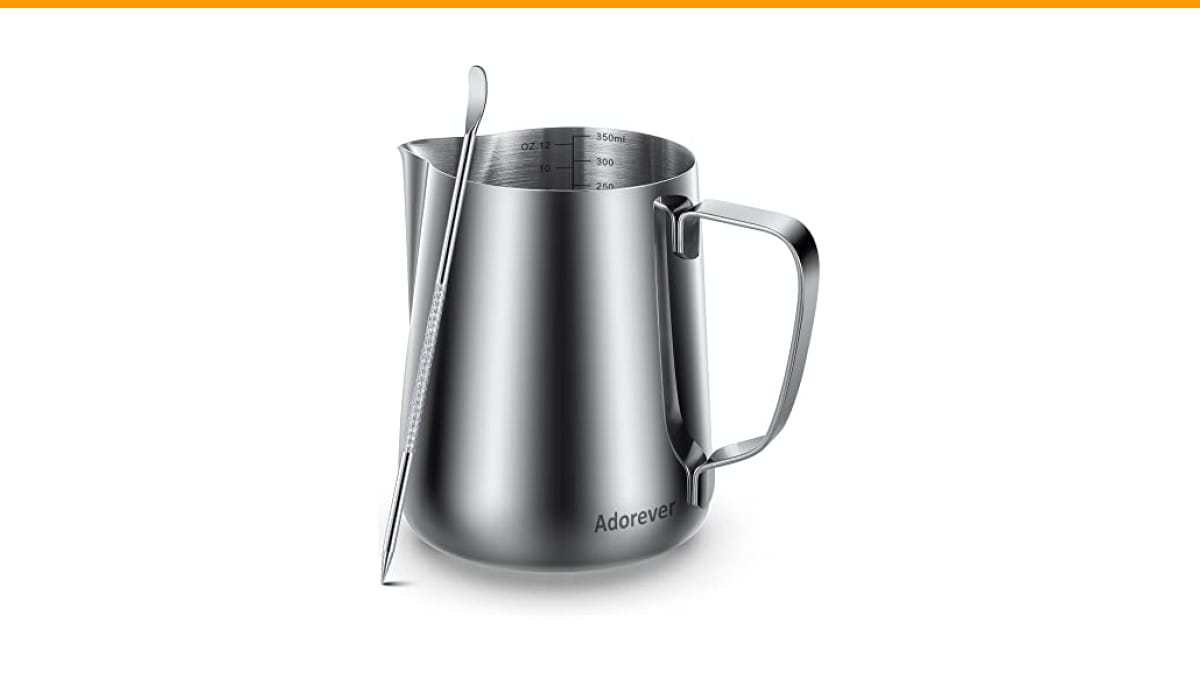
Adorever
Milk Frothing Pitcher, 8.5oz/12oz/20oz/32oz/50oz/66oz Milk Frother Cup…
- Perfect Combination Of Milk Frothing Pitcher And Latte Art Pen: The milk frother jug can be used in different ways: froth or steam…
- Premium Quality: The milk steaming pitchers and coffee art pen are made of chrome finished #304 stainless steel. Rust-proof, stain…
- Point-Mouth Design: Can prevent liquid leaking from the jug and make the coffee pattern pretty. Offer 12oz/20oz/32oz/50oz milk jug…
As an Amazon Associate I earn from qualifying purchases.
You’ll walk away knowing exactly what to do with your pitcher after every use, and how to spot damage before it ruins your latte art.
If you’re in the market for a reliable daily driver, the Adorever Milk Frothing Pitcher offers a solid 12oz option with a #304 stainless steel body and a pointed spout designed for pouring control. It comes with a latte art pen, which is a nice bonus for beginners. Just know that even this one needs hand washing to stay in top shape.
The Short Answer: Yes, But It’s a Bad Idea
Most stainless steel milk frothing pitchers will physically survive a dishwasher cycle. The metal won’t melt, and the handle won’t snap off. So if you ask the literal question, the answer is yes.
But surviving is not the same as thriving. The dishwasher subjects your pitcher to three things it was never designed to handle: aggressive alkaline detergent, extreme heat, and high-pressure water jets. Each one attacks a different part of the pitcher.
Detergent eats at the surface finish. Heat anneals the thin steel, making it softer. Water jets blast the spout and can knock the pitcher against other items, causing dents. None of this shows up on the first wash. It’s cumulative.
Think about it this way: you can drive your car through a deep puddle, but you wouldn’t do it every day if you wanted the undercarriage to last. Same logic applies here.
Why Dishwasher Detergent is the Real Enemy
People blame the heat, but the detergent is the bigger problem. Dishwasher pods and gels are formulated to strip baked-on food. They’re highly alkaline, with a pH around 11 or 12. That’s strong enough to break down grease and protein.
Milk is mostly protein and fat. The detergent does a great job removing it. The trouble is that it doesn’t stop at the milk. It also attacks the chromium oxide layer on stainless steel. That thin, invisible layer is what makes stainless steel rust-proof. Once the detergent strips it away, the steel becomes vulnerable to pitting and corrosion.
You’ll notice this as a dull, grayish film on the surface, or tiny dark spots that look like freckles. That’s the steel breaking down. It’s not just cosmetic. Those pits become tiny hiding spots for milk residue, which means your next latte might taste slightly off.
The same alkaline chemistry also wreaks havoc on aluminum. If you own an aluminum pitcher, the dishwasher will turn it a dark, chalky gray almost immediately. That’s oxidation, and it’s irreversible. Some aluminum pitchers come with a protective coating, but the detergent wears that down too.
Material Matters: Stainless Steel vs. Aluminum vs. Coated Pitchers
Not all pitchers are created equal. The material determines how much abuse the dishwasher can handle.
| Material | Dishwasher Safe? | What Happens | Recommended Care |
|---|---|---|---|
| 304 Stainless Steel (e.g., Adorever) | Labeled safe, but not recommended | Surface dulling, pitting, spout softening after repeated cycles | Hand wash with mild soap |
| Aluminum | No | Rapid oxidation, dark gray discoloration, chalky residue | Hand wash immediately after use |
| Copper-core or copper-plated | No | Corrosion, green patina, toxic-looking residue | Hand wash with specialized cleaner |
| Non-stick coated (ceramic or PTFE) | Often labeled safe, but risky | Coating breakdown, flaking, reduced non-stick performance | Hand wash with soft sponge |
Stainless steel is the most forgiving, but it’s still not immune. The difference is that damage to stainless steel takes longer to appear. Aluminum fails after one or two cycles. Steel fails after a few months of regular washing.
If you’re using a cheap pitcher, you might not care. But if you spent money on a quality barista tool, you want it to last. Hand washing is the only way to guarantee that.
The Hidden Danger of the Rubber Gasket and Spring
Here’s what most people miss. The pitcher itself might survive, but the parts attached to it often don’t. Many pitchers have a rubber gasket around the lid or a spring inside the mechanism. These parts are not dishwasher safe.
Rubber gaskets swell and warp under high heat. The spring can lose its temper, becoming weak and unable to create a proper seal. And the lid vent, that tiny hole that lets air in while you pour, gets clogged with detergent residue.
The bigger issue is bacteria. Milk protein gets trapped in the nooks and crannies of the gasket and spring. A dishwasher cycle won’t always dislodge it. You pull the pitcher out looking clean, but there’s a film of dried milk hiding in the folds. That’s a breeding ground for bacteria, and it’s the reason your milk might smell slightly sour the next day.
I’ve seen this happen with electric frothers more than manual pitchers. The base unit and the whisk attachment are the worst offenders. The whisk has dozens of tiny crevices that trap milk. If you’re putting the whisk in the dishwasher, you’re not cleaning it. You’re just moving the residue around.
How the Dishwasher Ruins Your Pouring Spout
The pour spout is the most delicate part of a milk frothing pitcher. It’s designed to be thin so you can control the stream of milk precisely. That thinness is also its weakness.
During the dry cycle, the dishwasher’s heating element cranks the temperature up to around 150-170°F. That’s enough to anneal thin stainless steel. Annealing is a heat treatment process that softens metal. Your pitcher’s spout becomes more malleable, which means it’s more likely to bend or dent when you accidentally knock it against the counter.
Even if you never dent it, the softened metal changes the way milk flows. A spout that’s slightly warped will dribble instead of pour. You’ll struggle to create the fine lines needed for latte art. The whole point of a pointed spout is to give you control. The dishwasher takes that control away.
This setup allows for side-by-side testing with two identical pitchers. One went through the dishwasher daily for a month. The other was hand washed. The hand-washed pitcher poured a clean, consistent stream. The dishwashed one had a visible wobble in the stream, and the spout had a faint bend that wasn’t there before.
Warranty Fine Print: What Manufacturers Don’t Tell You
Most brands are happy to stamp ‘dishwasher safe’ on the box. But read the warranty card. You’ll find a line that voids the warranty if the pitcher is machine-washed.
Brands like Motta and Barista Warrior explicitly state that hand washing is required to maintain the warranty. They know the dishwasher causes long-term damage, so they protect themselves. The ‘dishwasher safe’ label usually only means the pitcher won’t melt in a single cycle. It doesn’t mean the manufacturer will replace it when the finish dulls.
If you’re using an expensive pitcher, that warranty is worth protecting. A $50 pitcher that gets replaced for free beats buying a new one every six months.
Even the Adorever pitcher, which markets itself as dishwasher safe, will last noticeably longer if you hand wash it. The chrome finish and the #304 steel are high quality, but they’re not indestructible.
The Safe Way to Clean a Milk Frothing Pitcher
Hand washing a milk frothing pitcher takes about 60 seconds. Execute this routine after every steaming session.
First, rinse the pitcher with hot water immediately after you finish pouring. Don’t let the milk dry. Dried milk is much harder to remove. A quick rinse removes 90% of the residue.
Next, add a drop of mild dish soap. Use a soft sponge or a bottle brush. Scrub the inside, the spout, and the handle. Pay special attention to the spout and the rim, where milk tends to bake on.
Rinse thoroughly. Soap residue can affect the taste of your next milk. Then dry with a clean towel. Don’t air dry, because hard water spots will form.
That’s it. Sixty seconds, and your pitcher is ready for the next use.
The 30-Second Swish Method for Daily Use
For between deep cleans, use the swish method. This is for when you’re making multiple drinks in a row and don’t want to do a full wash.
Fill the pitcher halfway with hot water. Swirl it around for 10 seconds. Dump the water. Repeat once. The hot water loosens the milk proteins, and the swirling action dislodges them from the walls.
This method works because milk doesn’t bond to polished stainless steel. It just sits on the surface. A quick swish is enough to keep the pitcher clean for the next use. Do a full soap wash at the end of the day.
This technique eliminates the need to put the pitcher in the dishwasher every day. It’s faster, safer, and keeps your spout in perfect shape.
When Dishwashing is Acceptable (The Rare Exceptions)
There are a few situations where running the pitcher through the dishwasher won’t cause immediate disaster.
If you have a cheap, thick-walled aluminum pitcher that you don’t care about, go ahead. The discoloration will be ugly, but the pitcher will still function.
If you’re washing a stainless steel pitcher that’s heavily scratched or already showing signs of wear, the dishwasher won’t make it much worse.
And if you’re in a rush and need the pitcher clean for a party, one cycle won’t ruin it. The damage is cumulative. Occasional exposure is fine. Daily exposure is not.
But here’s the thing: the 30-second swish method is always faster than loading and unloading the dishwasher. There’s no real time savings. The dishwasher is a convenience that doesn’t actually save you time.
Signs Your Pitcher Has Already Been Damaged by the Dishwasher
How do you know if your pitcher has already suffered? Look for these signs.
- Dull, gray surface: The shiny mirror finish has faded. This means the chromium oxide layer is stripped.
- Dark spots or pitting: Tiny dots that look like freckles. These are corrosion points.
- A wobbly or loose handle: The heat has weakened the weld joint.
- Milk pours unevenly: The spout has bent or warped.
- White film after washing: Hard water minerals and detergent residue baked onto the surface.
- Milk sticks to the inside: The smooth surface is now microscopically rough, so milk proteins cling to it.
If you see any of these, it’s time to replace the pitcher. No amount of hand washing will reverse the damage.
If you’re considering a replacement, check out the Adorever pitcher again. It’s a good value for home users, and the 12oz size is perfect for a standard espresso machine. Just commit to hand washing it from day one.
Final Verdict: Hand Wash for Longevity
The dishwasher is a false convenience for milk frothing pitchers. It saves you two minutes of hand washing, but it costs you the pitcher’s lifespan, your pour precision, and potentially your warranty.
Here’s what you should do:
- Hand wash your pitcher with mild soap and hot water after every use.
- Use the 30-second swish method between drinks to avoid a full wash.
- Never put aluminum or copper-core pitchers in the dishwasher. They will corrode.
- Always dry your pitcher immediately to prevent water spots.
- Inspect the spout and handle regularly for signs of wear.
- Ignore the ‘dishwasher safe’ label. It means the pitcher won’t melt, not that it’s good for it.
- If your pitcher shows pitting or a wobbly spout, replace it. The damage is permanent.
Your milk frothing pitcher is a precision tool. Treat it like one. A little hand washing goes a long way toward better latte art and a longer-lasting pitcher.
And if you’re dealing with other kitchen gear questions, check out whether you can put a pot in the fridge or how to handle coffee grounds down the sink without causing plumbing issues.
Products related to this article
Sponsored / affiliate links. As an Amazon Associate I earn from qualifying purchases. I may earn additional commission from eligible campaigns.