You fill the kettle, press the button, and wait. And wait. What used to take two minutes now drags past three. The water tastes faintly of chalk, and a white crust has formed on the lid. That crust is limescale, and it’s costing you more than you think.
Hard water effects on electric kettle performance go beyond ugly buildup. The scale acts as an insulator on the heating element, forcing the kettle to work harder and longer for every boil. This article breaks down the measurable damage, the exact energy waste, and the most effective ways to fix it—so you can decide whether to clean, filter, or replace.

Essential Values
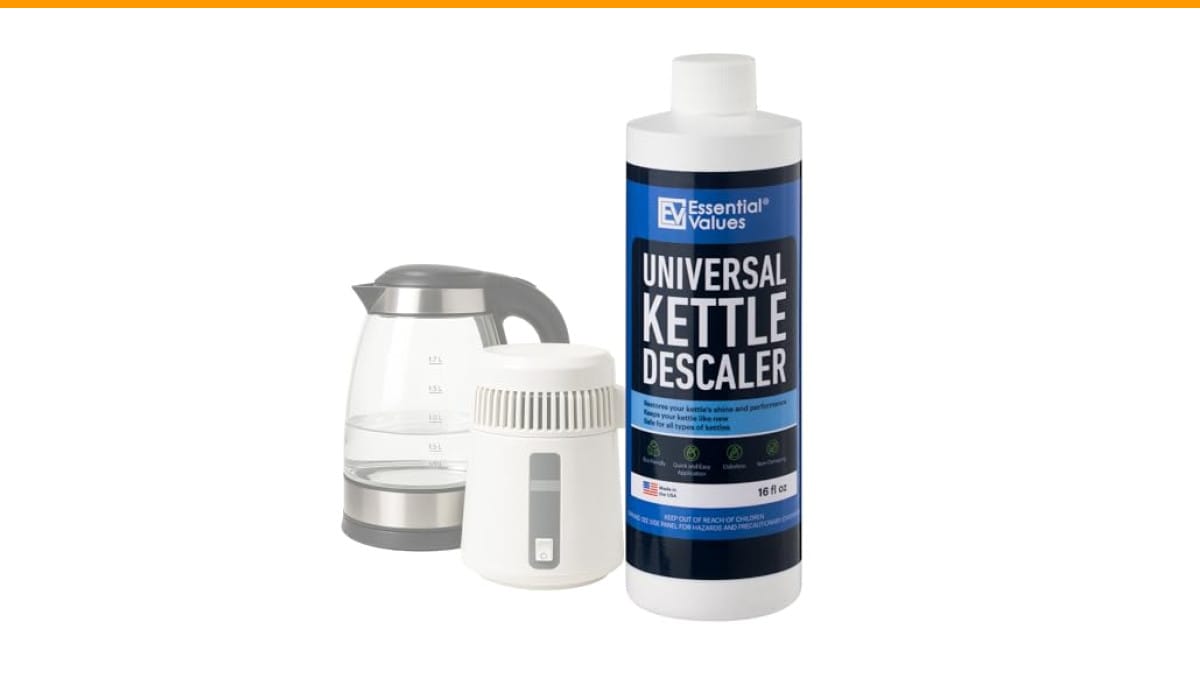
Essential Values Universal Descaler - Espresso Descaling…
- EFFECTIVE LIMESCALE REMOVER: This liquid citric acid solution breaks down stubborn limescale and mineral deposits, helping restore…
- SAFE FOR ALL KETTLE TYPES: Designed for use in electric and stovetop kettles, as well as coffee pots and other cookware. A gentle…
- NATURAL FORMULA: Our kettle cleaner is made with biodegradable, food-safe ingredients. This liquid cleaner offers a natural, non-t…
As an Amazon Associate I earn from qualifying purchases.
You’ll leave with a clear cost-benefit picture and a maintenance routine that actually works.
If you’re dealing with a slow or noisy kettle, a good descaler is the first step. The Essential Values Universal Descaler uses liquid citric acid to break down mineral deposits without harsh chemicals. It’s a practical tool for restoring boiling performance, and we’ll reference it in the comparison below.
The Hidden Cost of Hard Water in Your Kettle
Most people assume limescale is purely cosmetic. It isn’t. The numbers tell a different story.
Research from the German Energy Agency (dena) shows that just 2 millimeters of scale can increase energy consumption by up to 10%. At 3 millimeters, that jumps to 25%. For a typical 1500-watt kettle used twice daily, that translates to roughly 15–20 extra kilowatt-hours per year—enough to power a small fridge for a month.
The time cost is just as real. A clean kettle boils 1 liter of water in about 2.5 minutes. With moderate scale buildup, the same kettle takes 3.5 to 4 minutes. That’s an extra 30–60 seconds per boil, every single day.
Over a year, those extra seconds add up to over 12 hours of waiting. And you’re paying for the electricity to do it.
What Hard Water Actually Does to Your Kettle (The Science of Scale)
Hard water contains dissolved calcium and magnesium ions. When you heat it, these ions precipitate out and form solid calcium carbonate—the white, chalky deposit you see.
This process accelerates above 60°C (140°F), which is why kettles are particularly vulnerable. The heating element gets coated first, then the walls and lid.
The Insulating Effect: Why Boiling Slows Down
Limescale is a poor conductor of heat. A 1-millimeter layer of scale has roughly 40 times the thermal resistance of the metal heating element beneath it.
Think of it like wearing a thick winter coat in summer. The heat from the element can’t transfer efficiently to the water, so the kettle has to run longer to reach boiling point. The element itself gets hotter while the water stays cooler—a recipe for premature failure.
Corrosion and the Heating Element
Scale doesn’t just insulate; it corrodes. Calcium carbonate is slightly alkaline, and over time it can attack the protective coating on exposed heating elements.
Once that coating breaks down, the element is exposed to water and minerals directly. This leads to pitting, rust, and eventually a short circuit. A kettle with heavy scale buildup often dies not from age, but from corrosion-induced element failure.
This is why maintenance matters for appliances—the same logic applies to espresso machines and kettles alike.
5 Clear Signs Your Kettle is Suffering
- Boiling time has increased by more than 30 seconds compared to when it was new.
- Visible white or gray flakes floating in your boiled water or settled at the bottom of your cup.
- A chalky taste in tea or coffee, even with fresh grounds or leaves.
- Loud popping or hissing noises during heating—steam trapped under scale layers.
- A cloudy film on the interior surface that doesn’t wipe off with a cloth.
If you see two or more of these, your kettle has a scale problem that won’t fix itself.
The Real Impact: Performance, Energy Bills, and Taste
The performance loss is measurable. A kettle with 2mm of scale takes 47% longer to boil the same volume of water. That’s not a rounding error; that’s a significant performance hit.
Energy bills follow the same curve. The element draws the same wattage, but it runs for longer periods. A 10% energy waste on a small appliance might seem trivial, but when you scale it across a year of daily use, it’s a noticeable line item.
Taste is the sneakiest victim. Scale doesn’t dissolve fully into the water, but fine particles do. These particles dull the flavor of tea and coffee, masking the delicate notes you paid for. You might find yourself adding more sugar or milk to compensate—which is its own hidden cost.
For coffee drinkers, this is especially relevant. If your kettle water tastes off, your grinder and brew method won’t save the cup. The water is the largest ingredient by volume.
How to Remove Limescale: A Step-by-Step Comparison
You have three main options for descaling. Each has trade-offs in cost, effort, and effectiveness.
| Method | Active Ingredient | Time to Work | Effectiveness | Safety on Kettle | Cost per Use |
|---|---|---|---|---|---|
| White Vinegar | Acetic acid (5%) | 30–60 min soak | Good for light scale | Safe, but strong smell lingers | ~$0.20 |
| Citric Acid Powder | Citric acid | 15–30 min soak | Excellent for heavy scale | Safe, food-grade, no odor | ~$0.30 |
| Liquid Descaler | Citric or sulfamic acid | 10–20 min | Best for stubborn buildup | Safe, formulated for appliances | ~$1.00 |
All three work on the same chemical principle: acid dissolves calcium carbonate. The differences are in speed, convenience, and residue.
The Vinegar Method (Cheapest)
Mix one part white vinegar with two parts water. Fill the kettle to the max line and boil. Let it sit for 30 minutes, then pour out and rinse thoroughly.
It works, but the smell is hard to ignore. Even after multiple rinses, a faint vinegar odor can linger for days. If you’re sensitive to smells, this might not be the best choice.
The Citric Acid Method (Most Effective)
Dissolve 1–2 tablespoons of citric acid powder in a full kettle of water. Boil, then let it sit for 15–30 minutes. Pour out and rinse.
Citric acid is more effective than vinegar at similar concentrations because it chelates (binds) the calcium ions more aggressively. It also leaves no odor. The downside is you have to measure and mix the powder yourself.
A pre-mixed liquid like the Essential Values Universal Descaler skips that step. Just pour, boil, and rinse. The liquid formula is ready to use, which makes it easier to actually do the maintenance regularly.
Commercial Descalers (When to Use Them)
Commercial descalers are essentially citric acid with surfactants added to help lift stubborn deposits. They’re the fastest option, usually working in under 15 minutes.
Use them when you’ve neglected your kettle for months and the scale has built up in thick layers. The extra surfactants help break through that crust more effectively than plain acid alone.
One caveat: always check that the descaler is safe for your specific kettle material. Most are fine for stainless steel, glass, and plastic, but some aggressive formulas can damage aluminum or enamel coatings.
Prevention: How to Stop Scale Before It Starts
Cleaning is reactive. Prevention is proactive. Here’s what actually works.
Filtration vs. Softening vs. Regular Cleaning
Filtration: A basic carbon filter (like a Brita pitcher) removes some hardness minerals, but not all. It reduces scale formation by maybe 50–60%. You’ll still need to descale occasionally, just less often.
Water Softening: An ion-exchange softener removes calcium and magnesium entirely, replacing them with sodium. This eliminates scale almost completely. But a whole-house softener is a significant investment, and the sodium adds a slight taste that some people dislike.
Regular Cleaning: The cheapest and most reliable method. Descale every 4–6 weeks if you have hard water (above 180 ppm). The scale never gets a chance to build up, so each cleaning takes just 10 minutes.
Regular light cleaning beats occasional deep cleaning every time. It’s easier on the appliance and keeps boiling times consistent.
If you’re also dealing with a noisy espresso machine, the same prevention logic applies—scale is a common culprit there too.
When to Replace Your Kettle (Warranty and Safety)
Descaling can’t fix everything. If the heating element is already corroded or the kettle has developed a crack from thermal stress, it’s time to replace it.
Here’s the warranty angle most people miss: scale damage is often excluded from manufacturer warranties. Most warranties cover defects in materials and workmanship, not damage from neglect or environmental conditions. If your kettle dies from limescale buildup, don’t expect a free replacement.
Safety is the bigger concern. A kettle with a compromised heating element can short circuit, trip your breaker, or in rare cases, start a fire. If you notice any of the following, stop using the kettle immediately:
- Visible rust or pitting on the element
- Water leaking from the base
- Burning smell during operation
- Element glows red hot (it should never do this)
If your kettle is over 3 years old and has been used with hard water without regular descaling, replacement is often the more economical choice. A new kettle costs $30–50; the energy waste from a scaled-up unit can exceed that in a year.
Frequently Asked Questions
Does limescale in a kettle pose a health risk?
No. Calcium carbonate is not toxic. Your body absorbs some calcium from it, which is harmless for most people. The bigger issues are taste and appliance damage, not health.
Can I use lemon juice instead of vinegar or citric acid?
Yes, but it’s less efficient. Lemon juice has about 5–6% citric acid, but it also contains sugars and pulp that leave residue. It works in a pinch for light scale, but it’s not the best tool for the job.
How often should I descale my electric kettle?
Depends on your water hardness. With hard water (150+ ppm), every 4 weeks is reasonable. With soft water, every 8–12 weeks is fine. If you see visible scale, you’ve waited too long.
Will boiling water twice remove more scale?
No. Boiling alone doesn’t remove scale; it actually accelerates its formation. You need an acid to dissolve the deposits. Boiling water multiple times without a descaler just makes the buildup worse.
Is it safe to use a descaler in a plastic kettle?
Most liquid descalers are safe for food-grade plastic. Avoid abrasive scrubbing pads, which scratch the surface and create hiding spots for bacteria. Stick to the soak-and-rinse method.
Final Verdict: Is Hard Water a Dealbreaker?
No, but it demands respect. Hard water effects on electric kettle performance are real, measurable, and avoidable.
- Descale every 4–6 weeks if you have hard water—it’s a 10-minute task that saves hours of waiting.
- Use citric acid or a liquid descaler for best results; vinegar works but leaves a smell.
- Monitor boiling time. If it increases by 30 seconds or more, scale is the likely cause.
- Filtered water reduces scale by about half, but doesn’t eliminate the need for cleaning.
- Check your warranty terms—scale damage is usually excluded, so protect your investment.
- Replace the kettle if you see rust, leaks, or a red-hot element. Safety first.
- Track your energy bill. A clean kettle uses less power and pays for the descaler in savings.
Hard water isn’t a reason to give up on your kettle. It’s a reason to build a simple maintenance habit. Your kettle—and your tea—will thank you.
Products related to this article
Sponsored / affiliate links. As an Amazon Associate I earn from qualifying purchases. I may earn additional commission from eligible campaigns.
 SOLUSTRE Electric USB Coffee Cup Warmer with Temperature Settings Portable Milk and Beverage Heating Coaster for Office Desk Small Lightweight Design Easy to Clean Surface Multi Functional
 Bring It On Cleaner Hard Water Stain Remover for Shower Glass, 32 fl oz
 Coffee Espresso Machine Handle Replacement Parts, Cafe Bracket Handle for Lidl Silvercrest CM4621 CM4218 KF5002 KF500S Barista (for 51mm Portafilter Basket - Not included)