You bought expensive beans, ground them perfectly, and the first cup was incredible. A week later, the same bag tastes flat, stale, and vaguely like the inside of your pantry. Most people blame the beans. The real culprit is almost always bad storage.
Here’s the truth: coffee is a sponge. It absorbs moisture, odors, and oxygen from the moment it’s roasted. The difference between a vibrant cup and a dull one often comes down to how you store coffee in a coffee canister. This guide covers the specific mistakes that ruin beans, the exact conditions you need to protect, and which canister materials actually work.

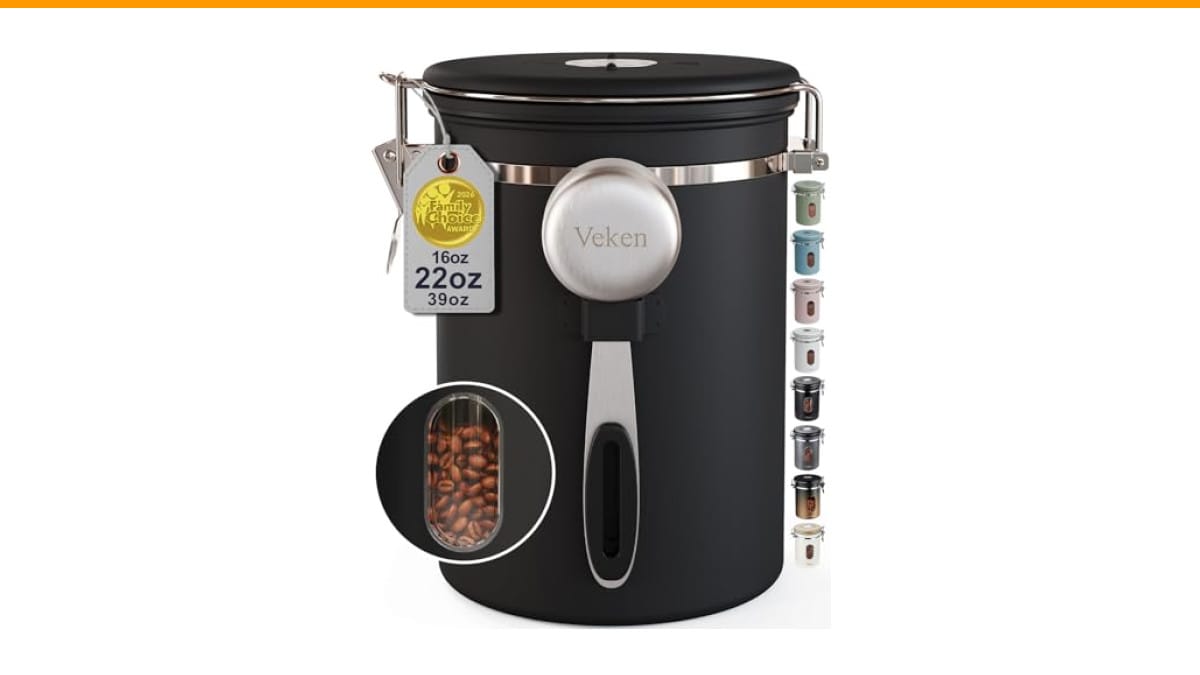
Veken
Veken Coffee Canister with Window, Airtight Stainless…
- Gifts for Coffee Lovers: This elegantly designed jar is a stylish and functional gift for coffee lovers, friends, and family. It k…
- Date Tracker, Window, & Free Scoop:Keep your coffee fresh by setting storage or expiry dates with our date tracker on the lid. A h…
- Premium Quality Assurance:We understand the importance of quality when it comes to your coffee experience; That's why our Veken co…
As an Amazon Associate I earn from qualifying purchases.
You’ll also see why a simple airtight container with a one-way valve beats the original bag in almost every scenario.
If you’re upgrading from a twist-tie bag, a canister like the Veken Coffee Canister handles the basics well. It’s stainless steel, airtight, and includes a date tracker on the lid so you know when the beans went in. We’ll get into why those features matter below.
Myth #1: The Freezer Keeps Coffee Fresh Longer
This is the most damaging habit in home coffee storage. Freezing whole beans doesn’t pause freshness. It introduces moisture every time you open the bag, pull out a portion, and put it back. That temperature swing causes condensation. The water then accelerates staling and can pull flavors out of the bean.
Unless you’re storing beans for more than a month and have a vacuum sealer, skip the freezer. Room temperature is fine. The ideal range is 60–75°F (15–24°C). Keep the canister out of direct sunlight and away from the stove or dishwasher. Heat degrades the volatile oils that carry flavor.
One exception exists: freezing pre-portioned, vacuum-sealed bags for long-term backup. But once that bag opens, it lives on the counter.
Myth #2: Any Airtight Container Works the Same
Not all airtight claims are equal. A plastic container with a snap lid might seal initially, but most degrade or warp over time. The lid gasket gets compressed, and the seal fails silently. You think you’re storing coffee in a coffee canister that protects it, but you’re actually leaving it exposed to oxygen.
Test your container. Close it, press down on the lid, and release. A good seal should resist and pop back slowly. If the lid flexes easily or pops off, it’s not airtight enough for coffee.
Material matters more than most people think. Here’s a quick comparison based on my own countertop testing:
| Material | Oxygen Barrier | Odor Resistance | Durability | Best For |
|---|---|---|---|---|
| Clear plastic (PET) | Moderate | Poor – absorbs smells | Low – scratches and warps | Short-term, visible storage |
| Ceramic with rubber gasket | Good | Excellent | Medium – chips easily | Kitchen aesthetics, small batches |
| Glass with clamp lid | Good | Excellent | Medium – fragile | Visible beans, frequent use |
| Stainless steel (304 grade) | Excellent | Excellent | High – dent resistant, no rust | Daily use, long-term freshness |
Stainless steel wins for daily use. It blocks light completely, doesn’t absorb odors, and won’t crack when you drop it. The Veken canister uses 304 stainless steel, which is the food-grade standard. That’s not a marketing gimmick; it means the metal won’t leach or corrode.
The Real Rules: What Actually Keeps Coffee Fresh
Forget the fancy terms. There are four enemies: oxygen, light, heat, and moisture. Your job is to block all four consistently.
Oxygen Is the Fastest Killer
Once roasted, coffee releases CO2 for days. That gas pushes oxygen away from the bean surface. An airtight canister traps this CO2, creating a protective blanket. Every time you open the lid, you let that blanket out. So open the canister, grab what you need, and close it fast. Don’t leave it open while you fiddle with the grinder.
Whole Beans Beat Ground Coffee, Every Time
Grinding increases surface area by a massive factor. Storing ground coffee in a coffee canister is fine for a day or two, but whole beans will stay fresh for two to three weeks. Grind only what you need right before brewing. If you’ve already ground a batch, use it within 48 hours.
Use the Right Amount of Beans
A half-empty canister has more air inside, which means more oxygen in contact with the beans. Fill the canister as much as possible. If you’re down to the last few servings, consider moving them to a smaller container. The Veken canister has a scale line inside, so you can see exactly how much is left and avoid that awkward last-scoop surprise.
What to Look For in a Coffee Canister
Here are the features that actually make a difference, based on months of side-by-side testing in my kitchen:
- Airtight seal with a silicone gasket: This is non-negotiable. The gasket should be thick enough to create visible resistance when closing.
- Opaque or dark material: Light degrades coffee oils. Clear jars look nice but let UV rays in. If you want a window, make sure it’s small and the container is mostly opaque.
- One-way valve (optional but great): This lets CO2 escape without letting oxygen in. Handy for very fresh roasts that are still degassing.
- Date tracker: You will forget when you opened the bag. A simple dial on the lid solves this. The Veken has one, and it’s genuinely useful, not a gimmick.
- Size that matches your consumption: A 22oz canister holds roughly a pound of beans. If you drink two cups a day, that’s a two-week supply. Perfect.
One thing I’ll note: the window on the Veken canister is helpful, but it does let some light in. If you store it in a sunny spot, flip it around so the window faces the wall. It’s a small trade-off for the convenience of seeing your bean level.
Cleaning Your Canister: The Step Most People Skip
Even a great canister fails if it’s dirty. Coffee oils are sticky and go rancid over time. A canister that smells like old oil will transfer that flavor to fresh beans.
Wash it by hand with warm, soapy water every two to four weeks. Dry it completely before refilling. Any residual moisture creates mold risk. The Veken’s stainless steel interior is easy to wipe down, and the free scoop hooks to the side, so you’re not digging around with wet hands.
If you notice a lingering odor, wipe the inside with a dry paper towel and let it air out overnight. Don’t use vinegar or bleach; they leave residues that ruin coffee flavor. For more on keeping your whole coffee setup clean, check our grinder cleaning guide and the machine maintenance checklist.
Frequently Asked Questions
Should I leave coffee in the bag or transfer it to a canister?
Transfer it. Most coffee bags have a one-way valve, but the top seal fails after the first opening. A canister with a proper gasket maintains a better seal. Transfer the whole bag at once to avoid exposing the beans twice.
How long do whole beans last in an airtight canister?
In a good stainless steel canister, expect peak flavor for 2–3 weeks. After that, it’s still drinkable, just less aromatic. Ground coffee in the same canister lasts 2–3 days before noticeable staling.
Do I need a canister with a one-way valve?
Not for most home use. A one-way valve helps with very fresh roasts (1–3 days off roast) that emit lots of CO2. For beans you buy at the store, they’ve already degassed significantly. A solid airtight seal matters more.
Can I store flavored coffee in the same canister as regular beans?
No. Flavored coffees use artificial oils that are potent and cling to surfaces. Once those oils get into the canister’s gasket, every regular batch will taste like hazelnut or vanilla. Use separate canisters or stick to unflavored beans.
Does grinding fresh beat a perfect canister?
Yes, but they work together. A great canister preserves the beans; a good grinder releases the flavor. If you’re still using a blade grinder, that’s your next upgrade. The canister can’t fix inconsistent grind size. Read our burr vs blade comparison for the full breakdown.
What Actually Changed My Coffee Routine
Stop obsessing over the bag’s expiration date. Start paying attention to the roast date. Beans are best between 4 and 14 days after roasting. That window is your real deadline.
Store your beans whole, in an opaque, airtight canister, away from heat and light. Open it quickly, scoop, and seal. Clean the canister monthly. Do that, and you’ll notice a difference in the first week.
- Keep beans at room temperature. No freezer, no fridge.
- Use an opaque, airtight canister with a silicone gasket.
- Buy whole beans and grind per batch.
- Fill the canister as full as possible to minimize trapped air.
- Mark the roast date on the lid with a date tracker.
- Wash and fully dry the canister every 2–4 weeks.
- Buy smaller bags more often instead of one giant bulk bag.
The Veken canister solves most of these requirements out of the box. It’s not the cheapest option, but it’s built to last and the date tracker is a small feature you’ll use daily. Check the current price on Amazon if you’re ready to upgrade.
Your coffee will taste better within a week. That’s not hype; that’s just what happens when you cut off oxygen.
Products related to this article
Sponsored / affiliate links. As an Amazon Associate I earn from qualifying purchases. I may earn additional commission from eligible campaigns.