You bought a French press because you wanted better coffee. Then your first brew came out muddy, bitter, and full of sludge. Or worse, it tasted like weak brown water. The culprit isn’t your beans or your water. It’s the grind.
Grind size controls everything in immersion brewing. Get it wrong and no amount of steeping time or fancy pouring will save the cup. Get it right and you’ll taste sweetness, body, and clarity you didn’t think a press could deliver. This guide walks you through the exact settings, how to see them, and how to fix a brew gone wrong.

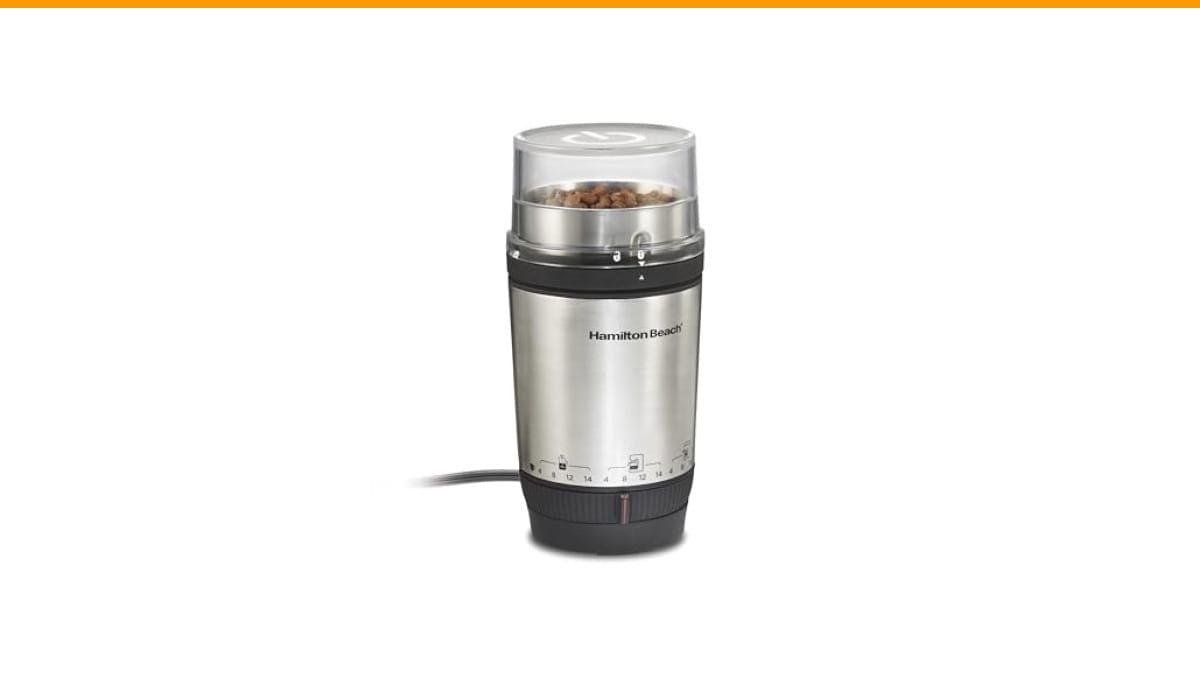
Hamilton Beach
Hamilton Beach Custom Grind Electric Coffee Grinder…
- EASILY SELECT GRIND SIZE AND CUPS OF BREWED COFFEE: Whether you need a fine grind size for espresso or a coarse grind for French p…
- GRIND COFFEE HANDS-FREE OR MANUALLY: Convenient push-down operation allows you to activate the grinder with one press. It grinds c…
- EASY TO POUR & CLEAN WITH REMOVABLE BOWL: Because the bowl removes, it's easy to fill with coffee beans and to pour coffee into yo…
As an Amazon Associate I earn from qualifying purchases.
You’ll leave with a concrete starting point for your grinder, a method to adjust by taste, and a few rescue tricks for the coffee you already ruined. No vague advice. Just numbers and actions.
If you’re grinding at home without a dedicated setup, a solid electric grinder makes the difference between a consistent coarse grind and a pile of dust. The Hamilton Beach Custom Grind Electric Coffee Grinder gives you an adjustable selection ring so you can pick a coarse setting for your press and switch back to fine for espresso without guesswork. It grinds enough for up to 14 cups and the removable stainless steel bowl pours straight into your press.
The 30-Second Answer: What Grind Size to Use
Use a coarse grind. Think breadcrumbs or kosher salt, not table salt and not pebbles. The pieces should be uniform, roughly 1.0 to 1.5 millimeters across.
For a standard 4-minute steep at 200°F, that size gives the water enough surface area to extract flavors without pulling out the bitter compounds that live near the end of the extraction curve.
If you own a burr grinder, start at a setting around 24 to 28 on the Baratza Encore, or 35 to 45 clicks from zero on a KINGrinder K6. You’ll adjust from there based on taste.
Why Grind Size Is the #1 Variable in French Press
Every other variable in French press brewing—water temperature, steeping time, coffee-to-water ratio—only matters if your grind is in the right ballpark. Grind size sets the extraction rate. Everything else just nudges it.
The Science of Extraction and Surface Area
Hot water dissolves coffee solubles from the surface of each particle. Smaller particles have more total surface area per gram. More surface area means faster extraction. That’s why a fine espresso grind extracts fully in 25 seconds, while a coarse French press grind needs four minutes.
Here’s the trap: if you use a fine grind in a French press, the water extracts too much too quickly. You get over-extraction. The coffee turns bitter, astringent, and dry. If you use a grind that’s too coarse, the water can’t pull enough flavor out in the steeping time. You get under-extraction. Sour, weak, and hollow.
The goal is a grind size that extracts roughly 18 to 22 percent of the coffee’s soluble material. That’s the sweet spot where sweetness and acidity balance.
How the Metal Filter Changes the Game
Paper filters trap fine particles and absorb coffee oils. The metal mesh in a French press does neither. It lets oils through, which gives the press its signature heavy body. It also lets fine particles through, which creates sediment.
That’s why you need a coarser grind than you’d use for a pour-over. A paper filter can catch fines and stop them from ending up in your cup. The metal filter can’t. So you have to prevent those fines from existing in the first place.
But not all metal filters are the same. Some presses use a coarse mesh with wide openings. Others, like the Bodum Chambord, use a tighter weave. A press with a tighter mesh tolerates a slightly finer grind because it filters out more sediment. A press with a wide mesh demands a coarser grind to keep the cup clean. Check your filter’s mesh before you dial in. It changes the ideal setting by a few clicks on your grinder.
Visual and Tactile Guide: What “Coarse” Really Looks Like
Grind size descriptions are useless if you can’t picture them. “Coarse” means different things to different people. So here’s a concrete comparison.
The Finger Test and the Sea Salt Comparison
Take a pinch of ground coffee and rub it between your thumb and index finger. Coarse grind should feel like coarse sea salt or dry breadcrumbs. You should feel individual particles with distinct edges. It shouldn’t feel smooth or powdery like flour.
If the particles look like table salt or granulated sugar, they’re too fine for a French press. If they look like small pebbles or steel-cut oats, they’re too coarse.
Here’s a more reliable test. Spread a few grounds on a white plate. Look at the size distribution. You want mostly uniform pieces, roughly 1 to 1.5 mm. If you see a wide mix of fine dust and large chunks, your grinder is producing inconsistent results. That inconsistency is the real enemy.
How to Dial In Your Perfect Grind (Step-by-Step)
Start with a recipe and adjust from there. Don’t change two variables at once. Keep your ratio at 1:15 (coffee to water) and your steep time at 4 minutes. Change only the grind.
Starting Point and Adjusting for Taste (Sour vs. Bitter)
Start coarse. Brew a test cup. Taste it after it cools slightly.
If it tastes sour, sharp, or salty, you’re under-extracting. The water didn’t pull enough flavor out. Make the grind finer. Move two or three clicks on your grinder and brew again.
If it tastes bitter, harsh, or dry, you’re over-extracting. Make the grind coarser. Move two or three clicks the other way.
Here’s the key: change one variable at a time and wait. A single adjustment is enough to taste a difference. Most people give up after one bad cup. The dial-in process takes three or four brews. It’s worth the time.
One thing I learned testing at home: let the coffee cool for a few minutes before you judge it. Hot coffee masks acidity and bitterness. A cup that tastes balanced hot can taste sour once it drops to drinking temperature.
Grind Settings for Popular Burr Grinders
Generic settings only help if you know your grinder. Here’s a quick reference for common models. These are starting points, not gospel. Adjust based on your filter mesh and taste.
| Grinder Model | French Press Setting | Notes |
|---|---|---|
| Baratza Encore | 24-28 | Start at 26. If brew is bitter, go coarser. |
| Baratza Virtuoso | 28-32 | Similar to Encore but with more steps in between. |
| KINGrinder K6 | 35-45 clicks from zero | Each click is a small adjustment. Start at 40. |
| 1Zpresso JX | 2.8-3.2 rotations | Count full rotations from the zero point. |
| Fellow Ode | 5-6 | This is a brew grinder, not for espresso. Works well. |
| Hamilton Beach Custom Grind | Coarse setting on the ring | Turn the selection ring to the coarse icon. Grind in short pulses for consistency. |
Blade grinders don’t have numbered settings. If you’re using one, pulse in one-second bursts and shake the grinder between pulses. That evens out the particle size. It’s not perfect, but it works in a pinch.
Adjusting Grind by Roast Level (Light, Medium, Dark)
Roast level changes how easily coffee extracts. Dark roasts are more porous and extract faster. Light roasts are denser and extract slower.
For a dark roast, go slightly coarser than your baseline. The coffee extracts quickly, so a coarser grind prevents bitterness. Think 26 on the Encore instead of 24.
For a light roast, go slightly finer. The dense beans need more surface area to extract fully. Try 22 or 23 on the Encore. Light roasts also benefit from a longer steep time. Push it to 4 minutes and 30 seconds if the cup tastes thin.
Medium roasts sit in the middle. Use your standard coarse setting and adjust only if the flavor tells you to.
Common Mistakes and How to Fix Them
Most French press problems trace back to one of three errors: wrong grind, wrong ratio, or wrong steep time. Here’s how to fix each.
The Blade Grinder Trap
A blade grinder chops beans randomly. It produces a chaotic mix of fine dust and large chunks. The fine dust over-extracts and turns bitter. The chunks under-extract and turn sour. You get both problems in the same cup.
If you’re stuck with a blade grinder, pulse in short bursts and stop before the coffee looks powdery. Shake the grinder between pulses to redistribute the beans. You’ll get closer to a uniform grind, though it won’t match a burr grinder’s consistency.
I’ve used this trick for years. It’s not perfect, but it turns a muddy mess into a drinkable cup.
Rescue Techniques for Over- and Under-Extracted Coffee
You already brewed a bad pot. Here’s how to salvage it.
If the coffee is bitter (over-extracted), add a tiny pinch of salt to your cup. Salt blocks bitter receptors on your tongue. It won’t fix the underlying problem, but it makes the cup drinkable. You can also dilute it with hot water to cut the intensity.
If the coffee is sour (under-extracted), you can’t add flavor back. But you can fake it. Add a splash of milk or cream. The fat coats your tongue and masks the sharp acidity. Or steep the grounds for another minute before pressing. That pulls out more solubles and rounds out the flavor.
Neither rescue is a long-term solution. They’re stopgaps while you dial in your grind.
French Press Grind Troubleshooting Matrix
| Symptom | Likely Cause | Fix |
|---|---|---|
| Bitter, dry, astringent | Grind too fine | Go coarser by 2-3 clicks |
| Sour, sharp, weak | Grind too coarse | Go finer by 2-3 clicks |
| Muddy with heavy sediment | Grind too fine or blade grinder | Go coarser; switch to burr grinder |
| Thin, watery body | Steep time too short | Extend steep to 4-5 minutes |
| Harsh, metallic taste | Water too hot | Drop water temp to 195-200°F |
| Weak flavor, low strength | Ratio too low | Increase coffee from 1:15 to 1:14 |
Frequently Asked Questions
Can I use pre-ground coffee from the store?
You can, but it’s usually ground for drip machines, which is finer than ideal for a press. The cup will be bitter and muddy. If you must use pre-ground, look for a bag labeled “coarse” or “French press.” Even then, it’s a compromise.
Should I adjust grind for cold brew in a French press?
Yes. Cold brew extracts slowly because cold water is less efficient at pulling solubles. Use an extra-coarse grind, larger than breadcrumbs, and steep for 12 to 18 hours in the fridge. The long steep compensates for the coarse grind.
Why does my French press coffee have so much sludge?
Sludge comes from fine particles passing through the metal filter. It’s a sign your grind is too fine or your grinder produces too many fines. Go coarser. You can also pour the coffee slowly and stop before the last quarter inch in the press. That’s where the heaviest sediment settles.
Is a burr grinder worth it for French press?
Yes. The uniform particle size a burr grinder produces is the single biggest upgrade you can make. A blade grinder creates uneven particles that cause simultaneous over- and under-extraction. A burr grinder gives you consistency, which makes dialing in predictable. Check our coffee maker cleaning guide to keep your equipment in top shape.
What’s the best water temperature for French press?
Use water between 195°F and 205°F. Boiling water (212°F) over-extracts and scorches the coffee. If you don’t have a thermometer, let the kettle rest for 30 to 60 seconds after it boils before pouring.
Final Verdict
Grind size is the difference between a bitter mess and a smooth, rich cup. Start coarse, adjust by taste, and keep notes.
- Start at 1.0 to 1.5 mm particles, like coarse sea salt or breadcrumbs.
- Use a burr grinder if you can. A blade grinder works with pulsing but won’t match the consistency.
- Start at 24-28 on the Baratza Encore, 35-45 clicks on the KINGrinder K6, or the coarse icon on a Hamilton Beach grinder.
- Adjust by taste: sour means go finer, bitter means go coarser.
- Dark roasts need a coarser grind; light roasts need a finer one.
- Check your press’s filter mesh. Tighter mesh tolerates finer grinds.
- For cold brew, go extra coarse and steep 12-18 hours.
Dialing in takes a few cups. Once you find the setting, write it down. Your future mornings will thank you.
And if your press or grinder is acting up, check out our troubleshooting guide for brew issues to get back to good coffee faster.
Products related to this article
Sponsored / affiliate links. As an Amazon Associate I earn from qualifying purchases. I may earn additional commission from eligible campaigns.
 HomeBeyond Espresso Coffee Maker 12 Cups, Classic Stovetop Espresso Maker, 600ml / 20oz Coffeemaker for Gas & Ceramic Stovetops (Silver)
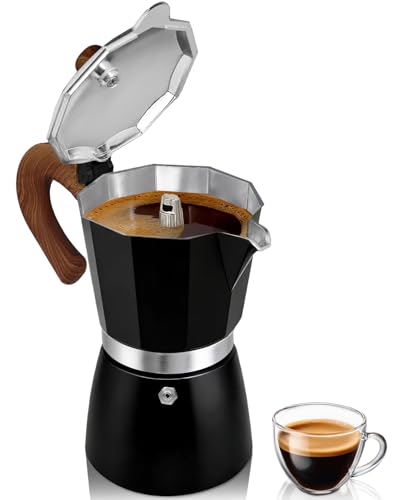 Belly Moka Coffee Maker Stovetop Espresso Maker 9 Cup Aluminum Moka Pot Percolator 15oz 450ml Easy Brewing for Electric Ceramic Stoves Home Camping Italian Cuban Café Classic Black
 Belly Moka Coffee Maker Stovetop Espresso Maker 6 Cup Aluminum Moka Pot Percolator 10oz 300ml Easy Brewing for Electric Ceramic Stoves Home Camping Italian Cuban Café Classic Silver