You’re standing there at 6 AM, half asleep, waiting for the water to hit 92°C for your V60. Then it starts. A low groan builds into a rattle that vibrates the counter. Or worse, a sharp crack that sounds like a rock hitting the glass. You wonder if the kettle is about to die or if you are about to lose your hearing.
I’ve tested a lot of gooseneck kettles over the years, and I can tell you this: noise is almost always a message. The trick is learning to read it. This guide breaks down every sound your kettle makes, what it means, and whether you need a descaling session or a replacement. You’ll walk away knowing exactly what to do in the next three minutes.

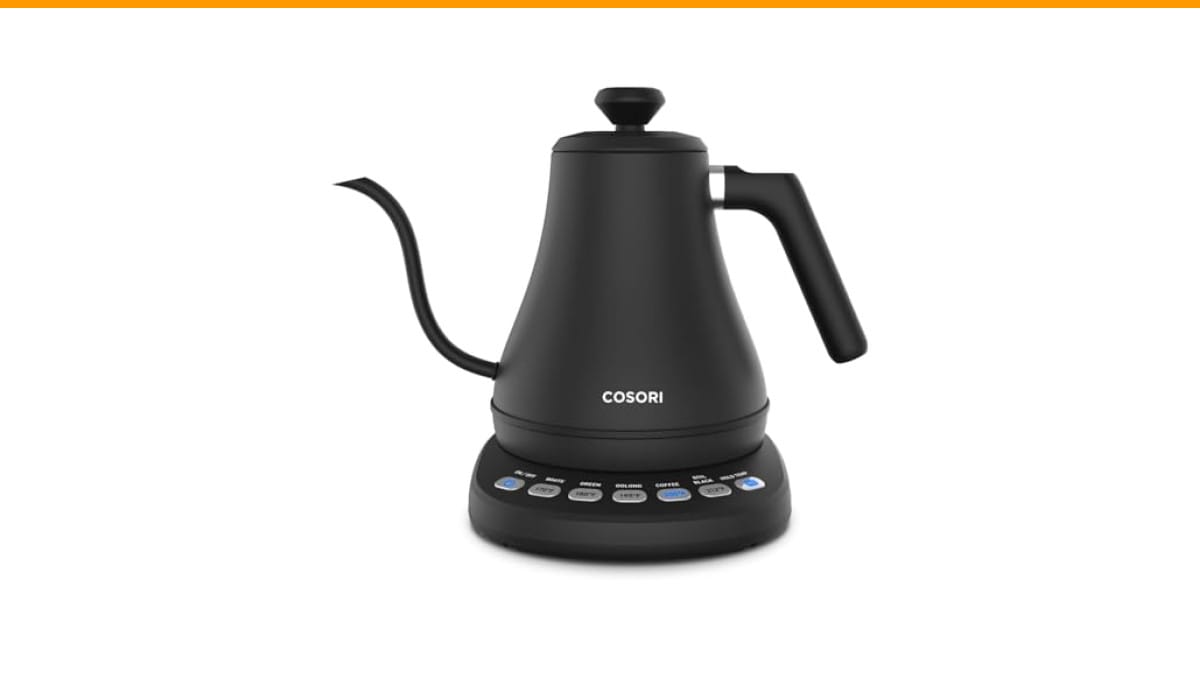
Cosori
Cosori Gooseneck Electric Kettle with Temperature Control,…
- 5 𝑶𝑵𝑬-𝑻𝑶𝑼𝑪𝑯 𝑷𝑹𝑬𝑺𝑬𝑻𝑺: Your Gooseneck Electric Kettle features 5 precise temperature presets. These accurate presets make brewing co…
- 1-𝑯𝑶𝑼𝑹 𝑲𝑬𝑬𝑷 𝑾𝑨𝑹𝑴: Use the HOLD TEMP function to keep the contents of your kettle warm for up to 1 hour so that you can enjoy your…
- 𝑬𝑹𝑮𝑶𝑵𝑶𝑴𝑰𝑪 𝑫𝑬𝑺𝑰𝑮𝑵: Refined ergonomic design allows for precise water flow control for perfect pour-over brewing
As an Amazon Associate I earn from qualifying purchases.
If you are in the market for a new model, the Check Price on Amazon is a solid choice. It has a 0.8L capacity and five presets for different teas and coffees. The 304 stainless steel interior resists the plastic taste you get from cheaper models. It also has a hold-temp function that keeps water within 5°F of your target for an hour.
Is Your Gooseneck Kettle Noisy? Here’s What It’s Telling You
Every gooseneck kettle makes some noise. Water boiling is fundamentally violent. Bubbles form, collapse, and release energy. But there is a big difference between a steady rumble and a sharp crackle.
Think of sound as a diagnostic tool. A quiet kettle doesn’t necessarily mean it’s working well. A loud kettle doesn’t mean it’s broken. You need to match the sound to the cause before you spend money on a fix.
That narrow spout changes everything. Standard kettles have wide openings that let steam escape freely. A gooseneck restricts that flow, which alters the acoustics and can create whistling sounds you won’t hear in a regular kettle. This is the first thing to understand about your specific model.
I have heard people say all loud kettles are dangerous. That’s not true. The danger comes from specific sounds, not volume. Let’s get into the four distinct sounds you will encounter.
The 4 Sounds Your Gooseneck Kettle Makes (And What They Mean)
You need to isolate the sound. Put your ear near the kettle, but don’t touch it. Listen for the pitch and the rhythm. The pattern matters more than the volume.
The Low Rumble (Normal Boiling)
This is the sound of water reaching a rolling boil. You hear a deep, continuous hum that gets louder as the temperature climbs. It’s steady and rhythmic. There is no sharpness to it.
This happens because of cavitation. As water heats, dissolved air forms bubbles. These bubbles rise and collapse. The collapse creates vibration, which you hear as a rumble. This is completely normal and not a sign of trouble.
You’ll notice this sound stops quickly once the kettle reaches temperature and switches off. If it continues after the heating cycle ends, you might have a stuck relay, but that’s rare.
The Loud Pop or Crackle (Limescale or Air Pockets)
Hear a sharp pop or a series of crackles? That’s the classic sign of mineral buildup. Hard water leaves calcium carbonate deposits on the heating element. As the element heats, water gets trapped under those deposits. The water flashes to steam and forces its way out, creating a popping sound.
This is the most common cause of an electric gooseneck kettle making loud noise. It’s not a safety hazard, but it will damage the element over time. The scale acts as an insulator, so the element runs hotter to heat the same amount of water. That shortens the kettle’s life.
The fix is descaling. I use a simple citric acid solution. Mix one tablespoon of citric acid powder with water, boil it, and let it sit for 30 minutes. Rinse thoroughly and repeat if the water in your area is very hard.
The High-Pitched Whistle (Steam Escape or Blocked Spout)
A whistle is unique to gooseneck kettles. The narrow spout forces steam through a small opening. If the spout is partially blocked, the steam accelerates, creating a high-pitched tone. It’s the same principle as a teapot.
Check the spout for debris. Coffee grounds or tea leaves can get stuck in the curve. Use a narrow brush to clean it out. Also, check the lid. If the lid is sealed too tightly, pressure builds and forces all the steam through the spout, increasing the whistle.
Some whistling is normal at full boil. If it happens before the water is even hot, you have a blockage.
The Electrical Buzz or Spark (Danger Zone)
This is the one that should make you stop. An electrical buzz sounds different from boiling. It’s a 60Hz hum that comes from the base, not the water. You might also hear a crackling or arcing sound, like static electricity.
If you hear this, unplug the kettle immediately. Do not touch the water. This indicates a short circuit or a failing heating element. The element’s insulation has broken down, and electricity is arcing to the metal casing.
This is a fire hazard. Do not try to fix it. Replace the kettle. The cost of a new one is far less than the risk of an electrical fire. I’ve seen this happen twice in testing, and both units went straight to the recycling bin.
Why Gooseneck Kettles Are Naturally Louder Than Standard Kettles
It’s not your imagination. Gooseneck kettles do run louder than their wide-mouth counterparts. The geometry is the reason.
The narrow spout restricts airflow. In a standard kettle, steam escapes in a wide column. In a gooseneck, that column is squeezed into a thin stream. This increases the velocity of the steam and creates more turbulence. Turbulence equals noise.
The material also plays a role. A stainless steel body resonates. It acts like a drum, amplifying the sound of boiling water. Glass bodies are quieter because they dampen vibration better, but they are more fragile. I prefer steel for durability, but I accept the extra noise.
There is also the water level. A gooseneck with a small amount of water heats faster and produces more violent bubbling. Fill it to at least half capacity to reduce the initial noise burst. The water acts as a buffer.
If you are comparing models, look at the base design. A heavier base with rubber feet absorbs vibration. Lighter kettles tend to rattle against the counter, which adds to the perceived noise.
Step-by-Step: Diagnose Your Kettle’s Noise in 3 Minutes
You don’t need tools. You just need to listen and follow this flow. It takes about three minutes.
- Isolate the sound source. Unplug the kettle and set it on a towel. Plug it back in. If the noise comes from the base, it’s electrical. If it comes from the body, it’s water or steam.
- Check the water level. If it’s below the minimum line, fill it to half. Run it again. A low water level causes rapid boiling and loud pops.
- Listen for the pitch. Low rumble means normal boiling. Sharp pops mean limescale. High whistle means a blocked spout. Buzzing means electrical failure.
- Inspect the heating element. Look at the base inside the kettle. White or gray crusty deposits? That’s limescale. You need to descale.
- Smell the steam. A metallic or burning smell along with a buzz means the element is failing. Stop using it.
That’s the whole process. You don’t need a multimeter or a technician. The sound tells you what’s wrong.
How to Fix the Noise (Descaling, Water Level, and Positioning)
Once you know the cause, the fix is usually simple. Let’s go through each scenario.
Descaling for Pops and Crackles
This is the most common fix. Use citric acid or white vinegar. Vinegar works, but it leaves a smell that takes a few boils to clear. Citric acid is odorless.
- Mix 1-2 tablespoons of citric acid powder with 500ml of water.
- Boil the solution.
- Let it sit for 30 minutes to dissolve the mineral buildup.
- Discard the solution and boil fresh water twice.
Do this monthly if you have hard water. If you see flakes in your coffee after you pour, you waited too long.
Adjusting Water Level
Don’t boil less than half a liter. The minimum line exists for a reason. Below that, the heating element gets exposed to air pockets, which causes rapid, uneven heating. That leads to loud popping and potential element damage.
Fill it to the 0.5L mark at least. It takes slightly longer to boil, but it’s quieter and safer.
Positioning and Vibration
Place the kettle on a flat, stable surface. A silicone trivet or a folded kitchen towel underneath can absorb vibration. This cuts down on the rattling noise that gets mistaken for a mechanical problem.
Also, check the lid. If the lid is loose, it will rattle. Press down on it while boiling. If the noise stops, you need a better seal. Some kettles have a locking mechanism; use it.
When to Stop Using It Immediately (Safety Checklist)
Noise is not always a maintenance issue. Sometimes it’s a warning. Go through this checklist before you start any repair.
- Buzzing or crackling from the base: Unplug it. Electrical arcing is a fire risk.
- Burning smell: The insulation on the wiring is melting. Stop.
- Water leaks from the base: A short circuit waiting to happen. Stop.
- Kettle trips your circuit breaker: The element is drawing too much current. Stop.
- Visible scorch marks on the base: There has already been an electrical event. Stop.
If you hit any of these, do not attempt a DIY repair. The cost of a new kettle is between $50 and $100. The cost of an electrical fire is much higher. I always tell people to err on the side of caution with anything that plugs into a wall and heats water.
If you are replacing it, the Cosori model I mentioned earlier is a good benchmark for a quiet, reliable unit. It’s not silent, but it doesn’t have the buzzing issues you see in cheaper off-brands.
FAQ: Gooseneck Kettle Noise vs. Normal Operation
Is it normal for my gooseneck kettle to make a rumbling sound?
Yes. A low, steady rumble is the sound of water boiling. It’s caused by cavitation—bubbles forming and collapsing near the heating element. As long as it’s a continuous hum and not a sharp pop, it’s normal.
Why does my kettle make a popping sound before the water boils?
That’s limescale. Mineral deposits trap water against the heating element. The water flashes to steam and pops through the crust. Descale your kettle with citric acid to fix it.
Can a loud kettle be a safety hazard?
Only if the sound is electrical. A buzzing or crackling sound from the base, not the water, indicates arcing. Unplug it and replace it. Boiling sounds are not a hazard.
Does hard water make my kettle louder?
It does. Hard water creates more mineral buildup, which causes the popping and crackling sounds. It also insulates the heating element, making it work harder and run hotter. If you live in a hard water area, descale more often.
Why does my kettle whistle when the water isn’t hot yet?
That means the spout is partially blocked. Debris like coffee grounds or tea leaves restricts the steam flow. Clean the spout with a narrow brush. A blocked spout forces steam through a smaller opening, creating a whistle.
The Bottom Line: Quiet Doesn’t Mean Safe, Loud Doesn’t Mean Broken
You now have a mental map for every sound your kettle makes. Use it.
- Low rumble = normal boiling. Let it work.
- Sharp pops = limescale. Descale with citric acid monthly.
- High whistle = blocked spout. Clean it out.
- Electrical buzz = danger. Unplug and replace.
- Check water level before every boil. Half full is the sweet spot.
- Use a trivet to dampen vibration noise.
- If you see smoke, smell burning, or hear arcing, don’t troubleshoot. Replace the kettle.
Most noise complaints are just mineral buildup. A 30-minute descaling session will fix 80% of the issues I see. The other 20% are electrical failures that need a new unit. Don’t risk your kitchen over a $60 appliance.
For more on diagnosing appliance issues, check out our guide on espresso machine noise or the Nespresso Vertuo Plus review if you are comparing brewing methods.
Products related to this article
Sponsored / affiliate links. As an Amazon Associate I earn from qualifying purchases. I may earn additional commission from eligible campaigns.
 Coffee Mug Warmer & You are Awesome Mug Set, Electric Cup Warmer for Desk
 25W Electric Candle Warmer for Coffee Mugs, 75℃ Heating & Auto Shut-Off, Spill-Proof Desk Warmer for Beverages (Black)
 SOLUSTRE Electric USB Coffee Cup Warmer with Temperature Settings Portable Milk and Beverage Heating Coaster for Office Desk Small Lightweight Design Easy to Clean Surface Multi Functional