It’s 7 AM. You hit the switch on your electric kettle, and instead of a gentle rumble, you get a sound like a small animal being slowly lowered into a woodchipper. You stand there, half asleep, wondering if the kettle is about to launch itself off the counter.
I’ve tested dozens of kettles over the years, and I’ve heard every noise they can make. Most are fixable. Some mean the kettle is done. The trick is knowing the difference, and that starts with identifying the exact sound coming from your machine.

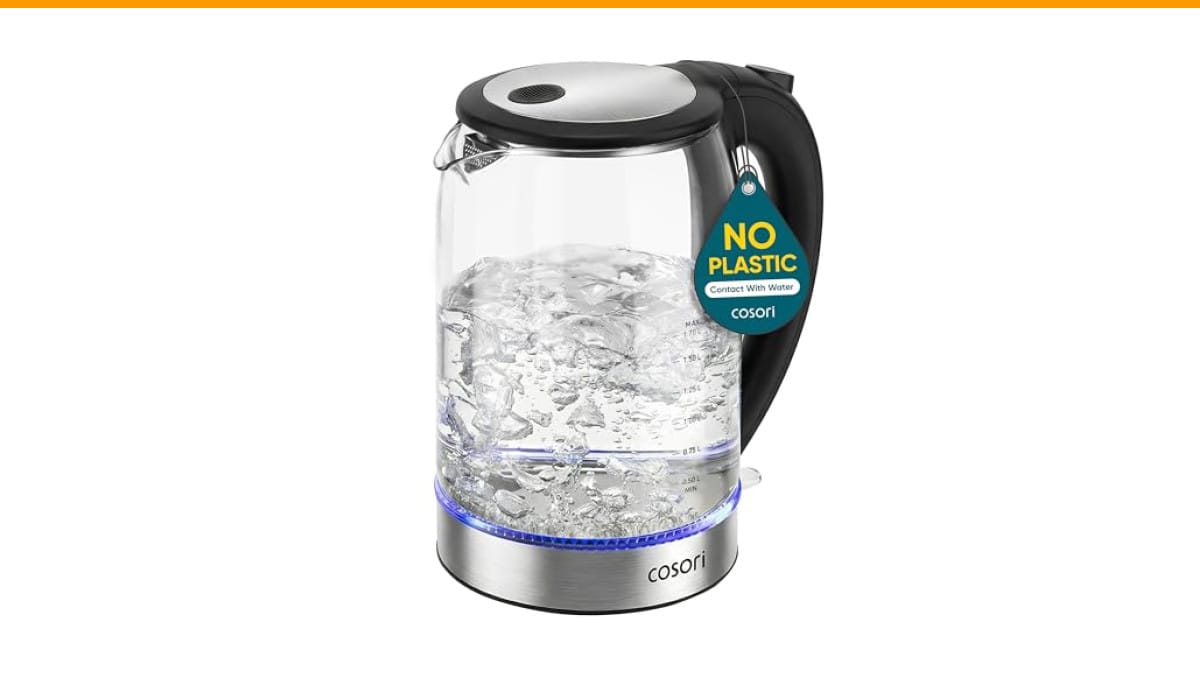
Cosori
Cosori Electric Kettle, No Plastic Contact with…
- No Plastic Contact with Your Water——With no plastic inside, water never touches plastic, ensuring a pure taste and safer drinking…
- Faster Than a Stovetop Kettle——Heats 0.5L (2 Cups) water in under 3 minutes for less wait time
- Easy to Clean——Wide mouth and large-angle lid lets you reach every corner with ease
As an Amazon Associate I earn from qualifying purchases.
This guide breaks down each noise, what causes it, and whether you should fix it or toss it. You’ll also learn the one maintenance habit that prevents most of these problems in the first place.
If you’re shopping for a replacement and want to avoid these issues entirely, the Check Price on Amazon is a solid option. It has a stainless steel interior with no plastic touching your water, which eliminates the plastic taste issue and makes descaling easier since you can see the buildup clearly.
The 5 Sounds Your Kettle Makes and What Each One Means
Every noise your kettle makes is a clue. Here’s the breakdown:
| Sound | Likely Cause | Severity | Fix |
|---|---|---|---|
| Popping or crackling | Mineral buildup on the heating element | Low | Descale with citric acid |
| Buzzing or humming | Loose base plate or vibration against counter | Low | Tighten screws or add a mat |
| Rattling | Loose internal components or debris | Medium | Disassemble base and check |
| Whistling or hissing | Steam vent blockage | Medium | Clean the vent area |
| Loud grinding | Heating element failure or severe scale | High | Replace the kettle |
The most common sound by far is the popping or crackling. It sounds like Rice Krispies in your kettle. That’s the sound of water vapor forcing its way through a layer of limescale stuck to the heating element.
I’ve seen kettles make this noise for years without failing. It’s annoying, but it’s not dangerous. The real problem is what the scale does to your water and your energy bill. A thick layer of scale insulates the element, so the kettle has to work harder and longer to boil the same amount of water.
The buzzing sound is different. That’s usually mechanical. The base plate might have worked loose, or the kettle itself is vibrating against the counter at a frequency that resonates. I’ve fixed buzzing kettles by simply placing them on a silicone trivet.
Rattling is trickier. It could be a loose screw inside the base, or it could be a piece of scale that broke off and is bouncing around. Listen carefully to where the sound comes from. If it’s from the base, that’s mechanical. If it’s from inside the water chamber, it’s scale.
Whistling or hissing means steam is escaping somewhere it shouldn’t. The steam vent might be partially blocked, or the lid seal is compromised. This one needs attention because steam escaping at the wrong angle can burn you.
Loud grinding is the bad one. That often signals the heating element is failing. If your kettle sounds like a blender full of rocks, stop using it and replace it. That’s not a fixable problem.
The #1 Culprit: Limescale and Hard Water (With a Quick Test)
If your kettle makes popping, crackling, or snapping sounds, you have limescale. Hard water contains dissolved calcium and magnesium. When you boil it, those minerals precipitate out and stick to the heating element and the walls of the kettle.
Think of it like a pot of pasta water that boils over and leaves a crust. Except this crust builds up every single time you boil, and it never washes off with just water.
Here’s a quick test to confirm: boil a full kettle of water, then pour it out and let the kettle cool completely. Shine a flashlight inside. If you see white, chalky deposits or a grayish film on the heating element, you have scale.
You can also feel it. Run your finger along the bottom of the kettle (when it’s cool). If it feels rough or gritty, that’s scale.
Scale does more than make noise. It reduces the kettle’s efficiency. A heavily scaled kettle can take 30-40% longer to boil. That’s wasted electricity and wasted time. It also affects the taste of your water, which matters if you’re using that water for coffee or tea.
The fix is descaling, and I’ll walk you through the exact process in a dedicated section below. But first, let’s cover the other causes, because not every noise is scale.
When the Heating Element Is the Problem
The heating element is the workhorse of your kettle. It’s a metal coil that gets red hot and transfers heat to the water. When it starts to fail, it makes distinctive sounds.
A failing element often produces a low, continuous hum that’s louder than normal. You might also hear intermittent clicking, like a relay switching on and off rapidly. That clicking is the thermostat struggling to regulate temperature because the element isn’t heating evenly.
Here’s the thing about heating elements: they either work or they don’t. There’s no in-between. If your kettle still boils water but makes a loud hum, the element is likely fine. The noise is probably vibration from the base or the body of the kettle amplifying the natural hum of the electrical current.
But if the kettle takes twice as long to boil, or if the water never reaches a rolling boil, the element might be degrading. In that case, replacement is the only option. You can’t repair a heating element. It’s sealed inside the kettle base.
One more thing to check: the connection between the kettle and its base. If the contacts are dirty or corroded, you’ll hear arcing, which sounds like a rapid buzzing or crackling. Unplug the base and look at the metal contacts. If they’re black or pitted, clean them with a dry cloth. If they’re badly corroded, replace the kettle.
Boil-dry protection is a related safety feature. It’s designed to shut the kettle off if there’s no water inside. If this fails, the kettle can overheat and melt the plastic housing. If you suspect your kettle’s boil-dry protection isn’t working, don’t use it. That’s a serious safety hazard, not a minor annoyance.
Design Flaws and Material Issues That Amplify Noise
Some kettles are just louder than others. It’s not always a malfunction. It’s physics.
Plastic kettles tend to be noisier than stainless steel ones. The thin plastic walls vibrate more and transmit sound more readily. A stainless steel kettle is denser, which dampens vibration. If you’ve always used a plastic kettle and wonder why it sounds like a jet engine, that’s part of the answer.
The shape of the kettle matters too. Wide, squat kettles have a larger surface area that can vibrate. Tall, narrow kettles tend to be quieter because the water column is more stable.
Then there’s the base. Cordless kettles sit on a separate base with electrical contacts. If the base is flimsy or the kettle doesn’t sit flush, you’ll get rattling. I’ve seen kettles where the base plate was held on by four screws, and one had worked loose. A quick tighten with a screwdriver fixed the rattling completely.
Corded kettles, where the cord is attached directly to the kettle, tend to be quieter because there’s no separate base to vibrate. But they’re less convenient. It’s a trade-off. If noise is your primary concern, a corded model might be worth considering, though they’re getting harder to find.
Material also affects how quickly scale builds up. Stainless steel is easier to clean than plastic, and you can see the scale forming. With a plastic kettle, you might not notice the buildup until it starts making noise.
One more design factor: the steam vent. Kettles with a narrow, angled spout can produce a whistling sound as steam escapes. That’s normal, but if it’s excessively loud, the vent might be partially blocked. Clean it with a small brush or pipe cleaner.
The Altitude and Water Volume Factor Most People Miss
Here’s a variable nobody talks about: altitude. Water boils at a lower temperature at higher elevations because there’s less atmospheric pressure pushing down on it.
At sea level, water boils at 212°F (100°C). At 5,000 feet, it boils at about 203°F (95°C). At 10,000 feet, it’s around 194°F (90°C).
Why does this matter for noise? Because lower boiling points mean less vigorous boiling. The bubbles that form are larger and collapse more violently. This can make the kettle sound louder, with more popping and crackling, even if there’s no scale at all.
If you live at altitude and your kettle is noisy, try it with a smaller volume of water. Fill it just above the minimum line instead of halfway. Less water means less pressure on the heating element and less violent boiling. I’ve found this makes a noticeable difference.
Water volume also matters at any altitude. A kettle filled to the max line takes longer to boil, which means the heating element stays hot longer, which means more scale buildup over time. I always recommend boiling only what you need. It’s faster, quieter, and better for the kettle.
Another altitude-related issue: if you’re using filtered water, the filter removes some minerals but not all. At altitude, even filtered water can produce scale because the boiling process concentrates whatever minerals remain. If you live above 3,000 feet, you’ll need to descale more frequently.
Step-by-Step: How to Diagnose Your Kettle’s Noise in 3 Minutes
Let’s put this all together into a quick diagnostic routine. You’ll need a flashlight and about three minutes.
- Empty the kettle and let it cool completely. Never work on a hot kettle.
- Shine a flashlight inside. Look for white or gray deposits on the heating element and walls. If present, you have scale. That’s your problem.
- Check the base. Turn the kettle over and look at the bottom. Are there screws? Are they tight? Use a screwdriver to snug them up. A loose base plate causes rattling.
- Inspect the contacts. Look at the metal prongs on the base and the matching contacts on the kettle. If they’re black or pitted, clean them with a dry cloth.
- Test on a different surface. Place the kettle on a silicone mat or a folded towel. If the noise changes or disappears, it was vibration against the counter.
- Boil a small amount of water. Fill it to the minimum line and listen. If the noise is gone, the problem was water volume or scale concentration.
- Listen to the steam vent. When the kettle boils, does steam escape from the spout or from under the lid? If it’s from under the lid, the seal is compromised.
If you’ve done all this and the noise persists, it’s likely a failing heating element or a design flaw you can’t fix. That’s when you consider replacement.
For reference, if you’re dealing with a similar noise issue on your espresso machine, the diagnostic approach is similar. Check out our guide on automatic espresso machine noise for a deeper dive into that specific appliance.
The Complete Descale Guide (Vinegar vs. Citric Acid)
Descaling is the single most effective thing you can do for a noisy kettle. It removes the mineral buildup that causes popping, crackling, and extended boil times.
You have two main options: white vinegar or citric acid powder. Both work. They just have different trade-offs.
| Method | Cost | Effectiveness | Smell | Time |
|---|---|---|---|---|
| White vinegar | Cheap (about $1 per bottle) | Good for light to moderate scale | Strong vinegar smell for a few days | 30-60 minutes |
| Citric acid powder | Moderate (about $5 per bag) | Excellent for heavy scale | Minimal, no lingering smell | 15-30 minutes |
Vinegar method: Mix one part white vinegar with two parts water. Fill the kettle to the halfway mark. Boil it, then let it sit for 30 minutes. Pour it out and rinse thoroughly. Boil plain water twice to remove any residual vinegar taste.
Citric acid method: Dissolve one to two tablespoons of citric acid powder in a full kettle of water. Boil it, then let it sit for 15-20 minutes. Pour out and rinse. Boil plain water once to clear it out.
I prefer citric acid. It’s more effective on heavy scale, and it doesn’t leave that vinegar smell that lingers in the plastic parts of the kettle. It’s also food-safe and cheap if you buy it in bulk.
How often should you descale? It depends on your water hardness. If you have hard water, once a month. If you have soft water, every three months. If you notice the popping sound returning, that’s your cue to descale again.
One tip: after descaling, wipe the interior with a soft cloth to remove any remaining loose scale. Don’t use abrasive scrubbers, as they can scratch the surface and give scale new places to grip.
If you use your kettle for coffee, you’ll also want to check your espresso machine’s water path. Scale buildup there can cause similar noise and performance issues. Our guide on bitter coffee after cleaning covers some related maintenance pitfalls.
When to Stop Fixing and Replace the Kettle (Safety Checklist)
Not every kettle is worth saving. A budget kettle that costs $15 and makes a grinding noise is not worth the effort. A premium stainless steel model might be worth descaling and repairing.
Here’s my safety checklist. If any of these are true, stop using the kettle immediately and replace it:
- The kettle doesn’t shut off automatically when the water boils.
- The kettle doesn’t shut off when it’s empty (boil-dry protection failure).
- You see any signs of melting or warping on the plastic parts.
- The power cord is frayed or damaged.
- The contacts on the base are badly corroded or pitted.
- The kettle makes a loud grinding or screeching sound that persists after descaling.
- The lid doesn’t seal properly, allowing steam to escape from the sides.
If your kettle is more than five years old and needs a new base or a significant repair, replacement is almost always the smarter financial move. A new kettle costs between $20 and $50 for a good one. Repairs can cost half that and don’t guarantee the problem is solved.
When you do replace it, look for a model with a stainless steel interior. It’s easier to clean, more durable, and doesn’t absorb odors like plastic does. The Cosori Electric Kettle I mentioned earlier is a good example of this design. It has a wide mouth that makes descaling and cleaning genuinely easier. You can reach every corner without a brush.
I’ve also found that spending a little more upfront saves money over time. A $50 kettle with a solid stainless steel body will outlast three $15 plastic kettles. And it’ll be quieter the entire time.
FAQ: Popping, Buzzing, and Rattling Explained
Why does my electric kettle make a popping sound?
Popping or crackling is almost always limescale on the heating element. Water vapor pushes through the mineral crust and creates small explosions. Descale the kettle with citric acid and the sound should stop.
Is it safe to use a kettle that makes a loud noise?
If the noise is popping from scale, yes, it’s safe in the short term. But if the noise is grinding, or if you notice the kettle not shutting off, stop using it. Those are signs of a serious electrical or mechanical failure.
Why does my kettle buzz or hum loudly?
Buzzing is usually vibration. The base plate might be loose, or the kettle is resonating against your counter. Tighten any visible screws and try placing the kettle on a silicone mat. If the hum persists, the heating element may be degrading.
How often should I descale my electric kettle?
With hard water, once a month. With soft water, every three months. If you hear popping or notice longer boil times, descale immediately. It’s a five-minute task with citric acid.
Can I use filtered water to prevent kettle noise?
Filtered water helps. It removes some of the calcium and magnesium that cause scale. But it doesn’t remove all of it. You’ll still need to descale occasionally, just less frequently. At higher altitudes, you’ll need to descale even with filtered water.
Final Verdict: Is a Noisy Kettle Ever Safe?
A noisy kettle is usually a scaled kettle, and a scaled kettle is safe but inefficient. The popping sound is annoying, but it won’t hurt you. It just means your kettle is working harder than it needs to.
The danger comes when the noise is accompanied by a failure of the safety mechanisms. If your kettle doesn’t shut off, if it boils dry, or if it makes a grinding sound that persists after descaling, that’s when you replace it.
Here’s what I want you to remember:
- Popping and crackling means limescale. Descale with citric acid.
- Buzzing usually means vibration. Tighten screws or use a mat.
- Rattling could be a loose part or debris. Check the base.
- Whistling means steam is escaping. Clean the vent.
- Grinding means the heating element is failing. Replace the kettle.
- Descale monthly if you have hard water.
- Replace the kettle if it fails the safety checklist, no matter how new it is.
Your kettle should be a quiet, reliable appliance. When it starts making noise, it’s telling you something. Listen to it, fix what you can, and don’t hesitate to replace it when the repair isn’t worth it.
If you’re in the market for a quiet, easy-to-clean replacement, the Cosori Electric Kettle on Amazon is worth a look. It’s not perfect, but the stainless steel interior and wide opening make maintenance genuinely easier, which means less scale buildup and less noise over time.
Products related to this article
Sponsored / affiliate links. As an Amazon Associate I earn from qualifying purchases. I may earn additional commission from eligible campaigns.
 6 lb Citric Acid Powder Food Grade, Citric Acid Crystals, 100% Pure
 25W Electric Candle Warmer for Coffee Mugs, 75℃ Heating & Auto Shut-Off, Spill-Proof Desk Warmer for Beverages (Black)
 SOLUSTRE Electric USB Coffee Cup Warmer with Temperature Settings Portable Milk and Beverage Heating Coaster for Office Desk Small Lightweight Design Easy to Clean Surface Multi Functional