You pull a shot that looks great, but the crema is thin and the taste is bitter. The machine took forever to heat up, and there is a faint, sour smell coming from the group head. This is what happens when you skip basic upkeep. A home espresso machine is a precision tool, but it is also a water pump, a boiler, and a set of valves. Treat it like a car, not a toaster.
This guide walks through the exact routine you need to keep your espresso machine pulling great shots for years. You will learn the daily habits that take 30 seconds, the weekly cleaning that prevents oily buildup, and the descaling process that saves your boiler from hard water damage. You will also get a clear schedule you can print and stick on your fridge.
Let’s start with the one thing most owners get wrong: they clean the outside but ignore the inside.
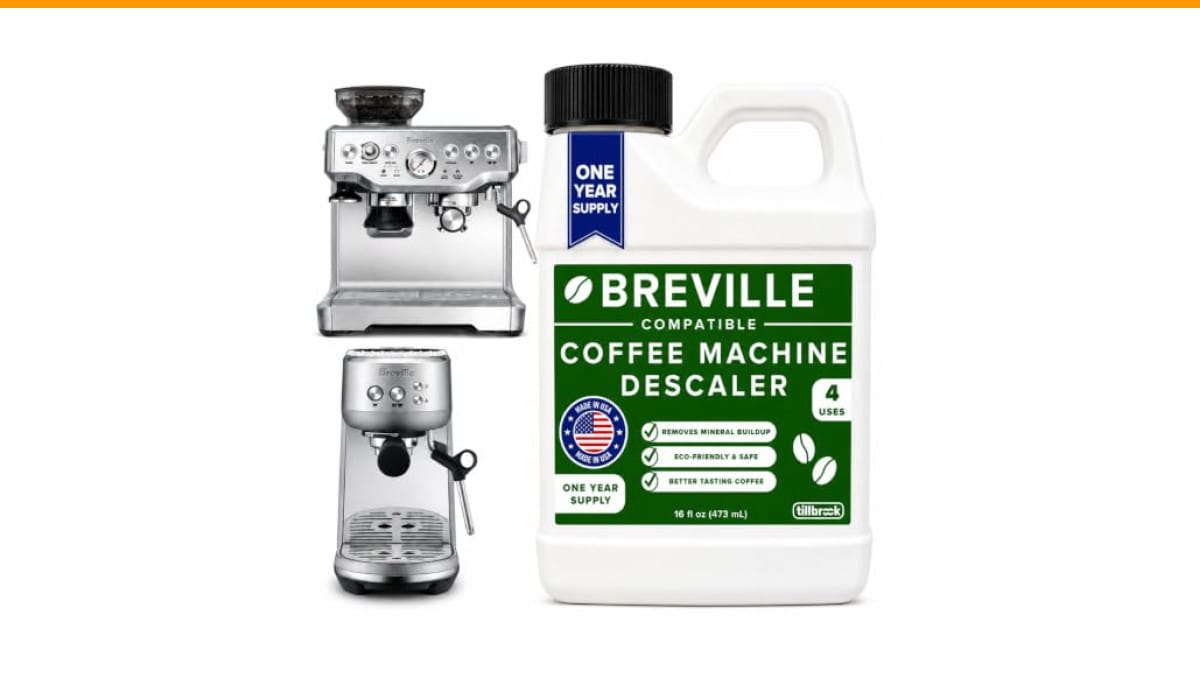
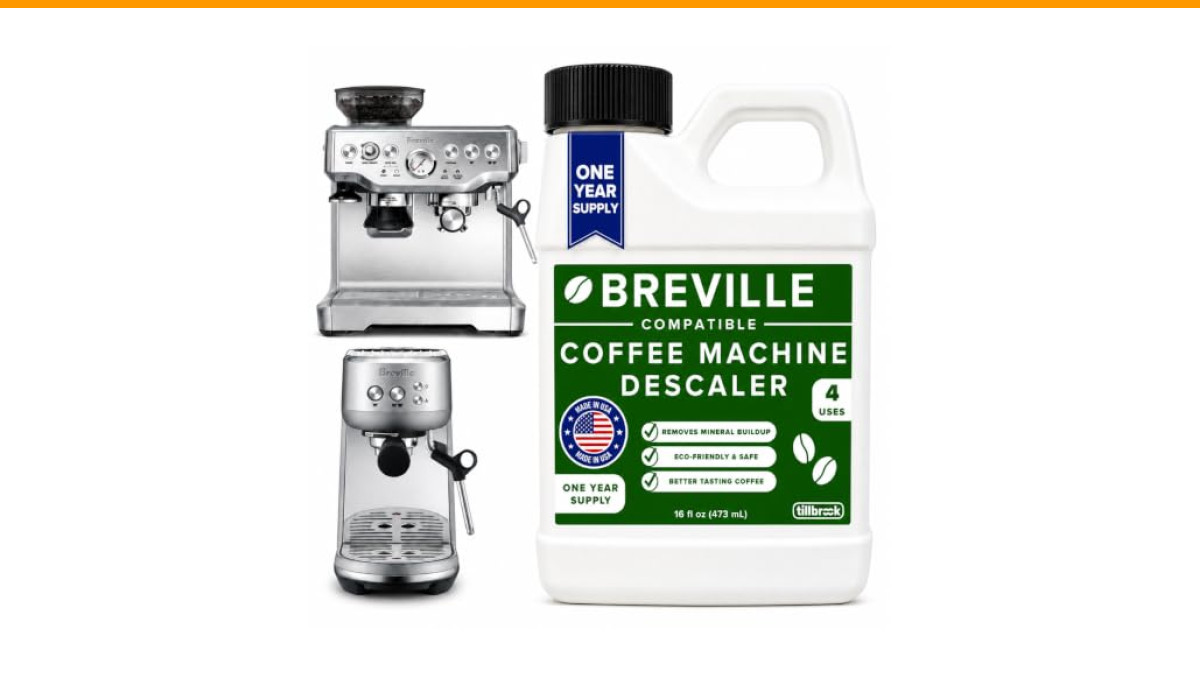
If you are looking for a solid descaler to start with, the Tillbrook Breville Compatible Descaler is a concentrated formula that handles four full cleanings per bottle. It is designed to dissolve mineral scale without leaving an aftertaste, which matters more than you think. You pour half a cup into the reservoir, fill the rest with water, run the cycle, and repeat with plain water twice.
The Daily Routine: 60 Seconds That Prevent 90% of Problems
Most espresso machine failures come from neglect, not wear. Coffee oils go rancid within a day. Milk residue turns into a crust that harbors bacteria. Your daily routine should be short and mechanical.
- Purge the group head. Before you pull a shot, run water through the portafilter for 3 seconds. This clears stale grounds from the last session and stabilizes temperature.
- Wipe the steam wand immediately. After steaming milk, purge the wand for 2 seconds to blow out milk that got sucked back in. Then wipe the tip with a damp cloth. Milk protein cooks onto metal fast, and once it bakes on, it is hard to remove.
- Knock out and rinse the portafilter. Empty the basket, then hold it under running water for 5 seconds. Do not use soap here; soap leaves a film that ruins crema.
- Run a blank shot. Lock in the empty portafilter and run water for 5 seconds. This flushes any loose grounds from the shower screen.
That is it. Less than one minute. If you do this every day, you will not need a deep clean as often, and your shots will taste noticeably cleaner. When owners skip this step for a week, the difference in flavor becomes obvious.
The Weekly Backflush: Removing Coffee Oils You Can’t See
Your espresso machine extracts coffee at around 9 bars of pressure. That pressure pushes oils and micro-fines into the shower screen and the three-way valve. Rinsing with water does not remove these. You need a backflush.
Backflushing means forcing water backward through the group head to wash out residue. You need a blind basket (a basket with no holes) and a mild espresso machine cleaner, usually called Cafiza or a similar brand. Do not use dish soap.
- Insert the blind basket into your portafilter.
- Add a small scoop of cleaner (about half a gram) to the basket.
- Lock the portafilter into the group head.
- Start the brew cycle for 10 seconds, then stop it.
- Wait 30 seconds for the solution to soak.
- Repeat the 10-second brew cycle 5 times.
- Remove the portafilter, rinse the basket, and run clean water through the group head for 10 seconds.
Do this once a week if you pull more than two shots a day. If you are a weekend-only brewer, every two weeks is fine. The shower screen will look clean, but the backflush gets the oil that hides behind it. You can see the difference if you remove the shower screen and inspect it after a month of skipped backflushes.
The Monthly Descaling: Protecting the Boiler and Pipes
Hard water is the silent killer of espresso machines. Minerals like calcium and magnesium build up inside the boiler and heating element. That scale acts like an insulator, so your machine has to work harder to heat water. It also narrows the pipes, reducing flow and pressure.
How often should you descale? It depends on your water hardness and how often you brew. The general rule is every 3 to 4 months, but here is a more practical test: if you see white flakes in your water reservoir or your shot pulls noticeably slower than it did a month ago, descale now.
You can use a commercial descaler like the Tillbrook formula or a citric acid solution. Do not use vinegar. Vinegar is acetic acid, which is too weak for heavy scale and leaves a smell that lingers for weeks. A proper descaler is formulated to dissolve scale fast without attacking rubber gaskets.
The process is straightforward but takes about 30 minutes:
- Remove the water filter if you have one.
- Fill the reservoir with the recommended descaler-to-water ratio (usually 1 part descaler to 4 parts water).
- Run the machine without a portafilter until the reservoir is half empty.
- Turn the machine off and let the solution sit for 15 minutes.
- Turn it back on and run the rest of the reservoir through.
- Fill the reservoir with fresh water and run two full tanks through to rinse.
One thing people miss: descale the steam wand too. While the solution is in the boiler, open the steam valve for 10 seconds to push fluid through the wand line. That clears scale from the narrow tube where it often hides.
If you are unsure whether your machine needs descaling, check our descaling guide for more detailed instructions on specific machine types.
Cleaning Schedule Comparison
Here is a practical schedule based on usage. Adjust it based on your water hardness; if you live in a hard water area, shift the descaling column earlier.
| Task | Light Use (1-2 shots/day) | Heavy Use (4+ shots/day) | Tools Needed |
|---|---|---|---|
| Purge group head | Daily | Daily | None |
| Wipe steam wand | Daily | Daily | Damp cloth |
| Rinse portafilter | Daily | Daily | Running water |
| Backflush | Every 2 weeks | Weekly | Blind basket, cleaner |
| Descale | Every 4 months | Every 3 months | Descaler solution |
| Replace group gasket | Every 12 months | Every 6-9 months | Replacement gasket |
| Deep clean shower screen | Monthly | Monthly | Screwdriver, cleaner |
That schedule has kept my test machines running well past the warranty period. The gasket replacement is the one step most owners skip, but a worn gasket causes leaks and pressure loss, which ruins extraction.
Common Mistakes That Shorten Machine Life
Even experienced owners make these errors. Avoid them and your machine will outlast your countertop.
- Using distilled water. Distilled water is corrosive to metal boilers because it has no minerals to buffer the pH. Use filtered tap water or a mix of tap and distilled.
- Leaving the portafilter locked in. Constant pressure on the group gasket flattens it. Leave the portafilter unlocked and resting in the cradle when not in use.
- Ignoring the drip tray. A full drip tray breeds mold and smells. Empty it daily, even if it is not full.
- Not replacing the water filter. If your machine has a charcoal filter, replace it every 60 days or 200 shots, whichever comes first. A clogged filter restricts flow.
One more thing: do not use a wire brush on the shower screen. It will scratch the metal and create rough spots where coffee clings. Use a soft nylon brush or a toothbrush.
Frequently Asked Questions
How often should I descale my espresso machine?
Every 3 to 4 months for most home users. If you have hard water, move it to every 2 months. If you use a water softener or filtered water, you can stretch it to 6 months. Watch for slower flow or white flakes; those are early signs of scale.
Can I use vinegar to descale my espresso machine?
You can, but you should not. Vinegar is acetic acid, which is too weak for heavy scale and can damage rubber seals over time. The smell also lingers in the boiler and ruins the taste of your next few shots. A dedicated descaler costs a few dollars and works faster.
Why does my espresso taste bitter or sour all of a sudden?
Usually it is dirty equipment, not bad beans. Rancid coffee oils on the shower screen add a bitter, ashy flavor. If you have not backflushed in a while, do that first. Then check your grind size and dose. If the taste does not change after cleaning, the problem is your water temperature or pressure, which may need professional calibration.
Do I need to backflush if I use a single boiler machine?
Yes, but less often. Single boiler machines like the Gaggia Classic still have a three-way valve that gets clogged with oil. Backflush every 2 to 4 weeks. The process is the same; just make sure you run the pump in short bursts so you do not overheat the boiler.
Is it okay to run descaling solution through the steam wand?
Yes, and you should. The steam wand line is a narrow tube where scale builds up fast. When you descale the boiler, open the steam valve for 10 seconds to push solution through the wand. Then flush with fresh water the same way. This prevents steamed milk from having a metallic taste later.
What to Do When Things Go Wrong
If you notice your machine making loud noises or leaking water, do not panic. These are often symptoms of scale buildup or a worn gasket, both of which you can fix at home. Loud sputtering usually means air in the line or a clogged pump inlet, which a descale often resolves. Leaks around the group head almost always mean the gasket is flat and needs replacing.
For a full breakdown of troubleshooting steps, see our maintenance guide that covers long-term care for all coffee machines.
Simple Habits That Keep Your Machine Running
- Purge the group head and wipe the steam wand after every single use. Do not skip this, even when you are in a hurry.
- Backflush weekly if you brew daily. Use a blind basket and a proper cleaner, not dish soap.
- Descale every 3 to 4 months with a real descaler, not vinegar. Mark it on your calendar.
- Replace the group gasket once a year. It is a $10 part that prevents leaks and pressure loss.
- Empty and rinse the drip tray daily to prevent mold and odors.
- Use filtered water, not distilled. Balanced minerals protect the boiler and improve extraction.
- If you are unsure about your water hardness, buy a cheap test strip. It takes 30 seconds and tells you exactly how often to descale.
Maintenance is not glamorous, but it is the difference between a machine that lasts 3 years and one that lasts 15. Your espresso quality depends on it. Start with the daily routine today; the rest follows.
Products related to this article
Sponsored / affiliate links. As an Amazon Associate I earn from qualifying purchases. I may earn additional commission from eligible campaigns.
 Coffee Espresso Machine Handle Replacement Parts, Cafe Bracket Handle for Lidl Silvercrest CM4621 CM4218 KF5002 KF500S Barista (for 51mm Portafilter Basket - Not included)
 Linnkyfloa Coffee Espresso Maker Handle Replacement for Stovetop Moka Pot or Percolator, Black Plastic for Spare Part Compatible with Italian(9-12 Cup)
 HomeBeyond Espresso Coffee Maker 12 Cups, Classic Stovetop Espresso Maker, 600ml / 20oz Coffeemaker for Gas & Ceramic Stovetops (Silver)