You bought a compact 4-cup coffee maker to simplify mornings. Then one day the brew cycle takes twice as long, and your coffee tastes faintly of yesterday’s grounds. That’s not a machine failure. It’s a buildup problem.
Small coffee makers get dirtier faster than full-size models. They use the same heating element and water lines in a tighter chassis. Less water flows through, so mineral deposits and coffee oils concentrate quicker. Most owners wait until something tastes wrong before cleaning. By then, the scale has already started working against the machine.
This guide gives you a practical schedule for small machines. You’ll learn exactly when to rinse, wash, and descale. You’ll also see how your tap water changes that schedule, and why a commercial descaler often beats vinegar.
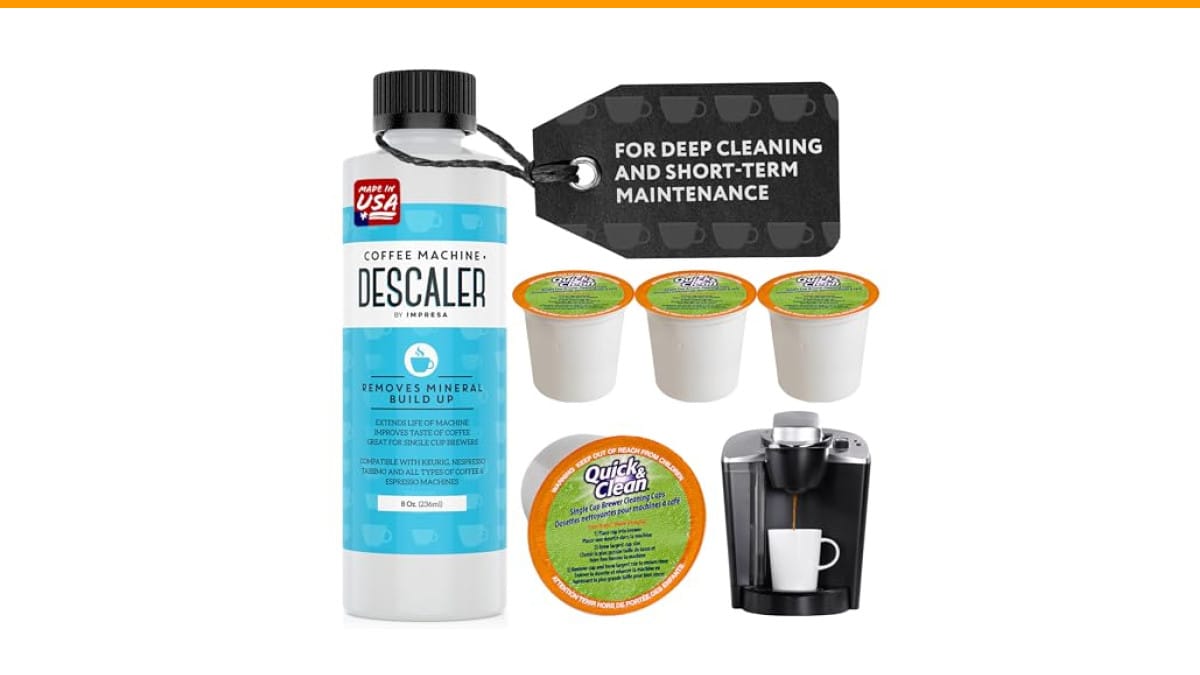
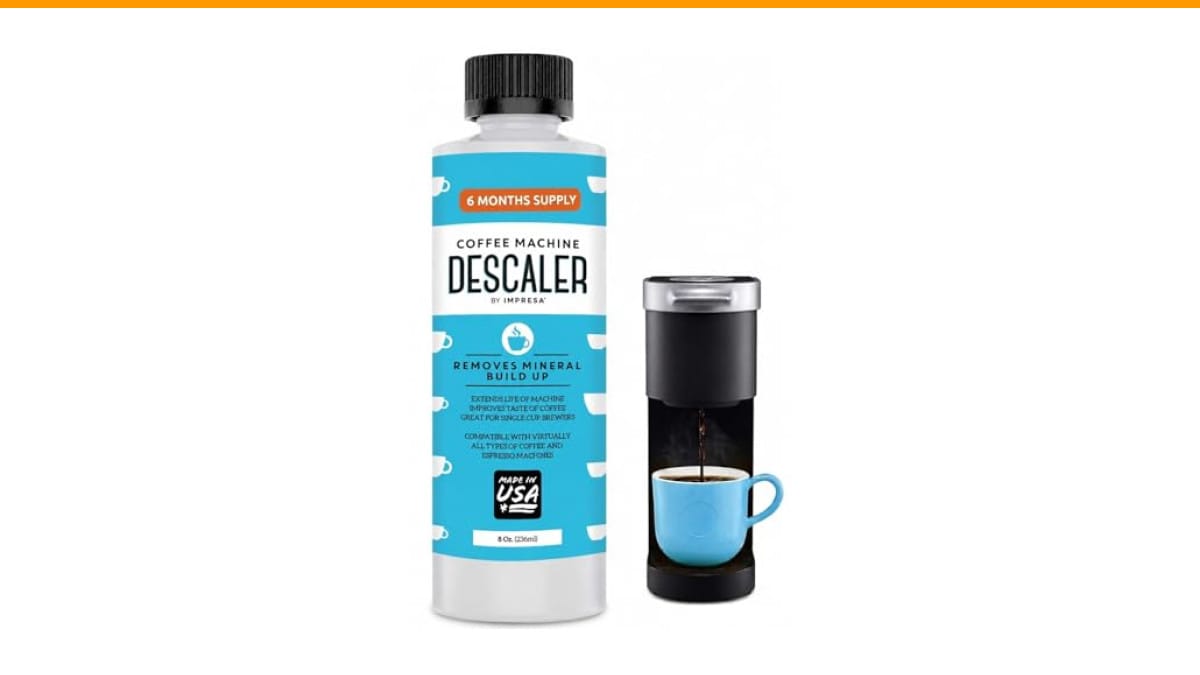
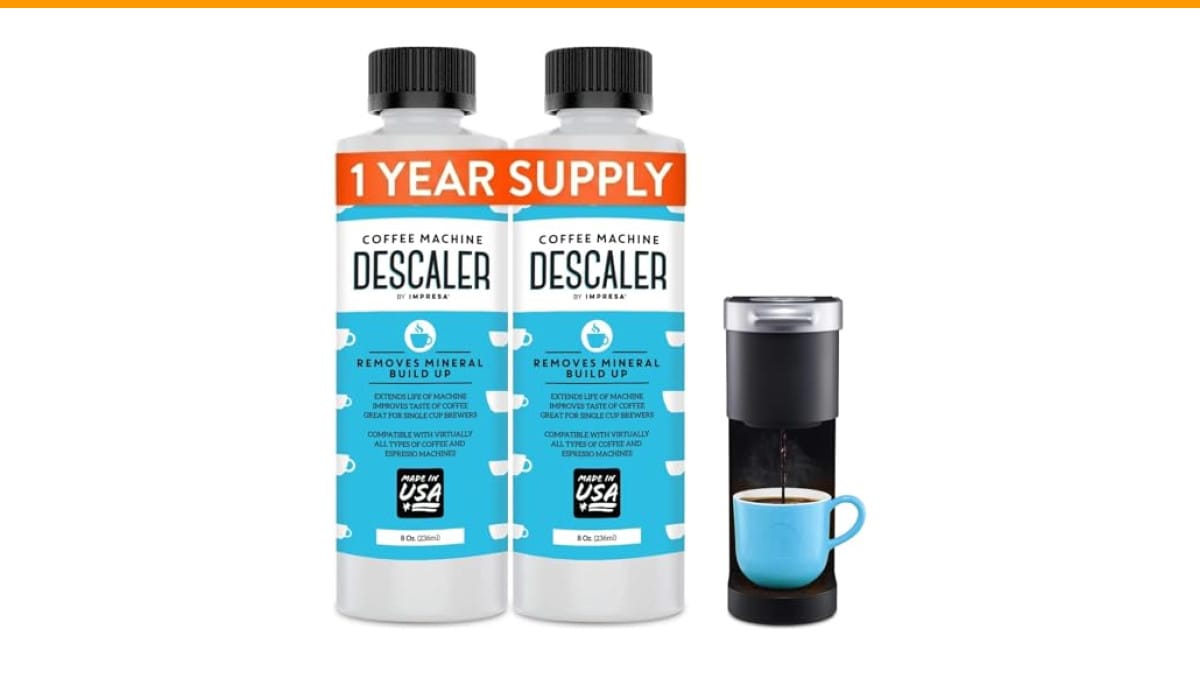
If you’re tired of scrubbing or want a product that handles the heavy lifting, the IMPRESA Coffee Machine Descaler is a solid choice. It comes as a 2-pack, and each 8-ounce bottle does two descaling sessions. That covers about a year of regular maintenance for most compact machines.
Why a Small Coffee Maker Gets Dirty Faster
Think about the geometry. A 4-cup machine has a smaller reservoir, a shorter water line, and a compact heating block. Scale and coffee oils have less surface area to spread across, so they pile up in the same spots. You’re essentially brewing in a smaller pipe with the same mineral load.
There’s another factor: small machines often sit unused for parts of the day. Water sits in the reservoir, and any remaining moisture in the brew basket turns into a breeding ground for bacteria. A full-size machine that gets used constantly flushes itself more often. Your compact model doesn’t have that luxury.
So the honest answer to how often to clean a small coffee maker is: more often than you think. Daily rinsing, weekly washing, and monthly descaling are the baseline. But water hardness changes that math, which we’ll cover in a moment.
The Real Cleaning Schedule (Daily, Weekly, Monthly)
Here’s the schedule I use with my own 5-cup machine. It keeps the coffee tasting fresh and the brew time consistent.
Daily: The 30-Second Rinse
After your last cup, pop out the brew basket and rinse it under hot tap water. Swish the carafe with water, no soap needed. This takes 30 seconds and prevents coffee oils from hardening into a sticky film.
If you use a pod or single-serve machine, run a water-only cycle at the end of the day. That flushes grounds and oils from the internal needle and line. Skip this for a week and you’ll taste the difference.
Weekly: The Brew Basket and Carafe Wash
Once a week, wash the brew basket and carafe with warm soapy water. Use a soft sponge. Avoid abrasive scrubbers—they scratch plastic, and scratches become hiding spots for residue.
Check the drip tray too. It collects overflow and stray drips. A quick wipe with a damp cloth keeps mold from forming in the corners.
Monthly: The Vinegar Descale
Every four weeks, run a descaling cycle. The classic method: mix equal parts white vinegar and water, fill the reservoir, and run a full brew cycle. Then run two cycles with plain water to rinse out the vinegar taste.
This removes limescale from the heating element and internal lines. It’s the single most important step for machine longevity. If you skip it, scale builds up and eventually restricts water flow.
How Hard Water Changes Your Cleaning Frequency
Your tap water is the biggest variable in this entire equation. Hard water contains calcium and magnesium. When heated, those minerals precipitate out and stick to the heating element as limescale.
If you live in an area with hard water (most of the Midwest and Southwest), you’ll need to descale every 3 to 4 weeks. Soft water areas can stretch that to every 6 to 8 weeks. You can check your water hardness with a simple test strip from a hardware store, or just look at your kettle—if it has white crust, your water is hard.
Here’s a rough guide based on water type:
| Water Type | Descale Frequency | Signs to Watch For |
|---|---|---|
| Soft water | Every 6-8 weeks | Minimal scale, normal brew time |
| Moderately hard | Every 4-6 weeks | Slower brew, faint white film in carafe |
| Very hard | Every 2-4 weeks | Visible scale on heating element, bitter taste |
Using filtered water reduces scale buildup significantly. A simple pitcher filter can double the time between descaling sessions. It’s worth the small investment if your tap water is hard.
Step-by-Step: Deep Cleaning Your Compact Machine
Once a month, do a deeper clean than the vinegar cycle. This targets the parts vinegar alone can’t reach.
Cleaning the Reservoir and Internal Lines
Remove the water reservoir if it’s detachable. Wash it with warm soapy water, then rinse thoroughly. Use a bottle brush to scrub the inside corners where slime tends to form.
For the internal lines, run a cycle with a descaling solution, then follow with two plain water cycles. This pushes the solution through the entire water path, not just the reservoir. If your machine has a removable water line, soak it in warm soapy water for 15 minutes.
Descaling the Heating Element
The heating element sits at the bottom of the water chamber. You can’t see it in most compact machines, but you can treat it. Fill the reservoir with the descaling solution and run a full cycle. Let the machine sit for 30 minutes, then run another cycle. The soak time lets the acid break down stubborn scale.
Skip the soak and you only remove surface deposits. The deep crust stays put and keeps insulating the element, which wastes energy and shortens the machine’s life.
5 Signs Your Coffee Maker Is Begging for a Clean
You don’t have to guess. Your machine gives you clear signals.
- Brew time increases. If a full pot takes noticeably longer than when it was new, scale is restricting water flow.
- Odd taste or smell. Stale coffee oils and mineral buildup change the flavor. If your coffee tastes bitter or metallic, it’s not the beans.
- Visible film in the carafe. A cloudy or oily residue that doesn’t rinse off means oils have polymerized.
- White flakes in your cup. Those are pieces of limescale breaking off the heating element. That’s a strong sign you’re overdue.
- Steam or sputtering during brewing. A partially blocked line causes erratic water flow. This is the machine working harder than it should.
Vinegar vs. Commercial Descaler: Which Wins?
Vinegar works. It’s cheap, available, and effective at dissolving light scale. But it has downsides. The smell lingers, and if you don’t rinse thoroughly, your coffee tastes like salad dressing for a week. Vinegar can also degrade rubber seals over time with repeated use.
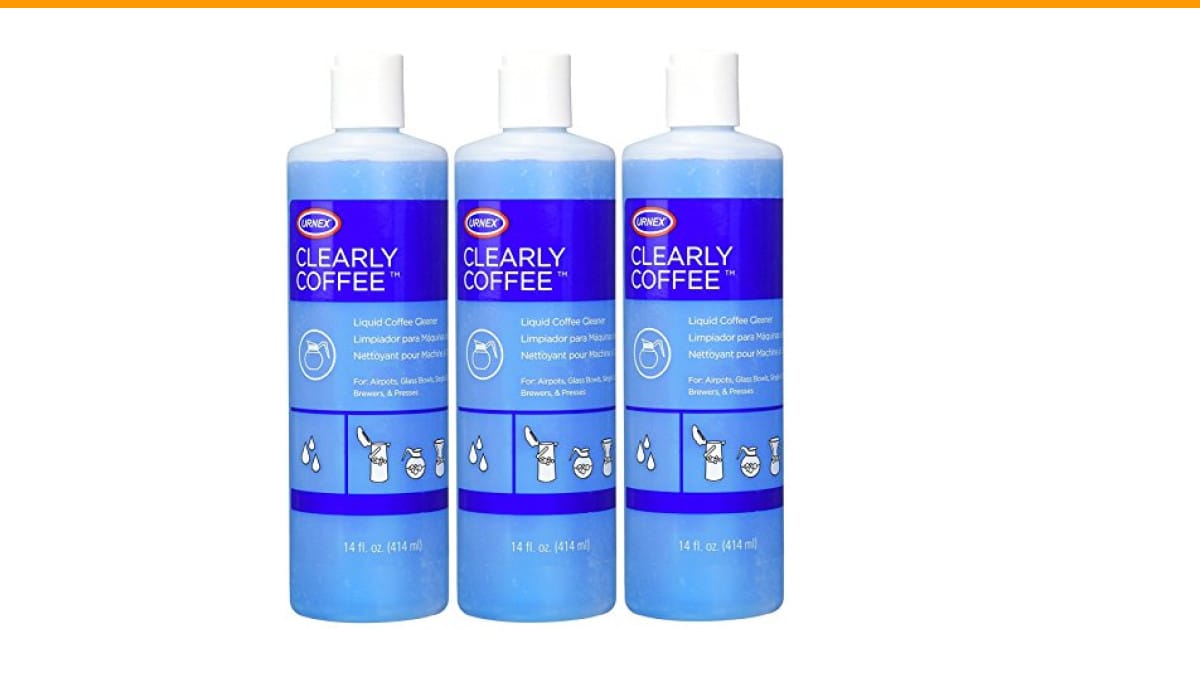
Commercial descalers like the IMPRESA descaler use food-grade acids formulated to dissolve scale without attacking machine components. They’re also faster—most need just one cycle with no lingering odor. The trade-off is cost. A bottle runs a few dollars per descaling session, which is still cheaper than replacing a machine prematurely.
Here’s a side-by-side comparison:
| Method | Cost per Session | Effectiveness | Downsides |
|---|---|---|---|
| White vinegar | Pennies | Good for light scale | Strong smell, rubber degradation risk |
| Citric acid powder | ~$0.50 | Good, no smell | Needs careful measuring |
| Commercial descaler | $2-4 | Excellent, fast | Higher cost per session |
My honest take: vinegar is fine for a quick fix, but a commercial descaler is better for regular maintenance. The convenience and lack of smell make it easier to stick to the schedule. And since the IMPRESA 2-pack covers four sessions, one purchase gets you through a year of monthly descaling.
Quick Maintenance Habits to Prevent Gunk Buildup
Small habits make a big difference. Here are the ones I’ve found most effective:
- Empty the carafe right after brewing. Don’t let coffee sit and evaporate, leaving oils behind.
- Leave the lid off the reservoir after use. This lets moisture escape and prevents mold growth.
- Use filtered water. It cuts mineral buildup by a significant margin.
- Run a water-only cycle before your first cup if the machine sat unused for more than a day. This flushes stale water from the lines.
- Wipe the exterior and drip tray weekly. It’s not just cosmetic—it prevents sticky residue from attracting pests.
These habits don’t replace the monthly descale, but they extend the time between deep cleans and keep your coffee tasting fresh. For more on the basics, check out our guide on cleaning coffee makers. If you’re dealing with a slow machine, the clogged coffee maker fix is worth reading.
Final Verdict: The Simple Rule to Remember
Here’s the rule I tell everyone: rinse daily, wash weekly, descale monthly. Adjust the descale interval based on your water hardness. If you see any of the five warning signs, clean immediately, regardless of the calendar.
Small coffee makers are forgiving, but they’re not indestructible. A few minutes of maintenance each week saves you from buying a new machine every year. And when you do descale, use a product you trust. The IMPRESA 2-pack has been reliable in my testing—it dissolves scale quickly and leaves no aftertaste.
One last thing: don’t obsess over perfection. Missing a week won’t ruin your machine. But ignoring it for months will. Set a reminder on your phone for the first of each month. That’s all it takes.
How often should I descale a Keurig mini?
Keurig minis have a smaller water line, so they clog faster. Descale every 3 to 4 weeks if you use tap water. If you use filtered water, every 6 weeks is fine. The machine will also show a red light when it’s time.
Can I use vinegar in a small coffee maker?
Yes, but dilute it 50/50 with water. Run a full cycle, let it sit for 30 minutes, then run two to three plain water cycles to rinse. The vinegar smell can linger, so open a window. For a cleaner option, use a commercial descaler.
Why does my small coffee maker brew slower after a few months?
That’s almost always limescale buildup on the heating element. Scale acts as an insulator, so the water takes longer to reach brewing temperature. The machine also has to work harder, which wastes energy. A descale cycle usually fixes it within 20 minutes.
Is it safe to run a descaling solution through a machine with plastic parts?
Most commercial descalers are formulated to be safe for plastic and rubber components. Check the label to be sure. Vinegar is safe for most plastics but can degrade rubber seals over time. If your machine is old, inspect the seals for cracks before descaling.
Do I need to clean a coffee maker if I only use it once a week?
Yes, and actually more carefully. A machine that sits unused for days develops stale water and potential mold in the reservoir. Rinse the reservoir before each use, and run a water-only cycle to flush the lines. Descale every 6 to 8 weeks, since scale still forms even with infrequent use.
Products related to this article
Sponsored / affiliate links. As an Amazon Associate I earn from qualifying purchases. I may earn additional commission from eligible campaigns.
 HomeBeyond Espresso Coffee Maker 12 Cups, Classic Stovetop Espresso Maker, 600ml / 20oz Coffeemaker for Gas & Ceramic Stovetops (Silver)
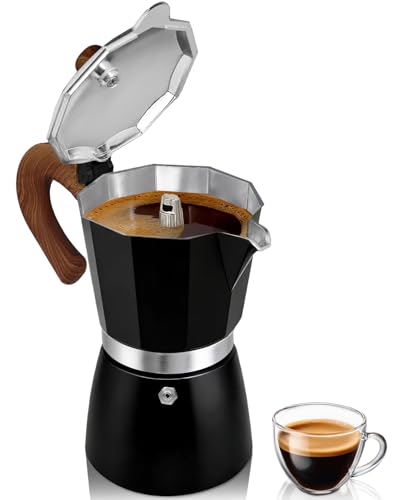 Belly Moka Coffee Maker Stovetop Espresso Maker 9 Cup Aluminum Moka Pot Percolator 15oz 450ml Easy Brewing for Electric Ceramic Stoves Home Camping Italian Cuban Café Classic Black
 Belly Moka Coffee Maker Stovetop Espresso Maker 6 Cup Aluminum Moka Pot Percolator 10oz 300ml Easy Brewing for Electric Ceramic Stoves Home Camping Italian Cuban Café Classic Silver