You pull a shot, and it comes out in a thin, pale stream. The crema is barely there, and the coffee tastes sour and weak. You check your grind, your dose, your water temperature. Everything looks right. But the shot still fails. Nine times out of ten, the problem is the puck. And the puck problem usually comes down to one thing: you skipped the tamp.
This article covers what a tamper actually does, whether you can get away without one, and how to pick the right tool for your home setup. You’ll learn the mechanics behind tamping, when it truly matters, and when you might be able to skip it. By the end, you’ll know exactly whether that round metal disc deserves a spot on your counter.

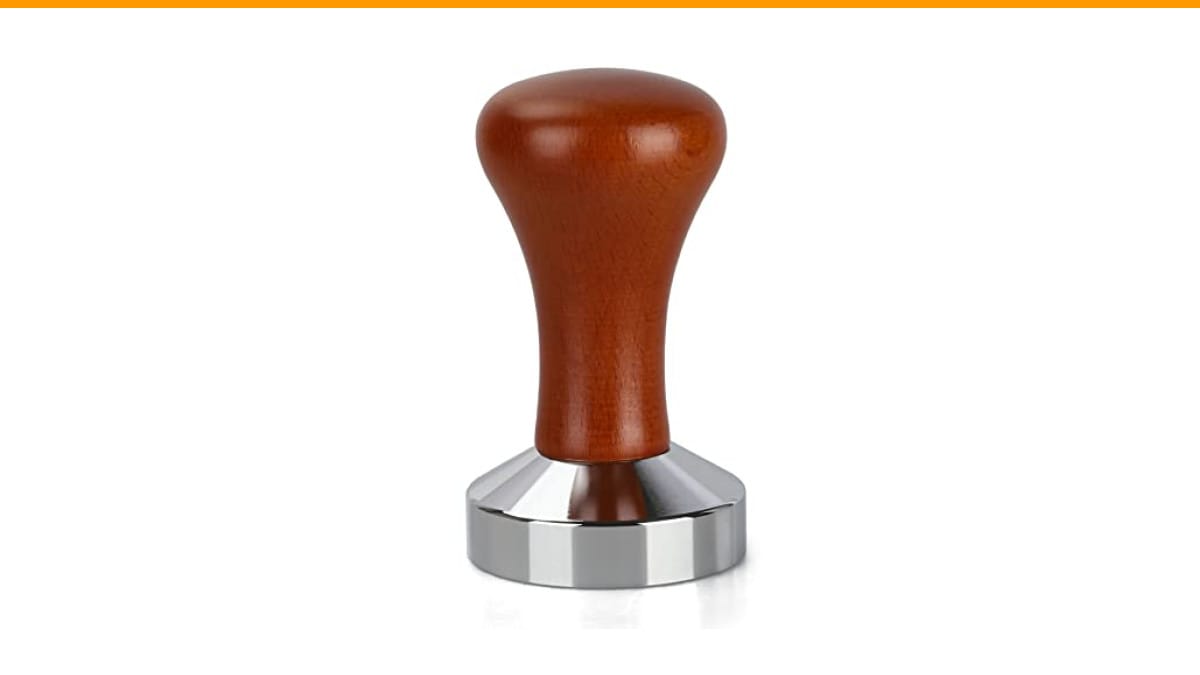
WYLOSUA
51mm Espresso Tamper-Premium Barista Coffee Tamper Coffee…
- THE DIAMETER OF THIS TAMPER IS 51MM - please check that this will fit your filter basket before purchasing.Fits all 51mm Commercia…
- UNIQUE DESIGN - The tamper has an exquisite appearance, Stainless steel design, the handles were ergonomically designed to ensure…
- PROFESSIONAL HANDMADE - Due to the high quality of the steel espresso control, the tamper has an ideal size and weight, because of…
As an Amazon Associate I earn from qualifying purchases.
For most home machines with a 51mm portafilter, a dedicated tamper makes a measurable difference in shot consistency. The WYLOSUA 51mm Espresso Tamper is a solid option for those machines, offering a flat stainless steel base and a solid wood handle that gives you a comfortable grip for even pressure.
What Tamping Actually Does to Your Coffee
Tamping compresses the ground coffee into a uniform puck. That’s the simple version. The real job is more specific: it removes air pockets and creates a flat, dense surface that the pressurized water hits evenly.
When water hits an uneven or loosely packed bed of coffee, it finds the path of least resistance. It channels through cracks and thin spots, over-extracting those areas while under-extracting the rest. The result is a shot that tastes both bitter and sour at the same time, with thin body and weak crema.
A proper tamp forces the water to push through the entire bed uniformly. The puck acts like a solid plug, and the pressure builds evenly across its surface. This is why the flatness of your tamper base matters more than the force you apply. A slightly convex base will always produce a slightly uneven puck, no matter how hard you press.
Think of it like packing snow for a snowball. A loose handful falls apart. A tightly packed ball holds its shape and melts evenly. Coffee works the same way, except you’re dealing with 9 bars of pressure instead of your mittens.
Can You Skip Tamping Entirely?
Some machines try to solve this problem for you. Pressurized portafilter baskets, common on entry-level machines like the De’Longhi EC155 or the Breville Bambino, use a single small hole in the basket instead of many tiny ones. The basket itself builds the pressure, so the coffee bed doesn’t need to be as dense.
With a pressurized basket, you can get a passable shot with zero tamping. The plastic insert does the work. But passable isn’t the same as good. The crema you get is mostly artificial, created by the pressure jet, not by proper extraction of the coffee oils.
If you’ve upgraded to a non-pressurized (bottomless) basket — which most enthusiasts do eventually — tamping becomes non-negotiable. Without it, water will blow straight through the loose grounds in under ten seconds. Your shot will be undrinkable.
So the honest answer to is a espresso tamper necessary depends on your basket. Pressurized basket? You can get by without one. Non-pressurized basket? You need one, and you need one that fits properly.
Choosing the Right Tamper Size and Type
Tamper diameter must match your basket’s internal diameter. Most home machines use either 51mm or 54mm baskets. Commercial machines use 58mm. Using a tamper that’s even a millimeter too small leaves a ring of untamped coffee along the basket wall. That ring causes channeling every single time.
Measure your basket before buying. A cheap set of calipers costs less than a bag of coffee and gives you the exact interior diameter. Don’t trust the machine’s spec sheet — some brands list the outer basket size, not the inner diameter.
Here’s a quick comparison of the common tamper types you’ll see:
| Tamper Type | Base Material | Best For | Trade-off |
|---|---|---|---|
| Standard flat | Stainless steel | Most home users | Requires consistent technique |
| Self-leveling | Stainless steel with leveling ring | Beginners or inconsistent tamps | Bulkier, harder to store |
| Calibrated (spring-loaded) | Steel with internal spring | Those who want exact pressure every time | More expensive, mechanical parts can wear |
| Convex base | Steel with curved face | Older style, some commercial baristas | Produces uneven pucks, not recommended |
The WYLOSUA tamper uses a flat stainless steel base, which is the right choice for modern espresso. Flat bases distribute pressure evenly across the full diameter of the basket. The solid wood handle gives you a firm grip, which matters more than you’d think when you’re trying to keep your wrist straight.
How to Tamp Correctly, Step by Step
Good technique matters more than expensive gear. Here’s the process I use and recommend:
- Distribute first. After grinding into the portafilter, tap the side gently to settle the grounds, then use a finger or a distribution tool to level the surface. Uneven grounds before tamping mean an uneven puck after.
- Set the tamper flat. Rest the base on the coffee bed. Your elbow should be directly above your wrist, and your wrist straight. This alignment prevents angled tamps.
- Press straight down. Apply firm, steady pressure for about 10-15 pounds. You don’t need to use maximum force. Consistency matters more than brute strength.
- Twist to polish. Give the tamper a quarter turn while still pressing. This smooths the surface and releases any suction that might lift the puck.
- Check the puck. It should be flat, dry on top, and level with the basket rim. If it’s slanted, dump it and start over. A bad tamp ruins the shot.
Pro tip: use the same pressure every time. If you have a bathroom scale, practice pressing on it until you can reliably hit 15 pounds by feel. Your future shots will thank you.
One thing I learned the hard way: don’t press so hard that you twist your wrist. A common mistake is pushing down and twisting at the same time, which creates a shearing effect that cracks the puck. Press first, then twist.
Common Tamping Mistakes and How to Fix Them
Even with the right tamper, people mess this up. Here are the three mistakes I see most often:
Mistake 1: Tamping at an angle. If your wrist isn’t straight, one side of the puck gets more pressure. Water channels through the thin side. Fix it by checking your posture before every tamp — elbow up, wrist locked.
Mistake 2: Using a tamper that’s too small. A 51mm tamper in a 54mm basket leaves a gap. That gap is where channeling starts. Measure your basket and buy the exact size. The WYLOSUA tamper is built for 51mm baskets, which covers machines like the Delonghi EC685 and the older Gaggia Carezza.
Mistake 3: Not leveling the grounds before tamping. If there’s a mountain of coffee on one side, your tamp just compresses that mountain. The flat side stays loose. Level the bed first with a quick tap or a finger sweep.
Another common issue: tapping the portafilter too hard on the counter after tamping. That can crack the puck and undo all your work. Handle it gently when you lock it into the group head.
If your shots are consistently sour or bitter, check your tamp before you blame the beans. A quick fix to your technique often solves problems that a new grinder won’t. For more on diagnosing extraction issues, see our guide on why espresso tastes burnt.
Frequently Asked Questions
Is a espresso tamper necessary for a pressurized basket?
No. Pressurized baskets build pressure themselves, so tamping is optional. You’ll get a better shot if you do a light tamp to level the bed, but you don’t need force or a precise fit. Save the money if you’re happy with your current setup.
What happens if I don’t tamp at all?
With a non-pressurized basket, water hits the loose grounds and blows straight through. You’ll get a shot that pulls in 5-8 seconds, tastes sour and thin, and has almost no crema. With a pressurized basket, you’ll get a mediocre shot that’s drinkable but lacks depth.
How hard should I press when tamping?
Aim for 10-15 pounds of pressure. That’s about the same as lifting a gallon of milk. More force doesn’t extract more flavor — it just risks cracking the puck. Consistency from shot to shot matters far more than maximum pressure.
Does tamper material matter?
Yes, mostly for durability and feel. Stainless steel bases stay flat and resist corrosion. Wood handles absorb sweat and provide grip, but they need occasional oiling. Plastic tampers flex and wear out quickly. The WYLOSUA’s stainless base and wood handle are a practical combo for daily use.
Can I use a 58mm tamper on a 51mm machine?
No. A 58mm tamper won’t fit inside a 51mm basket at all. Conversely, a 51mm tamper in a 58mm basket leaves a huge gap and makes a mess. Always match the tamper to your basket’s interior diameter. When in doubt, measure it.
What to Remember Before You Buy
Tamping is one of the few skills in espresso that costs nothing to learn but pays off in every cup. You don’t need a $100 calibrated tamper to make great coffee at home. You need a flat base, the right size, and a steady hand.
- Non-pressurized baskets require a tamper. No exceptions.
- Pressurized baskets work without one, but a light tamp still helps.
- Match the tamper diameter to your basket’s inner diameter — measure it.
- Flat bases beat convex ones for even extraction.
- Use 10-15 pounds of pressure, straight down, with a level wrist.
- Level the coffee bed before you tamp, and check the puck after.
- A solid wood handle and stainless base, like the WYLOSUA, offer durability without breaking the bank.
If you’re still deciding between machine types, check our comparison of automatic vs semi-automatic machines to see which one fits your workflow. And if you’re shopping on a budget, our list of automatic espresso machines under $1000 might point you in the right direction.
Products related to this article
Sponsored / affiliate links. As an Amazon Associate I earn from qualifying purchases. I may earn additional commission from eligible campaigns.
 Coffee Espresso Machine Handle Replacement Parts, Cafe Bracket Handle for Lidl Silvercrest CM4621 CM4218 KF5002 KF500S Barista (for 51mm Portafilter Basket - Not included)
 AirheadStorm Coffee Espresso Moka Stove Pot Handle, Mocha Pot Handle, Moka Express Handle Replacement Handle Parts for Espresso Pots 1 3 6 9-12 Cups(6 Cup)
 Quick Heating Cup Warmer, Three Temperature Settings, Splashproof and Portable, for Coffee, Milk, Lightweight ABS Material