That first morning shot comes out thin, pale, and sour. You knock the portafilter out, check the basket, and everything looks fine. But the machine is doing something it shouldn’t. This happens to almost every home barista at some point. The machine isn’t broken. It’s just telling you something.
This guide walks through the most common problems with semi-automatic espresso machines: weak shots, no pressure, leaks, and strange noises. You’ll learn what causes each issue, how to test for it, and what to fix first. Most solutions take under ten minutes and don’t require a repair technician.

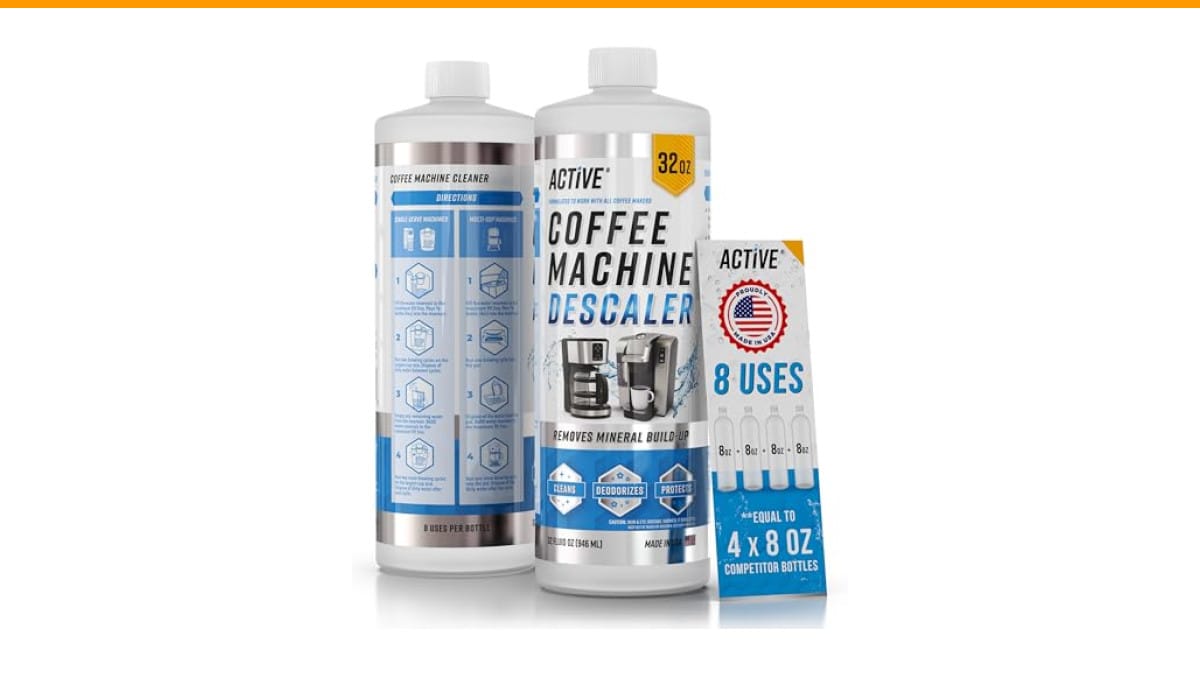
ACTIVE
ACTIVE Coffee Machine Descaler Descaling Solution -…
- 8 Uses Value-Size Bottle: Same as 4 x 8oz bottle kit of other products! Less Waste, Better Value!
- Works with All Coffee Machines: Our Coffee Maker Descaler is compatible with Nespresso pod and K-cup brewer, multi-cups drip coffe…
- Descaling and Cleaning Formula: ACTIVE Coffee Descaler and Cleaner, a natural Calcium & Scale Remover. Compare to Descaling Tablet…
As an Amazon Associate I earn from qualifying purchases.
Before diving into parts and pressure, let’s address one thing that causes more issues than any worn gasket: scale buildup. Hard water leaves calcium deposits inside the boiler and brew head. That scale restricts water flow, messes with temperature stability, and ruins extraction. A regular descale prevents roughly 70% of the problems described below. We use ACTIVE Coffee Machine Descaler in our shop for this exact purpose. It’s a liquid citric acid solution that dissolves scale in semi-automatic machines, and one 32oz bottle covers eight descaling cycles. That’s about a year of maintenance for most home users.
Why Is My Shot Coming Out Too Fast or Too Slow?
You timed the shot. It hit 25 seconds. But the espresso tastes hollow and thin. Or it took 45 seconds and came out dark, bitter, and oily. Both extremes point to the same core issue: grind size and dose.
Your grinder is the most important tool in this setup. The machine just pushes water through coffee. The grinder controls how much resistance that water meets. If the shot runs too fast (under 20 seconds), the grind is too coarse. If it drips painfully slow (over 35 seconds), the grind is too fine.
Adjust in small steps. Change the grind setting by one notch. Pull another shot. That single adjustment makes a bigger difference than anything else you can do. Also check your dose. A standard double basket holds 18 grams. If you’re at 14 grams, the water flows through too quickly, no matter how fine you grind.
One more thing: stale beans. Coffee degrades noticeably after three weeks past roast date. Old beans produce weak crema and fast shots because they’ve lost the oils that create resistance. If your beans are older than a month, get fresh ones before you touch the grinder.
So the fix order is: fresh beans, correct dose, then grind adjustment. Most people skip straight to grinding and chase their tails.
No Pressure or Very Low Pressure During Extraction
You lock in the portafilter, hit the brew button, and water just trickles out with no force behind it. The pump sounds like it’s running, but nothing builds up. This usually means one of three things.
First, check the portafilter basket. Is it blocked? Old coffee oils and fines can clog the tiny holes over time. Soak the basket in hot water with a drop of dish soap for ten minutes, then scrub with a stiff brush. That clears most blockages.
Second, the group head gasket might be worn. That rubber ring seals the portafilter against the group head. When it hardens or flattens, water escapes around the edges instead of pushing through the coffee. You’ll see water dripping down the sides of the portafilter during extraction. Replace the gasket — they cost about ten dollars and last a year or two.
Third, the pump itself could be weak. Semi-automatic machines use a vibration pump rated for 15 bars maximum, but they typically operate around 9 bars. If the pump is failing, you’ll hear it struggling or making an unusual whine. Pump replacement is more involved; it’s usually a $50 part and takes about an hour with basic tools.
If you’re dealing with a loud machine, check our guide on loud espresso machine issues before assuming the pump is dead. Sometimes it’s just air in the line.
Water Leaking From the Bottom or Around the Group Head
Puddles under the machine are annoying, but they’re almost never catastrophic. The most common source is the three-way solenoid valve. This valve releases pressure from the group head after you stop the shot. When it gets clogged with coffee residue, water backs up and drips out the bottom.
Here’s a simple test. Pull a shot, then stop it. Listen for a quick whoosh sound — that’s the solenoid releasing. If you don’t hear it, or if water keeps dripping from the group head for more than a few seconds, the solenoid likely needs cleaning. You can backflush with water and a blind basket to clear it. That’s the cheap fix. If backflushing doesn’t solve it, the solenoid may need to be disassembled and soaked in descaling solution.
Another leak source is a cracked or loose hose fitting inside the machine. Over time, the vibration from the pump loosens connections. Open the top panel and inspect all the push-fit connectors. Reseat any that are loose. This is a five-minute fix that most people never check.
Leaks from the steam wand are different. That’s usually a worn o-ring inside the steam valve. The wand should stop steaming completely when you close it. If it drips, the valve needs a new o-ring. It’s a common part and easy to replace.
For persistent leaks, our guide on espresso machine water leaks covers this in more detail.
Steam Wand Has No Pressure or Only Produces Water
You open the steam valve and get hot water instead of dry steam. Or the wand sputters and spits. This is one of the most frustrating issues because it makes latte art impossible.
The first thing to check is the steam tip. Milk residue and dried proteins clog the tiny holes. Remove the tip and soak it in hot water with a little detergent. Use a pin to poke through each hole. This is the most common fix and it takes two minutes.
If the tip is clean, the issue is likely scale inside the boiler. When calcium builds up on the heating element, the boiler can’t reach full steam temperature. The machine thinks it’s hot enough, but the water isn’t vaporizing properly. A thorough descaling cycle usually restores steam pressure. This is where a quality descaler matters — weak solutions don’t dissolve heavy scale.
One more possibility: the steam thermostat is out of calibration. Some machines have a separate thermostat for steam mode. If it’s stuck, the boiler overheats and triggers the safety cutout. You’ll get intermittent steam that stops after a few seconds. Replacing a thermostat is a straightforward job if you’re comfortable with a screwdriver.
Comparison Table: Common Semi-Automatic Problems and Fixes
| Symptom | Likely Cause | Difficulty | Time to Fix | Cost |
|---|---|---|---|---|
| Shot runs too fast, thin crema | Grind too coarse, low dose | Easy | 5 minutes | $0 |
| Shot runs too slow, bitter | Grind too fine, over-dosed | Easy | 5 minutes | $0 |
| No pressure during brew | Blocked basket, worn gasket | Easy to Moderate | 10-30 minutes | $0-$15 |
| Water leaking from bottom | Clogged solenoid, loose hose | Moderate | 20-60 minutes | $0-$50 |
| Weak steam, sputtering wand | Clogged tip, scale buildup | Easy | 10-20 minutes | $0-$20 |
| Machine vibrates excessively | Air in pump, loose mount | Easy | 10 minutes | $0 |
This table covers the daily issues. If you’re dealing with a dead machine that won’t power on, that’s usually a fuse, a tripped thermal switch, or a failed pump. Those need more investigation, but they’re still repairable at home.
How Often Should You Actually Descale?
This is the question everyone asks. The answer depends on your water hardness, not a calendar date. If you live in an area with hard water, descale every month. If you use filtered or soft water, every three months is fine.
You can test your water with simple strips from any hardware store. If the strips show high hardness, shorten your descale interval. Scale is the silent killer of espresso machines. It builds up slowly, and by the time you notice the symptoms, it’s already done damage.
Our descaling guide walks through the full process step by step. The short version: empty the reservoir, mix descaler with water per the instructions, run half through the brew head, let it sit for 15 minutes, then run the rest. Follow with two full reservoirs of fresh water to rinse thoroughly. Skipping the rinse step leaves a sour taste in your coffee.
Don’t use vinegar. It’s too weak for heavy scale and leaves a lingering smell. Use a proper citric-acid based descaler. Citric acid dissolves calcium faster and rinses clean. That’s what the ACTIVE descaler uses, and it’s why we recommend it for semi-automatic machines.
Frequently Asked Questions
Why does my espresso machine lose pressure after a few seconds?
This is usually a pump problem or a blocked flow path. If the pressure builds then drops, the pump might be overheating or the pressure stat is failing. Start by backflushing to clear any debris in the group head. If that doesn’t help, test the pump by running water without the portafilter. If flow is weak, the pump needs replacement.
Can I use regular coffee beans in a semi-automatic machine?
You can, but it won’t taste right. Semi-automatic machines need a fine, consistent grind that’s uniform in particle size. Pre-ground supermarket coffee is ground for drip machines — too coarse for espresso. You’ll get a fast, watery shot. Buy whole beans and grind them yourself, or find a local roaster who grinds for espresso specifically.
How do I know if my group head gasket needs replacing?
Look for water seeping around the portafilter during extraction. Also, if the portafilter locks in with very little resistance or feels loose, the gasket is worn. A fresh gasket should require a firm but comfortable turn to lock. Replace it if you see cracks, hardening, or flattening. They’re cheap and easy to swap.
Why does my espresso taste sour?
Sour taste means under-extraction. The water didn’t pull enough flavor out of the coffee. This happens when the shot runs too fast, water temperature is too low, or the dose is too small. Grind finer, increase your dose by a gram, and make sure the machine is fully heated before pulling the shot. Wait at least 20 minutes after turning it on, and run a blank shot through the portafilter to warm it up.
Is it normal for the machine to make hissing noises?
Some noise is normal. Vibration pumps hum, and the boiler makes occasional hissing sounds as steam pressure builds. But a continuous loud hiss or a rattling sound is not normal. That usually indicates air in the system or a loose internal component. Run water through the steam wand for a few seconds to purge air. If the noise persists, open the case and check for loose screws or mounts.
What to Do When Nothing Seems to Work
You’ve cleaned the basket, replaced the gasket, descaled, and adjusted the grind. The machine still misbehaves. Before you call a repair shop, do one last check: the water inlet filter. Many machines have a small mesh filter inside the reservoir or at the pump inlet. If that clogs, the pump starves for water and pressure drops dramatically. Pull it out, rinse it under hot water, and reinstall.
If that doesn’t fix it, check the brew pressure at the group head with a naked portafilter and a pressure gauge. You can buy a gauge that screws into the portafilter for about $20. If the pressure reads below 8 bars, the pump or the over-pressure valve is the culprit. The OPV is adjustable on many machines — a quarter turn can bring pressure back into spec.
One honest caveat: some machines are just not built to be serviced. If you’ve owned it for five years and the pump is failing, the repair cost might exceed half the price of a new machine. At that point, replacement makes sense. But try the cheap fixes first. Most problems are simple, and you’ll learn a lot about your machine in the process.
Quick Reference: The Fixes That Matter Most
- Grind fresh beans immediately before brewing. Stale coffee ruins everything.
- Dose by weight, not by volume. Use a scale for consistency.
- Backflush with water after every shot session. It takes 30 seconds.
- Descale every 1-3 months depending on water hardness.
- Replace the group head gasket at the first sign of leakage.
- Clean the steam wand tip weekly with a pin.
- Check the water inlet filter if pressure drops suddenly.
Most breakdowns are maintenance failures, not mechanical failures. The machine wants to work. It just needs clean water paths and a tight seal. Give it those two things and it’ll reward you with a decade of solid shots.
If you’re still getting inconsistent results, look at the bigger picture. The difference between a frustrating machine and a great one is usually the grinder. A $300 machine with a $500 grinder outperforms a $1000 machine with a cheap grinder. That’s the single best upgrade you can make.
And when you do get everything dialed in, keep the maintenance schedule going. Set a reminder on your phone for descaling. Future you will appreciate it.
Products related to this article
Sponsored / affiliate links. As an Amazon Associate I earn from qualifying purchases. I may earn additional commission from eligible campaigns.
 Coffee Espresso Machine Handle Replacement Parts, Cafe Bracket Handle for Lidl Silvercrest CM4621 CM4218 KF5002 KF500S Barista (for 51mm Portafilter Basket - Not included)
 Quick Heating Cup Warmer, Three Temperature Settings, Splashproof and Portable, for Coffee, Milk, Lightweight ABS Material
 Linnkyfloa Coffee Espresso Maker Handle Replacement for Stovetop Moka Pot or Percolator, Black Plastic for Spare Part Compatible with Italian(9-12 Cup)