You pull a shot one morning and something tastes off. Not sour, not bitter—just flat and slightly metallic. The flow from the portafilter looks thin, maybe a little uneven. Your first thought is the beans. But the beans are fresh. The grinder is clean. The real culprit is probably hiding inside the boiler and brew head: limescale.
Hard water leaves calcium deposits that coat the inside of your machine. Those deposits insulate the boiler, mess with temperature stability, and choke the small passages where water flows. If you ignore it long enough, you’ll be shopping for a new machine instead of just cleaning the one you have. This guide walks you through the entire descaling process for a semi automatic espresso machine—what to use, how often, and the exact steps to do it safely.

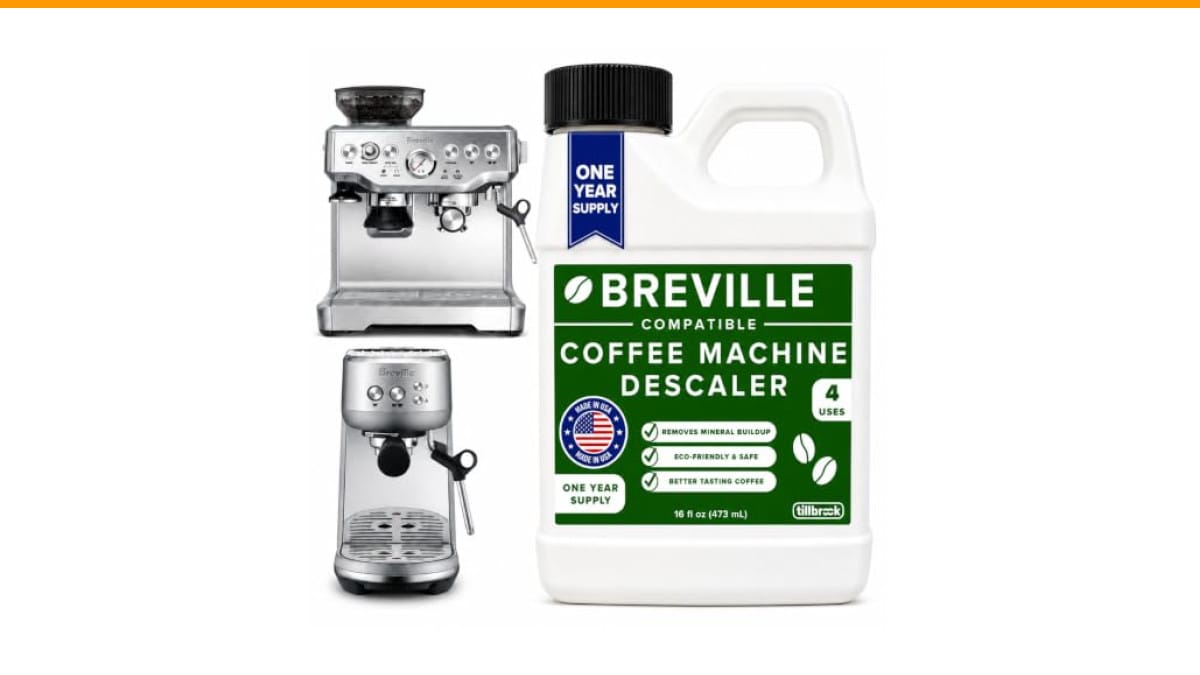
Tillbrook
Breville Espresso Machine Compatible Descaler, 4 Uses,…
- EXCEPTIONAL RESULTS: Introducing Tillbrook Coffee Machine Descaler specifically formulated for Breville—the best choice for removi…
- 1 YEAR SUPPLY: Our concentrated formula is easy to use and provides remarkable value with 4 cleanings per bottle. Simply add 1/2 c…
- SCIENTIFICALLY ENGINEERED: Our advanced descaling solution is carefully crafted with powerful, all-natural ingredients that remove…
As an Amazon Associate I earn from qualifying purchases.
I’ve tested this process on several home machines, from entry-level units to more serious setups. The steps are basically the same across brands, though the specific button sequences differ. I’ll point out where you need to check your manual.
Why Descaling Matters More Than You Think
Your espresso machine heats water to around 200°F. Hard water contains dissolved calcium and magnesium. When that water heats up, those minerals precipitate out and stick to metal surfaces. It’s the same white crust you see on a kettle element, just hidden inside a machine that cost you several hundred dollars.
Limescale does three specific kinds of damage. First, it coats the heating element, making it work harder and less efficiently. Your shots will pull at inconsistent temperatures. Second, it narrows the water paths in the brew head and group gasket, reducing flow and pressure. Third, it can eventually block the solenoid valve or steam wand, which means a repair bill that costs more than the descaler would have.
How often should you descale? That depends on your water hardness. If you have soft water, every 6 months is fine. If you have hard tap water, every 3 months. Most manufacturers recommend a descaling cycle every 3–4 months as a baseline. If you notice slower flow or a chalky taste in your coffee, don’t wait—do it now.
One thing I’ll say plainly: don’t use vinegar. It’s a common hack, but vinegar’s acetic acid can damage rubber seals and gaskets over time. It also leaves a smell that’s hard to rinse out completely. Use a proper descaling solution formulated for espresso machines. Something like the Tillbrook descaler works well because it’s designed to break down mineral buildup without attacking the machine’s internal components. It’s also concentrated, so one bottle handles four cleanings—roughly a year of maintenance for most home users.
What You Need Before You Start
Gather these items before you touch the machine. Running halfway through to find a container is annoying, and leaving the machine half-descaleed is worse.
- Descaling solution (concentrated liquid or powder, made for espresso machines)
- A large container or carafe that fits under the group head and steam wand simultaneously if possible
- Clean water for rinsing
- A soft cloth for wiping down the machine
- Your machine’s manual (for the specific descale mode, if it has one)
Take out the portafilter and the basket. Remove the water tank and empty any leftover water. You’ll want a blank start—no coffee in the machine during this process. Also remove any water filter inside the tank, like a Brita-style cartridge, because the descaling solution will ruin it.
Some machines have a dedicated descale mode. Others just require you to run the solution through the brew group and steam wand manually. The Tillbrook bottle instructions work for both approaches: add 4 oz of concentrate to the empty tank, fill the rest with water, then run the machine. If your machine has a descale program, follow that sequence. If not, you’ll run water through the group head and steam wand in stages.
Step-by-Step: How to Descale a Semi Automatic Espresso Machine
Here’s the process I use for most semi automatic machines, from Breville to Gaggia to Rancilio. The exact button presses vary, but the logic stays the same.
- Prepare the solution. Mix the descaling concentrate with water in the reservoir. Use the ratio on the bottle—for Tillbrook, that’s half a cup of concentrate per full tank. Swirl gently to mix.
- Run the brew cycle. Place your empty container under the group head. Start a brew cycle and let the solution run through. Stop after about half the tank is used. Let the solution sit inside the boiler for 15–20 minutes. This soak time matters—the acid needs time to dissolve the scale, not just wash over it.
- Flush the steam wand. Turn the steam function on and let the solution run through the wand for about 30 seconds. This cleans the internal steam path, which gets neglected in most cleaning routines. Be careful—the wand will spray hot liquid.
- Finish the brew cycle. Continue running the remaining solution through the group head until the tank is empty. If your machine has a hot water outlet, run some through that too.
- Rinse, rinse, rinse. Fill the tank with fresh water only. Run a full tank through the group head and steam wand. Then do it again. I run two full tanks of clean water through to make sure no solution residue remains. Residual acid will ruin the taste of your next shot.
- Wipe down and reassemble. Wipe the exterior, the group head, and the steam wand tip. Reinsert the water filter if you removed one. Run one final blank shot of plain water through the portafilter to be safe.
The whole process takes about 30 minutes, mostly waiting. The actual active time is maybe 10 minutes. You’ll notice the water flow improves immediately on the next shot.
Comparing Descaling Methods
There are several ways to approach descaling, and not all are equal. Here’s a side-by-side comparison based on what I’ve seen work and what I’ve seen cause problems.
| Method | Effectiveness | Risk to Machine | Cost per Use | Best For |
|---|---|---|---|---|
| Commercial liquid descaler (citric or lactic acid based) | High—dissolves calcium and magnesium quickly | Low if used at correct dilution | $2–$4 | Most home machines; safest choice |
| Descaling powder (e.g., citric acid crystals) | High—similar to liquid | Low if fully dissolved before use | $1–$3 | Budget users comfortable measuring |
| Vinegar (white) | Moderate—works slowly | High—can degrade seals and leave odor | ~$0.50 | Emergency use only, not regular maintenance |
| Descaling tablets | Moderate—sometimes leave residue | Low | $1–$2 | Pod and capsule machines more than semi autos |
I prefer liquid concentrates for semi automatic machines. They mix evenly in the tank and you can control the concentration precisely. Powders work fine but require complete dissolution to avoid clogging the pump. Vinegar is a last resort—I’ve seen it cause more gasket replacements than limescale ever did.
Common Mistakes and How to Avoid Them
The biggest mistake is skipping the soak time. Running the solution through quickly and rinsing doesn’t give the acid time to actually break down the scale. Let it sit in the boiler for at least 15 minutes. For heavily scaled machines, I’ve left it for 30 minutes with good results.
The second mistake is using too much solution. More is not better. Over-concentrated acid can attack metal surfaces and plastic fittings. Follow the dilution ratio on the bottle. If your machine is heavily scaled, run the descale cycle twice at the correct concentration rather than doubling the dose once.
The third mistake is forgetting the steam wand. It’s the most neglected part of any espresso machine. Milk residue combines with mineral scale to form a stubborn film inside the wand. Run the solution through it every time you descale. If the wand is already clogged, you may need to soak the tip separately in a small cup of descaling solution.
Finally, don’t descale too often. Running acid through a clean machine is unnecessary wear. Stick to the 3–4 month schedule unless your water is extremely hard. If you’re unsure about your water hardness, a simple test strip from a hardware store settles it. For more on keeping your machine in shape between descales, check our coffee machine maintenance tips.
Frequently Asked Questions About Descaling
Can I use a descaling tablet meant for drip coffee makers?
Technically yes, but I wouldn’t. Drip machine descalers are formulated for lower temperatures and simpler plumbing. Espresso machines run hotter and have more delicate components like solenoid valves and brass boilers. Stick to a solution labeled for espresso machines. The chemistry is similar, but the concentration guidelines are better suited for your machine’s internals.
How do I know if my machine needs descaling?
Watch for three signs: slower brew flow than usual, a faint metallic or bitter taste in your shots, and visible scale on the drip tray or around the steam wand tip. Some machines also have a descale indicator light. If you have hard water and haven’t descaled in six months, just do it—you won’t hurt a clean machine with one proper cycle.
Is it safe to descale a semi automatic espresso machine at home?
Yes, as long as you follow the manufacturer’s instructions and use the right solution. The process is designed to be user-serviceable. If you’re nervous, start with a machine that has a dedicated descale mode—it automates the on/off cycling. For machines without that mode, the manual process I described above works fine. Just don’t take the machine apart to descale internal parts manually; that’s a job for a technician.
What happens if I don’t descale at all?
Eventually, the scale will restrict water flow enough that your pump works harder and your shots pull at lower pressure. Temperature stability suffers, which makes your espresso taste inconsistent. In severe cases, the heating element can overheat and burn out. That’s a repair that costs more than a new mid-range machine. Descaling is cheap insurance.
Can I descale a machine that’s leaking water?
No. A leak usually indicates a failed seal or a cracked component, not limescale. Descaling won’t fix it, and the acid solution could make the leak worse. Fix the leak first—check the leaking water guide for troubleshooting steps—then descale once the machine is watertight.
What to Do After Descaling
Your machine is clean. Now keep it that way. Use filtered or softened water in the tank to slow scale buildup. Empty the drip tray and wipe the group head after each day’s use. Purge the steam wand for a few seconds after steaming milk to clear out residue.
Pay attention to how your machine behaves. If you notice scale returning faster than expected, test your water hardness. If it’s very hard, consider a water softener or a machine with an integrated filter. For a deeper comparison of machine types and their maintenance needs, read our semi vs automatic espresso guide.
One last note: keep the descaling schedule on your calendar. Set a reminder every three months. It takes half an hour and costs a few dollars. Skipping it can turn a $500 machine into a paperweight. I’ve seen it happen more than once, and it’s always avoidable.
- Descale every 3–4 months, or sooner with hard water.
- Use a commercial espresso descaler—skip the vinegar.
- Soak the solution in the boiler for 15–20 minutes.
- Always flush the steam wand during descaling.
- Rinse with two full tanks of fresh water afterward.
- Remove any water filter from the tank before descaling.
- Set a recurring reminder so you never forget.
Products related to this article
Sponsored / affiliate links. As an Amazon Associate I earn from qualifying purchases. I may earn additional commission from eligible campaigns.
 Coffee Espresso Machine Handle Replacement Parts, Cafe Bracket Handle for Lidl Silvercrest CM4621 CM4218 KF5002 KF500S Barista (for 51mm Portafilter Basket - Not included)
 Quick Heating Cup Warmer, Three Temperature Settings, Splashproof and Portable, for Coffee, Milk, Lightweight ABS Material
 Linnkyfloa Coffee Espresso Maker Handle Replacement for Stovetop Moka Pot or Percolator, Black Plastic for Spare Part Compatible with Italian(9-12 Cup)