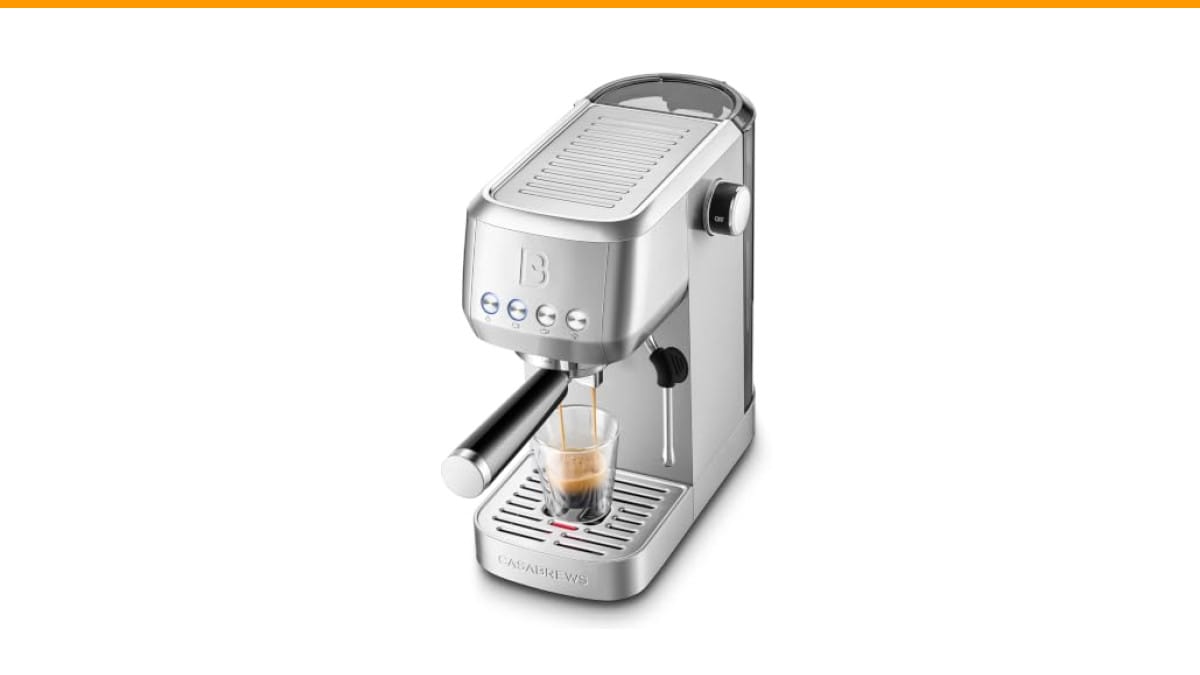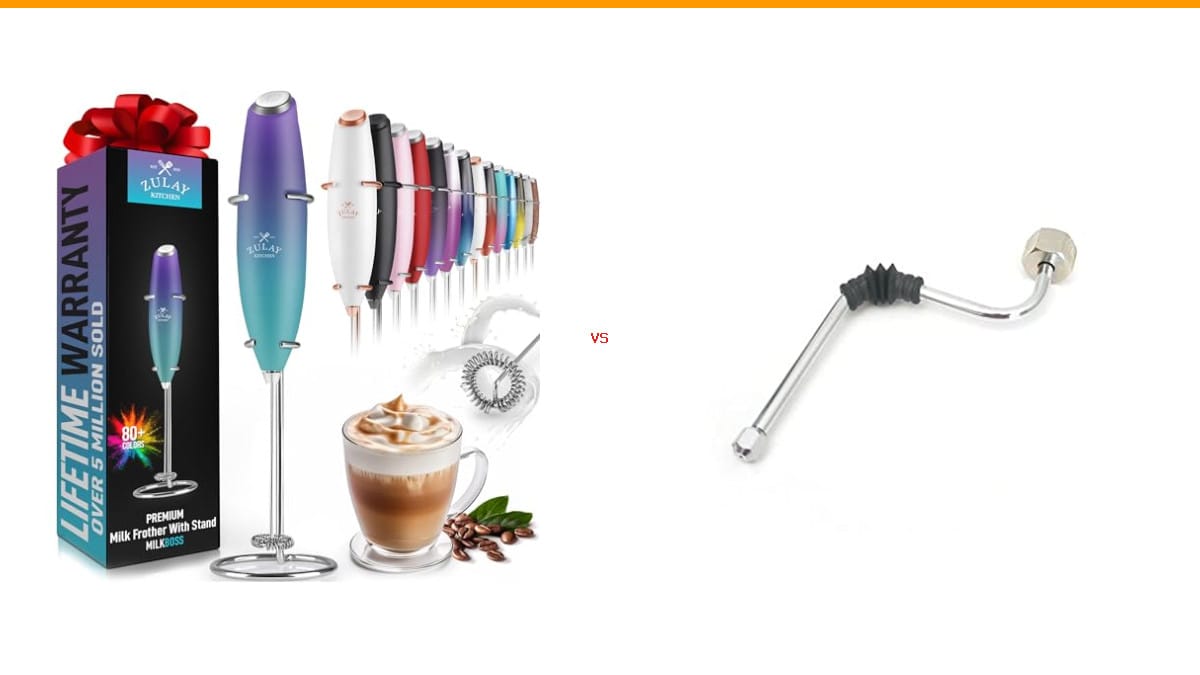
You’re standing in the kitchen at 7 a.m., half awake, and you just want a decent latte without a trip to the café. The question is whether a $20 handheld milk frother or a proper steam wand bolted to an espresso machine is the right answer. I’ve spent the last month using both side by side—my buddy owns the Zulay wand, I’ve got the Rancilio Silvia steam wand—and we swapped gear every few days to compare notes.
| Our Pick | Runner Up |

|

|
| Zulay Kitchen Zulay Kitchen Powerful Milk Frother Wand With… | Rancilio Rancilio Silvia (V1/V2) Steam Wand |
| See on Amazon | See on Amazon |
As an Amazon Associate I earn from qualifying purchases.
This comparison isn’t about which one makes prettier latte art (though that matters). It’s about what fits your actual life: how much counter space you have, how patient you are in the morning, whether you drink iced lattes in July, and how much you’re willing to spend over the long haul. The honest answer? Most people should buy the handheld frother. But if you already own an espresso machine with a steam wand, you’d be crazy not to learn it.
Here’s what we found after a month of daily use, including testing oat milk, almond milk, and whole milk in both devices.
The Core Difference: Heat vs. Agitation
A steam wand injects hot, pressurized steam into cold milk. That steam heats the milk and creates microfoam—tiny bubbles that give latte art its canvas. The Zulay wand, on the other hand, is a tiny electric whisk that spins fast and whips air into milk. It can’t heat anything. You have to warm the milk yourself.
That single difference drives everything else: texture, temperature, cold foam, cleanup, and cost. Let’s dig into each device on its own terms first.
What Is a Steam Wand? (And What It Does Best)
The Rancilio Silvia steam wand (V1/V2) is a stainless steel tube, 6 mm in diameter and 180 mm long. It’s a replacement part, technically, but tons of home users buy it to upgrade a Gaggia Classic or to fix an old Silvia. It connects to the boiler of an espresso machine, so it’s not a standalone tool.
What it does best is texture. In testing, whole milk came out silky, glossy, and sweet—the kind of microfoam that holds a rosetta pattern without collapsing. The wand gives you control over the whirlpool in the pitcher, so you can stretch the milk to the right volume and then heat it to 150°F. You can also steam non-dairy milks if you’re careful, though oat milk needs a gentle touch.
The downsides are real. You need an espresso machine with a boiler, which means a big appliance on your counter. You also need a stainless steel pitcher, a thermometer (or a lot of practice), and you have to purge the wand before and after each use. It’s a ritual—one that takes about three minutes once you’re good, but it’s three minutes of focused attention.
Cleaning is the other thing. If you don’t wipe the wand and purge it immediately, milk residue bakes on and clogs the tip. I’ve had to soak mine in hot water more than once. The good news is it’s a simple metal tube—repairable, replaceable, and likely to outlive your espresso machine. Check our guide on cleaning a steam wand if you go this route.
What Is a Milk Frother? (The Types Explained)
The Zulay Kitchen frother is a handheld electric whisk. It’s a slim plastic body with a metal wand that spins at high speed. You dip it into a cup of warm milk, press a button, and within 20 seconds you’ve got foam. It runs on two AA batteries (Duracell included in the box, which is nice) and comes with a metal stand for storage.
It’s not the only type of frother out there, but it’s the one we tested.
Handheld, Automatic, and Manual Frothers
Handheld wands like the Zulay are the cheapest and most portable. Automatic frothers—the kind that look like a mini blender—heat and froth in one step, but they cost more and take up counter space. Manual frothers (a plunger in a jar) are cheap but tiring to use. The Zulay sits in the middle: it’s fast, cheap, and does a decent job on both dairy and non-dairy milk, but it won’t produce the same tight microfoam as a steam wand.
Head-to-Head: Steam Wand vs. Milk Frother
We compared them on five things that actually matter in daily use. Here’s the short version:
| Feature | Zulay Handheld Frother | Rancilio Steam Wand |
|---|---|---|
| Heats milk | No—you heat milk separately | Yes—steam heats as it froths |
| Microfoam quality | Good for cappuccino foam, not latte art | Excellent—silky, glossy, art-ready |
| Cold foam | Works great on cold milk for iced drinks | Not possible—steam is hot |
| Setup time | 20 seconds, no preheat | Requires espresso machine warm-up (10+ min) |
| Cleaning | Rinse whisk under hot water, run it briefly | Purge, wipe, deep-clean tip regularly |
| Noise | Whirring buzz, about as loud as an electric toothbrush | Hissing steam, plus the espresso machine pump |
| Cost of ownership | ~$20 upfront, batteries every few months | Part of a $700+ espresso machine, plus pitcher and thermometer |
| Lifespan | Motor can wear out in 1-2 years; replaceable | Simple metal tube—likely lasts decades |
Texture and Microfoam Quality
The Zulay makes froth—big, airy bubbles that sit on top of your drink. It’s perfect for a cappuccino-style layer of foam, but it’s not microfoam. You can’t pour latte art with it, and the texture is more like shaving cream than velvet.
The steam wand is a different animal. After a week of practice, I was pouring hearts and tulips. The milk has that glossy, wet-paint look that means the bubbles are fine and uniform. If texture is your priority, the steam wand wins by a mile.
Temperature Control and Cold Foam
Here’s where the Zulay shines. Because it doesn’t heat, you can froth cold milk straight from the fridge. I made a cold foam cold brew every morning for a week—just a splash of milk, 15 seconds with the wand, and it sat on top of the iced coffee like a cloud. A steam wand can’t do that. Full stop.
For hot drinks, the Zulay requires a separate step: heat the milk in the microwave or on the stove, then froth. That’s fine, but it’s an extra dish and an extra minute. The steam wand does both at once, and you control the final temperature by feel.
Ease of Use and Learning Curve
The Zulay is idiot-proof. Press the button, move it up and down, done. My first attempt produced decent foam. The steam wand took me about ten sessions to get right. You have to hold the tip just below the surface, tilt the pitcher, and listen for the right hiss. Too deep and you just heat the milk; too shallow and you get giant bubbles that pop. It’s a skill, not a switch.
Cleaning and Maintenance
Zulay’s cleanup is genuinely easy: rinse the whisk under hot water and run it for a second. Done. The steam wand needs a purge, a wipe, and periodic soaking of the tip. If you skip that, you’ll be dealing with clogged holes and burnt milk smell. It’s not hard, but it’s a daily habit.
Cost, Noise, and Lifespan
The Zulay costs about $20 and runs on batteries. The Rancilio wand is usually bought as part of an espresso machine, so the real cost is the machine. Over a year, the Zulay might need a few sets of batteries and possibly a replacement if the motor dies. The steam wand, being a solid metal tube, will outlive everything else on your counter. But it’s tied to a machine that won’t.
Noise is a practical thing. The Zulay buzzes like a toothbrush—annoying but brief. The steam wand hisses loudly, and if you have an espresso machine, the pump adds a whir. In a small apartment at 6 a.m., that hiss will wake someone up. We actually tested that. My roommate wasn’t thrilled.
The Milk Matters: Dairy vs. Non-Dairy Performance
Whole milk is the easiest for both. The fat and protein create stable foam. The Zulay handles it fine; the steam wand makes it perfect.
Oat milk is the surprise winner for the steam wand. The barista blends (with added oils) steamed beautifully—rich, creamy, and stable. The Zulay did okay, but the foam collapsed after a few minutes. Almond milk was the worst on both. The Zulay made a thin, watery froth; the steam wand made something that looked like soap bubbles. Soy milk is a middle ground—decent on both, but it curdles if you overheat it.
If you mostly drink non-dairy, the Zulay is more forgiving because you’re not heating the milk as aggressively. But if you want the best oat milk latte, the steam wand wins.
Which One Should You Buy? (A Decision Guide)
Here’s how to decide based on your situation.
- Budget-conscious: Zulay. You can’t beat $20 for a frother that works.
- Small kitchen or no espresso machine: Zulay. It’s tiny, portable, and doesn’t need a boiler.
- Iced coffee lover: Zulay. Cold foam is a game-changer for iced lattes.
- Latte art enthusiast: Steam wand. There’s no shortcut to microfoam.
- Already own an espresso machine with a steam wand: Use it. Don’t buy a separate frother unless you want cold foam.
- Impatient in the morning: Zulay. It’s faster than waiting for the machine to heat up.
If you’re still deciding between an espresso machine with a steam wand and a simpler setup, check our automatic vs semi-automatic comparison to see which fits your workflow.
Frequently Asked Questions
Can a handheld frother heat milk?
No. The Zulay wand only whips air into milk. You have to heat the milk separately in a microwave or on the stove. That’s an extra step, but it also means you can make cold foam.
Is a steam wand worth it if I don’t have an espresso machine?
Probably not. A steam wand is a component of an espresso machine, not a standalone tool. You’d need to buy a machine that has one, which costs hundreds of dollars. If you’re not making espresso, the Zulay frother is a fraction of the price and does the job.
Which one is better for oat milk?
A steam wand gives better texture if you use a barista blend oat milk. But it’s easy to overheat and curdle. The Zulay is more forgiving with non-dairy milks because you control the heat separately. For cold foam, the Zulay is the only option.
How do I clean the Zulay frother?
Rinse the whisk under hot water and run it for a second to fling off residue. That’s it. The steam wand requires purging and wiping after every use, plus a deeper soak if milk bakes on. Our steam wand cleaning guide has the full routine.
The Verdict: It Depends on Your Coffee Ritual
I’m not going to tell you one is objectively better, because it depends on what you want from your coffee. The Zulay frother is the sensible choice for most home users: cheap, fast, zero learning curve, and it makes cold foam. It’s not perfect—the foam is airy, not silky, and the motor might not last forever. But for $20, it’s a no-brainer.
The steam wand is for people who care about texture and are willing to practice. It rewards you with café-quality microfoam that turns a morning latte into a ritual. But it demands an espresso machine, counter space, and patience. If you already have one, learn to use it. If you’re starting from scratch, buy the Zulay first and upgrade later if you get hooked.
Either way, you’ll be drinking better coffee than you did yesterday. That’s the point.
Products related to this article
Sponsored / affiliate links. As an Amazon Associate I earn from qualifying purchases. I may earn additional commission from eligible campaigns.
 Quick Heating Cup Warmer, Three Temperature Settings, Splashproof and Portable, for Coffee, Milk, Lightweight ABS Material
 Coffee Mug Warmer & You are Awesome Mug Set, Electric Cup Warmer for Desk
 Coffee Espresso Machine Handle Replacement Parts, Cafe Bracket Handle for Lidl Silvercrest CM4621 CM4218 KF5002 KF500S Barista (for 51mm Portafilter Basket - Not included)