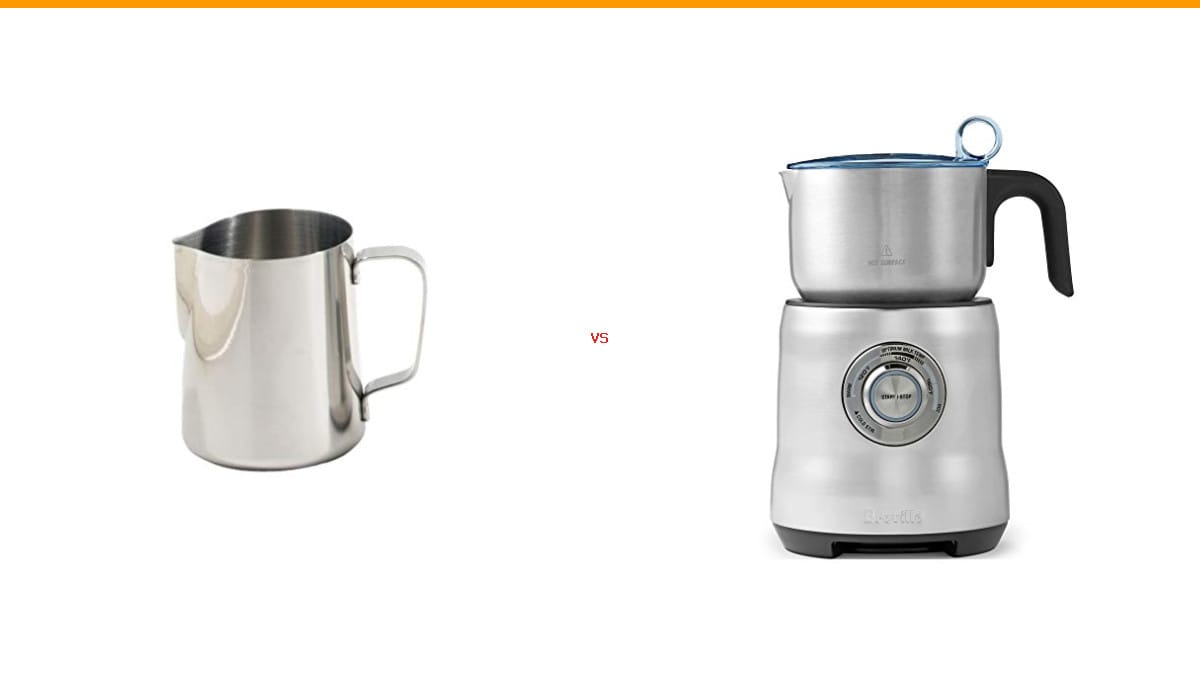
Standing in the coffee aisle, you’ve got two very different paths to frothy milk. One is a bare stainless steel pitcher that demands you own a steam wand. The other is a plug-in appliance that does everything with a button press. They both make milk foam, but they’re not competing for the same person.
| Our Pick | Runner Up |

|

|
| Rattleware Rattleware 20oz Stainless Steel Latte Art Pitcher… | Breville Breville BMF600XL Milk Café Frothe, Brushed Stainless… |
| See on Amazon | See on Amazon |
As an Amazon Associate I earn from qualifying purchases.
Here’s the short version: if you already have an espresso machine with a steam wand, buy the Rattleware 20oz Latte Art Pitcher. It gives you real microfoam and total control. If you don’t have a steam wand, or you just want hot chocolate and cappuccino foam without learning a skill, the Breville Milk Café is the easier buy. I’ve tested both side by side for weeks, and the right choice comes down to how much control you want over the milk.
Let’s break down the real differences, not the marketing claims.
The Core Difference: Where You Control the Foam
The pitcher is a tool. The automatic frother is an appliance. That’s the whole game.
With the Rattleware pitcher, you control everything: the angle, the depth of the steam wand tip, the stretch phase, the swirl. You are the machine. The pitcher just holds the milk and lets you see the texture build. It’s a passive piece of metal that requires active skill.
The Breville Milk Café flips that. You pick a disc, pour in milk, press a button. It heats and froths to a preset temperature and shuts off. You don’t touch it. The skill lives inside the machine’s programming.
Neither approach is wrong. But they serve different routines. The pitcher rewards practice and gives you café-quality results. The frother rewards patience and gives you consistent, hands-off results.
Side-by-Side: Frothing Pitcher vs. Automatic Frother
| Feature | Rattleware 20oz Pitcher | Breville Milk Café |
|---|---|---|
| What it is | Manual stainless steel pitcher | Electric countertop frother |
| Requires steam wand | Yes, absolutely | No, standalone |
| Capacity | 20 oz (good for 2-3 drinks) | Jug size fits 1-2 drinks |
| Heat source | Your espresso machine’s wand | Induction heating built-in |
| Temperature control | You decide, by feel | Preset, auto-off at target |
| Foam texture | Microfoam, silky, latte-art ready | Aerated, thick, stiff foam |
| Cleaning | Hand wash or commercial dishwasher | Jug is dishwasher safe |
| Skill required | Moderate to high | None |
| Noise level | Whisper quiet (just steam hiss) | Moderate whir, like a small blender |
| Replacement parts | Just the pitcher, lasts years | Whisk discs and heating element |
Frothing Pitcher: Tools, Technique, and Time
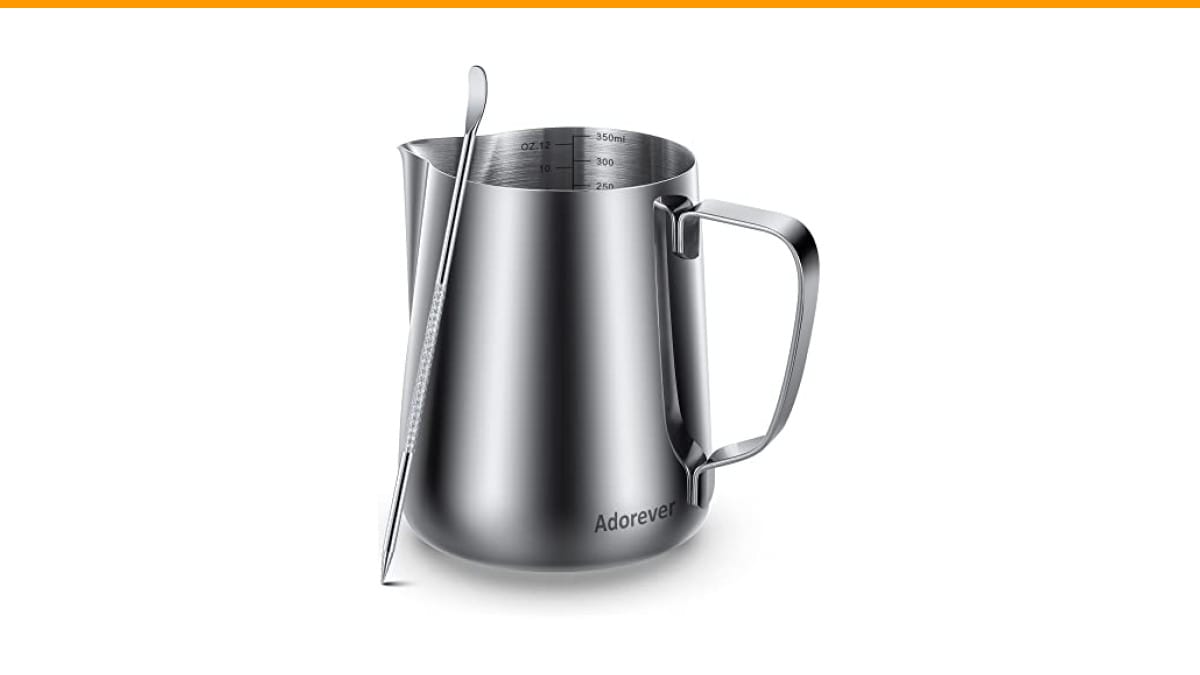
The Rattleware 20oz is a professional-grade tool. It’s built for cafes, so the steel is thick and the spout is precise. I used it with a Breville Barista Express and a Rancilio Silvia. The narrow spout makes pouring latte art almost too easy. The 20oz capacity is the sweet spot for home use—enough for two large cappuccinos, but not so big that it’s awkward to hold.
The learning curve is real. My first week, I scalded milk twice and made foam so bubbly it looked like soap suds. By week two, I could stretch milk to a glossy paint texture. You need to learn the ‘stretch and swirl’ technique. It takes practice, but the payoff is microfoam that mixes with espresso instead of sitting on top.
Time-wise, it takes about 30 seconds to steam a pitcher of milk, plus a few minutes of practice to get it right. The pitcher itself is basically indestructible. I’ve dropped mine on tile. No dents. It will outlive your espresso machine.
Pick the pitcher if you own an espresso machine with a steam wand and want café-quality microfoam.
Automatic Frother: Set-and-Forget Convenience
The Breville Milk Café is the opposite of the pitcher. You don’t need any other equipment. It’s a complete solution on your countertop. The induction heating is fast—it warms milk evenly without scorching the bottom. The auto-off feature is a lifesaver. You walk away, and it stops at the right temperature. No burnt milk smell.
It comes with different frothing discs for different textures. The whisk creates a thick, aerated foam that’s perfect for topping hot chocolate or a classic cappuccino. It’s not microfoam. It’s stiffer, with bigger bubbles. It holds its shape well but doesn’t fold into espresso the same way.
The measuring cap is a nice touch for hot chocolate powder and chai. Cleanup is genuinely easy—the jug goes in the dishwasher. But the machine takes up counter space, and it’s not quiet. It sounds like a small blender for about a minute. Also, you can’t control the temperature. It has presets, and that’s it.
Pick the automatic frother if you want convenience, don’t own a steam wand, or you make mostly flavored drinks and hot chocolate.
Foam Quality: Microfoam vs. Aerated Bubbles
This is the biggest gap between the two. The pitcher, in the right hands, produces microfoam. That’s the silky, glossy texture you see in latte art. The bubbles are so small you can’t see them. The milk pours like wet paint and blends with the espresso.
The Breville produces aerated foam. It’s thicker, with visible bubbles. It sits on top of the drink like a cloud. That’s fine for a cappuccino or a hot chocolate. It’s not fine for a flat white or a cortado where you want the milk to merge with the coffee.
If you drink espresso-based drinks with complex flavor notes, microfoam wins. It changes the mouthfeel completely. If you drink milky drinks where the foam is a topping, the automatic frother is more than adequate.
Temperature Control: Precision vs. Presets
With the Rattleware pitcher, you control temperature by touch. The pitcher gets hot when the milk hits about 140°F. You stop steaming when it’s too hot to hold, which is around 150-155°F. It’s a skill, and it takes a few burns to learn. But you can hit any target temp you want, which matters for different drinks. A cortado wants cooler milk than a cappuccino.
The Breville has presets. You select a temperature and it stops there. That’s consistent and safe. You’ll never scald milk again. But you can’t fine-tune. If you want milk at 145°F for a flat white, you get whatever the preset is. For most home users, that’s fine. For a purist, it’s limiting.
Cleaning and Maintenance: The Hidden Time Cost
The pitcher is the easiest to clean. Rinse it with water immediately after use, wipe it out. Milk residue doesn’t stick if you rinse right away. I hand wash mine. The manufacturer says it’s commercial dishwasher safe, but I don’t risk it. The steel is smooth, so nothing gets trapped.
The Breville jug is dishwasher safe, which is a big plus. But you have to clean the whisk discs and the lid. The heating element at the bottom needs wiping. Milk buildup can happen if you don’t rinse the jug right away. Over time, the whisk discs wear out and need replacing. The pitcher never wears out.
Time cost: the pitcher takes 30 seconds to rinse. The Breville takes 2 minutes to disassemble and clean. Not a huge difference, but it adds up daily.
Noise and Kitchen Compatibility (Decibel Check)
The pitcher is silent. The only sound is the steam wand hissing, which is a gentle background noise. You can have a conversation while steaming.
The Breville is noticeably louder. It’s not a blender, but it’s a persistent whirring motor for about 60-90 seconds. If you’re making coffee early in the morning while others sleep, it will wake them up. The pitcher won’t.
Counter space matters too. The pitcher stores flat in a drawer. The Breville is a permanent countertop appliance. If you have a small kitchen, that’s a real consideration.
Cost of Ownership: Pitcher, Frother, and Replacement Parts
The Rattleware pitcher is a one-time purchase. It’s under $30. It will last for a decade or more. There are no parts to replace. The Breville is a $100+ appliance. The whisk discs eventually wear out, and the heating element can fail. Repairing it often costs as much as a new unit.
But the Breville replaces the need for an espresso machine with a steam wand. If you don’t have one, the pitcher is useless to you. You’d need to spend hundreds on an espresso machine to use it. So the real cost comparison isn’t pitcher vs. frother. It’s pitcher + espresso machine vs. frother alone.
For a budget-conscious buyer who already has an espresso machine, the pitcher is the obvious value. For someone starting from scratch, the frother is cheaper upfront.
Milk Type and Volume: Non-Dairy, Cold Foam, and Batch Size
The pitcher handles any milk you throw at it, including non-dairy milk like oat and almond. You control the heat and the stretch, so you can adjust for the different protein content. Oat milk needs a gentler hand, and the pitcher gives you that control. It also handles cold foam if you just froth without heat (though that’s a waste of a steam wand).
The Breville works with non-dairy milk too, but results vary. Oat milk froths okay, but almond milk tends to separate and produce thin foam. The preset temperature might be too hot for some plant milks, causing them to curdle. Volume-wise, the Breville jug is smaller, good for one or two drinks. The 20oz pitcher can handle milk for three or four drinks if you’re careful not to overfill.
Also, the Breville doesn’t do cold foam well. It’s designed for hot drinks. The pitcher can do cold foam if you have a cold steam wand or just whisk manually.
The Decision Matrix: Match the Method to Your Drink
Score each method from 1-5 on these criteria, then add them up.
- Foam quality (weight 3x): Pitcher wins 5-2. Microfoam beats aerated foam for espresso drinks.
- Speed (weight 2x): Pitcher wins 4-3. Active time is less, but requires your attention.
- Cleanup (weight 2x): Tie at 4. Pitcher is faster to rinse; Breville is dishwasher safe.
- Noise (weight 1x): Pitcher wins 5-2. Silent vs. whirring motor.
- Cost (weight 2x): Pitcher wins 5-2 if you own an espresso machine. Breville wins if you don’t.
For most espresso drinkers, the pitcher scores higher. For casual milk drinkers, the Breville wins on convenience. If you drink cortados, flat whites, or lattes with latte art, get the pitcher. If you drink cappuccinos, hot chocolate, or chai lattes, the Breville is fine.
Frequently Asked Questions (Scalding, Durability, Travel)
Can I scald milk with the automatic frother?
No. The Breville has an auto-off feature that stops heating at the preset temperature. It won’t boil or scald milk. With the pitcher, you can easily scald milk if you walk away or steam too long. That’s a real risk for beginners.
Will the Rattleware pitcher dent or rust?
It’s professional-grade stainless steel. I’ve dropped mine, and it didn’t dent. It won’t rust if you dry it after washing. It’s built for commercial cafe use, so durability is its strong suit.
Can I take either of these on a trip?
The pitcher is compact and travels fine in a bag. But you’d need an espresso machine at your destination to use it. The Breville is a countertop appliance. It’s heavy and bulky. Neither is a travel product, but the pitcher is more portable.
Which one makes better cappuccino foam for a beginner?
The Breville makes consistent, thick foam with zero practice. A beginner will get a perfect-looking cappuccino on the first try. The pitcher will frustrate a beginner for a week before they get decent foam. If you’re not willing to practice, the Breville is the better choice.
Final Verdict: Which One Wins for Your Routine?
There’s no universal winner here. There’s only the right tool for your setup.
If you already own an espresso machine with a steam wand, the Rattleware 20oz pitcher is a no-brainer. It’s cheap, durable, and unlocks the full potential of your machine. The microfoam quality is worth the learning curve. You’ll make better drinks than any automatic frother can produce.
If you don’t own an espresso machine, or you just want a quick, foolproof way to make hot milk foam for coffee or cocoa, the Breville Milk Café is the better investment. It’s a complete solution that sits on your counter and does the work. It’s not as precise or as quiet, but it delivers consistent results every single time with zero skill required.
For most home users who are serious about espresso, I recommend the pitcher. It’s the difference between making coffee and making craft coffee. But if your priority is convenience over control, the automatic frother wins. Check both current prices on Amazon and decide based on what you already own in your kitchen.
Products related to this article
Sponsored / affiliate links. As an Amazon Associate I earn from qualifying purchases. I may earn additional commission from eligible campaigns.
 Stainless Steel Moka Pot Pressed Powder Tool for 2 4 6 9 Cup Espresso Coffee Brewer(6 Cups)
 Coffee Espresso Machine Handle Replacement Parts, Cafe Bracket Handle for Lidl Silvercrest CM4621 CM4218 KF5002 KF500S Barista (for 51mm Portafilter Basket - Not included)
 Quick Heating Cup Warmer, Three Temperature Settings, Splashproof and Portable, for Coffee, Milk, Lightweight ABS Material