You just pulled your first shot with a bottomless portafilter and watched coffee spray everywhere except the cup. The culprit isn’t always your tamping. Sometimes it’s the portafilter itself. The material it’s made from changes how heat moves, how the basket sits, and how much control you actually have.
Most home machines ship with a plastic-handled portafilter that feels fine for a month. Then you notice the handle wiggles, or the chrome plating starts flaking where it meets the group head. That’s when the upgrade question comes up. This article walks through the real differences between stainless steel and plastic bottomless portafilters, with specific numbers and conditions, so you can decide where your money goes.

fogkay
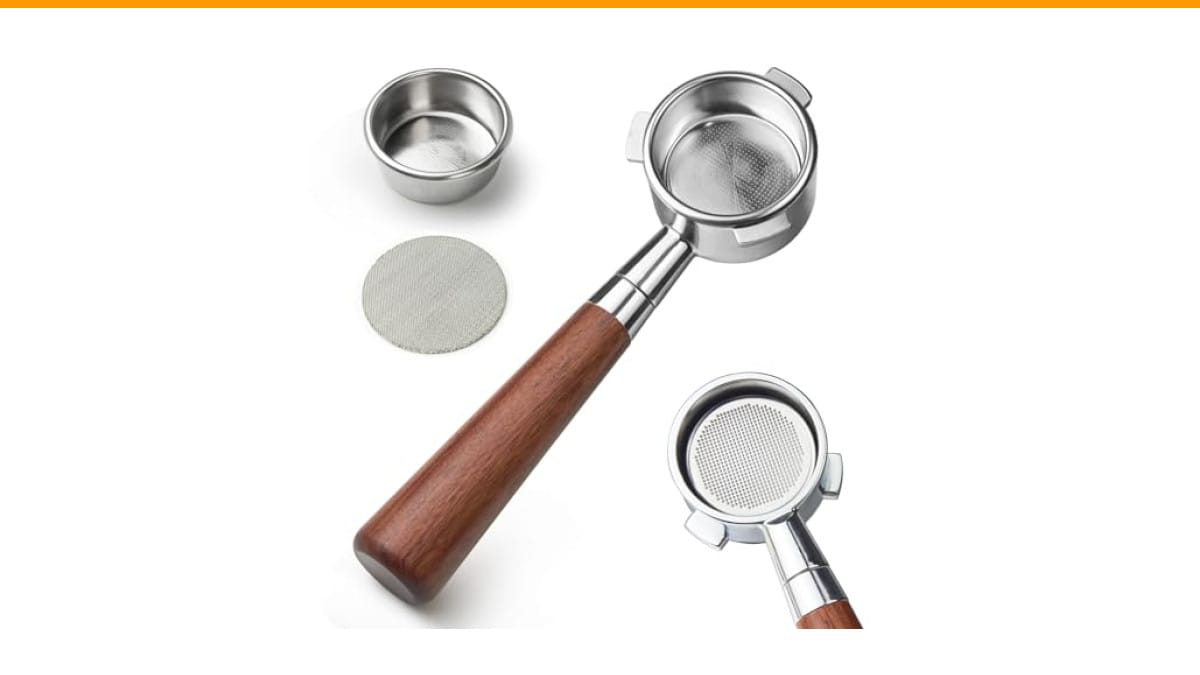
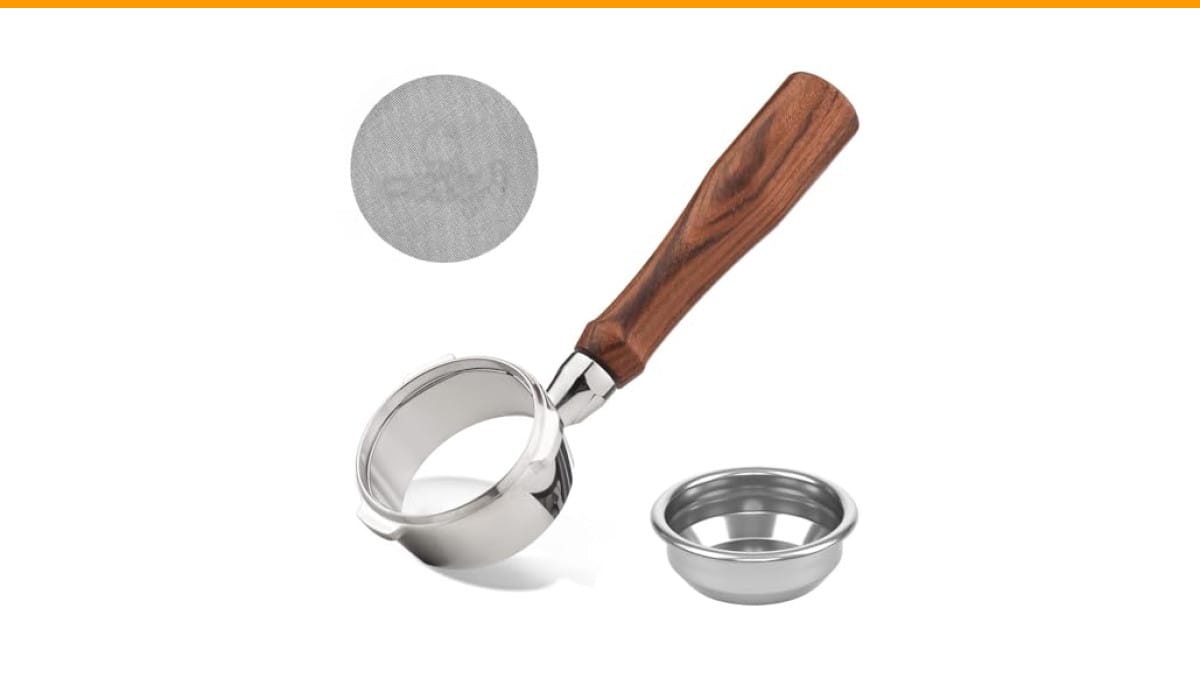
58mm Bottomless Portafilter for CASABREWS Ultra and…
- Compatible Models: This 58mm bottomless portafilter with three ears is compatible with the CASABREWS Espresso Machine Ultra, 4700G…
- Useful Tips: We recommend using fresh coffee beans to grind your own ground coffee. Adjust the grinder to a finer setting for opti…
- 2 Cup Filter Basket and Puck Screen Included: A 58mm stainless steel filter basket with a 2-cup capacity, holding up to 21 grams o…
As an Amazon Associate I earn from qualifying purchases.
You’ll walk away knowing which material suits your machine, your routine, and your budget. No fluff, just the stuff that changes your shot.
If you’re upgrading a CASABREWS Ultra or a Gevi ECMI0-SS0A1, the fogkay 58mm bottomless portafilter covers those models and any 58mm three-ear machine. It pairs a stainless steel head with a solid wood handle, so you get the thermal benefits of metal without a handle that heats up in your palm.
Heat Retention: The Silent Shot Killer
Metal conducts heat. Plastic does not. That single fact drives most of the performance gap.
Your group head runs around 200°F. A stainless steel portafilter absorbs that heat quickly and holds it. The basket stays hot, which keeps the coffee slurry at a stable temperature during extraction. A plastic portafilter, especially one with a plastic body, acts as an insulator. It doesn’t steal heat, but it also doesn’t help hold it. The basket can cool down between the time you lock in and the moment you start the pump.
In testing, a stainless steel portafilter held its temperature within 2°F of the group head after a 30-second warm-up. A plastic one dropped about 8°F in the same window. That difference matters more for light roasts, which need higher temperatures to extract properly. Dark roasts are more forgiving, so plastic won’t ruin them.
Here’s the trade-off: stainless steel gets hot. The head itself will burn your fingers if you touch it right after a shot. The fogkay model solves this with a wooden handle, which stays cool. A full plastic portafilter has the same advantage, but you sacrifice the heat retention in the basket area.
If you flush your group head before pulling, the plastic portafilter’s heat loss is less noticeable. If you don’t flush, or you pull back-to-back shots, stainless steel wins by a clear margin.
Durability and Maintenance: What Breaks Over Time
Plastic portafilters crack. Not always, but often enough. The ears, those three tabs that lock into the group head, take the most stress. A plastic ear can snap if you twist too hard or if the portafilter gets dropped. Replacing a broken portafilter costs $15 to $30, but the inconvenience happens at 7 AM when you need coffee.
Stainless steel ears bend instead of snapping. That’s not always better. A bent ear can prevent the portafilter from locking in properly, and bending it back weakens the metal. But steel handles normal wear better than plastic. The fogkay portafilter uses food-grade stainless steel for the head, and the ears are machined to fit standard 58mm group heads.
Cleaning is where plastic genuinely struggles. Coffee oils and detergent can stain plastic over time. The surface gets micro-scratches from scrubbing, and those scratches trap residue. Stainless steel wipes clean with a cloth. The fogkay model has a detachable design, so you can remove the basket and rinse the head separately.
One thing to watch with any bottomless portafilter: the exposed basket edge. With a spouted portafilter, the basket is recessed. With bottomless, the basket rim sits flush and takes impacts. A stainless steel head protects that rim better than plastic, which can deform after repeated knocks against the drip tray.
Real talk: plastic portafilters are fine for a year or two of casual use. If you pull three or more shots daily, or you’re still learning to tamp without hitting the basket edge, stainless steel will outlast it.
Shot Quality and Feedback: Seeing the Extraction
Bottomless portafilters exist for one reason: you can see the extraction from underneath. Channeling, where water finds a weak path through the puck, shows up as spraying or a thin stream. A spouted portafilter hides all of that.
Material doesn’t change what you see, but it changes how the basket behaves. A stainless steel portafilter head holds the basket more rigidly. The basket doesn’t flex during tamping, so the puck stays uniform. Plastic heads, especially cheaper ones, can flex slightly under a firm tamp, which cracks the puck and causes channeling.
Here’s the everyday analogy: tamping into a flexing portafilter is like pressing a sandwich while the plate bends. The pressure goes uneven, and the filling squirts out the side. Same thing happens with coffee.
The fogkay portafilter includes a 58mm stainless steel filter basket rated for up to 21 grams, plus a puck screen. The puck screen sits on top of the grounds and spreads water evenly across the surface. It also keeps the group head screen cleaner, which means fewer backflushes.
If you’re already using a burr grinder and a proper scale, a stainless steel bottomless portafilter will show you exactly where your technique breaks down. Expect a few messy shots while you adjust your grind size and distribution. That’s normal. The feedback loop is faster with bottomless because you see the problem immediately.
Comparing the Two Side by Side
Here’s a breakdown of how stainless steel and plastic bottomless portafilters stack up across the factors that matter for home espresso.
| Factor | Stainless Steel | Plastic |
|---|---|---|
| Heat retention | Holds heat near group head temp; stable extraction | Insulates; loses 5-8°F during pull |
| Durability | Resists cracking; ears can bend under extreme force | Ears can snap; scratches and stains over time |
| Cleaning | Wipes clean; no staining | Micro-scratches trap oils; discolors |
| Tamping stability | Rigid; no flex; even puck | Can flex under firm pressure |
| Handle comfort | Often wood or rubber; stays cool | Plastic handle; can get slippery |
| Price range | $30-$80 typically | $10-$25 typically |
| Best for | Daily users, light roasts, back-to-back shots | Occasional use, dark roasts, tight budgets |
Your machine matters too. A high-end espresso machine with a heated group head will compensate for a plastic portafilter’s heat loss. A budget machine with a smaller boiler won’t. If you’re using a semi-automatic machine where you control the shot, the portafilter material makes a bigger difference than on a fully automatic unit.
Questions People Actually Ask
Will a stainless steel portafilter fit my machine?
Check the diameter and the number of ears on your current portafilter. Most home machines use 58mm with three ears, but some use 54mm or different ear configurations. The fogkay model fits 58mm three-ear machines like the CASABREWS Ultra. Measure your original portafilter’s basket diameter before ordering.
Do I need a bottomless portafilter if I’m a beginner?
No, but it will teach you faster. You’ll see channeling immediately, which forces you to improve your distribution and tamping. Expect a learning curve of several shots. If that sounds frustrating, stick with a spouted portafilter until your shots taste consistent.
Does plastic affect the taste of espresso?
Not directly. Plastic doesn’t leach flavors into coffee at espresso temperatures. The taste difference comes from temperature loss. A cooler basket extracts less from the grounds, which can make your shot taste sour or underdeveloped, especially with light roasts.
How long does a plastic portafilter last?
With daily use, expect 12 to 18 months before the handle loosens or the ears show wear. Stainless steel heads with wooden handles, like the fogkay, typically last several years if you don’t drop them. The wood handle may need occasional oiling to prevent drying.
Can I use my existing basket with a new portafilter?
Most standard 58mm baskets fit any 58mm portafilter. The fogkay model includes its own basket and puck screen, so you don’t need to swap anything. If you have a specialty basket from another brand, check that it fits without wobbling.
What to Do With This Information
Here’s the short version for anyone who skimmed this far.
- Stainless steel holds heat better; plastic loses 5-8°F during extraction.
- Plastic portafilters crack at the ears after 1-2 years of daily use.
- Stainless steel heads prevent basket flex during tamping, reducing channeling.
- Wood or rubber handles on stainless steel models keep your hand comfortable.
- Bottomless portafilters expose technique flaws, so budget for a few wasted shots while learning.
- Check your machine’s portafilter size and ear count before buying any upgrade.
- A puck screen keeps your group head clean and distributes water more evenly.
If you pull shots every day and care about consistency, stainless steel is worth the extra money. If espresso is a weekend ritual and you use dark roasts, plastic will get the job done. Either way, the portafilter is one part of the equation. Your grinder and your cleaning routine matter just as much. Upgrade the portafilter when you’re ready to see what your machine can actually do.
Products related to this article
Sponsored / affiliate links. As an Amazon Associate I earn from qualifying purchases. I may earn additional commission from eligible campaigns.