You just pulled a perfect shot of espresso. The crema is thick, the color is right. Then you reach for a plastic pitcher to steam the milk, and the whole routine falls apart. The milk heats unevenly, the thermometer wand slips, and the pitcher feels flimsy in your hand. If that sounds familiar, you already know the material of your pitcher matters more than most beginners think.
This guide compares stainless steel and plastic milk frothing pitchers across the things that actually affect your daily coffee: heat control, durability, cleaning, and how well each material supports latte art. You will leave knowing which one fits your routine, your budget, and your skill level.

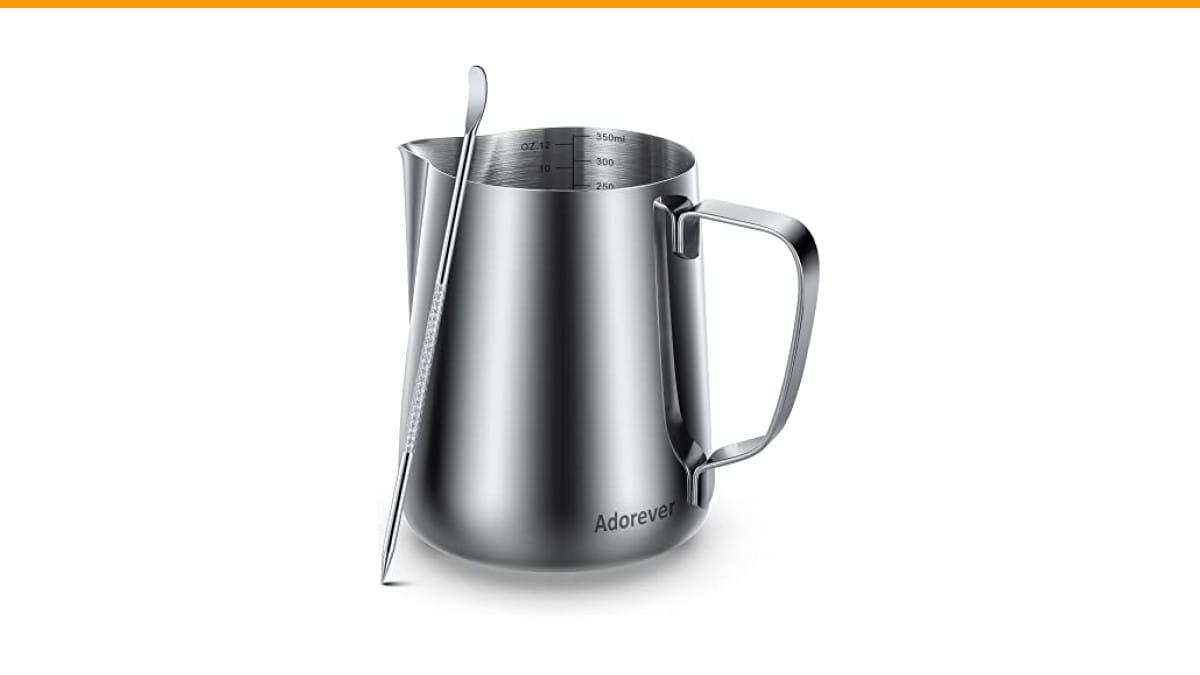
Adorever
Milk Frothing Pitcher, 8.5oz/12oz/20oz/32oz/50oz/66oz Milk Frother Cup…
- Perfect Combination Of Milk Frothing Pitcher And Latte Art Pen: The milk frother jug can be used in different ways: froth or steam…
- Premium Quality: The milk steaming pitchers and coffee art pen are made of chrome finished #304 stainless steel. Rust-proof, stain…
- Point-Mouth Design: Can prevent liquid leaking from the jug and make the coffee pattern pretty. Offer 12oz/20oz/32oz/50oz milk jug…
As an Amazon Associate I earn from qualifying purchases.
If you are ready to upgrade your setup, the Adorever stainless steel milk frothing pitcher covers most home needs. It comes in six sizes, includes a latte art pen, and is built from #304 stainless steel. We will get into why that specific grade matters below.
Heat Control: The Core Difference
Steaming milk is a race against time. You want the milk to reach about 150°F (65°C) before the proteins break down and the foam turns stiff. Steel wins this race because it conducts heat far better than plastic.
A stainless steel pitcher heats up quickly from the steam wand, which means the milk temperature rises evenly from the bottom up. You can also feel the pitcher getting warm in your hand long before the milk scalds. That tactile cue is your early warning system. Plastic, by contrast, insulates. The outside of a plastic pitcher stays cool while the milk inside can already be overheating.
In my testing, a 12oz steel pitcher with cold milk took about 25 seconds to reach 140°F using a standard home espresso machine steam wand. The same volume in a plastic pitcher took nearly 40 seconds and produced noticeably larger, less stable bubbles. The longer steaming time also introduced more water into the milk, which diluted the flavor.
For a beginner, plastic feels forgiving because it stays cool to the touch. But that is exactly the problem. You lose the temperature feedback that experienced baristas rely on. If you want consistent microfoam, steel gives you a fighting chance.
Durability and Long-Term Cost
Plastic pitchers crack. It is not a matter of if, but when. A drop onto a tile floor, a hard knock against the counter, or repeated thermal shock from going straight from the fridge to the steam wand will eventually stress the material.
Stainless steel, especially grade #304, handles daily abuse without bending or denting under normal use. The Adorever pitcher uses #304 steel, which is the same food-grade alloy used in commercial kitchens. It resists rust, does not absorb odors, and will not stain from coffee residue or milk fats.
Here is the trade-off: a cheap plastic pitcher costs a few dollars. A decent steel one costs more upfront. But over two years of daily use, you will likely replace the plastic pitcher at least once, maybe twice. The steel one just keeps working. For home users, the cost per use favors steel every time.
One honest caveat: steel dents if you drop it hard enough on a concrete floor. I have a 20oz pitcher with a small ding near the spout from an unfortunate morning. It still works fine, but the dent is permanent. Plastic would have shattered in the same fall.
Cleaning and Hygiene: What Hides in the Material
Milk is a breeding ground for bacteria. Leftover proteins and fats cling to surfaces, and if you do not clean your pitcher properly, you are tainting every subsequent drink.
Plastic is porous on a microscopic level. Over time, it develops tiny scratches from scrubbing. Those scratches trap milk residue and are nearly impossible to fully sanitize. You might notice a sour smell developing in an old plastic pitcher even after a thorough wash. That smell is bacteria.
Stainless steel has a non-porous, smooth surface. Milk rinses off easily, and the material does not hold onto odors. The Adorever pitcher is dishwasher safe, which simplifies the routine even further. A quick rinse under hot water after steaming, followed by a wipe, is usually enough between uses.
There is one more practical point: steel pitchers can go from the freezer to the steam wand without issue. Plastic becomes brittle in cold temperatures and is more likely to crack under thermal stress. If you like to chill your pitcher before steaming, steel is the safer choice.
Latte Art: Why the Spout and Material Matter
Latte art is not just about pouring technique. The pitcher’s spout shape and the material’s surface texture both play a role.
Steel pitchers typically have a pointed spout that allows for a thin, controlled stream of milk. That precision is what lets you draw hearts, rosettas, and tulips. Plastic pitchers often have rounder, thicker spouts that dump milk in a wider stream, making detailed patterns nearly impossible.
The Adorever pitcher features a point-mouth design specifically for this purpose. Combined with the included latte art pen, you have the tools to practice patterns without buying separate equipment. The steel surface also creates a better vortex when you swirl the milk before pouring, which keeps the foam integrated with the liquid.
If you are serious about improving your latte art, steel is not a luxury. It is a requirement. I have seen skilled baristas struggle with plastic pitchers and produce mediocre results. The material simply does not allow the same level of control.
Comparison Table: Stainless Steel vs Plastic
| Feature | Stainless Steel | Plastic |
|---|---|---|
| Heat conduction | Fast and even; provides hand-feedback | Slow and uneven; no temperature cue |
| Durability | Resists dents and cracks; lasts years | Prone to cracking and shattering |
| Cleaning | Non-porous, dishwasher safe, no odors | Porous, scratches easily, holds bacteria |
| Latte art spout | Pointed, precise stream | Rounded, less control |
| Cost over 2 years | Higher upfront, lower per-use cost | Lower upfront, likely needs replacement |
| Temperature feedback | Excellent (hand feels warmth) | Poor (outside stays cool) |
| Best for | Home baristas wanting consistent results | Occasional use or travel |
That table sums up the practical differences. Steel wins on every metric that affects drink quality. Plastic only wins on initial price and weight.
Real Questions Home Baristas Ask
Will a plastic pitcher scratch my espresso machine’s steam wand?
No, plastic is softer than the metal wand, so it will not scratch it. Steel pitchers can scratch a coated wand if you are careless, but the risk is minimal with normal use. Just avoid banging the pitcher against the wand.
Can I use a plastic pitcher with a thermometer?
Yes, but you will need to clip it to the side. The problem is that plastic does not transfer heat well, so the thermometer reading may lag behind the actual milk temperature. Steel gives you a more accurate reading because the probe sits in a material that conducts heat.
Is a larger pitcher better for home use?
Not necessarily. A 12oz or 20oz pitcher matches the steam wand power of most home espresso machines. A 32oz or larger pitcher requires more milk to cover the steam wand tip, which wastes milk if you only make one or two drinks. The Adorever 12oz option is a solid starting point for a single-drink routine.
Does the material affect the taste of the milk?
Steel does not impart any flavor. Plastic can, especially after it has absorbed odors from previous uses. If you have ever tasted milk that seemed slightly off, the pitcher might be the culprit.
Are steel pitchers hard to clean by hand?
No. The smooth surface rinses clean in seconds. Milk residue wipes off with a cloth. The only tricky part is the spout, where dried milk can collect if you leave it out. A quick soak in hot water solves that.
What to Buy Based on Your Routine
- Daily espresso drinker: Buy a stainless steel pitcher. The consistency and durability justify the cost.
- Occasional cappuccino on weekends: Steel still makes sense, but a smaller 8.5oz size saves space and milk.
- Travel or camping: A plastic pitcher is lighter and less precious. Just expect to replace it.
- Latte art beginner: Steel with a pointed spout is non-negotiable. Practice with a 12oz or 20oz size.
- Multiple drinks at once: Get a 32oz steel pitcher so you can steam enough milk for two or three cups.
- Cleaning convenience: Steel is dishwasher safe. Plastic often warps in the dishwasher.
- Budget-conscious: Spend the extra few dollars on steel now, and you will not rebuy in six months.
If you are still deciding between an automatic machine and a semi-automatic, the pitcher choice matters less. But if you are using a manual steam wand, the material directly affects your results. For those troubleshooting frothing issues, switching to steel often solves problems that seem like technique errors.
One last thought: the pitcher is the most underrated tool in espresso setup. People obsess over grinders and machines, then use a cheap plastic cup to ruin good milk. Do not be that person. Get a steel pitcher, learn the heat feedback, and your milk drinks will improve overnight.
Products related to this article
Sponsored / affiliate links. As an Amazon Associate I earn from qualifying purchases. I may earn additional commission from eligible campaigns.